
Key Takeaways
-
BPC-157 and TB-500 lack robust human clinical trial evidence despite animal studies showing promise; most claims come from testimonials and preclinical research, not proven human results.
-
The FDA has not approved BPC-157 or TB-500 for injury healing and raised concerns about unclear safety profiles, immune reactions, peptide impurities, and a reported case of shortness of breath after injectable use.
-
Both BPC-157 and TB-500 are banned by WADA as of January 1, 2026 (S0 and S2.3 categories respectively), making them prohibited for all competitive athletes subject to anti-doping rules.
-
"Research use only" labels and online availability do not indicate FDA approval or safety; product purity, concentration, and quality vary significantly, especially with compounded versions from online sellers.
-
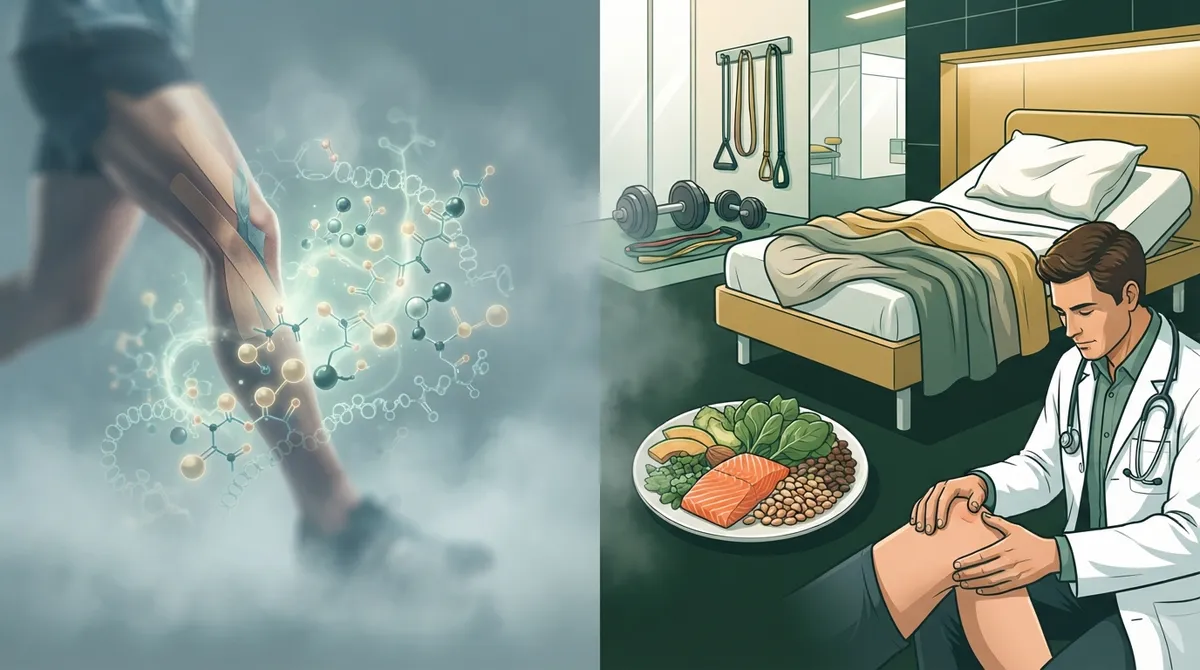
Proven injury recovery foundations—accurate diagnosis, guided physical therapy, progressive loading, adequate protein, sleep, and medical follow-up—should be the priority; any peptide use should complement, not replace, these evidence-based strategies.
-
Before considering peptide therapy, work with a licensed provider to review your specific injury, get baseline lab work, understand the product's regulatory status, and establish clear monitoring and stopping points.
You tweaked a shoulder, strained a hamstring, or your elbow has been nagging you for months. Naturally, you start searching for faster ways to heal. Soon you run into peptides for injury recovery, and the claims sound amazing. Some posts say you can heal tendons in half the time.
Here is the friendly truth: the hype runs ahead of the science. Most of the excitement comes from animal studies and online testimonials, not large human trials. That does not mean you should write peptides off. It means you should learn how to evaluate them wisely.
In this guide, we walk through what these peptides are, what the evidence really shows, what the FDA has said, and how to build a smart recovery plan. If you are a health optimizer, a busy professional, or a data-driven biohacker, this is your roadmap for making a safe, informed choice in 2026.
What Are Peptides for Injury Recovery?
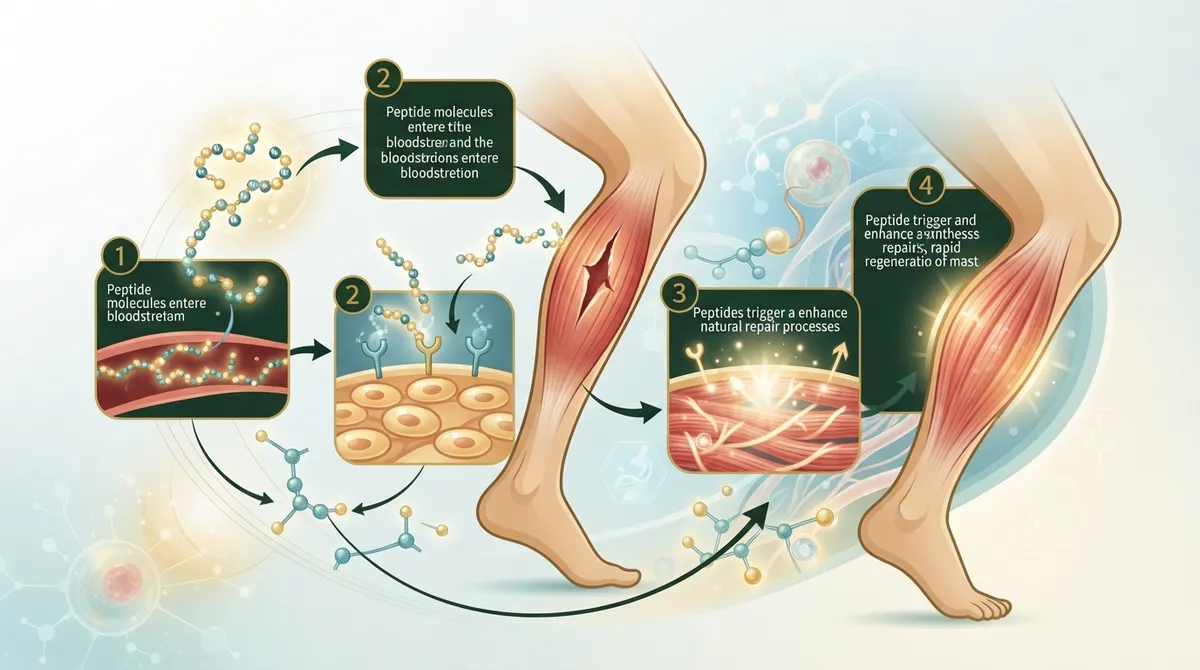
Peptides are short chains of amino acids, the building blocks of proteins. If you are new to the topic, our guide on 8 facts that explain what are peptides in 2026 is a great starting point. You can also read a plain-language overview of what are peptides from WebMD.
When people say “peptides for injury recovery,” they usually mean two products:
- BPC-157: a synthetic 15-amino-acid peptide promoted for tendon, muscle, ligament, and joint healing.
- TB-500: a synthetic fragment related to thymosin beta-4, promoted for similar recovery goals.
Both are marketed in wellness settings. Neither is an FDA-approved drug for healing injuries. Keeping that in mind is step one of a smart evaluation.

What Does the Evidence Actually Show?
This is the part many websites skip. Let’s separate three things: lab findings, marketing claims, and proven human results.
Animal and Lab Research
BPC-157 has been studied mostly in animals and in cell-based models. Researchers have proposed that it may support tissue repair, calm inflammation, and encourage new blood vessel growth. Those ideas are interesting. But animal findings do not prove a treatment is safe or effective in people.
Human Clinical Evidence
Here is where we need to be honest. There is no robust, peer-reviewed human clinical-trial evidence showing that BPC-157 or TB-500 improves injury recovery. The FDA has noted limited human exposure data, and those studies looked at other conditions and routes:
- A rectal-enema study in 24 healthy subjects (up to 2 mg/kg daily for 8 days).
- A small ulcerative-colitis study of about 26 people (80 mg rectally daily for 2 weeks).
Neither study tests the injections commonly sold for tendon or muscle injuries. Evidence for one route or condition cannot be assumed to apply to another. You can browse published research through the National Library of Medicine to see how studies are described.
| Type of Information | What It Can Tell You | What It Cannot Tell You |
|---|---|---|
| Animal studies | Possible biological effects worth studying | Whether it works or is safe in humans |
| Online testimonials | Personal experiences and stories | Cause and effect, product quality, or safety |
| Marketing claims | What sellers want you to believe | Proven clinical results |
| Human clinical trials | Safety and effectiveness for a specific use | Not available for injury recovery with these peptides |
What Has the FDA Said?
The FDA’s recent materials give us a clear picture of the open questions. Here are the key points in plain language:
- BPC-157 is not a component of an FDA-approved drug.
- Available safety information is not enough to characterize its safety profile.
- The FDA has raised concerns about immune reactions, peptide impurities, and unclear active-ingredient makeup in compounded versions.
- The agency identified no human studies for certain proposed routes, including subcutaneous injection.
The FDA also describes a report of a 28-year-old man who developed shortness of breath after using compounded injectable BPC-157. A single report does not prove the peptide caused the event. Still, it shows why this area needs careful medical oversight.
“Research Use Only” Is Not a Safety Seal
You may see products labeled “research use only” or sold online with confident claims. That label does not mean a product is approved, proven safe, or suitable for human use. Concentration, purity, storage, and route of use can all change risk. Online availability is never proof of approval.
To learn more, read our breakdown of FDA-approved vs. compounded peptides and our guide on how to get prescription peptides safely in 2026.
Athletes: Check the 2026 WADA Rules First
If you compete in any sport that follows anti-doping rules, pause here. The 2026 World Anti-Doping Agency Prohibited List took effect on January 1, 2026. It includes:
- BPC-157 under category S0, prohibited at all times.
- Thymosin-beta-4 and derivatives such as TB-500 under S2.3, also prohibited at all times.
Check with your anti-doping organization before using anything. For more on this topic, see is BPC-157 safe and legal for athletes to use.
How to Evaluate Peptides for Injury Recovery: 7 Steps
Think of this as your personal checklist. Follow it in order, and you will make calmer, smarter choices.
- Get the injury properly diagnosed. A sprain, a tendon tear, and a stress fracture each need different care. Start with a qualified clinician or physical therapist.
- Start with proven care. Rest, guided rehab, load management, sleep, and nutrition are the foundation of healing.
- Separate hype from evidence. Ask: is this claim based on human trials, animal studies, or testimonials?
- Check the regulatory status. Ask whether the product is FDA-approved, compounded, or labeled research use only.
- Review your sport rules. If you are subject to anti-doping rules, confirm what is banned.
- Get baseline lab work. Blood work helps a provider spot health issues, medication conflicts, or other factors that affect recovery.
- Work with a licensed provider. Make sure someone qualified reviews your history, explains risks, and monitors you.
Questions to Ask Any Provider
A trustworthy provider welcomes your questions. Here are a few worth asking before you start anything:
- What human evidence supports this for my specific injury?
- Where is the product made, and how is its quality verified?
- What are the possible side effects and risks?
- How will you monitor me, and what happens if I have a reaction?
- What proven treatments should I be doing alongside this?
Our list of 15 peptide consultation questions to ask in 2026 goes even deeper.
BPC-157 vs. TB-500: A Quick Comparison
These two get lumped together, but they are different. Here is a simple side-by-side look.
| Feature | BPC-157 | TB-500 |
|---|---|---|
| What it is | Synthetic 15-amino-acid peptide | Synthetic thymosin beta-4 related fragment |
| Common marketing claims | Tendon, ligament, muscle, gut healing | Muscle, tissue repair, flexibility |
| Main evidence base | Mostly preclinical (animal and lab) | Mostly preclinical (animal and lab) |
| FDA-approved for injury healing? | No | No |
| 2026 WADA status | Prohibited (S0) | Prohibited (S2.3) |
Want more detail? Explore BPC-157 vs. TB-500 or our 13 facts about TB-500 peptide. For a deeper look at the other half of the pair, see 9 BPC-157 peptide facts to know before you start.
Evidence-Based Ways to Support Injury Healing
While peptide research continues, many proven tools can help you bounce back. These are the basics that clinicians rely on every day:
- Progressive loading and rehab: Tendons and muscles heal best with guided, gradual strength work.
- Protein and calories: Your body needs fuel to rebuild tissue.
- Sleep: Repair work happens while you rest.
- Smart activity changes: Modify training instead of pushing through pain.
- Professional care: Physical therapy, imaging when needed, and medical follow-up for stubborn injuries.
These steps are not flashy, but they are the best-supported options we have. Any peptide plan should sit on top of this foundation, never replace it. To go further, see how to evaluate muscle recovery peptides safely.
Understanding the Risks
Every treatment has trade-offs. With unapproved peptides, the unknowns are bigger. Keep these risks in mind:
- Unclear safety data: The FDA says there is not enough information to describe BPC-157’s safety profile.
- Immune reactions: Compounded peptides may trigger immune responses in some people.
- Impurities and inconsistent dosing: Quality varies, especially with products sold online.
- Masking a bigger problem: Feeling better may tempt you to skip proper diagnosis or rehab.
- Sport eligibility: Use can lead to anti-doping violations for covered athletes.
For a balanced view, read is peptide therapy safe? What you really need to know.
How Telehealth Can Help You Decide Safely
If you are curious about peptide therapy, the best first move is a conversation with a licensed provider, not a checkout page. Telehealth makes that easy, especially for busy professionals who cannot spend a day at a clinic.
At Allura Longevity, clients begin with a $50 virtual consultation and complete blood work through LabCorp. A licensed provider team, led by Ashley, a board-certified Family Nurse Practitioner, reviews your history and goals, explains what is and is not known about options like BPC-157, and builds a personalized plan with ongoing monitoring. We serve clients in Florida, Georgia, Texas, Connecticut, Indiana, Maryland, New York, and California. Curious how it compares to visiting in person? Check out local clinic vs. telehealth, or learn how to start peptide therapy safely.
Setting Realistic Expectations
It is easy to hope for a shortcut. But healing takes time, and no peptide has been proven to speed it up in humans. A good provider will tell you that plainly and keep your plan grounded in what is known.
If you decide to explore peptide therapy, ask about timelines, check-ins, and clear stopping points. Our guide on how long for peptide therapy results can help you set honest expectations.
Final Thoughts
Peptides for injury recovery are exciting to talk about, but the honest picture is this: promising lab findings, loud marketing, and a real shortage of human proof. Add the FDA’s safety questions and the 2026 WADA ban for athletes, and the smart path is clear. Diagnose first, rely on proven rehab, and bring a licensed provider into every decision.
If you want personalized, medically supervised guidance, we would love to help. Request a consultation with Allura Longevity today. New client spots are limited each month, and you can also call us at (813) 510-6277.
FAQs
Q: Do BPC-157 or TB-500 actually help injuries heal in humans?
A: We wish we could say yes, but there is no robust, peer-reviewed human clinical-trial evidence showing they speed injury recovery. Most of the excitement comes from animal studies and testimonials, so it is best to treat the claims with healthy caution.
Q: Is BPC-157 FDA-approved, and can a compounding pharmacy provide it?
A: BPC-157 is not a component of an FDA-approved drug. The FDA has raised concerns about the safety, impurities, and immune reactions linked to compounded versions, so a licensed provider should always help you weigh the risks.
Q: Are BPC-157 and TB-500 banned in sports?
A: Yes, for athletes covered by anti-doping rules. The 2026 WADA Prohibited List bans BPC-157 under S0 and TB-500 under S2.3 at all times, so always check with your anti-doping organization first.
Q: What are the risks of injectable BPC-157 or TB-500?
A: The FDA says safety information is limited and notes concerns about immune reactions and product impurities. It also describes a reported shortness-of-breath event after injectable use, though a single report does not prove cause.
Q: What proven treatments help with tendon, muscle, or ligament injuries?
A: Accurate diagnosis, guided physical therapy, progressive loading, good nutrition, and quality sleep are the best-supported tools. A clinician can build a plan that fits your specific injury and goals.





