
Key Takeaways
-
BPC-157 is banned by WADA at all times (in and out of competition) with no Therapeutic Use Exemption available, creating real career risk for tested athletes regardless of intent.
-
Most positive BPC-157 claims come from animal studies, not human trials; the limited human research lacks control groups and cannot rule out placebo effect.
-
BPC-157 is not FDA approved and has no official quality standard (USP monograph), meaning products vary wildly in dosing accuracy, sterility, and purity across manufacturers.
-
Evidence-based alternatives like physical therapy, load management, sports medicine evaluation, and supervised nutrition have strong clinical evidence and zero anti-doping risk.
-
Without licensed medical oversight, BPC-157 products carry risks of contamination, inaccurate dosing, and unknown drug interactions that could harm athletes.
-
Non-tested individuals pursuing wellness goals can explore peptide therapy through licensed providers who conduct blood work and design personalized protocols with ongoing monitoring.
If you’re an athlete searching for faster recovery, you’ve probably heard whispers about BPC-157. Maybe a training partner mentioned it. Maybe you saw it on a forum promising miracle tendon healing. We get it, when you’re dealing with a nagging injury, you want answers fast. But before you go any further down this road, let’s have an honest, friendly chat about what the science actually says, and what it means for your athletic career and your health.
At Allura Longevity, we believe in giving you real information, not hype. Peptide therapy can be an exciting tool for wellness and recovery, but it has to be approached with your eyes wide open, especially if you compete in regulated sports. Let’s break down everything you need to know about BPC-157 for athletes, so you can make a smart, informed choice.
What Is BPC-157, Exactly?
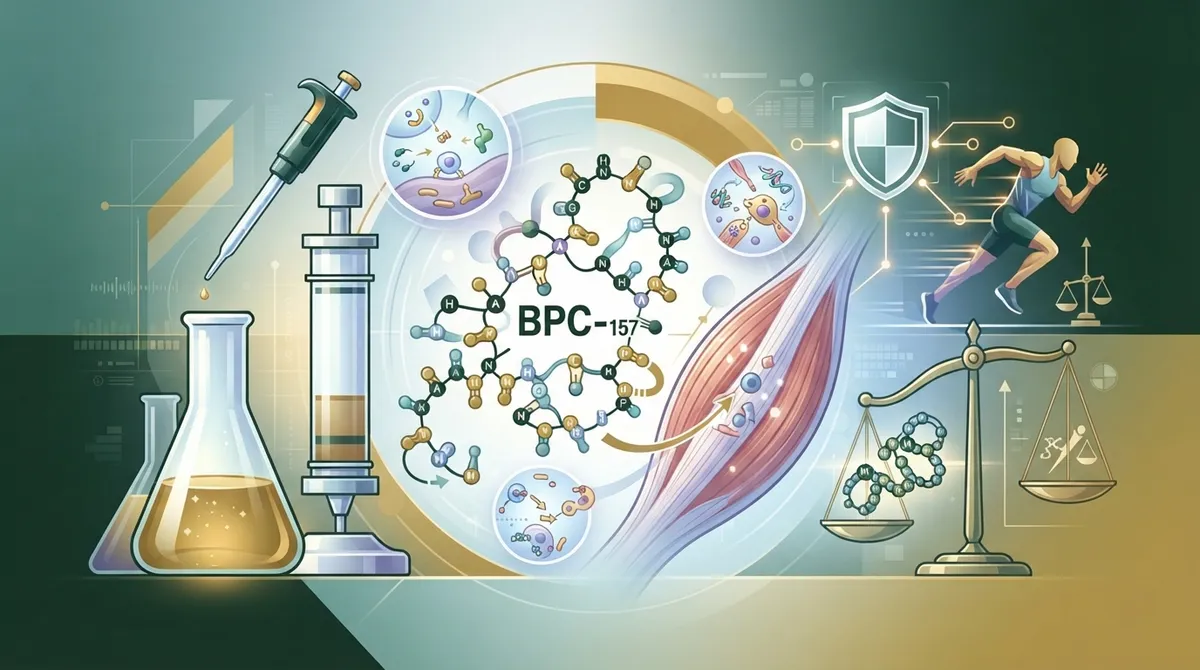
BPC-157 stands for Body Protection Compound-157. It’s a synthetic peptide that scientists have studied mostly in labs and animal models. Researchers have looked at its potential role in tissue repair, inflammation control, and gut healing. You can learn more about how peptides work in general in our guide on what peptides are and how they function in the body.
Here’s the honest truth: most of the exciting claims you hear about BPC-157 come from animal studies, not human trials. That doesn’t mean the compound is useless. It just means we don’t have the solid human evidence yet to say it definitely works the way people hope for athletic recovery.
Why Athletes Are Curious About It
It’s easy to see the appeal. Athletes deal with real, painful problems:
- Tendon and ligament strains that won’t heal fast enough
- Nagging muscle injuries that sideline training
- Joint pain from repetitive stress
- Slow recovery between intense training blocks
- Frustration with traditional treatment timelines
When you’re motivated to get back on the field, court, or track, any promise of faster healing sounds tempting. But wanting something to work and having proof it works are two very different things.

What Does the Actual Research Show?
Let’s look at the facts, because this is where things get important. According to the National Library of Medicine, most BPC-157 research involves animal or laboratory models, not controlled human trials involving athletes.
A 2025 systematic review focused on BPC-157 in orthopedic sports medicine found something eye-opening: there was no clinical human safety data included in the entire body of evidence reviewed. The available literature was mostly low-level, preclinical, or observational.
The Handful of Human Studies That Exist
Here’s a quick look at what limited human research actually exists:
| Study | Participants | What It Looked At | Key Limitation |
|---|---|---|---|
| Knee pain report | 12 patients | Intra-articular BPC-157 injection for knee pain | Small sample, no control group |
| 2025 IV pilot study | 2 healthy adults | Safety and pharmacokinetics of intravenous BPC-157 | Extremely small sample size |
| Interstitial cystitis study | Small group | Symptom response, not athletic recovery | Not related to sports injuries |
In the knee pain report, 7 out of 12 patients said their pain improved for more than six months. That sounds encouraging, but it’s far from proof. There was no comparison group, no blinding, and no way to rule out the placebo effect. This is not the kind of evidence that should guide decisions for competitive athletes.
Is BPC-157 FDA Approved?
No. This is one of the most important facts to understand. BPC-157 does not have FDA approval for any use in the United States. FDA briefing documents state there is insufficient clinical safety information to characterize its safety profile, whether in free base or acetate form.
There’s also no official United States Pharmacopeia or National Formulary monograph for this peptide. In plain terms, that means there’s no established quality standard that compounding pharmacies must follow for it. This creates real risk for consumers.
Why This Matters for Product Safety
Without FDA oversight or a monograph, products sold as BPC-157 can vary wildly in quality. Risks include:
- Inaccurate dosing that’s higher or lower than labeled
- Contamination during manufacturing
- Impurities that haven’t been screened out
- Poor sterility leading to infection risk
- Product degradation from improper storage
- Unknown interactions with other medications
This is exactly why working with a licensed, medically supervised provider matters so much. Our guide on FDA-approved versus compounded peptides breaks down these differences in more detail.
Is BPC-157 Legal for Competing Athletes?
This is the part that trips up a lot of people, and it’s critical. BPC-157 is banned by the World Anti-Doping Agency (WADA). It falls under the S0 category for Non-Approved Substances on the Prohibited List.
WADA added BPC-157 to this list back in 2022, and the 2026 Prohibited List continues to ban it. Here’s the part many athletes don’t realize:
The Ban Applies All The Time
- The prohibition covers in-competition periods.
- The prohibition also covers out-of-competition periods, including off-season training.
- There is no Therapeutic Use Exemption pathway that makes this substance acceptable for tested athletes.
- Using it during rehab, even with no intent to cheat, can still trigger a violation if you’re tested.
- Ignorance of the rule is not typically accepted as a valid defense in anti-doping cases.
According to USADA’s athlete advisory on BPC-157, this experimental peptide creates real risk for competitors, both from a health standpoint and a career standpoint. If you’re a tested athlete at any level, from high school to professional, this is not a peptide you want anywhere near your medicine cabinet.
Comparing BPC-157 to Evidence-Based Recovery Options
The good news? You don’t have to choose between doing nothing and taking on unnecessary risk. There are proven, safer paths to recovery that don’t put your eligibility or health on the line.
| Approach | Evidence Level | Anti-Doping Status | Best For |
|---|---|---|---|
| BPC-157 | Mostly animal/lab studies | Banned by WADA (S0) | Not recommended for tested athletes |
| Physical therapy | Strong clinical evidence | Fully allowed | Tendon, ligament, muscle recovery |
| Load management programs | Strong clinical evidence | Fully allowed | Preventing overuse injuries |
| Sports medicine evaluation | Gold-standard diagnostic approach | Fully allowed | Accurate injury diagnosis |
| Supervised peptide therapy for non-competitive goals | Growing clinical interest, provider-guided | Depends on substance and status | Non-tested individuals focused on wellness |
Steps for Smart, Safe Recovery
If you’re dealing with an injury, here’s a simple path forward that doesn’t involve unregulated substances:
- Get evaluated by a qualified sports medicine provider for an accurate diagnosis.
- Start a structured physical therapy program tailored to your specific injury.
- Prioritize sleep, since tissue repair happens largely during rest.
- Dial in your nutrition to support recovery, including adequate protein intake.
- Use load management to avoid re-injury while healing.
- Ask your provider about approved treatments appropriate for your condition.
- Verify current rules with your sport’s governing anti-doping organization before trying any new supplement or peptide.
What About Non-Competitive Wellness Goals?
Not everyone reading this is training for the Olympics. Many of our clients are busy professionals, weekend warriors, or wellness seekers who simply want to feel better, move better, and recover faster from everyday activity. If you’re not subject to drug testing, peptide therapy conversations look different.
At Allura Longevity, our licensed providers evaluate your full health picture, including blood work through LabCorp, before recommending any personalized treatment plan. We never guess. Every plan is built around your actual biology and goals. You can learn more about our process in how to start peptide therapy safely and see real results.
Peptides We Discuss With Clients
Depending on your goals and blood work, a licensed provider might discuss several options with you, including:
- Peptides supporting muscle recovery and tissue health
- Options for improving energy and reducing fatigue
- Peptides tied to metabolism and weight management goals
- Support for sleep quality and mental clarity
- Options related to skin health and healthy aging
If injury recovery is your main concern, our resource on BPC-157 peptide facts to know before you start offers a deeper look at what’s currently understood, including cautions worth reading closely.
Questions to Ask Before Starting Any Peptide Protocol
Whether you’re an athlete or simply someone focused on wellness, asking the right questions protects you. Consider these before starting anything new:
- Is this substance approved or regulated, and by whom?
- What does my governing sports organization say about this substance?
- Who is manufacturing this product, and what quality controls are in place?
- What does the human research actually show, not just animal studies?
- Is a licensed medical provider overseeing my treatment plan?
- What blood work or monitoring will track my progress and safety?
If a provider can’t answer these questions clearly, that’s a red flag. Transparency matters, especially with newer, less-studied compounds.
How Allura Longevity Approaches Peptide Therapy Responsibly
We built our clinic around one core idea: personalized care backed by real data, not guesswork or hype. Every client starts with an affordable virtual consultation and comprehensive blood work through LabCorp. From there, our board-certified Family Nurse Practitioner Ashley and her team design a customized six-month plan based on your actual health markers and goals.
We serve clients across Florida, Georgia, Texas, Connecticut, Indiana, Maryland, New York, and California, with everything delivered conveniently to your door. Whether your goals involve muscle recovery support, better sleep, or overall vitality, our licensed providers guide you every step of the way with ongoing monitoring and adjustments.
We also understand that trustworthy information matters more than trendy claims. Resources like what are peptides can help you build foundational knowledge before diving into any specific protocol.
The Bottom Line for Athletes
Here’s the honest summary: BPC-157 shows interesting results in animal studies, but human evidence remains thin, and safety data is lacking. It is not FDA approved, and it is banned by WADA at all times, in and out of competition. For any athlete subject to drug testing, this peptide carries real career risk alongside unclear health risk.
If recovery is your goal, evidence-based approaches like physical therapy, proper load management, and personalized wellness plans built on real lab data offer a safer, smarter path. Peptide therapy can absolutely play a role in your wellness journey, but it should always be guided by licensed professionals who put your safety first.
Ready to explore a personalized, medically supervised approach to recovery and vitality? Our team at Allura Longevity is here to help you build a plan around your unique health picture. Request a consultation today and let’s talk about what truly makes sense for your body and your goals. Spots are limited each month, so don’t wait to start your journey toward feeling your best.
FAQs
Q: Does BPC-157 actually help athletes recover from injuries?
A: The honest answer is, we don’t fully know yet. Most positive results come from animal and lab studies, not solid human trials, so we can’t confidently say it works the way people hope for tendon, ligament, or muscle recovery.
Q: Is BPC-157 legal for athletes during competition?
A: No, it’s not. BPC-157 is banned by WADA under the S0 category, and this ban applies at all times, including during off-season training. Tested athletes risk a violation even if they use it purely for rehab purposes.
Q: Can I get a Therapeutic Use Exemption for BPC-157?
A: Unfortunately, no. Since BPC-157 falls under Non-Approved Substances, there’s no exemption pathway available for competitive athletes, regardless of the reason for use.
Q: Is BPC-157 FDA approved in the United States?
A: It is not. The FDA has stated there’s insufficient safety information and no official quality monograph for this peptide, meaning it isn’t an approved medicine and quality can vary significantly between products.
Q: What are safer alternatives for athletes dealing with injuries?
A: Working with a qualified sports medicine provider, following a structured physical therapy plan, and managing training load are all backed by strong evidence. Personalized, medically supervised wellness plans can also support recovery in a safe, legal way.