
Key Takeaways
-
There is no high-quality clinical evidence that adding peptides to appropriately prescribed hormone therapy gives extra benefits beyond hormone therapy alone.
-
FDA-approved hormone products have the strongest evidence for hot flashes, night sweats, and bone protection after menopause; these benefits come from the hormone itself, not peptides.
-
Compounded bioidentical hormones are not FDA-approved for safety, effectiveness, or quality, and ACOG advises against routinely prescribing them when approved versions exist.
-
Growth-hormone-stimulating peptides may raise GH or IGF-1 levels, but research does not clearly show meaningful muscle gain or fat loss in healthy adults.
-
Estrogen can raise blood clot and stroke risk, and growth-hormone peptides can cause fluid retention and affect blood sugar, so baseline labs and follow-up monitoring matter.
-
A personalized, lab-guided plan with ongoing monitoring and dose adjustments is the most practical benefit of medically supervised care, and you should ask providers whether each product is FDA-approved or compounded.
If you’ve been curious about pairing bioidentical hormone replacement therapy with peptides, you’re in good company. More people than ever are asking, what are the benefits of BHRT with peptides, and whether the combo lives up to the buzz.
Here’s the friendly, honest answer: some of the potential benefits are real and well-studied on their own, while others are still being researched. Right now, there is no high-quality clinical evidence showing that adding peptides to hormone therapy gives you extra benefits beyond appropriately prescribed hormone therapy alone. That doesn’t mean the idea is off the table. It means a smart plan starts with clear facts.
In this guide, we’ll walk through 13 potential benefits people look for, what the science says about each one, and the risks to know about. We’ll also show you how a lab-guided, medically supervised plan can help you decide what fits your body and goals. Whether you’re a data-loving biohacker or a busy professional who wants answers fast, you’ll leave with a clear, realistic picture.
First, What Do BHRT and Peptide Therapy Actually Mean?
Before we get to the benefits, let’s clear up some confusing terms. People often use these words loosely, and that’s where mix-ups start.
BHRT: Two Very Different Things
“BHRT” can mean two things. One is FDA-approved hormone medicine that is chemically identical to the hormones your body makes. The other is custom-compounded bioidentical hormone therapy, which a pharmacy mixes for you. These are not the same. FDA-approved products have been reviewed for safety, effectiveness, and quality. Compounded versions have not. You can learn more in our guide to bioidentical hormone replacement.
Peptide Therapy: A Broad Label
Peptides are short chains of amino acids that act as messengers in your body. If you’re new to the topic, this overview of what are peptides is a helpful start. Some peptides are approved medicines for specific conditions. Many others sold through wellness clinics are unapproved or compounded. Each peptide has its own evidence and risks, so they should never be lumped together.
| Term | What It Means | Regulatory Status |
|---|---|---|
| FDA-approved BHRT | Hormones identical to human hormones, made as approved drugs | Evaluated for specific uses |
| Compounded BHRT | Custom-mixed hormones from a compounding pharmacy | Not FDA-approved for safety, effectiveness, or quality |
| Approved peptides | Peptide medicines cleared for a defined condition | Evaluated for specific uses |
| Wellness or compounded peptides | Peptides promoted for energy, recovery, or aging | Often unapproved; evidence varies by peptide |
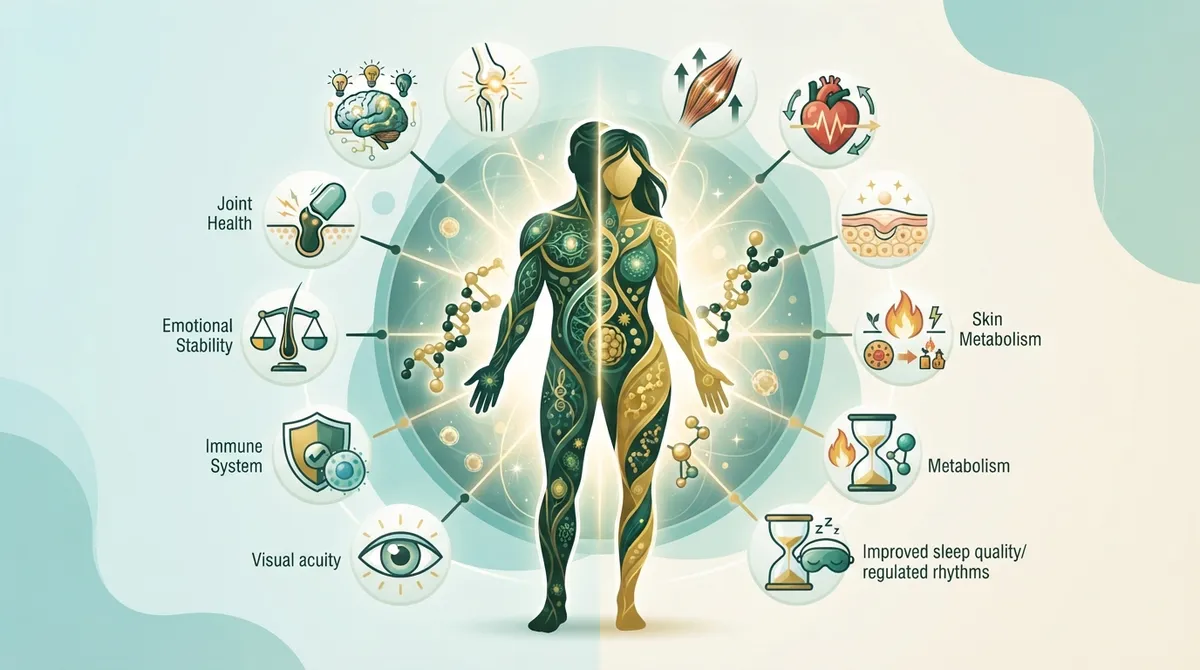
13 Potential Benefits of BHRT With Peptides
Below, we separate what’s well supported from what’s still emerging. Think of this list as a map of what people hope for, paired with a reality check.
1. Relief From Menopause Symptoms (Hormone Side)
This one belongs to the hormone therapy, not the peptides. Menopausal hormone therapy is well established for hot flashes and night sweats. If this is your main concern, approved hormone products are the evidence-based starting point. See our rundown of hormone therapy facts for women.
2. Support for Bone Health (Hormone Side)
Estrogen therapy has a known role in protecting bone density after menopause. Again, this benefit comes from the hormone itself. Peptides haven’t been shown to add to it. For details, read facts on hormone therapy and bone density.
3. Better Energy and Vitality
Low energy is one of the top reasons people explore this combo. Correcting a true hormone deficiency can help energy. Growth-hormone-stimulating peptides are often marketed for energy too, but evidence for meaningful gains in healthy adults is limited. Raising a lab marker is not the same as feeling better. Our post on peptides and fatigue digs in deeper.
4. Improved Sleep Quality
Hormone shifts, especially in perimenopause, can wreck sleep. Treating the underlying imbalance may help. Some people also try sleep-focused peptides, but proof is still thin. Good sleep habits and proven options like CBT-I remain strong tools.
5. A More Stable Mood
Hormone swings can affect mood and focus. Many people report feeling steadier once an imbalance is treated. Mood changes can also have other causes, so a clinician should rule those out. Here’s more on hormone therapy and mood.
6. Possible Libido Support
Low desire can come from hormone changes, stress, medications, or relationship factors. Testosterone, estrogen, and certain approved peptide medicines have a role for specific, diagnosed concerns. Claims that any combo “boosts libido” for everyone are not proven.
7. Body Composition Support
Hormones help shape muscle and fat. Growth-hormone secretagogues like CJC-1295 and ipamorelin can raise growth hormone or IGF-1. But research does not clearly show they build meaningful muscle or reduce fat in healthy aging adults. If body composition is your goal, nutrition, strength training, and sleep still do the heavy lifting. See how peptides affect your fat-to-muscle ratio.
8. Skin and Collagen Support
Estrogen influences skin thickness and hydration. Some peptides are studied for skin, mostly in topical form. The research is promising for certain ingredients but varies a lot. Check our take on peptides and crepey skin.
9. Recovery and Repair
Athletes and active adults often ask about peptides for recovery. Some animal and early studies look interesting, but human evidence is limited for many of them. We cover this in things peptides really do for muscle recovery.
10. Personalized, Lab-Guided Care
This may be the most real benefit of all. A good plan begins with symptoms, history, and blood work, not guesswork. Personalization helps you target what’s actually off. Learn how to build a bloodwork-based plan.
11. Convenience Through Telehealth
Busy schedule? Telehealth lets you meet a licensed provider, get labs through a local draw, and have treatment shipped to your door. That’s a practical win, even if it isn’t a biological one.
12. Ongoing Monitoring and Adjustments
Hormones and peptides aren’t set-and-forget. Regular check-ins let a provider adjust doses, track side effects, and stop what isn’t working. This safety net is a real benefit of medically supervised care.
13. A Clear, Whole-Picture Strategy
The best part of a combined approach may be the structure. When one clinician looks at your hormones, lifestyle, labs, and goals together, you avoid piecemeal fixes. That’s a plus when you’re seeking BHRT with adjunct peptide therapy.
Benefits at a Glance: Evidence Check
| Potential Benefit | Main Driver | Evidence Strength |
|---|---|---|
| Hot flash relief | Hormone therapy | Strong |
| Bone health | Hormone therapy | Strong |
| Energy and vitality | Hormone therapy; peptides unclear | Mixed |
| Sleep and mood | Treating the imbalance | Moderate for hormones; limited for peptides |
| Body composition | Lifestyle plus hormones | Limited for peptides |
| Added benefit of combining both | Combination | Not established |
What You Should Know About Risks
A friendly guide is an honest guide, so let’s talk risks. Hormone therapy has risks that depend on the hormone, dose, route, duration, and your own health. Estrogen can raise the risk of blood clots and stroke in some people. Unopposed estrogen can raise endometrial cancer risk if you have a uterus.
Growth-hormone stimulation can cause fluid retention and affect blood sugar. Long-term safety is still uncertain. For a closer look, see peptide therapy side effects and how to use CJC-1295 safely.
Compounded Hormones Deserve Extra Caution
The FDA and the National Academies report there isn’t enough rigorous evidence to show compounded bioidentical hormones are safer or more effective than approved products. ACOG advises against routinely prescribing compounded menopausal hormone therapy when approved versions are available. One 2022 meta-analysis found a higher risk of androgenic effects with compounded DHEA versus placebo (relative risk 3.87). Also, the longest trial reviewed lasted just one year, so long-term safety is unclear.
Compounding can also bring concerns like inconsistent dosing, impurities, or lack of sterility. That’s why choosing a provider who explains the source of every product is so important.
Who May Want to Be Extra Careful
- People with a history of blood clots, stroke, or certain cancers
- Anyone with a uterus who is considering estrogen without progesterone
- People with diabetes or blood sugar concerns considering growth-hormone peptides
- Anyone who is pregnant, trying to conceive, or breastfeeding
- People taking multiple medications that may interact
A licensed provider can review your history before anything starts. Our guide on spotting contraindications explains what they look for.
How a Safe, Personalized Plan Usually Works
Here’s a simple path many patients follow with a medically supervised telehealth clinic:
- Start with a consultation. Share your symptoms, history, and goals with a licensed provider.
- Get lab work. Blood tests show where your hormones and key markers stand. Treatment should follow a clear indication, not a generic hormone panel.
- Build a custom plan. Your provider picks therapies that fit your labs and goals, favoring approved options when they exist.
- Begin treatment at home. Medications are shipped to you with clear instructions.
- Monitor and adjust. Follow-ups track symptoms and labs, and your plan changes as needed.
Want a closer look at timelines? Try a realistic peptide therapy timeline. Curious about the lab side? Read what to test and why.
Questions to Ask Any Provider
- Is each product FDA-approved, or is it compounded?
- What evidence supports this therapy for my specific goal?
- What labs will you run, and how often will we recheck?
- What side effects should I watch for?
- How will we know if it’s working, and when would we stop?
More prompts are in our list of peptide consultation questions.
The Bottom Line
So, what are the benefits of BHRT with peptides? The honest answer is that hormone therapy has proven benefits for the right people, and peptides may offer targeted support for certain goals. But the claim that combining them gives you extra, proven results is not yet backed by strong evidence. The real wins come from a personalized, lab-guided, carefully monitored plan that uses approved treatments where they exist.
That’s the approach we take at Allura Longevity, a telehealth clinic offering personalized, medically supervised peptide therapy. Clients start with a $50 virtual consultation, complete LabCorp blood work, and receive a customized six-month plan delivered to their home. Care is led by Ashley, a board-certified Family Nurse Practitioner, and is available in Florida, Georgia, Texas, Connecticut, Indiana, Maryland, New York, and California. Spots for new clients are limited each month. Ready to find out what’s right for you? Request a consultation or call (813) 510-6277.
FAQs
Q: What is the difference between FDA-approved BHRT and compounded bioidentical hormone therapy?
A: FDA-approved BHRT products are hormone medicines that have been reviewed for specific uses, safety, and quality. Compounded versions are custom-mixed by a pharmacy and are not FDA-approved. ACOG advises against routinely using compounded menopausal hormone therapy when approved options are available.
Q: Is there proof that adding peptides to BHRT works better than BHRT alone?
A: Not yet! There’s no strong clinical evidence showing that peptides add extra benefit on top of appropriately prescribed hormone therapy. Some peptides may help specific goals, but each one has to be judged on its own evidence and risks.
Q: Can peptides be safely combined with hormone replacement therapy?
A: It can be done under medical supervision, but safety depends on the exact hormone, the specific peptide, your dose, and your health history. Growth-hormone peptides can cause fluid retention and affect blood sugar, so lab work and follow-ups matter.
Q: What tests should I have before starting hormone or peptide therapy?
A: A licensed provider will usually review your symptoms and history and order blood work to see where your hormones and key health markers stand. Treatment should be based on a clear medical reason and ongoing monitoring, not just a broad wellness panel.
Q: Who should avoid hormone therapy or peptide treatments?
A: People with a history of blood clots, stroke, or certain cancers, as well as those who are pregnant or breastfeeding, may need to avoid or limit these treatments. Your provider can review your history and talk through safer, evidence-based alternatives.