

Key Takeaways
-
Most evidence for muscle recovery peptides like BPC-157 comes from animal studies, not human trials; a 2025 systematic review found only 1 clinical study out of 544 screened articles met inclusion criteria.
-
Neither BPC-157 nor TB-500 is FDA-approved for human use, and unapproved products from online sellers may have purity, sterility, potency, and contamination issues requiring licensed medical oversight.
-
BPC-157, TB-500, CJC-1295, ipamorelin, and GHRP-2/6 are prohibited substances under WADA's 2026 anti-doping list, so competitive athletes must get sport-specific guidance before use.
-
Growth-hormone-related recovery peptides may affect blood sugar, insulin sensitivity, cardiovascular function, hormone balance, and fluid retention, requiring ongoing lab monitoring rather than one-time use.
-
A responsible approach requires comprehensive baseline bloodwork, direct evidence discussions with a licensed provider, clear dosing sourcing verification, and regular monitoring every few months.
-
Recovery alternatives worth discussing with providers include anti-inflammatory lifestyle strategies, sleep optimization, stress management, and regenerative medicine approaches beyond experimental peptides.
Sore muscles after a hard workout. A nagging tendon strain that just won’t quit. If you’ve spent any time in wellness circles lately, you’ve probably heard whispers about muscle recovery peptides promising faster healing and less downtime. It’s an exciting idea, and we totally get the appeal, especially if you’re someone who hates sitting on the sidelines. But before you jump in, let’s have an honest, friendly chat about what these peptides actually are, what the science really shows, and how to approach this topic like a smart, informed grown-up.
At Allura Longevity, we believe you deserve real answers, not hype. This guide walks you through the facts on muscle recovery peptides step by step, so you can make a confident, safe decision with the help of a licensed medical provider. Whether you’re a weekend warrior, a busy professional squeezing in gym time, or someone simply curious about longevity science, this one’s for you.

What Are Muscle Recovery Peptides, Really?
Here’s the first thing to know: “muscle recovery peptides” isn’t an official medical term. It’s more of a marketing phrase used to describe a group of experimental peptides that some people use for muscle, tendon, and soft-tissue support. Think of it as an umbrella term rather than a specific, approved treatment category.
In the peptide therapy world, this term usually points to a few well-known names, including BPC-157, TB-500, and growth-hormone-related peptides like CJC-1295, ipamorelin, GHRP-2, and GHRP-6. If you want a deeper primer on how peptides work in general, our article on what are peptides in 2026 is a great place to start.
Why People Are Curious About Them
It makes sense why these peptides have caught people’s attention. Recovery matters to almost everyone:
- Athletes wanting to bounce back faster between training sessions
- Aging adults hoping to protect joints and mobility
- Biohackers who love experimenting with new protocols
- Busy professionals with little time to nurse an injury
- Wellness seekers looking to level up their self-care routine
That curiosity is valid. But curiosity should always come paired with careful, evidence-based thinking, which is exactly what we’re offering here.
The Science Behind BPC-157 and TB-500
Let’s break down the two most talked-about names in this space, one at a time.
1. BPC-157: The Lab Darling With Limited Human Data
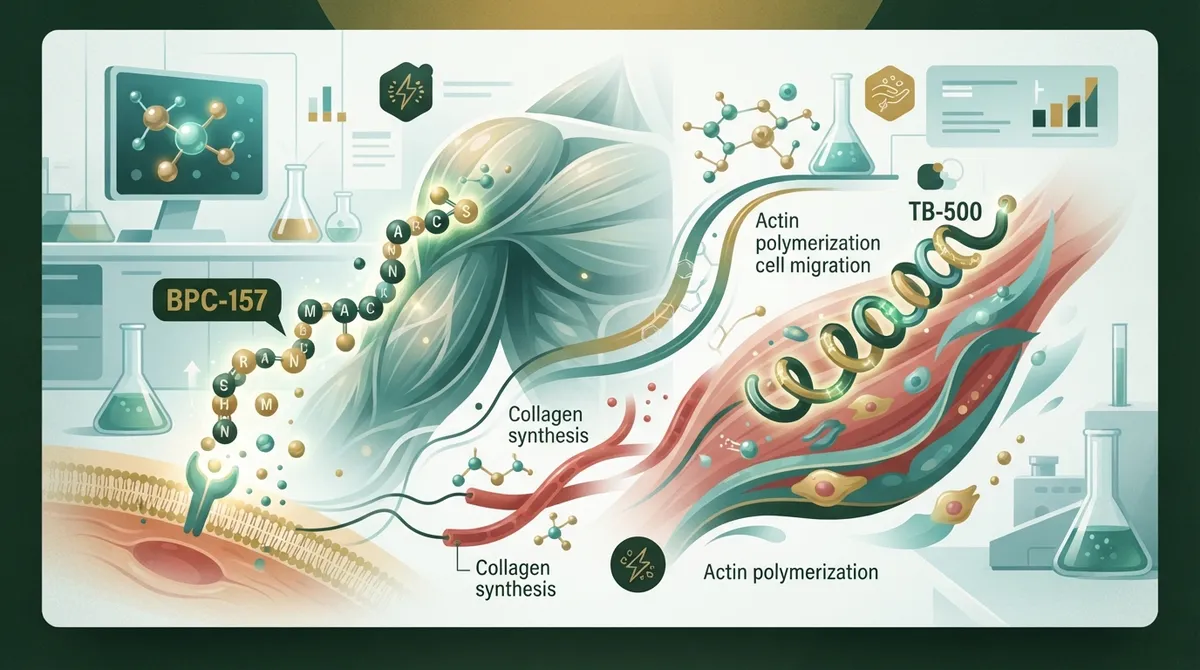
BPC-157 is a synthetic peptide made of 15 amino acids. Researchers believe it may influence nitric-oxide pathways, blood vessel growth, and collagen organization. In plain English, scientists think it might help tissue repair itself more efficiently.
Sounds promising, right? Here’s the catch: most of this evidence comes from animal studies, not human trials. A 2025 systematic review looking at BPC-157 in orthopedic and sports medicine screened 544 articles. Only one clinical study met the criteria for inclusion, while 35 were animal or lab-based studies. That’s a pretty big gap between hype and hard proof.
Most of the existing literature falls into Level IV or Level V evidence. That means we’re mostly looking at case reports and preclinical research, not the gold-standard randomized controlled trials doctors rely on to confirm a treatment truly works.
2. TB-500: Often Confused With Thymosin Beta-4
TB-500 is marketed as a synthetic fragment related to a naturally occurring protein called thymosin beta-4. But here’s an important distinction: research on full-length thymosin beta-4 or on animals doesn’t automatically prove TB-500 works the same way in people.
As of 2026, there are still no completed, published human randomized controlled trials specifically testing TB-500 for muscle or tendon recovery. If you’re curious to learn more about this specific peptide, check out our detailed breakdown in 13 Facts About TB-500 Peptide You Need in 2026.
Comparing Common Muscle Recovery Peptides
To make things easier to digest, here’s a simple comparison table of the peptides most often discussed for recovery support.
| Peptide | Primary Use Discussed | Human Evidence Level | FDA Status |
|---|---|---|---|
| BPC-157 | Tendon, ligament, muscle repair | Very limited (mostly preclinical) | Not approved; Category 2 bulk substance |
| TB-500 | Soft tissue healing | No published human RCTs | Not approved |
| CJC-1295 | Growth hormone support | Some GH-related research, not recovery-specific | Not FDA-approved as drug product |
| Ipamorelin | Growth hormone secretagogue | Limited, mostly indirect | Not FDA-approved as drug product |
| GHRP-2 / GHRP-6 | Growth hormone release | Limited clinical data | Not FDA-approved as drug product |
This table isn’t meant to scare you away from peptide therapy altogether. It’s meant to give you clarity so you can have a real, informed conversation with a licensed provider, like the team behind How to Start Peptide Therapy Safely and See Real Results.
How to Approach Muscle Recovery Peptides the Smart Way
If you’re still interested in exploring this category, here’s a step-by-step approach we recommend.
Step-by-Step Guide to Evaluating Recovery Peptides
- Get a proper medical consultation before considering any peptide protocol.
- Request comprehensive blood work to understand your baseline health.
- Ask your provider directly about the evidence level for any peptide discussed.
- Clarify sourcing and quality controls for any product you’re considering.
- Discuss realistic expectations, not marketing promises.
- Set up a monitoring schedule so your provider can track your progress and safety.
- Reassess your plan every few months based on your results and labs.
This is precisely the kind of structured, careful process we follow at Allura Longevity. Clients start with an affordable virtual consultation, complete labs through LabCorp, and receive a personalized six-month plan built around their actual health data, not guesswork.
Safety, Regulation, and What You Need to Know
Let’s talk about the less glamorous but incredibly important part: safety and legality.
FDA Status and Regulatory Concerns
Neither BPC-157 nor TB-500 is FDA-approved for any human therapeutic use. In fact, the FDA classified BPC-157 as a Category 2 bulk drug substance in 2023, which reflects real safety and compounding concerns rather than any kind of approval.
This matters because unapproved products sold online or through unregulated sellers may have serious quality issues, including:
- Uncertain purity or identity of the actual compound
- Sterility problems that increase infection risk
- Inconsistent potency from batch to batch
- Possible contaminants not listed on the label
- Inaccurate dosing instructions
This is exactly why working with a licensed provider matters so much. According to the National Library of Medicine, peptide-based compounds require careful clinical oversight due to variability in formulation and patient response.
Potential Side Effects to Discuss With Your Provider
Because clinical data is limited, the full side-effect profile of these peptides isn’t completely mapped out. Still, growth-hormone-related peptides in particular may affect:
- Blood sugar and insulin sensitivity
- Cardiovascular function over time
- Hormone balance, including cortisol and IGF-1 levels
- Fluid retention or joint discomfort
This is why ongoing monitoring, not a one-time purchase, is the responsible way to approach any peptide protocol. If you’re new to this entire category, our guide on 9 BPC-157 Peptide Facts to Know Before You Start covers even more detail.
What About Athletes and Anti-Doping Rules?
If you compete in any sport governed by anti-doping rules, this section is extra important for you.
Prohibited Substances You Should Know
According to the WADA 2026 prohibited list, multiple non-approved peptides and growth-hormone-related substances are banned for tested athletes. This includes:
- BPC-157, treated as prohibited under the non-approved-substance framework
- CJC-1295
- Ipamorelin
- GHRP-2 and GHRP-6
- Thymosin-related compounds, which may include TB-500
If you’re a competitive athlete, always get sport-specific guidance before using any recovery peptide. A positive test can affect your career, so this step simply isn’t optional. Our article on 11 Best Peptides for Athletes Worth Knowing in 2026 goes into more depth on this exact topic.
Setting Realistic Expectations
We know it’s tempting to want a magic solution for sore muscles or nagging injuries. But honest expectations lead to better decisions and less disappointment down the road.
What the Evidence Actually Supports
- Animal studies suggest possible healing benefits for tendons and muscles
- Mechanistic theories are promising but not yet proven in people
- Human clinical trials remain scarce and mostly low-quality evidence
- No peptide in this category is currently FDA-approved for recovery use
This doesn’t mean peptide therapy as a whole lacks value. Many peptides do have stronger evidence bases for other goals, like metabolic health, energy, or hormone support. If muscle building is more your focus, take a look at 14 Peptides for Muscle Gain Worth Knowing (2026) for a broader picture.
Why Working With a Licensed Provider Matters So Much
We can’t stress this enough, friends: this is not a DIY situation. Peptide therapy, especially in this experimental category, needs careful medical oversight.
What Good Medical Oversight Looks Like
- A thorough intake and health history review
- Comprehensive blood work before starting anything
- A personalized plan based on your actual biology, not a one-size-fits-all template
- Clear informed consent about evidence limitations and risks
- Regular check-ins and lab monitoring throughout treatment
- Honest conversations about what’s realistic versus what’s marketing hype
At Allura Longevity, care is led by Ashley, a board-certified Family Nurse Practitioner, alongside a team of licensed medical providers. Every plan starts with a $50 virtual consultation and real lab work through LabCorp, so decisions are based on your body, not guesswork. We’re proud to offer telehealth access nationwide, with licensing in Florida, Georgia, Texas, Connecticut, Indiana, Maryland, New York, and California.
Injury Recovery Support Options Worth Discussing
If you’re dealing with a nagging injury, there are several paths worth exploring with your provider, beyond just the peptides mentioned above.
- Comprehensive blood work to identify hormonal or nutritional gaps
- Anti-inflammatory lifestyle strategies alongside any peptide discussion
- Sleep and stress optimization, since both affect healing speed
- Regenerative medicine approaches your provider can walk you through
For a wider look at regenerative options, our article What Are Regenerative Medicine Peptides, and Do They Work? is worth a read.
Bringing It All Together
Muscle recovery peptides are a fascinating, fast-moving corner of wellness science. There’s real promise in the lab, but we’re just not there yet when it comes to solid human proof. That gap between animal studies and confirmed patient outcomes is exactly why medical guidance, informed consent, and quality sourcing matter so much.
You deserve a partner who tells you the truth, celebrates your goals, and builds a plan around real science and real labs, not trends. That’s the whole philosophy behind Allura Longevity, and we’d genuinely love to help you explore what’s right for your body. Spots fill up each month, so if you’re ready to talk through your options with a licensed provider, go ahead and request a consultation today. You’ve got this, and we’re cheering you on every step of the way.
FAQs
Q: What are muscle recovery peptides and how are they supposed to work?
A: Muscle recovery peptides is a marketing term for experimental compounds like BPC-157, TB-500, and certain growth-hormone-related peptides. They’re thought to support tissue healing through mechanisms like collagen organization and blood vessel growth, though most evidence comes from lab and animal studies rather than confirmed human results.
Q: Does BPC-157 actually speed up muscle, tendon, or ligament recovery in humans?
A: The honest answer is we don’t fully know yet. A 2025 systematic review found only one clinical study met inclusion criteria out of 544 screened, meaning most evidence is still preclinical, not proven in people.
Q: Are BPC-157 and TB-500 FDA-approved or legal to use in the United States?
A: Neither peptide is FDA-approved for human therapeutic use. BPC-157 was classified as a Category 2 bulk drug substance in 2023, reflecting safety and regulatory concerns rather than approval, so working with a licensed provider is essential.
Q: Are BPC-157, TB-500, CJC-1295, or ipamorelin prohibited for tested athletes?
A: Yes, according to WADA’s 2026 prohibited list, these substances generally fall under prohibited categories for competitive athletes. If you compete under anti-doping rules, always get sport-specific advice before considering any recovery peptide.
Q: Are peptide injections safe when obtained from a compounding clinic or online seller?
A: Safety really depends on where you get them and who’s guiding your care. Products from unregulated online sellers can have quality, purity, and dosing issues, which is why working with a licensed telehealth provider who orders proper labs matters so much.





