

Key Takeaways
-
Most popular recovery peptides, including BPC-157 and TB-500, lack strong human clinical trial evidence; animal and lab results do not reliably predict benefits in people.
-
A 2026 systematic review found only three small human BPC-157 studies totaling 30 participants, with evidence rated very low certainty, so it cannot yet prove faster injury healing.
-
TB-500 is a sold-online fragment, not the same as thymosin beta-4, which most research studies, so those results should not be assumed to apply to TB-500.
-
Products sold 'for research use only' carry unknown identity, purity, and dose, making self-injection risky; FDA has flagged compounded BPC-157 for impurities and immune reaction concerns.
-
Growth hormone-releasing peptides may cause fluid retention and blood sugar changes, and athletes should note BPC-157 and TB-500 are reported as prohibited by WADA.
-
Start with a proper diagnosis, evidence-based care, sleep, protein, hydration, and lab testing, since low hormones or nutrient gaps can slow recovery more than any peptide.
You push hard at the gym, tweak a shoulder, or simply feel like your body takes longer to bounce back than it used to. So you do what most of us do. You search online for a faster fix, and peptides keep popping up. But how do peptides support recovery, really? And how much of the buzz is backed by science?
Here is the friendly, honest answer. Peptides are short chains of amino acids that act as signaling molecules in your body. Some may influence inflammation, tissue repair, or growth hormone release. That sounds exciting. But for many popular recovery peptides, the proof in humans is still thin.
In this guide, we will walk through what peptides do, what the research says in 2026, and where the risks hide. We will also cover how a licensed clinician can help you decide if peptide therapy fits your goals. Whether you are a busy professional, a biohacker, or simply someone who wants to feel strong again, you deserve clear facts. Let’s dive in.
What Are Peptides, and Why Do People Link Them to Recovery?
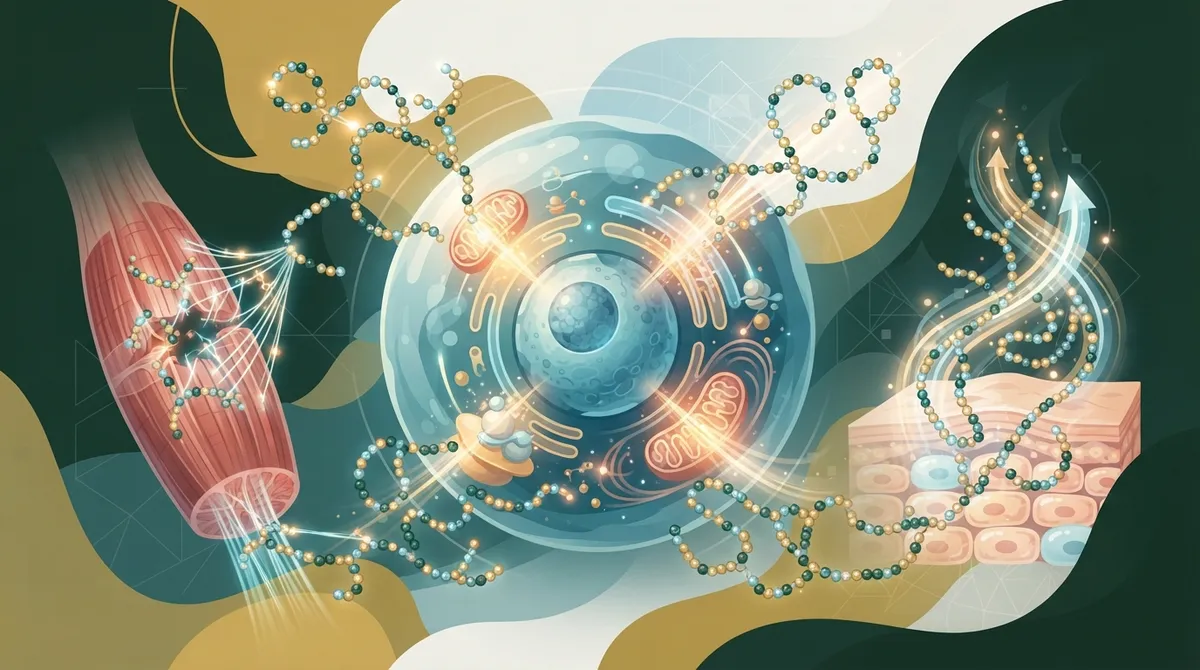
Peptides are small chains of amino acids. Think of them as tiny text messages your cells send to each other. Your body already makes thousands of them. Some act as hormones. Others help cells talk about healing, hunger, or sleep. For a simple overview, see what are peptides from WebMD.
In recovery talk, peptides are often linked to four ideas:
- Inflammation control: Some peptides may change how your body handles swelling and irritation.
- Blood vessel growth: Better blood flow may help tissues get nutrients.
- Collagen production: Collagen is the building block of tendons, ligaments, and skin.
- Growth hormone signaling: Some peptides nudge your body to release more of its own growth hormone.
Here is the key point. Effects depend on the specific peptide. You cannot say “peptides heal injuries” as one blanket claim. Each one works differently, and each has its own level of evidence. To go deeper on the basics, check out our guide on how peptide therapy mechanisms work in your body.
How Do Peptides Support Recovery in Theory?
Let’s separate the proposed mechanisms from proven results. A mechanism is the “how it might work” story. A clinical outcome is proof that it actually worked in people.
The Signaling Story
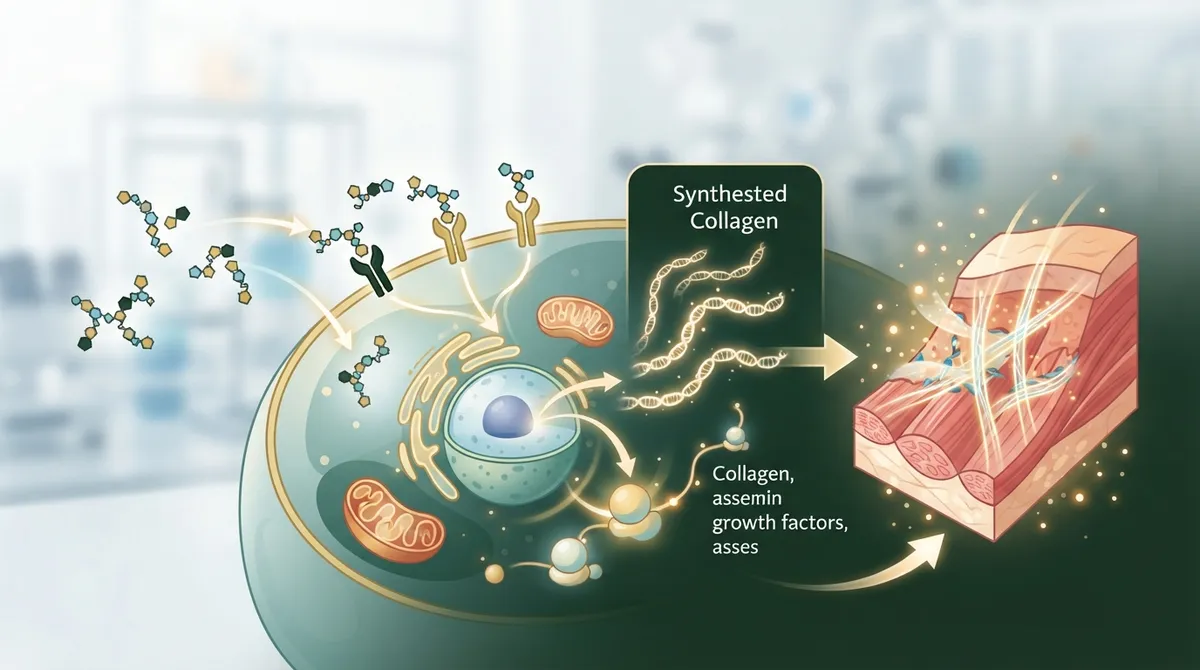
When you strain a muscle or irritate a tendon, your body kicks off a repair process. It sends signals that call in immune cells, build new tissue, and calm things down once the job is done. Certain peptides may nudge parts of this process. That is the theory behind most recovery peptides.
The Growth Hormone Story
Growth hormone helps with tissue repair, body composition, and sleep quality. Some peptides, such as CJC-1295 and ipamorelin, are designed to prompt your pituitary gland to release more growth hormone. Learn more in our post on ipamorelin peptide therapy benefits, dosing, and safety.
Why Theory Is Not the Same as Proof
Many of these ideas come from lab and animal studies. Animal results do not always carry over to people. That gap is the biggest thing to understand before you spend money or put anything in your body.
What the Research Says About Popular Recovery Peptides
Let’s look at the most talked-about options and what the evidence shows today.
| Peptide | Marketed For | Evidence in Humans | Key Concern |
|---|---|---|---|
| BPC-157 | Tendon, ligament, muscle, gut recovery | Very limited; mostly preclinical | Limited safety data; FDA quality concerns |
| TB-500 | Tissue repair | Insufficient for the fragment sold online | Often confused with thymosin beta-4 |
| Growth hormone-releasing peptides | Muscle recovery, body composition | No robust trials proving injury healing | Fluid retention, glucose changes |
BPC-157: Big Buzz, Small Human Data
BPC-157 is marketed for tendon, ligament, muscle, and gut healing. Animal studies look interesting. Human proof is another story. A 2026 systematic review found only three small human studies with 30 participants total. One was a retrospective knee-pain study with 16 people. Another was an interstitial cystitis pilot with 12 people. The third was an intravenous safety pilot with just 2 people.
The reviewers rated the certainty of the evidence as very low because of bias, indirectness, and imprecision. In plain words, these studies are too small and too weak to say BPC-157 speeds up injury recovery. You can read more in our breakdown of what the research really shows about BPC-157 safety.
TB-500: Not the Same as Thymosin Beta-4
This one trips up a lot of people. Much of the research is on thymosin beta-4, the full-length peptide your body makes naturally. TB-500 is a fragment sold online. Human evidence for TB-500 itself is not enough to prove recovery benefits or safety. If you want a side-by-side look, read BPC-157 vs. TB-500.
Growth Hormone-Releasing Peptides
These are promoted for muscle recovery. But strong trials showing they heal injuries or improve recovery in patients are missing. Also, long-term excess growth hormone signaling can bring risks such as fluid retention and impaired glucose control. That is one reason lab monitoring matters so much. See our guide on growth hormone peptides and how they work.
The Honest Truth: What We Know and Don’t Know
Let’s keep it simple. Here is where things stand in 2026.
- Peptides are real signaling molecules. Your body uses them every day.
- Some peptides have strong evidence for specific uses. Examples include certain approved drugs for diabetes and weight management.
- Most recovery peptides lack strong human trials. That includes the best-known names.
- Animal data is not a green light. It is a reason to study more, not a promise of results.
- Quality and sourcing matter. A good peptide from a bad source can still be a bad product.
Being honest about this does not mean peptides have no place in a wellness plan. It means you should work with a licensed provider who treats them as one tool, not a magic wand. For more on this, see 8 things peptides really do for muscle recovery.
Regulatory, Safety, and Anti-Doping Concerns
This is the part many online sellers skip. Let’s cover it clearly.
FDA Approval vs. Compounding vs. Evidence
These are three different things. An FDA-approved drug has passed rigorous review for a specific use. A compounded product is made by a pharmacy and is not an FDA-approved drug. And clinical evidence is the proof that something works. A discussion about compounding does not prove a peptide is safe or effective for recovery.
The FDA has raised concerns about compounded BPC-157. These include limited human safety information, impurities, peptide aggregation, and possible immune reactions. Learn how to sort the types in our post on FDA-approved vs. compounded peptides.
The Risk of Research-Labeled Products
Products sold online “for research use only” are a big red flag. You cannot be sure about identity, purity, dose, storage, or contamination. Injecting an unknown product is risky. Please do not self-inject items sold as research chemicals.
Anti-Doping Rules for Athletes
If you compete, check current rules before you try anything. Reports indicate BPC-157 is prohibited by WADA, and TB-500 is among prohibited substances. Read more in is BPC-157 safe and legal for athletes to use.
Risks to Weigh Before You Start
Every treatment has trade-offs. Here are common points to talk through with a clinician:
- Unknown long-term safety: Many recovery peptides lack long-term human data.
- Product quality: Impurities and contamination are real risks from unregulated sources.
- Injection site reactions: Redness, swelling, or irritation can happen with any injectable.
- Hormone effects: Growth hormone-related peptides may affect fluid balance and blood sugar.
- Masking a real injury: Feeling better does not mean the tissue has healed.
For a fuller picture, check out how to weigh the risks of peptide therapy safely.
What Actually Supports Recovery? Evidence-Based Basics
Before any peptide, the foundation matters most. If you are dealing with an injury, get a proper diagnosis from a licensed clinician. Pain can come from a strain, a tear, a nerve issue, or something else entirely. The right plan depends on the cause.
Here is a simple order of operations:
- Get a diagnosis. Know what you are treating.
- Follow evidence-based care. This may include rest, physical therapy, guided loading, and medical treatment.
- Fix the basics. Prioritize sleep, protein, hydration, and stress.
- Check your labs. Low hormones or nutrient gaps can slow recovery.
- Then discuss options. Talk with a provider about whether a peptide plan makes sense.
Sleep alone can change how fast you heal. If rest is a struggle, see which peptides actually help you sleep better. And if your energy has dipped, our guide on how to increase energy after 40 may help.
How a Clinician-Led Plan Can Help
Here is where personalized care makes a real difference. Good peptide therapy does not start with a vial. It starts with data. A licensed provider reviews your history, goals, and blood work. Then they decide what is safe and sensible for you, and what is not.
That approach is built into how Allura Longevity works. Clients begin with a virtual consultation, complete blood work through LabCorp, and receive a customized treatment plan with ongoing monitoring by licensed providers. Everything is delivered to your home, which suits busy schedules. You can learn how this fits together in 15 ways a peptide therapy plan gets personalized.
Why Lab Work Comes First
Your labs show whether low testosterone, thyroid issues, or other gaps are slowing you down. Sometimes fixing those does more for recovery than any peptide. See lab work for peptide therapy: what to test and why.
Setting Realistic Expectations
Peptide therapy is not an overnight fix. Ask any provider for a realistic timeline and be wary of anyone who promises dramatic results. Our guide on a realistic peptide therapy timeline sets honest expectations.
Questions to Ask Before You Try a Recovery Peptide
Bring this checklist to your first visit. It keeps the conversation focused and safe.
- What is the evidence in humans for this specific peptide and my specific issue?
- Is this product an FDA-approved drug or a compounded preparation?
- Where is it made, and how is purity verified?
- What side effects should I watch for?
- How will you monitor my labs and progress?
- Are there any anti-doping concerns if I compete?
Not sure what else to ask? Here are 15 peptide consultation questions to ask in 2026.
Final Thoughts: A Smart, Safe Path to Better Recovery
So, how do peptides support recovery? In theory, some may influence inflammation, tissue repair, and growth hormone signaling. In practice, strong human proof is missing for the most popular recovery peptides, and product quality can be a real problem. That is not meant to scare you. It is meant to help you choose wisely.
The best path is simple. Get a proper diagnosis, build strong habits, check your labs, and work with a licensed clinician who is honest about what is known and unknown. Personalized, medically supervised care beats guesswork every time.
If you are curious whether a personalized plan could fit your goals, we would love to chat. Request a consultation with Allura Longevity, or call (813) 510-6277. Telehealth care is available in Florida, Georgia, Texas, Connecticut, Indiana, Maryland, New York, and California, and spots for new clients are limited each month. For extra reading, the National Library of Medicine is a helpful place to explore peptide research.
FAQs
Q: Do peptides actually help injuries heal faster?
A: Not proven yet. Some peptides show promise in lab and animal studies, but strong human evidence for faster injury healing is missing for the popular ones. A licensed clinician can help you weigh options safely.
Q: Is TB-500 the same as thymosin beta-4?
A: No, and this mix-up is super common. Thymosin beta-4 is the full-length peptide your body makes naturally, while TB-500 is a fragment sold online. Most research is on thymosin beta-4, so those results do not automatically apply to TB-500.
Q: Are recovery peptides FDA-approved?
A: Popular recovery peptides like BPC-157 and TB-500 are not FDA-approved drugs for injury recovery. Compounded products are also not FDA-approved, and compounding status does not prove a peptide is safe or effective.
Q: Are BPC-157 and TB-500 allowed in competitive sports?
A: Reports indicate BPC-157 is prohibited by WADA and TB-500 is among prohibited substances. If you compete, always check the latest anti-doping rules before trying any peptide.
Q: What are the risks of using injectable peptides for recovery?
A: Risks include limited human safety data, impurities, contamination, injection site reactions, and hormone-related effects like fluid retention. Using research-labeled products makes these risks even bigger, so medical supervision really matters.





