
Key Takeaways
-
Each peptide has a unique mechanism targeting specific receptors, enzymes, or proteins—there is no single way peptide therapy works, so evaluate each peptide individually rather than treating all peptides as equivalent.
-
Many peptides promoted for wellness like BPC-157, CJC-1295, and ipamorelin are not FDA-approved for those uses; the FDA has raised concerns about limited safety data and product quality, so prioritize FDA-approved peptides with defined labels.
-
Peptides are often injected rather than taken orally because digestive enzymes break them down; delivery method significantly impacts how long a peptide works and dosing frequency, so understand the delivery route for your chosen peptide.
-
A plausible mechanism on paper does not equal proof of safety or effectiveness; always check for controlled human clinical trials and ask your provider about side effects, product quality, and regulatory approval for your specific goal.
-
Personalized peptide therapy requires matching the peptide's mechanism to your individual labs, health history, and goals through licensed provider oversight; one-size-fits-all approaches ignore critical individual differences.
-
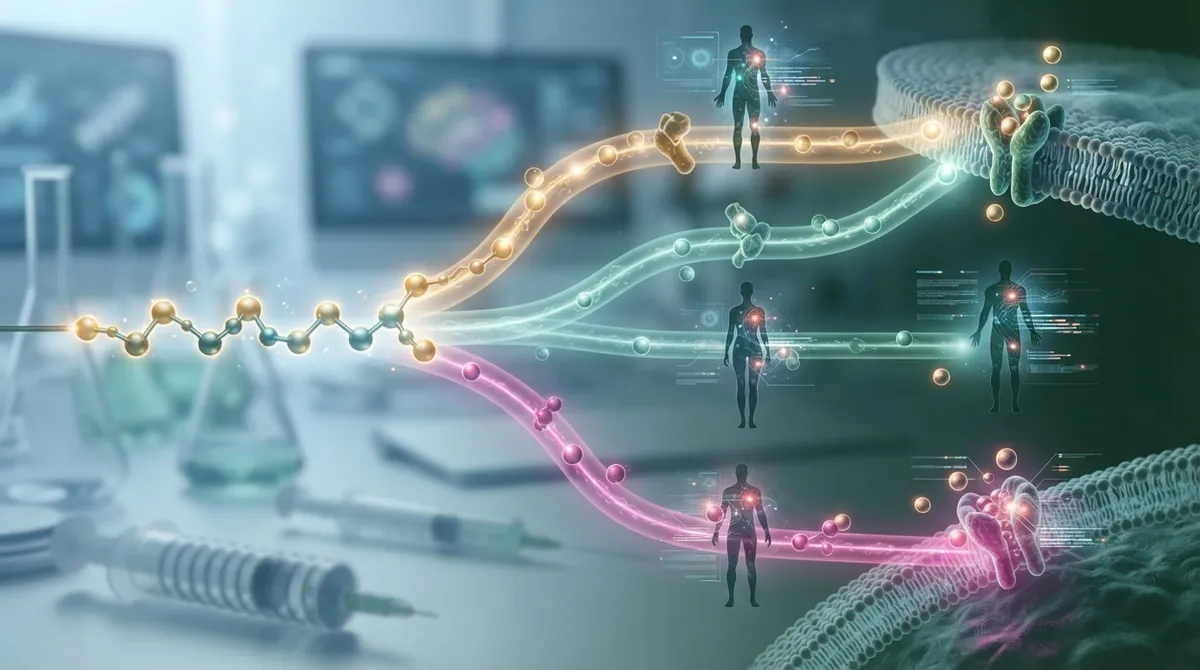
The main peptide mechanisms include receptor activation (turning signals on), receptor blocking (turning signals off), hormone mimicry (copying natural hormones like GLP-1), and targeted delivery—understanding which applies to your peptide helps assess real science versus hype.
Ever wonder what actually happens after a peptide enters your body? You are not alone. Many people hear that peptides can help with energy, recovery, weight, or aging. But the real question is simple: how do they do it?
Here is the honest answer. There is no single way peptide therapy works. Each peptide has its own target, its own job, and its own level of evidence. Understanding peptide therapy mechanisms helps you spot real science and skip the hype.
In this friendly guide, we will walk through how peptides talk to your cells, the main ways they work, and why some are FDA-approved while others are still being studied. Whether you are a health optimizer, a busy professional, or just curious, you will leave with a clear picture. Let’s dive in!
What Are Peptides, Exactly?
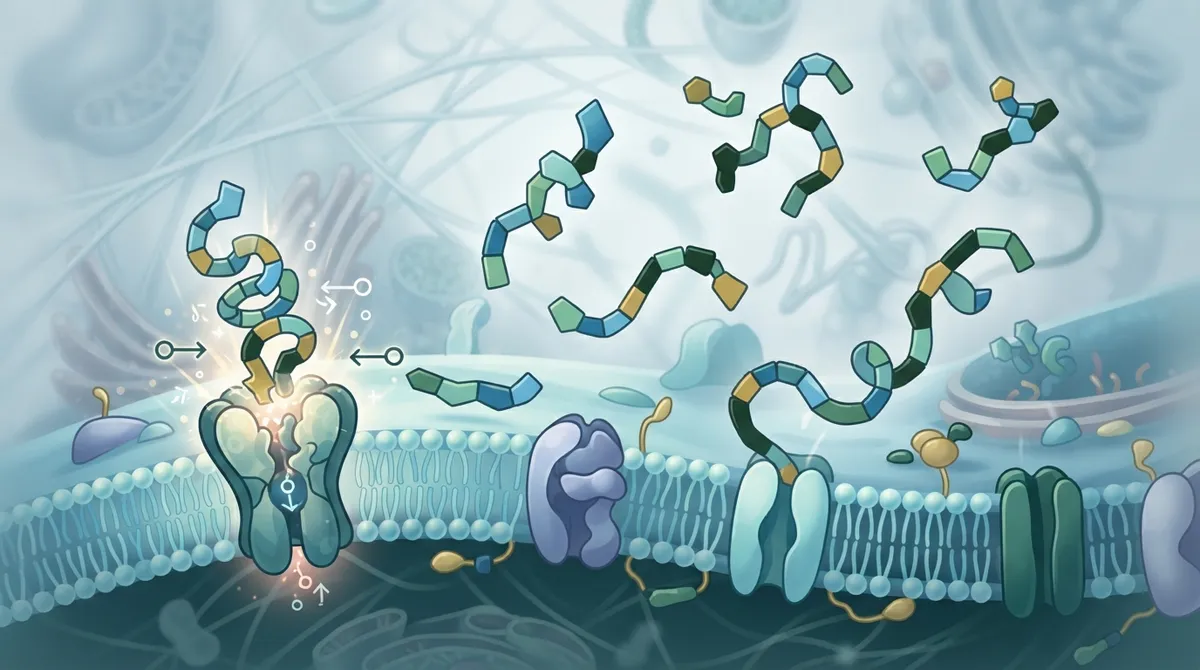
Peptides are short chains of amino acids. Amino acids are the same building blocks that make up proteins. The difference is size. Peptides are small, while proteins are long and complex.
Your body already makes thousands of peptides. Insulin, oxytocin, and growth hormone-releasing hormone are all peptides. They act like tiny text messages between cells. If you want a deeper starter guide, check out 8 Facts That Explain What Are Peptides in 2026, or read a general overview of what are peptides.
Peptide medicines are built to copy, boost, or block those natural messages. That is the big idea behind most peptide therapy mechanisms.
Why There Is No Single Peptide Therapy Mechanism
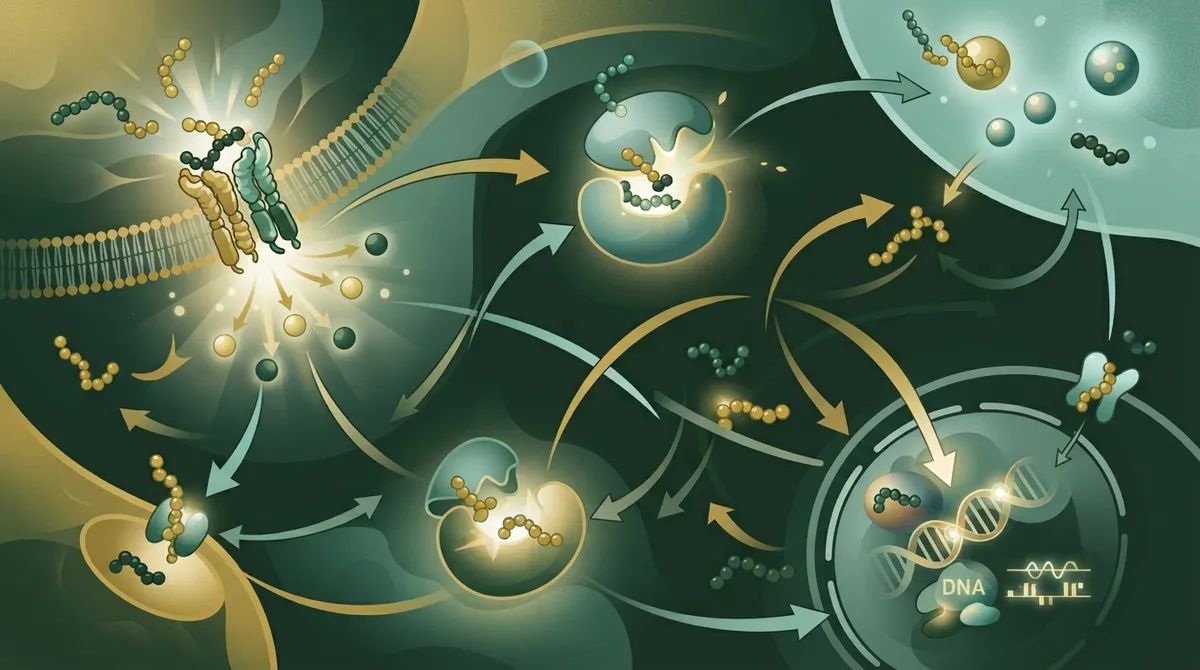
This is the most important point in the whole article. “Peptide therapy” is not one treatment. It is a big family of medicines.
Each peptide works through its own target. That target might be a receptor, an enzyme, a protein, or an ion channel. The effect depends on:
- The specific peptide and its structure
- The target it binds to
- The dose you take
- How it is delivered (injection, nasal, or another route)
So when someone says “peptides heal everything,” be cautious. A plausible mechanism is a starting point, not proof. Real proof comes from human clinical trials. That is why we always look at each peptide and each use one at a time.
The Main Peptide Therapy Mechanisms Explained
Let’s break down the most common ways peptide medicines work. Think of your cells like houses with locked doors. Peptides are keys, and receptors are the locks.
1. Receptor Activation (Agonists)
Many peptide drugs bind to receptors on the outside of a cell. Most of these are called G-protein-coupled receptors, or GPCRs. When the peptide fits, it turns the receptor “on.” This is called agonism.
Once the receptor is on, the cell gets a message. It might release a hormone, change how it uses energy, or shift how it senses pain. The result depends on which receptor you switch on.
2. Receptor Blocking (Antagonists)
Some peptides do the opposite. They sit in the lock without turning it. This blocks the natural signal. These are called antagonists.
Blocking a signal can be helpful when a signal is too strong or happening at the wrong time. GnRH blockers used in some medical care are one example.
3. Hormone Replacement or Mimicry
Some peptide therapies replace or copy a hormone your body makes too little of. Insulin is the classic case. GLP-1 medicines are another. They mimic a natural gut hormone that helps control blood sugar and appetite.
4. Targeted Delivery
Certain peptides act like homing devices. They latch onto cells that carry a particular target. Some carry a linked drug or an imaging agent right to those cells. This is used in specialized medical settings.
5. Binding Proteins and Other Targets
Peptides can also grab onto proteins, including receptor tyrosine kinases. This can change how a cell grows, repairs, or communicates. These mechanisms are very specific to each medicine.
Peptide Mechanisms at a Glance
| Mechanism | How It Works | Example Area |
|---|---|---|
| Receptor agonist | Turns a receptor “on” to trigger a cell response | Blood sugar and appetite control |
| Receptor antagonist | Blocks a receptor to stop a signal | Hormone suppression |
| Hormone mimicry | Copies or replaces a natural hormone | Insulin, GLP-1 medicines |
| Targeted delivery | Guides a drug or imaging agent to certain cells | Diagnostic and specialty care |
| Protein binding | Attaches to a protein to change cell activity | Signaling and growth pathways |
How GLP-1 Peptides Work: A Real-World Example
GLP-1 medicines are a great way to see peptide therapy mechanisms in action. GLP-1 is a natural hormone released by your gut after you eat.
GLP-1 receptor agonists copy that hormone. Here is what happens step by step:
- The peptide binds to GLP-1 receptors on cells.
- The pancreas releases insulin when blood sugar is high.
- The brain gets signals that help you feel full.
- Stomach emptying slows down, so you stay satisfied longer.
That combination can lower blood sugar and reduce appetite. These medicines have strong clinical trial data for specific uses. If you want to go deeper, see How Does GLP-1 Work for Weight Loss, Really? and How to Understand GLP-1 Peptide Therapy in 2026.
How Growth Hormone-Releasing Peptides Work
Another well-known group works on your pituitary gland. Peptides like sermorelin and CJC-1295 act on the growth hormone-releasing hormone receptor. Ipamorelin and other GHRPs act on the ghrelin receptor.
In simple terms, they nudge your body to release its own growth hormone. They do not deliver growth hormone directly. This is why many people describe them as “signal boosters” instead of replacements.
Learn more in Growth Hormone Peptides: What They Are & How They Work and How Do GHRP Peptides Really Work in Your Body?.
Why Delivery Matters: Stability and Absorption
Here is a fun fact that surprises many people. Your gut is very good at breaking down peptides. Enzymes chop them up like scissors. That is why many peptide medicines are injected instead of swallowed.
Peptides can also be cleared from the body fast. To fix this, drug developers use clever tricks:
- Changing the amino acid sequence for better stability
- Adding fatty-acid groups so the peptide lasts longer
- Using depot formulations that release slowly
- Choosing non-oral routes like subcutaneous injection
These design choices are part of the mechanism story. They decide how long a peptide works and how often you dose. For more on oral options, see 9 Truths About Oral Peptide Supplements in 2026.
A Mechanism Is Not the Same as Proof
Now for the reality check. A cool mechanism on paper does not mean a peptide is safe or effective for a claimed use. Lab findings and stories online are not the same as controlled human trials.
When judging any peptide, ask these questions:
- Was it tested in well-run human studies?
- Is it approved for this exact use?
- What are the known side effects?
- Who makes it, and how is quality checked?
The National Library of Medicine is a helpful place to look up published research on specific peptides.
FDA-Approved vs. Wellness Peptides
Not all peptides sit in the same category. It helps to separate them clearly. A 2024 review counted 34 FDA peptide-drug approvals from 2016 to 2024, though counts vary by how products are classified. These approved medicines have defined uses, dosing, and safety labels.
Many peptides promoted for recovery or anti-aging, like BPC-157, CJC-1295, and ipamorelin, are not FDA-approved drugs for those uses. FDA materials have raised concerns about limited safety data, product quality, and possible immune reactions. Rules can change, so always check current FDA sources.
| Category | Evidence Level | Regulatory Status |
|---|---|---|
| FDA-approved peptide medicines | Indication-specific clinical trials | Approved with defined labels |
| Investigational peptides | Early or limited human data | Not approved for wellness claims |
| Compounded or wellness peptides | Varies widely, often limited | Subject to FDA and state review |
To understand the difference in depth, read FDA-Approved vs. Compounded Peptides: What Wins? and Is Peptide Therapy Safe? What You Really Need to Know.
What This Means for Different Goals
Different people come to peptides for different reasons. Here is how mechanism thinking helps each group.
For Health Optimizers and Biohackers
You love data, so use it. Match the peptide’s target to your goal, then check the trial evidence. Pair your plan with blood work so you can track real changes.
For Aging Adults and Wellness Seekers
You want steady, safe support. Focus on peptides with clear rationale and provider oversight. Not every trending peptide is right for you.
For Busy Professionals
Convenience counts. Telehealth makes it easier to get lab-guided care without long clinic visits. Just make sure a licensed provider is in the loop.
Why Personalization Matters
Because each peptide works through its own mechanism, one plan does not fit everyone. Your labs, goals, and health history all shape the right choice. That is why guides like How to Choose the Right Type of Peptide Therapy and How to Use Biomarker Testing to Guide Peptide Therapy are so useful.
At Allura Longevity, licensed providers design customized plans from your blood work and goals. Care is delivered by telehealth, with peptides shipped right to your door. Your provider explains what each medicine is meant to do and what the evidence does and does not show. You can also explore options for peptides for women and peptides for men.
Possible Risks and Side Effects
Every medicine that changes signaling can cause side effects. Common concerns vary by peptide. They may include injection site irritation, nausea, headaches, or changes in how you feel day to day. Some peptides have limited long-term safety data.
Always share your full health history with your provider. Never buy peptides from unverified sellers. Quality and purity matter as much as the mechanism itself. For a safer path, see How to Get Prescription Peptides Safely in 2026.
Conclusion: Know the Mechanism, Trust the Process
Peptide therapy mechanisms are as varied as the peptides themselves. Some switch receptors on, some block them, some replace hormones, and some deliver cargo to targeted cells. Delivery method, dose, and quality all shape the outcome.
The best approach is simple. Learn how a peptide works, check the evidence for your goal, and work with licensed providers who track your progress. Science plus personalization is the winning combo.
Ready to see what a personalized plan could look like? Clients start with a $50 virtual consultation, LabCorp blood work, and a customized six-month plan overseen by Ashley, a board-certified Family Nurse Practitioner. Spots for new clients are limited each month, so request a consultation today or call (813) 510-6277. Allura Longevity is licensed in Florida, Georgia, Texas, Connecticut, Indiana, Maryland, New York, and California.
FAQs
Q: How does peptide therapy work in the body?
A: Peptides act like tiny messengers. They bind to specific targets, often receptors on cell surfaces, and trigger or block a response. What happens next depends on the exact peptide, the dose, and how it is delivered.
Q: Are peptides absorbed orally, or do they need to be injected?
A: Many peptides are broken down by digestive enzymes, so they often have poor oral absorption. That is why many peptide medicines are given by injection or other non-oral routes. Some are redesigned to last longer or survive better in the body.
Q: Are BPC-157, CJC-1295, and ipamorelin FDA-approved?
A: These peptides are not FDA-approved drugs for the wellness, recovery, or anti-aging uses they are often promoted for. FDA materials have flagged concerns like limited safety data and product quality. Rules can change, so always check current FDA sources and talk with a licensed provider.
Q: What are the risks and side effects of peptide therapy?
A: Side effects depend on the peptide and dose. They can include injection site irritation, nausea, or headaches, and some peptides have limited long-term safety data. A licensed provider can review your labs and history to help you choose safely.
Q: Does a proven mechanism mean a peptide works for my goal?
A: Not quite. A plausible mechanism is a helpful starting point, but it does not prove a peptide is safe or effective for a specific use. Look for controlled human trials and regulatory review for your exact goal.





