

Key Takeaways
-
Only sermorelin and tesamorelin have FDA approval, specifically for HIV-related lipodystrophy; other growth hormone peptides lack broad FDA approval despite being widely discussed in wellness communities.
-
Growth hormone peptides stimulate your body's natural pituitary gland to release more of its own growth hormone, rather than injecting synthetic hormone directly, preserving your body's natural hormone release rhythm.
-
Large, high-quality human trials proving fat loss, muscle gain, and anti-aging benefits are limited for most non-approved compounds; honest providers will acknowledge incomplete long-term safety data.
-
Always start with comprehensive blood work through a licensed provider before beginning any peptide therapy, and avoid programs that skip baseline testing or promise guaranteed results.
-
The four most discussed peptides—sermorelin, tesamorelin, CJC-1295, and ipamorelin—work through different mechanisms and have varying approval statuses, requiring personalized evaluation based on your specific goals.
-
Growth hormone peptides work best as part of a comprehensive health plan including proper sleep, nutrition, and movement; they are not standalone solutions and require ongoing medical monitoring.
If you have spent any time reading about wellness trends, you have probably heard people talk about growth hormone peptides. Maybe a friend at the gym mentioned one. Maybe you saw a post about better sleep, faster recovery, or healthier aging. It is exciting, but it can also feel confusing fast. What is real? What is hype? And what actually happens in your body?
Here is the good news. You do not need a science degree to understand this topic. This guide breaks down growth hormone peptides in simple terms. We will cover how they work, which ones are commonly discussed, what the research actually shows, and how to approach this safely. Whether you are a busy professional looking for better energy, or someone tracking every lab number like a biohacker, this article is for you. Let’s dig in together, one friendly step at a time.
What Are Growth Hormone Peptides?
Growth hormone peptides are small proteins that encourage your pituitary gland to release more of your own growth hormone. They do not add synthetic growth hormone into your body. Instead, they nudge your body to make more of what it already produces naturally.
This is an important distinction. Direct HGH therapy involves injecting growth hormone itself. Growth hormone peptides work differently. They support your body’s natural rhythm of hormone release, which many wellness experts believe is a gentler approach. To understand the basics of peptide science first, this article on what are peptides in 2026 is a great starting point.
How Do Growth Hormone Peptides Work?
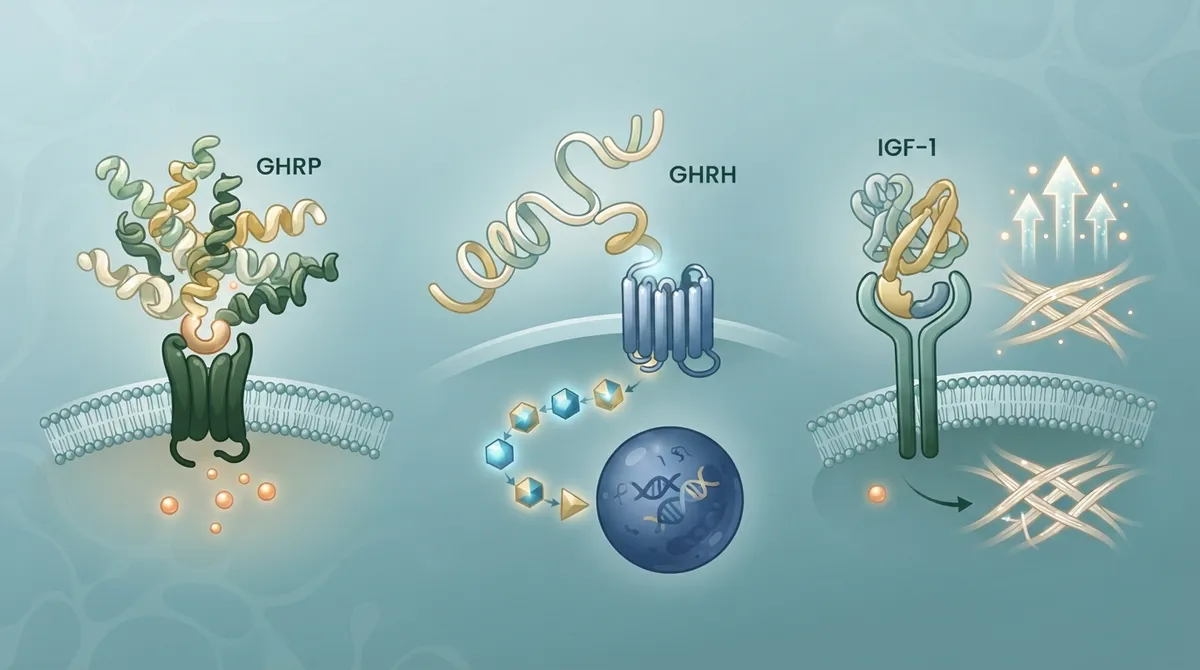
Most growth hormone peptides fall into two main categories. Understanding these categories helps you make sense of the different options available.
- GHRH analogs, which mimic the hormone that tells your pituitary gland to release growth hormone
- Ghrelin-receptor agonists, which trigger a different pathway that also boosts growth hormone release
- Combination approaches, where two peptides are used together for a layered effect
- Peptides tied to specific approved medical uses, like treating certain fat distribution issues
The goal across all of these is the same. They aim to work with your body’s own signals instead of overriding them. According to the National Library of Medicine, peptide therapeutics have become one of the fastest-growing areas of modern medicine, with more than 80 therapeutic peptides already reaching the global market.
Common Growth Hormone Peptides You Should Know
Not all growth hormone peptides are the same. Some have FDA approval for specific conditions. Others are used more broadly in wellness settings, though the evidence behind them varies. Here is a simple breakdown.
| Peptide | Type | Common Use Discussion | FDA Status |
|---|---|---|---|
| Sermorelin | GHRH analog | Wellness, hormone support | Approved for HIV-related lipodystrophy |
| Tesamorelin | GHRH analog | Fat reduction discussions | Approved for HIV-related lipodystrophy |
| CJC-1295 | GHRH analog | Often paired with other peptides | Not broadly FDA-approved |
| Ipamorelin | Ghrelin-receptor agonist | Sleep, recovery discussions | Not broadly FDA-approved |
| AOD-9604 | Modified peptide fragment | Fat metabolism research | Not broadly FDA-approved |
Sermorelin and tesamorelin stand out because they have a clear, approved medical purpose. The others are discussed often in wellness circles, but the human research behind general anti-aging or muscle-building claims is still limited. This is worth knowing before you commit to any protocol.
Sermorelin vs Tesamorelin vs CJC-1295 vs Ipamorelin
People often ask how these four peptides differ from each other. Here is a simple way to think about it.
- Sermorelin has the longest track record and a specific FDA-approved use for lipodystrophy related to HIV.
- Tesamorelin is also FDA-approved for the same type of condition, and it is one of the few growth hormone-pathway peptides with strong clinical backing.
- CJC-1295 is a longer-acting compound often discussed alongside other peptides, but it does not have the same approval status.
- Ipamorelin works through a different pathway and is often paired with GHRH analogs in wellness conversations, though large human trials for general use are limited.
If you are trying to compare peptides for a specific goal, like muscle support, this resource on peptides for muscle gain worth knowing offers helpful context. And if fat loss is more your focus, this piece on peptides for fat loss that really work breaks down the options.
What the Research Actually Shows
It is easy to get swept up in exciting claims. But let’s be honest with each other here. The science on growth hormone peptides is still developing for many uses outside of approved medical conditions.
- Large, high-quality human trials are limited for many non-approved compounds
- Long-term safety data is still incomplete for several peptides in this category
- Claims about muscle gain, fat loss, and anti-aging benefits are not yet strongly proven in big studies
- Some products have faced compounding and regulatory restrictions in recent years
- Individual results can vary a lot based on age, hormone levels, and overall health
This does not mean growth hormone peptides are useless. It means you deserve honest information so you can make a smart, informed choice. A good provider will walk you through the real evidence, not just the marketing buzz. For a deeper dive into safety considerations, check out is peptide therapy safe.
The Growing Peptide Therapeutics Market
Even with these caveats, interest in peptide therapy continues to climb. The global peptide therapeutics market was valued at 140.9 billion dollars in 2025, and it is projected to reach 294.6 billion dollars by 2033. That is a strong growth rate of 8.7 percent per year.
Growth hormone peptides are just one small slice of this much bigger picture. The overall market is now largely driven by metabolic peptides like GLP-1 drugs, not anti-aging compounds. If you want to understand that side of the field, this guide on GLP-1 peptide therapy in 2026 is a helpful companion read.
Who Considers Growth Hormone Peptides?
People explore this category of peptide therapy for many different reasons. Here are some common motivations we see.
- Adults noticing lower energy or slower recovery after workouts
- Midlife men and women wanting to support healthy aging
- Biohackers who track labs closely and want data-driven options
- Busy professionals looking for convenient, at-home treatment plans
- Wellness seekers already investing in supplements who want a more personalized approach
No matter which group you fall into, the same principle applies. Growth hormone peptides are not a magic fix. They work best as part of a bigger picture that includes sleep, nutrition, movement, and proper medical guidance.
Are Growth Hormone Peptides Safe?
Safety depends heavily on the specific peptide, the dose, and who is guiding your care. This is not something to figure out alone from internet forums.
- Always start with blood work to understand your baseline hormone levels
- Work with a licensed provider who can interpret your labs correctly
- Choose peptides that are sourced from a reputable, regulated pharmacy
- Follow a structured plan with regular check-ins and adjustments
- Report any side effects quickly so your provider can adjust your protocol
This is exactly why medical supervision matters so much. At Allura Longevity, every plan starts with real lab work through LabCorp, followed by a customized six-month protocol built around your actual numbers. Care is overseen by Ashley, a board-certified Family Nurse Practitioner, so you are never guessing on your own.
Can Growth Hormone Peptides Be Compounded Legally?
This is a common and fair question. Some growth hormone peptides can be legally compounded by licensed pharmacies under a valid prescription. However, regulations have tightened in recent years for certain compounds, and availability can shift.
This is another reason working with a licensed telehealth provider matters. A trustworthy clinic stays current on regulatory changes and only sources peptides through compliant channels. If you are weighing your options for getting started, this comparison of local clinic vs telehealth peptide therapy can help you decide what fits your lifestyle.
Steps to Start Growth Hormone Peptide Therapy the Right Way
If you are ready to explore this path, here is a simple, safe way to approach it.
- Book an initial consultation with a licensed provider to discuss your goals
- Complete comprehensive blood work to see your current hormone levels
- Review your results with your provider and ask questions freely
- Receive a personalized treatment plan tailored to your body and goals
- Get your peptides delivered directly to your home for easy administration
- Follow up regularly so your provider can adjust your plan as needed
This process removes the guesswork. You are not ordering random products online and hoping for the best. You are working with real data and real medical oversight. For a full walkthrough, take a look at how to start peptide therapy safely and see real results.
Growth Hormone Peptides vs Direct HGH Therapy
People often mix these two up, so let’s clear it up simply.
| Feature | Growth Hormone Peptides | Direct HGH Therapy |
|---|---|---|
| Mechanism | Stimulates your own pituitary gland | Supplies synthetic hormone directly |
| Natural rhythm | Preserves pulsatile release pattern | Can override natural release pattern |
| Regulatory status | Mixed, with some approved uses | Tightly regulated, prescription-only |
| Common goals discussed | Energy, recovery, wellness support | Specific growth hormone deficiency |
Understanding this difference helps you have better conversations with your provider. It also helps you set realistic expectations for what each option can offer. For more background, WebMD offers a helpful overview of what are peptides and how they function in the body.
Setting Realistic Expectations
We want you to feel excited about your health journey, but also grounded in reality. Here is what that balance looks like in practice.
- Results take time and consistency, not overnight miracles
- Lab monitoring helps track real progress, not just how you feel
- Lifestyle habits like sleep and nutrition still matter enormously
- Not every peptide is right for every person or every goal
- Ongoing communication with your provider leads to better outcomes
This honest approach builds trust, and trust is the foundation of good healthcare. It is also simply the kind, respectful way to treat you as a whole person, not just a customer.
Why Personalized Care Matters So Much
Your body is unique. Your hormone levels, your goals, and your health history are different from anyone else reading this article. That is exactly why cookie-cutter protocols rarely work well.
Allura Longevity was built around this idea. Every client starts with a 50 dollar virtual consultation, followed by full blood work. From there, licensed providers design a plan just for you, and your peptides arrive right at your door. It is convenient, personalized, and grounded in real medical guidance, which matters a lot when you are exploring something like growth hormone peptides.
What Makes a Trustworthy Provider
Not all peptide programs are created equal. Here is what to look for when choosing where to start your journey.
- Licensed medical providers overseeing every treatment plan
- Required blood work before any prescription is written
- Clear explanations of risks, benefits, and realistic timelines
- Ongoing monitoring and check-ins, not a one-time transaction
- Transparent sourcing from regulated, compliant pharmacies
If a provider skips blood work or promises guaranteed results, that is a red flag worth paying attention to. Your health deserves better than shortcuts.
Bringing It All Together
Growth hormone peptides are a fascinating part of modern peptide therapy, but they are not one-size-fits-all magic. Some, like sermorelin and tesamorelin, have real FDA-approved uses. Others are still being studied, and honest providers will tell you that upfront. What matters most is working with someone who takes your safety seriously and builds a plan around your actual body, not a generic template.
You deserve a partner in this journey who explains things clearly, checks your labs, and stays with you for the long haul. That is exactly what Allura Longevity offers, with licensed providers, personalized six-month plans, and convenient at-home delivery across Florida, Georgia, Texas, Connecticut, Indiana, Maryland, New York, and California. Spots are limited each month, so if you are curious about whether growth hormone peptides fit your goals, now is a great time to reach out. Request a consultation today and take the first friendly step toward feeling like yourself again, only better.
FAQs
Q: What are growth hormone peptides in peptide therapy?
A: Growth hormone peptides are compounds that encourage your pituitary gland to release more of your own growth hormone. They work with your body’s natural rhythms instead of adding synthetic hormone directly, which is why so many people find the concept appealing.
Q: Which peptides are considered growth hormone secretagogues?
A: The most commonly discussed ones include sermorelin, tesamorelin, CJC-1295, ipamorelin, and sometimes AOD-9604. Each works a bit differently, and their evidence and approval status vary quite a bit, so it helps to review them one by one with your provider.
Q: Are growth hormone peptides FDA-approved?
A: Only a couple, like sermorelin and tesamorelin, have specific FDA approval, and that approval is for a narrow medical condition called HIV-associated lipodystrophy. Many other growth hormone peptides used in wellness settings do not carry broad FDA approval, so it is important to have honest conversations with your provider.
Q: Do growth hormone peptides really help with fat loss or muscle gain?
A: Some people report positive experiences, but large, high-quality human studies proving consistent fat loss or muscle gain are still limited for many of these peptides. We always encourage setting realistic expectations and focusing on your overall health plan, not just one compound.
Q: Are growth hormone peptides safe to use?
A: Safety really depends on the specific peptide, your individual health profile, and proper medical supervision. That is why we always start with blood work and ongoing monitoring, so your plan is built around your real numbers, not guesswork.





