

Key Takeaways
-
Start with targeted lab testing (CBC, TSH, glucose, liver function) to identify the actual cause of fatigue rather than guessing; this reveals fixable issues like anemia, thyroid problems, or blood sugar disorders.
-
Establish five daily non-negotiable habits first: 7-9 hours consistent sleep, daily movement, adequate protein intake, proper hydration, and intentional stress management—these form the foundation before considering any medical intervention.
-
If fatigue persists beyond six months despite lifestyle changes, work with a licensed provider who orders proper testing and builds a personalized plan; avoid unregulated online products without medical supervision.
-
Peptide therapy has no FDA approval specifically for general fatigue; when used, it should be part of a supervised plan targeting related goals like sleep quality and recovery, not as a standalone solution.
-
Watch for red flags requiring evaluation: fatigue despite full sleep, unexplained weight gain, brain fog, muscle weakness, or sleep apnea symptoms—these signal conditions worth investigating early before they worsen.
-
Ask prospective providers about FDA approval status, required lab work before treatment, their state license, known risks, and progress measurement methods to ensure evidence-based care rather than aggressive sales tactics.
Turning 40 doesn’t mean you have to accept feeling tired all the time. Many people notice their energy dips as they get older, and they assume it’s just part of aging. But here’s some good news: low energy after 40 is often fixable. The trick is finding out what’s really behind your fatigue, then treating the actual cause instead of just pushing through it with more coffee.
This guide walks you through the real reasons energy drops after 40, what tests can uncover hidden problems, and how personalized options like what are peptides therapy may fit into a bigger plan. Whether you’re a busy professional running on fumes, a biohacker who tracks every metric, or simply someone who wants to feel like yourself again, this article gives you a clear path forward.
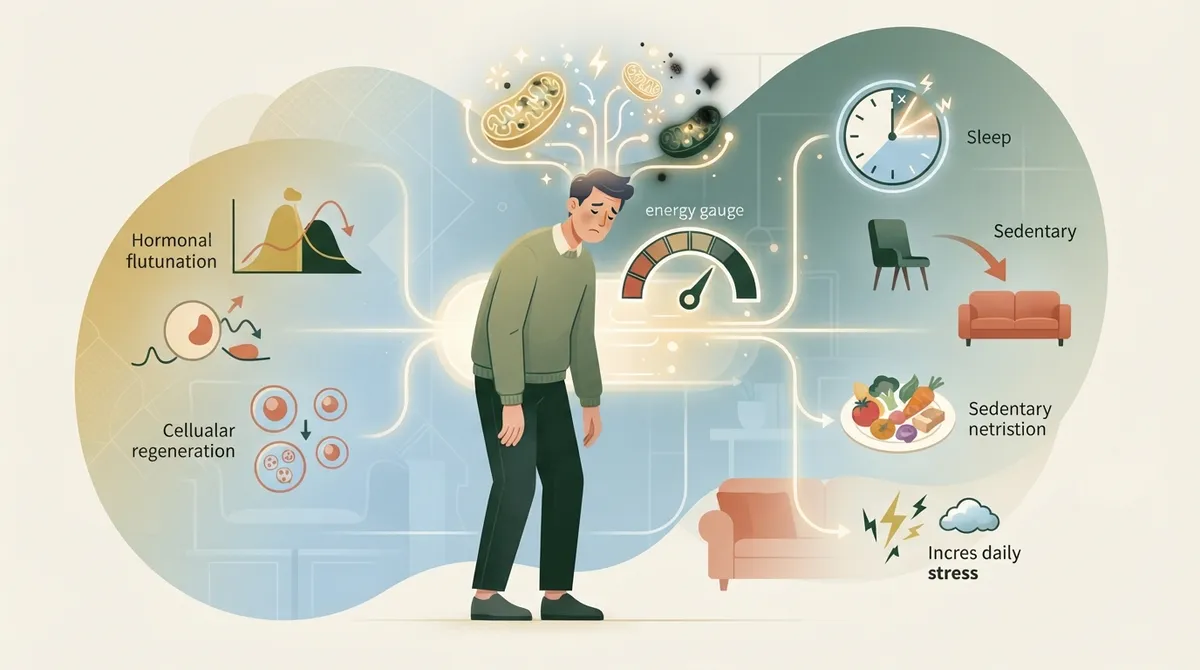
Why Energy Often Drops After 40
Low energy isn’t an automatic part of getting older. It’s usually a sign that something specific needs attention. Hormone shifts, sleep problems, stress, and lifestyle habits all play a role.
As we age, our bodies naturally produce less growth hormone and other key hormones. Sleep quality often declines too. Add in a demanding job, family responsibilities, and less time for exercise, and it’s easy to see why so many people feel drained by their 40s.
Common Reversible Causes of Fatigue
Before jumping to any treatment, it helps to know what might be causing your tiredness. Many causes are treatable once identified.
- Poor sleep quality or undiagnosed sleep apnea
- Low iron levels or anemia
- Thyroid problems, including an underactive thyroid
- Chronic stress, anxiety, or depression
- Blood sugar issues or early diabetes
- Side effects from medications
- Too much alcohol or poor nutrition
- Chronic health conditions that haven’t been diagnosed yet
According to a clinical review published in National Library of Medicine, sleep disorders, depression, and psychosocial stress are among the most common causes of ongoing fatigue. The same review found that serious hidden illness, like undiagnosed cancer, is rare and accounts for less than 1% of fatigue cases seen by primary care doctors.

Step 1: Get the Right Tests Before Assuming It’s Hormones
If you’ve been tired for more than six months, doctors classify this as chronic fatigue. That’s worth taking seriously. The smart first move isn’t guessing. It’s testing.
A good medical evaluation should include a review of your symptoms, your medications, and your sleep habits. From there, your provider may order specific blood tests to rule out common problems.
| Test | What It Checks | Why It Matters |
|---|---|---|
| Complete Blood Count (CBC) | Red blood cells, anemia markers | Low iron is a common, fixable cause of fatigue |
| Thyroid-Stimulating Hormone (TSH) | Thyroid function | An underactive thyroid can cause deep tiredness |
| Glucose or A1C | Blood sugar levels | Diabetes and prediabetes often cause fatigue |
| Liver Function Tests | Liver health | Liver issues can quietly drain your energy |
| Inflammatory Markers | Chronic inflammation | Ongoing inflammation is linked to low energy |
Doctors also use tools like the STOP-BANG questionnaire to screen for sleep apnea risk. This looks at snoring, tiredness, observed breathing pauses, blood pressure, weight, age, neck size, and sex. If your score is high, a sleep study may be the next step.
Step 2: Build the Lifestyle Foundation First
No treatment, including peptide therapy, works well without a solid lifestyle foundation. Think of this as the base you build everything else on top of.
Five Daily Habits That Actually Move the Needle
- Protect your sleep window. Aim for seven to nine hours, and keep a consistent bedtime, even on weekends.
- Move your body daily. A mix of walking, strength training, and cardio supports energy, mood, and metabolism.
- Eat enough protein. Protein supports muscle, hormones, and steady blood sugar throughout the day.
- Stay hydrated. Even mild dehydration can make you feel sluggish and foggy.
- Manage stress on purpose. Try short walks, breathing exercises, or simply stepping away from screens.
These habits sound simple, but they’re the evidence-based backbone of energy management at any age. If you’re already doing all of this and still feel exhausted, that’s when it’s worth exploring medical support with a licensed provider.
Where Peptide Therapy Fits Into the Picture
Peptide therapy has become a popular topic among people looking for personalized wellness support. It’s important to understand what peptides can realistically offer, and what they can’t.
Right now, there is no peptide broadly approved by the FDA specifically to treat general fatigue or reverse aging. That said, some peptides are used in carefully supervised, individualized treatment plans to support related goals like sleep quality, muscle recovery, and metabolic health, which can indirectly support how energetic you feel day to day. You can learn more about the basics in this guide on what peptides are and how they work.
Peptides Sometimes Discussed for Energy-Related Goals
| Peptide Category | Commonly Discussed For | Evidence Status |
|---|---|---|
| Growth-hormone-releasing peptides | Body composition, recovery, sleep quality | Used in select medical contexts under supervision; not a general energy treatment |
| GLP-1 peptides | Weight management, metabolic health | FDA-approved for specific weight and blood sugar conditions |
| BPC-157 | Tissue and injury recovery | Limited human trial data; often used off-label under provider guidance |
| Sleep-support peptides | Sleep quality | Early-stage evidence; requires more research |
Because the science is still developing for many of these compounds, it’s important to work with a licensed medical provider rather than trying products on your own. Quality, dosing, and safety can vary widely between sources. If you’re curious how a personalized plan actually gets built, this article on how to start peptide therapy safely and see real results breaks it down step by step.
How Allura Longevity Approaches Energy Concerns
At Allura Longevity, the process always starts with real data, not guesswork. Clients begin with a $50 virtual consultation, followed by blood work through LabCorp. This helps identify whether hormone levels, thyroid function, or other markers might be contributing to low energy.
From there, Ashley, a board-certified Family Nurse Practitioner, and the licensed care team design a personalized six-month treatment plan based on your specific labs and goals. Peptides, when appropriate, are shipped directly to your home, and your provider monitors your progress and adjusts the plan as needed.
This model works well for busy professionals who don’t have time for repeated in-office visits. Telehealth care is available nationwide, with services licensed in Florida, Georgia, Texas, Connecticut, Indiana, Maryland, New York, and California. You can compare this approach in more detail through this piece on local clinic vs. telehealth peptide therapy options.
Signs Your Fatigue Deserves a Deeper Look
Some fatigue is normal after a rough week. Other fatigue is a signal worth investigating. Here’s how to tell the difference.
- You feel tired even after a full night’s sleep
- Your energy has dropped noticeably over the past year
- You’ve gained weight without changing your diet
- You feel foggy, unmotivated, or emotionally flat
- Your muscles feel weaker than they used to
- You snore loudly or wake up gasping for air
If several of these sound familiar, it’s worth scheduling a real evaluation instead of just powering through. A thorough workup can catch things like thyroid disease, anemia, or sleep apnea early, before they become bigger problems.
What to Expect From a Personalized Energy Plan
A responsible approach to energy after 40 usually includes several steps working together, not just one quick fix.
- A detailed conversation about your symptoms, sleep, stress, and medical history
- Targeted lab testing to rule out anemia, thyroid issues, and blood sugar problems
- A personalized plan that may include lifestyle coaching, hormone support, or peptide therapy
- Ongoing monitoring with follow-up labs to track progress
- Adjustments to your plan based on how your body responds
This is very different from buying an unregulated product online and hoping for the best. Working with licensed providers means your treatment is based on your actual biology, not a one-size-fits-all approach. For men specifically dealing with hormone-related fatigue, this resource on peptides for men offers more context, and women can explore similar options through peptides for women.
Questions to Ask Before Starting Any Peptide Program
Not every clinic or online seller operates the same way. Before starting treatment, ask these questions to protect yourself.
- Is this peptide FDA-approved, or is it being used off-label?
- What lab work will be done before and during treatment?
- Who is supervising my care, and are they licensed in my state?
- What are the known risks and side effects?
- How will progress be measured over time?
A trustworthy provider will answer these questions clearly and won’t pressure you into treatment without proper testing first. This guide on how to get prescription peptides safely covers additional red flags to watch for.
Bringing It All Together
Feeling exhausted after 40 is common, but it doesn’t have to be permanent. Start with the basics: sleep, movement, nutrition, and stress management. Then get real lab testing to rule out thyroid issues, anemia, or blood sugar problems.
If those steps don’t fully solve the problem, a personalized, medically supervised plan may help address the root cause rather than just masking symptoms. Peptide therapy, when used appropriately and monitored by licensed providers, can be one piece of that bigger puzzle alongside proven lifestyle strategies.
Ready to find out what’s really behind your low energy? Request a consultation with the team at Allura Longevity and get a personalized plan built around your own blood work and goals. Spots are limited each month, so reach out soon to reserve your spot. You can also call (813) 510-6277 to speak with the team directly.
FAQs
Q: What causes low energy after 40?
A: Low energy after 40 can come from many things, like poor sleep, thyroid problems, low iron, stress, or hormone shifts. The good news is most of these causes are treatable once you know what’s going on. A simple round of lab work can point you in the right direction.
Q: Can peptide therapy increase energy and reduce fatigue after 40?
A: Some peptides may support related goals like sleep, recovery, and metabolism, which can help you feel more energized overall. There’s no peptide broadly approved just for fatigue, so it works best as part of a bigger, personalized plan guided by a licensed provider.
Q: What tests should I get for persistent fatigue after 40?
A: A good starting point includes a complete blood count, thyroid testing, blood sugar checks, liver function tests, and inflammatory markers. Your provider may also screen you for sleep apnea if you snore or wake up feeling unrested. These tests help find the real cause instead of guessing.
Q: Are peptides like BPC-157 or growth-hormone-releasing peptides FDA-approved for energy?
A: No, these are not broadly FDA-approved specifically for fatigue or general energy enhancement. They’re sometimes used in individualized treatment plans under medical supervision, but the human research is still limited, so it’s smart to talk with a licensed provider before trying them.
Q: How do I know if my fatigue is from hormones, sleep apnea, or lifestyle habits?
A: Honestly, you usually can’t tell just by how you feel. That’s why a proper evaluation with blood work and a sleep screening matters so much. Once you have real data, your provider can build a plan that actually targets the true cause of your tiredness.





