

Key Takeaways
-
Peptide therapy has no single side-effect profile: the specific peptide, dose and route, product quality, and your health history all change your risk.
-
FDA-approved peptide medicines like GLP-1 drugs have documented side effects, most often nausea, vomiting, diarrhea, and constipation, which often ease as the body adjusts.
-
The FDA has flagged safety concerns for BPC-157, ipamorelin, and TB-500, citing immunogenicity, impurities, and insufficient human safety data, so their risk profile is not yet reliable.
-
Injection-site redness, pain, swelling, or itching are the most common reactions; rotating sites and using clean technique help reduce them.
-
Product quality matters as much as the peptide: unclear strength, contamination, poor storage, and mixing errors can cause harm, so buy only through licensed, transparent sources.
-
Seek urgent care for trouble breathing, throat tightness, or facial swelling, and contact your provider for spreading redness, fever, pus, persistent vomiting, or blood sugar changes.
If you have ever typed “what are the side effects of peptide therapy” into a search bar late at night, you are in good company. Peptides are everywhere right now, and it is smart to ask tough questions before you roll up your sleeve and try one.
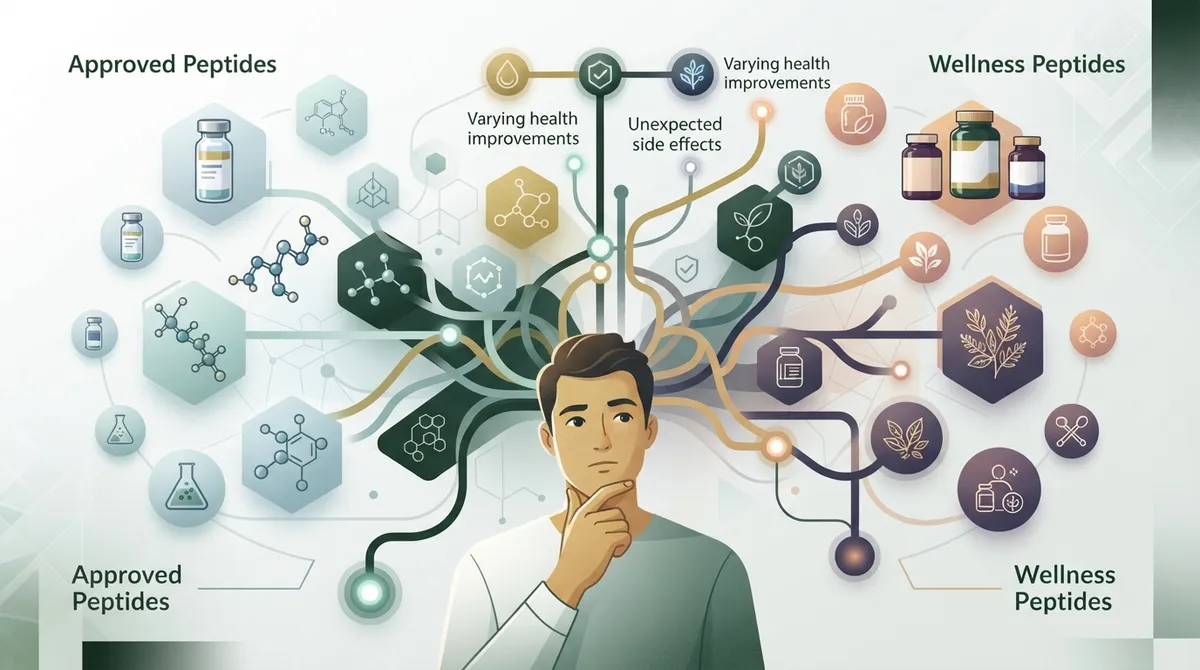
Here is the honest answer: there is no single side-effect list. “Peptide therapy” covers a huge range of products. Some are FDA-approved medicines with years of safety data. Others are popular in wellness circles but have very little human research behind them.
That is why this guide compares two groups side by side: approved peptide medicines and wellness or compounded peptides. You will see which side effects tend to show up, what makes some products riskier, and how to protect yourself. If you want a quick refresher first, check out 8 Facts That Explain What Are Peptides in 2026.
Whether you are a busy professional, a biohacker with a spreadsheet of labs, or just someone who wants to feel great as the years add up, let’s walk through this together.
Why There Is No One-Size-Fits-All Answer
Peptides are short chains of amino acids. Your body already makes thousands of them. Some are used as medicines, and others are promoted for recovery, skin, or anti-aging.
Side effects depend on four big things:
- The specific peptide. Each one acts on different pathways in the body.
- The dose and route. Injections carry different risks than creams or capsules.
- Product quality. Purity, sterility, and storage all matter.
- Your health. Medical history and other medicines change your risk.
So when someone says “peptides are totally safe” or “peptides are dangerous,” both claims miss the point. The real question is: which peptide, from which source, under whose supervision?

Approved vs. Wellness Peptides: A Quick Comparison
Here is a simple side-by-side view of the two big categories.
| Factor | FDA-Approved Peptide Medicines | Wellness or Compounded Peptides |
|---|---|---|
| Safety data | Product-specific trials and prescribing information | Often limited human data |
| Side-effect profile | Well documented, often dose-related | Less defined; many unknowns |
| Manufacturing oversight | Strict, standardized | Varies by source and pharmacy |
| Common concerns | Known effects like nausea or injection-site reactions | Immune reactions, impurities, dosing errors |
| Best for | Conditions the drug was studied for | Cases guided closely by a licensed clinician |
Neither category is automatically “good” or “bad.” But the amount of evidence we have is very different, and that matters when you weigh risk.
For a deeper look at this split, see FDA-Approved vs. Compounded Peptides: What Wins?
Side Effects Seen With Injectable Peptides in General
Many peptides are given as small injections under the skin. A few side effects can show up no matter which peptide you use.
Injection-Site Reactions
These are the most common and usually the mildest. They can include:
- Redness at the injection spot
- Mild pain or tenderness
- Swelling or a small bump
- Itching
These often fade within a day or two. Rotating injection sites and using clean technique helps a lot. Our guide on how to prepare for safe, effective peptide injections walks through the basics.
Infection Risk
Any needle can introduce germs if the skin, vial, or supplies are not clean. Infection risk goes up with unsafe mixing, reused supplies, or products that were not made sterile. Warning signs include spreading redness, warmth, pus, or fever.
Allergic and Immune Reactions
This one deserves extra attention. The FDA notes that peptide aggregation or impurities may trigger the immune system, which is called immunogenicity. In rare cases, this can cause serious reactions, including anaphylaxis. The agency also states that injectable routes generally carry more immunogenicity concern than oral routes.
Seek urgent care right away for trouble breathing, swelling of the face or throat, or a widespread rash after a dose.
Side Effects of FDA-Approved Peptide Medicines
Approved peptide drugs come with detailed safety information. A well-known example is the GLP-1 family, including semaglutide and tirzepatide.
GLP-1 Medicines
These commonly cause digestive effects, such as:
- Nausea
- Vomiting
- Diarrhea
- Constipation
- Abdominal discomfort
Many people find these effects ease as the body adjusts, especially with gradual dose changes. Less common but serious risks and contraindications are listed in each drug’s prescribing information, so those details should always be reviewed with your clinician. These effects belong to this drug class and should not be applied to every peptide.
Learn more in What Causes GLP-1 Side Effects and How to Manage Them? and How to Understand GLP-1 Peptide Therapy in 2026. If constipation is your main concern, there is a helpful piece on why GLP-1 therapy causes constipation and how to fix it.
Side Effects of Wellness and Compounded Peptides
This is where the picture gets fuzzier. Many peptides marketed for recovery, anti-aging, or performance are not FDA-approved for those uses, and human safety data is limited.
Growth-Hormone-Releasing Peptides
Peptides in this family can influence hormone levels and how the body handles sugar. Concerns discussed in clinical and regulatory sources include fluid retention and glucose intolerance, along with other effects. Risks vary by compound, and for many wellness uses the evidence is thin. To understand how they work, read Growth Hormone Peptides: What They Are & How They Work and How Do GHRP Peptides Really Work in Your Body?
BPC-157, Ipamorelin, and TB-500
These names come up a lot in biohacker circles. The FDA has flagged safety concerns and insufficient information for several substances proposed for compounding, including BPC-157, ipamorelin, and the thymosin beta-4 fragment known as TB-500. The concerns include immunogenicity, peptide-related impurities, and not enough human safety information.
It helps to keep the numbers in perspective:
- An FDA review of adverse-event reports for BPC-157 through December 4, 2025 found three reports. These reports do not show how common problems are or prove cause.
- An FDA briefing document described two non-serious reports tied to compounded products: increased tearing and headache after nasal ipamorelin, and elbow joint pain after an injectable containing ipamorelin and sermorelin.
- In one clinical study of intravenous ipamorelin used for gastric motility, serious events included infections (10.7% with ipamorelin vs. 10.3% with placebo) and two deaths in the ipamorelin group versus none with placebo. That was a specific setting and route, so it is not a risk estimate for other uses.
In plain terms: a short list of reports does not mean these peptides are safe, and it does not mean they are dangerous. It means we do not have a reliable side-effect profile yet. For more detail, see Is BPC-157 Safe? What the Research Really Shows, 12 BPC-157 Side Effects Facts You Need in 2026, 13 Facts About TB-500 Peptide You Need in 2026, and Ipamorelin Peptide Therapy: Benefits, Dosing & Safety.
Risks That Come From the Product, Not the Peptide
Sometimes the problem is not the peptide itself. It is how the product was made, stored, or used. This is a big deal for anyone buying peptides outside a clinical setting.
- Unclear identity or strength. The vial may not contain what the label says.
- Contamination or nonsterility. This raises infection risk.
- Degradation and poor storage. Heat and time can break peptides down.
- Dosing and mixing errors. Reconstitution mistakes can lead to too much or too little.
- Self-injection mishaps. Poor technique can cause bruising, infection, or nerve irritation.
- Stacking multiple substances. Combining products without guidance makes it hard to know what is causing what.
This is why where you get your peptides matters just as much as which ones you choose. Our article on how to get prescription peptides safely in 2026 and the 4 compounded peptides facts you need in 2026 are great next reads.
Side Effects by Peptide Type: At a Glance
| Peptide Type | Possible Effects | Evidence Level |
|---|---|---|
| GLP-1 medicines (semaglutide, tirzepatide) | Nausea, vomiting, diarrhea, constipation, abdominal discomfort | Strong, drug-specific data |
| Growth-hormone-releasing peptides | Possible fluid retention, glucose changes, hormone effects | Limited for many wellness uses |
| BPC-157 | Unknown profile; immune and impurity concerns raised by FDA | Limited human data |
| Ipamorelin | Reports of headache, watery eyes, joint pain in compounded forms | Limited; FDA flagged concerns |
| TB-500 | Unknown profile; immunogenicity and impurity concerns | Very limited human data |
Remember, this table shows possibilities, not guarantees. Your clinician can explain which ones apply to you.
Who Should Be Extra Careful?
Certain situations call for more caution and a closer conversation with a licensed provider:
- You have diabetes, prediabetes, or blood sugar concerns
- You are pregnant, nursing, or trying to conceive
- You have a history of allergies or strong reactions to medicines
- You take other prescriptions or supplements
- You have a personal or family history of certain cancers or endocrine conditions
- You compete in tested athletics
This is not a complete list. It is a nudge to share your full story before starting. The right plan starts with your history and your labs, as explained in Who Is a Candidate for Peptide Therapy in 2026?
How to Lower Your Risk: A Simple Checklist
The good news is that you have real control here. Follow these steps:
- Work with a licensed medical provider. They review the exact product, route, dose, and your other medicines.
- Get baseline blood work. Labs help guide choices and track changes.
- Ask about FDA status. Find out if the product is approved or compounded.
- Start low and go slow. Gradual dosing often reduces side effects.
- Learn safe injection habits. Clean hands, clean skin, new supplies, rotating sites.
- Track how you feel. Keep notes on sleep, mood, digestion, and injection sites.
- Schedule check-ins. Ongoing monitoring catches small issues early.
Want a full roadmap? See How to Start Peptide Therapy Safely and See Real Results and Is Peptide Therapy Safe? What You Really Need to Know. You can also browse the 15 peptide consultation questions to ask in 2026 before your first visit.
When to Stop and Seek Care
Most mild reactions are manageable, but do not tough it out when something feels wrong. Reach out to your provider if you notice:
- Injection-site redness that spreads or gets worse after a couple of days
- Persistent vomiting or severe stomach pain
- Unusual swelling in the hands, feet, or face
- Signs of high or low blood sugar, like extreme thirst or shakiness
- Fever or pus at an injection site
Call emergency services right away for trouble breathing, throat tightness, or facial swelling. You can also report suspected adverse events to the appropriate regulator, such as the FDA’s MedWatch program. For more background on research and safety reporting, the National Library of Medicine is a solid place to explore peer-reviewed studies.
Telehealth and Peptide Safety
Many people worry that doing this from home means less safety. Done right, it can actually mean more structure. A good telehealth model includes a real consultation, lab work, a licensed prescriber, and scheduled follow-ups. If you want to compare formats, read Local Clinic vs. Telehealth: Best Peptide Therapy Near You? and How Do You Know Online Peptide Therapy Is Safe?
At Allura Longevity, care starts with a virtual consultation and blood work through LabCorp. A licensed provider team, led by board-certified Family Nurse Practitioner Ashley, builds a personalized six-month plan and adjusts it as your body responds. We are licensed in Florida, Georgia, Texas, Connecticut, Indiana, Maryland, New York, and California.
The Bottom Line
So, what are the side effects of peptide therapy? It depends. Approved peptide medicines have well-documented effects, such as the digestive symptoms common with GLP-1 drugs. Wellness and compounded peptides often have limited human data, which means unknowns, plus added risks from product quality and injection practices.
The smartest move is not fear or hype. It is information, labs, and a licensed clinician who knows your history. Ask questions, expect clear answers, and never feel rushed.
Ready to talk through your goals and your safety questions with a team that takes both seriously? Request a consultation with Allura Longevity today, or call (813) 510-6277. Spots for new clients are limited each month, so reach out while there is room on the calendar.
FAQs
Q: What are the most common side effects of peptide therapy?
A: It really depends on the peptide, but injection-site reactions like redness, mild pain, swelling, or itching are the most common with injectables. FDA-approved GLP-1 medicines often cause nausea, vomiting, diarrhea, or constipation. Your provider can tell you what to expect for your specific plan.
Q: Can peptide therapy cause allergic reactions?
A: Yes, though serious reactions are rare. The FDA notes that impurities or clumping in peptide products can trigger immune responses, and injectable routes carry more of this concern than oral ones. Get urgent care right away if you have trouble breathing or swelling of the face or throat.
Q: Are BPC-157, ipamorelin, and TB-500 safe to use?
A: The honest answer is that we do not have enough human safety data to say. The FDA has flagged concerns about immunogenicity, impurities, and limited information for these substances. If you are curious about them, talk with a licensed clinician before trying anything.
Q: Do peptides affect blood sugar or hormones?
A: Some can. Growth-hormone-releasing peptides may influence hormone levels and glucose regulation, and GLP-1 medicines are designed to affect blood sugar pathways. Baseline blood work and regular follow-ups help your provider catch changes early.
Q: How can I tell if a peptide product is FDA-approved or compounded?
A: Ask your provider directly and check the label and prescribing information. FDA-approved products come from approved manufacturers with published safety data, while compounded products are made by pharmacies and may have different oversight. A trustworthy clinic will explain which one you are getting and why.





