

Key Takeaways
-
Not all online peptide therapy is created equal—legitimate programs require real lab work, licensed providers, state-licensed pharmacies, and ongoing follow-up care, while sketchy ones skip these steps entirely.
-
FDA-approved peptides undergo rigorous safety testing, but compounded peptides do not; 2026 data shows compounded semaglutide and tirzepatide have higher hospitalization rates (2.35x), dosing errors (48.92x), and contamination risks (19x) compared to FDA versions.
-
Red flags include prescriptions issued in under 5 minutes with minimal screening, no real medical questionnaire, instant approval, and claims that compounded products are identical to FDA-approved medications.
-
Evidence varies widely across peptides—FDA-approved GLP-1 medications have strong clinical trial data, while many peptides marketed for anti-aging or muscle building have limited human evidence and thinner research backing.
-
A trustworthy provider should disclose whether your peptide is compounded or FDA-approved, explain exact dosage and formulation, provide scheduled follow-up visits for monitoring, and tell you when in-person care is necessary.
-
The FDA removed semaglutide from its drug shortage list in February 2025 and tirzepatide in December 2024, changing the legal conditions for compounding these medications—ask your provider if there's clear medical justification for compounded versions.
Maybe you saw a friend’s amazing energy boost after starting peptides. Maybe your doctor mentioned it during your last checkup. Or maybe you’re just tired of feeling tired, and you’re wondering if online peptide therapy could be the answer you’ve been looking for. You’re not alone. More people than ever are turning to telehealth to feel like themselves again, and peptide therapy is leading that charge.
But here’s the thing: not all online peptide therapy is created equal. Some programs are run by licensed medical providers who order real labs and check in with you regularly. Others are little more than a website form and a shipping label. Knowing the difference isn’t just smart. It could protect your health. Let’s walk through exactly what online peptide therapy is, how to spot the real deal, and what questions to ask before you start.

What Is Online Peptide Therapy, Really?
Online peptide therapy uses telehealth to connect you with a licensed medical provider who can evaluate your health, order lab work, and prescribe peptide medications when appropriate. If it’s done right, the process includes a real clinical assessment, a prescription from someone licensed in your state, dispensing through a state-licensed pharmacy, and ongoing follow-up care. That last part matters more than people realize.
Peptides themselves are short chains of amino acids that act like messengers in your body, telling cells to do specific jobs. If you want a deeper dive into how they actually work, this guide on what peptides are and how they function breaks it down in plain language. You can also check out this trusted overview of what are peptides for more background.
Not All Peptide Therapy Looks the Same
Here’s something a lot of people don’t realize: peptide therapy isn’t one single treatment. It’s a whole category that includes:
- FDA-approved peptide medications, like certain GLP-1 receptor agonists used for specific health conditions
- Compounded peptides made by specialty pharmacies for individualized doses
- Investigational or research peptides that lack strong human safety data
- Peptides used for weight management, muscle recovery, hormone support, or sexual wellness
That variety is exactly why it pays to ask questions before jumping in. A trustworthy provider will walk you through which category your treatment falls into and why it’s right for you.
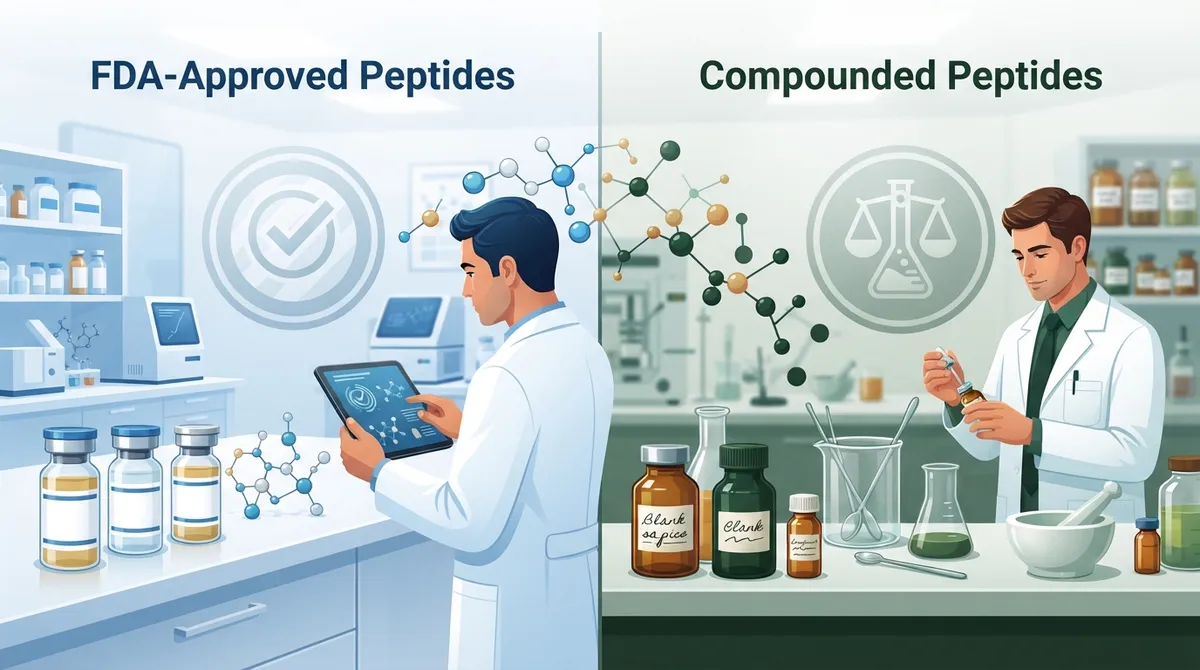
FDA-Approved vs. Compounded Peptides: Why the Difference Matters
This is probably the single most important thing to understand before starting any online peptide therapy program. FDA-approved medications go through rigorous testing for safety, effectiveness, and manufacturing quality. Compounded peptides, on the other hand, are not FDA-approved. They don’t go through that same premarket review process.
That doesn’t automatically mean compounded peptides are bad. Compounding has a long, legitimate history in medicine, especially for patients who need customized dosing. But it does mean you need extra reassurance about who is making your medication and how carefully your care is being managed. For a closer look at how these two paths compare, this article on FDA-approved versus compounded peptides is worth a read.
| Feature | FDA-Approved Peptides | Compounded Peptides |
|---|---|---|
| Premarket safety review | Yes, required by FDA | No, not FDA-reviewed |
| Manufacturing oversight | Strict federal standards | Varies by pharmacy |
| Customization | Fixed dosing | Can be personalized |
| Availability | Only for approved uses | Broader range of formulations |
Why the FDA Is Watching Compounded GLP-1 Peptides Closely
You may have heard some concerning headlines about compounded semaglutide and tirzepatide. They’re worth paying attention to, not to scare you away from peptide therapy, but to help you choose a safer path.
As of May 31, 2026, the FDA had received 990 adverse-event reports tied to compounded semaglutide and more than 730 tied to compounded tirzepatide. These are reports, not proof of direct cause, but they’re a signal worth taking seriously. A 2026 pharmacovigilance study published in Expert Opinion on Drug Safety analyzed over 81,000 reports and found some striking numbers:
- Hospitalization was reported far more often with compounded GLP-1 products, with a reporting odds ratio of 2.35
- Preparation errors, like incorrect dosing from multidose vials, showed a reporting odds ratio of 48.92
- Contamination concerns had a reporting odds ratio of 19.00
- Gastrointestinal symptoms like nausea, diarrhea, and abdominal pain were all reported more frequently
- Cholecystitis reporting odds reached 3.39, and suicidality reporting odds reached 6.34
The FDA also removed semaglutide from its drug shortage list in February 2025, and tirzepatide followed in December 2024. That change affected the legal conditions under which pharmacies could compound these medications. If your provider is still offering compounded versions of these specific peptides without a clear medical justification, that’s a fair question to ask. You can learn more directly from the FDA’s concerns about unapproved GLP-1 drugs.
How to Spot a Trustworthy Online Peptide Therapy Provider
Here’s the good news: you don’t need a medical degree to protect yourself. You just need to know what to look for. A 2026 review of online weight-loss telehealth platforms found that 91.8% issued a prescription, and some did it in under five minutes with barely any clinician interaction. That’s a red flag, not a feature.
Warning Signs to Watch For
- No real medical questionnaire or conversation before your prescription is approved
- Prescriptions issued almost instantly, with little to no clinician screening
- No way to reach a provider after your purchase if you have questions or side effects
- Claims that a compounded product is “identical” to an FDA-approved medication
- Packaging that arrives damaged, unlabeled, or incomplete
Signs of a Legitimate Program
- A real consultation with a licensed provider who reviews your health history
- Blood work or lab testing before your treatment plan is finalized
- Clear information about your exact medication, dosage, and formulation
- Ongoing check-ins and the ability to adjust your plan over time
- A pharmacy that is properly licensed in your state
This is exactly the kind of standard Allura Longevity was built around. Clients start with an affordable virtual consultation, complete blood work through LabCorp, and receive a personalized six-month treatment plan built around their actual health data. Every plan is overseen by licensed providers, led by Ashley, a board-certified Family Nurse Practitioner, so you’re never guessing about who’s managing your care.
Steps to Starting Online Peptide Therapy the Right Way
If you’re ready to explore peptide therapy, here’s a simple roadmap to follow so you feel confident every step of the way.
- Book a virtual consultation with a licensed provider to discuss your goals and health history
- Complete lab work so your plan is based on real data, not guesswork
- Review your personalized treatment options, including which peptides fit your goals
- Confirm the pharmacy is state-licensed and understand exactly what you’re receiving
- Start your treatment with clear instructions for storage, dosing, and administration
- Schedule follow-up visits so your provider can monitor progress and adjust as needed
For a more detailed walkthrough, this guide on how to start peptide therapy safely covers what to expect at each stage. And if you’re still deciding between visiting a local clinic or going the telehealth route, this comparison of local clinic versus telehealth peptide therapy can help you weigh your options.
What Can Online Peptide Therapy Actually Help With?
People come to peptide therapy for all kinds of reasons, and honestly, that’s part of what makes it so interesting. Here are some of the most common goals:
- Boosting energy and mental clarity throughout the day
- Supporting weight loss with GLP-1 medications alongside lifestyle changes
- Speeding up recovery from injuries using peptides like BPC-157
- Improving sleep quality and reducing fatigue
- Supporting healthy testosterone levels in men and women
- Promoting skin rejuvenation and healthy aging from the inside out
If weight loss is your main focus, this breakdown of which weight loss peptides actually work is a great place to start. Curious about recovery peptides specifically? This resource on TB-500 peptide facts covers what the research actually shows.
Evidence Varies: Not Every Peptide Has the Same Track Record
It’s tempting to think all peptides work the same way or have the same level of research behind them. They don’t. FDA-approved peptide medications have gone through years of clinical trials for their specific approved uses. Many other peptides marketed online for anti-aging, muscle building, or general wellness have much thinner human evidence.
That doesn’t mean those peptides are useless. It means you deserve honest information about what’s proven and what’s still emerging. According to research published by the National Library of Medicine, peptide-based therapeutics are a growing and promising field, but individual products vary widely in their evidence base. A good provider will tell you the truth about this instead of overselling results.
| Peptide Category | Common Use | Evidence Level |
|---|---|---|
| GLP-1 receptor agonists (FDA-approved) | Weight management, blood sugar support | Strong, extensive clinical trials |
| BPC-157 | Injury and tissue recovery | Promising animal data, limited human trials |
| CJC-1295 / Ipamorelin | Growth hormone support | Moderate, growing research base |
| Melanotan-type peptides | Skin pigmentation, tanning | Limited, safety concerns noted |
Questions to Ask Before You Commit
Before you hand over your credit card, run through this quick checklist. It takes five minutes and could save you a lot of frustration.
- Is the prescribing provider licensed in the state where I live?
- Is the pharmacy state-licensed, and does it disclose whether products are compounded?
- What exact peptide, dose, and formulation am I receiving?
- What side effects or contraindications should I watch for?
- How do I reach my provider if something feels off?
- What lab work or monitoring is included in my plan?
Telehealth rules also vary by state, covering things like licensure, informed consent, and follow-up care requirements. A provider who takes these rules seriously is one you can trust. Allura Longevity is licensed in Florida, Georgia, Texas, Connecticut, Indiana, Maryland, New York, and California, so clients in those states can feel confident their care meets state-specific standards.
Does Online Peptide Therapy Replace In-Person Care?
Short answer: not entirely, and that’s okay. Telehealth is incredibly convenient, especially for busy professionals who don’t have time to sit in a waiting room. But your provider may still need lab results, a physical exam, or a specialist referral depending on your situation. The best online programs know when to recommend in-person follow-up rather than pretending telehealth can handle everything.
This is part of why ongoing monitoring matters so much. A single virtual visit followed by silence isn’t real medical care. A six-month plan with scheduled check-ins, lab reviews, and dosage adjustments is a completely different experience, and it’s the standard every peptide therapy patient deserves.
Bringing It All Together
Online peptide therapy can be a genuinely life-changing tool when it’s done responsibly. The key is choosing a provider who treats you like a whole person, not just a transaction. Look for real lab work, licensed providers, transparent information about your medication, and a team that sticks around after your first shipment arrives.
If you’re ready to explore a personalized approach to energy, recovery, weight loss, or healthy aging, Allura Longevity offers exactly that kind of care. With a simple virtual consultation, LabCorp blood work, and a custom six-month plan guided by licensed providers, you’ll never feel like just another order number. Spots are limited each month, so if you’ve been curious about getting started, now’s a great time to request a consultation and see what a personalized plan could look like for you. You can also call (813) 510-6277 to speak with the team directly.
FAQs
Q: What is online peptide therapy and how does it work?
A: Online peptide therapy connects you with a licensed provider through telehealth for evaluation, prescribing, and ongoing support. A trustworthy program includes real lab work, a personalized treatment plan, and follow-up care, not just a quick form and a shipment.
Q: Are online peptide therapy providers legitimate and safe?
A: It really depends on the provider. Legitimate programs use licensed clinicians, state-licensed pharmacies, and real medical screening, while sketchy ones skip these steps entirely, so it pays to ask questions before you commit.
Q: Are compounded semaglutide and tirzepatide safe to use?
A: They can carry more risk than FDA-approved versions, with 2026 data showing higher rates of hospitalization, dosing errors, and contamination reports. That’s why working with a careful, licensed provider who explains your exact formulation matters so much.
Q: How much does online peptide therapy cost, and is it covered by insurance?
A: Costs vary widely depending on the peptide and your treatment plan, and insurance coverage is often limited since many peptides are used off-label. Many clinics, including Allura Longevity, offer affordable consultations and transparent six-month plans to make budgeting easier.
Q: Can online peptide therapy replace an in-person doctor visit?
A: Not completely, and that’s perfectly normal. Telehealth is wonderful for convenience and ongoing management, but some situations still call for in-person labs, exams, or specialist care, and a good provider will always tell you when that’s needed.





