
Key Takeaways
-
Oral collagen peptides have the strongest human evidence for skin glow, with pooled improvements in hydration and elasticity across 35 randomized trials, though wrinkle results were less consistent.
-
Benefits from oral collagen were often seen after at least 12 weeks of daily use, so judge results only after a sustained trial period.
-
GHK-Cu is widely promoted for skin glow, but human evidence for visible cosmetic benefits remains limited despite promising lab findings on collagen-related processes.
-
Compounded injectable GHK-Cu is not FDA-approved to improve skin appearance, and compounded products are not reviewed by the FDA for safety, effectiveness, or quality.
-
GLOW blends combining GHK-Cu, BPC-157, and TB-500 have not been established in human clinical trials, so the name is a marketing term rather than proof of benefit.
-
Daily sunscreen, gentle cleansing, good moisturizing, sleep, and balanced nutrition form the evidence-based foundation for glowing skin before adding any peptide.
Let’s be honest: everyone wants that lit-from-within look. Maybe you caught a glimpse of yourself in a video call and thought, “Where did my glow go?” You are not alone. And if you’ve been scrolling through wellness feeds, you’ve probably seen the buzz about peptides.
So what peptides are used for skin glow? The short answer is a mix. Some are creams. Some are supplements. Some are compounded injections. They are not all equal, and the science behind them varies a lot.
In this guide, we’ll walk through 11 peptides and peptide-related options that come up most often in skin-focused peptide therapy conversations. We’ll keep it real about what research supports and what is still just hype. We’ll also share how to talk with a licensed provider so you can make a smart, safe choice.
First, a quick note. “Glow” is not a medical term. It usually means brighter, more hydrated, smoother-looking skin. Keep that in mind as we go, because peptide claims should always tie back to a specific, measurable result.

What Does “Skin Glow” Actually Mean?
When people say glow, they usually mean a few things at once:
- Hydration: skin that looks plump and dewy, not dry or tight
- Texture: a smoother surface with fewer rough patches
- Tone: a more even, less dull complexion
- Firmness: a bouncier feel when you gently press the skin
Peptides are short chains of amino acids. They act like tiny messengers in the body. If you want a deeper primer, what are peptides is a helpful starting point. You can also explore our guide on how peptide therapy mechanisms work in your body.
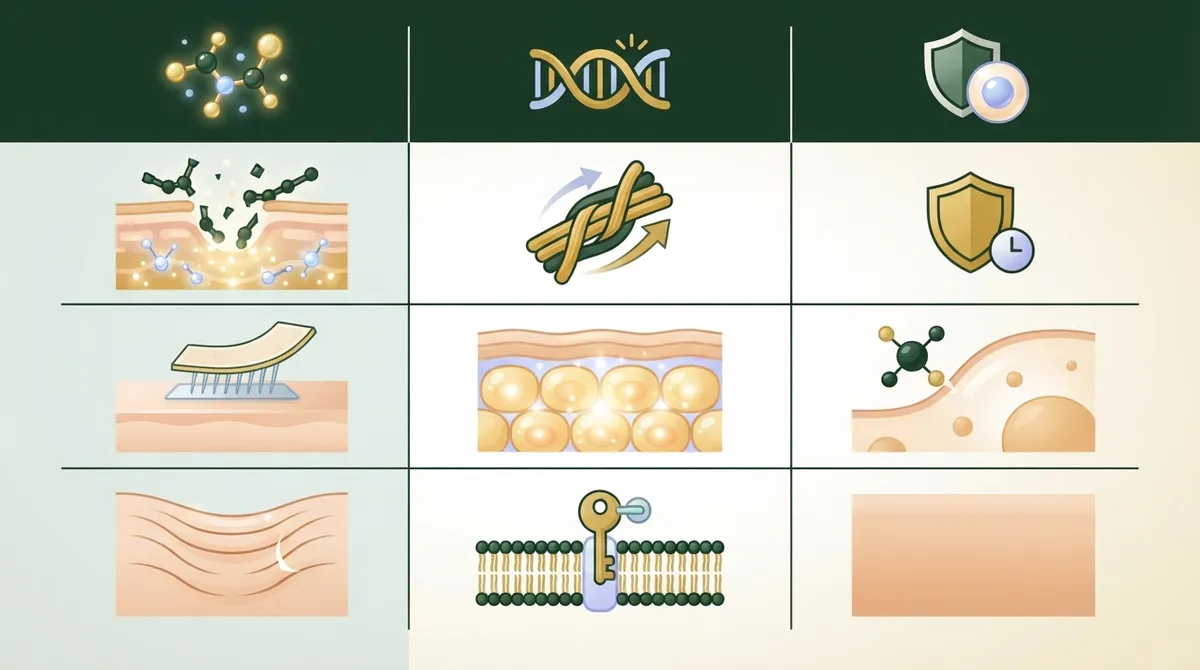
The Quick Comparison: Skin Peptides at a Glance
Before we dive in, here is a simple snapshot. It shows how the main options differ in form and in how strong the human evidence is.
| Option | Common Form | Human Evidence for Skin | Best Way to Think About It |
|---|---|---|---|
| Oral collagen peptides | Powder, capsule | Moderate | Supplement for hydration and elasticity |
| GHK-Cu (topical) | Cream, serum | Limited but growing | Cosmetic skincare ingredient |
| GHK-Cu (injectable) | Compounded injection | Very limited | Not proven for cosmetic benefit |
| GLOW blends | Compounded injection | None in human trials | Marketing term, not a proven treatment |
1. Oral Collagen Peptides
Let’s start with the one that has the most human research behind it. Oral hydrolyzed collagen peptides are collagen proteins broken into small pieces so your body can absorb them.
A 2026 systematic review looked at 35 randomized trials with 2,534 participants. It found pooled improvements in skin hydration and elasticity. Wrinkle and other structural changes were less consistent. Some benefits showed up with at least 12 weeks of use.
That is encouraging, but it is not magic. Results vary by product, dose, and study design. If you want to dig deeper, read our take on collagen peptide wrinkle mistakes to avoid.
2. GHK-Cu (Copper Tripeptide-1)
GHK-Cu is the peptide most often promoted for skin glow. It is a small peptide that binds copper. In lab studies, it appears to influence collagen-related processes and tissue repair.
Here is the honest part. Lab findings do not automatically mean visible results on your face. Human evidence for noticeable cosmetic benefits is limited. In one small study described in a 2026 report, 20 women used a topical product for one month. The collagen findings were preliminary and should not be treated as proof of visible change.
Curious about safety? See our guide on how to evaluate GHK-Cu peptide safely.
3. Topical Copper Peptides
This is where GHK-Cu lives in the skincare world. Creams and serums with copper peptides are sold as cosmetics. They are not the same as injections, and the evidence and risks do not automatically transfer between the two.
Topical products can also cause local irritation for some people. If your skin is sensitive, start slowly and patch test first.
4. Injectable GHK-Cu
Some peptide therapy discussions include compounded GHK-Cu injections. This is where we want to be extra clear and careful.
- GHK-Cu is not FDA-approved as a drug to improve skin appearance.
- Compounded drugs are not FDA-approved. FDA does not review them for safety, effectiveness, or quality before they are marketed.
- Human trial data showing that injections improve skin glow is lacking.
In a small study of GHK-Cu after CO2 laser resurfacing, 13 participants completed follow-up. People felt happier with the GHK-Cu regimen. But objective comparisons did not show a clear advantage in redness, wrinkles, or overall skin quality. That gap between how people feel and what measurements show is worth remembering.
5. BPC-157
BPC-157 is best known in peptide circles for recovery and healing conversations. You can read more in our post on whether BPC-157 is safe.
For skin glow, it is sometimes tossed into blends. But it has not been established as a proven skin-glow treatment in human trials. We mention it here because you will likely see it, not because the evidence supports it for your complexion.
6. TB-500
TB-500 is another peptide that often shows up next to BPC-157. Like BPC-157, it is talked about for tissue repair. It is not a proven cosmetic skin treatment.
If a seller promises glowing skin from TB-500 alone, treat that claim with caution. Ask for the human data. If they cannot show it, that tells you something.
7. “GLOW” Peptide Blends
You may have seen the name GLOW on a product label. These blends are commonly described as combining GHK-Cu with BPC-157 and TB-500.
Here is the key point: the blend and its cosmetic benefits have not been established in human clinical trials. The name sounds great, but a catchy label is not evidence. Always ask what is in the vial, who made it, and what research backs the claim.
8. Oral Collagen Plus Supporting Nutrients
Many collagen products add things like vitamin C or hyaluronic acid. These add-ons are popular because they sound logical. Still, the strongest human data we have is for collagen peptides themselves, and results vary by formula.
If you are shopping, look for clear labeling and third-party testing. For more on this, see 5 things to know about collagen peptides for women.
9. Signal Peptides in Skincare
Signal peptides are a broad group found in many serums. The idea is that they “signal” skin cells to behave in a more youthful way. A 2026 systematic review and meta-analysis covered 19 randomized trials with 1,341 participants testing oral or topical peptides for skin aging. Results varied by outcome and formulation.
Translation: some products may help some outcomes, but there is no single best peptide for everyone. For a broader look, check our list of the best anti-aging peptides for skin.
10. Carrier Peptides
Carrier peptides are designed to deliver trace minerals, like copper, to skin cells. GHK-Cu is the best-known example. Because of this, you will often see the two ideas blend together in marketing.
The takeaway is simple. A cream with a carrier peptide is a cosmetic. It is a very different thing from a compounded injection, even if the names overlap.
11. Enzyme-Inhibiting Peptides
Some skincare peptides are meant to slow the breakdown of collagen and other structural proteins. They are mostly used in topical products. The research is early, and results depend on the exact formula.
These can be a gentle add-on to a routine, but they are not a replacement for sun protection, sleep, and good nutrition.
Cosmetics vs. Supplements vs. Compounded Injections
This is the biggest source of confusion, so let’s make it simple. Each category has different rules, different evidence, and different risks.
| Category | What It Is | Regulatory Reality | What to Ask |
|---|---|---|---|
| Cosmetics | Creams and serums applied to skin | Sold as skincare, not drugs | Is my skin reacting? Is the formula tested? |
| Supplements | Oral collagen powders and capsules | Not approved as drugs | Is it third-party tested? How long should I try it? |
| Compounded injections | Custom-made peptide vials | Not FDA-approved or reviewed for safety, effectiveness, or quality | Where is it made? What is the human evidence? |
One more thing worth repeating. Seeing a peptide in an FDA review list or a compounding category does not mean the substance or the finished product is approved or proven to work. If you want to understand this better, read about approved peptides vs. wellness peptides.
How to Build a Smart, Evidence-Based Glow Plan
Here is a friendly step-by-step approach. It keeps your expectations realistic and your skin safe.
- Define your goal. Is it hydration, texture, tone, or firmness? Pick one or two.
- Start with the basics. Daily sunscreen, gentle cleansing, and a good moisturizer do more than most people think.
- Consider collagen peptides. They have the most human data. Give them at least 12 weeks before judging.
- Try topical peptides carefully. Patch test and introduce one new product at a time.
- Talk to a licensed provider. Before considering any injectable or compounded option, discuss the limited evidence and the alternatives.
- Track your results. Take photos in the same light every few weeks so you can see what is really changing.
Safety Questions to Ask Any Provider
If an injectable peptide is on the table, you deserve clear answers. Here are good questions to bring to your visit:
- What is the human evidence for this specific peptide and this specific use?
- Is this product FDA-approved, or is it compounded?
- Where is it made, and how is quality checked?
- What side effects or risks should I know about?
- What lower-risk alternatives could we try first?
Good providers welcome these questions. If you feel brushed off, that is a red flag. Our guide on 15 peptide consultation questions to ask can help you prepare.
Why Lab Work Matters Before You Start
Skin is a reflection of what is going on inside you. Sleep, stress, hormones, and nutrition all play a part. That is why a plan based on your own blood work makes more sense than guessing.
At Allura Longevity, care starts with a virtual consultation and lab work, then moves to a plan built around your goals and health history. Licensed providers monitor your progress and adjust as needed. Our care is delivered by telehealth and shipped to your door, which is great for busy schedules. Learn why in 7 reasons lab work matters before peptide therapy.
What About Realistic Timelines?
Skin changes slowly. Most research on collagen peptides points to at least 12 weeks before you can expect to see shifts in hydration or elasticity. Topical products may take a similar window. If anyone promises overnight glow from peptides, be skeptical.
For a deeper look at pacing, see how long until peptides improve skin.
The Bottom Line on What Peptides Are Used for Skin Glow
So, what peptides are used for skin glow? The most talked-about are GHK-Cu, oral collagen peptides, signal and carrier peptides in skincare, and blends that add BPC-157 and TB-500. Of these, oral collagen has the strongest human data for hydration and elasticity. GHK-Cu is promising in the lab but still limited in people. GLOW blends are not proven.
The good news is you have options, and you do not have to guess. A thoughtful, lab-informed plan with a licensed provider can help you choose what fits your body, your budget, and your comfort level. Ready to talk it through? Request a consultation with the Allura Longevity team, or call (813) 510-6277. Spots for new clients each month are limited, so reach out soon. For additional reading on the science, the National Library of Medicine is a trustworthy place to explore.
FAQs
Q: What peptides are used for skin glow?
A: The most common are GHK-Cu (copper peptide), oral collagen peptides, and signal or carrier peptides found in skincare. Some products also pair GHK-Cu with BPC-157 and TB-500 in so-called GLOW blends. Of these, oral collagen has the most human evidence, mainly for hydration and elasticity.
Q: Does GHK-Cu really improve skin brightness or collagen?
A: Lab research suggests GHK-Cu may influence collagen-related processes and tissue repair. But human evidence for visible cosmetic benefits is still limited, so it is best viewed as promising rather than proven. Topical and injectable forms also cannot be assumed to work or carry risk the same way.
Q: Is injectable GHK-Cu FDA-approved?
A: No. GHK-Cu is not FDA-approved as a drug to improve skin appearance. Compounded products are not reviewed by the FDA for safety, effectiveness, or quality before they are sold, so it is smart to talk through the risks and alternatives with a licensed provider first.
Q: Do oral collagen peptides improve skin hydration and elasticity?
A: A 2026 review of 35 randomized trials found pooled improvements in hydration and elasticity, though wrinkle results were less consistent. Benefits were often linked to at least 12 weeks of use, so patience is key.
Q: What are safer, evidence-based options for skin glow?
A: Daily sunscreen, gentle skincare, good sleep, and balanced nutrition are the foundation. Oral collagen peptides and carefully chosen topical products can be sensible add-ons. A licensed provider can help you decide whether anything more makes sense for you.