
Key Takeaways
-
Medically supervised fat loss peptides are prescription medicines like semaglutide (Wegovy) and tirzepatide (Zepbound), used with clinician screening, lab work, and follow-up, not as shortcuts.
-
In large trials, semaglutide averaged 14.9% weight loss at 68 weeks and tirzepatide up to 20.9% at 72 weeks, though individual results vary and both require lifestyle support.
-
Compounded versions are not FDA-reviewed for safety, effectiveness, or quality, and the FDA has reported dosing errors, so doses should never be self-calculated or adjusted.
-
Boxed warnings on these medicines mean people with a personal or family history of medullary thyroid carcinoma or MEN 2 should not use them, making a screening visit essential.
If you have ever scrolled through social media and seen the phrase “fat loss peptides,” you are not alone in feeling a little confused. Some posts make big promises. Others sound a bit risky. So what is actually real, and what is just hype?
Here is the friendly truth: medically supervised fat loss peptides usually means prescription peptide-based medicines, like semaglutide and tirzepatide, used with clinician guidance, lab work, and follow-up. They are not magic shots, and they are not meant to replace healthy habits. But for many adults, they can be a powerful tool when used safely.
In this guide, we will walk through how these medicines work, who may qualify, what the research shows, and what to watch out for. Whether you are a busy professional, a data-loving biohacker, or someone who wants a smarter path to better health in midlife and beyond, you will find clear answers here. Let’s dive in together.

What Are Medically Supervised Fat Loss Peptides?
“Fat loss peptides” is a broad marketing phrase. It is not one single treatment. In real medical care, it most often points to a group of peptide-based medicines that affect hunger and fullness signals in the body.
The best-studied options are:
- Semaglutide (sold as Wegovy for weight management), a GLP-1 receptor agonist
- Tirzepatide (sold as Zepbound for weight management), a dual GIP/GLP-1 receptor agonist
“Medically supervised” is the key part. It means a licensed provider checks your health history, reviews your labs, picks a safe starting dose, and follows your progress over time. If you want a deeper look at why oversight matters, our guide on why you should choose medically supervised peptides in 2026 breaks it down nicely.
How Do These Peptides Help With Fat Loss?
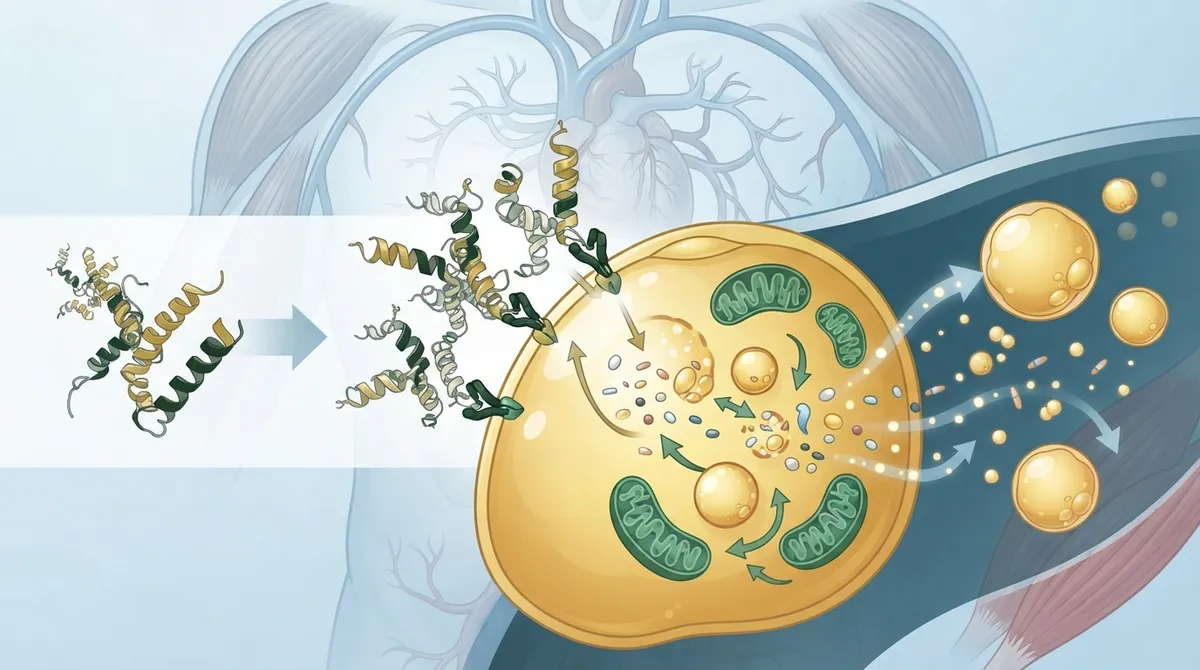
Think of these medicines as helping your body’s “I’m full” messages speak a little louder. They act on appetite and food-intake pathways in the brain and gut. Many people notice fewer food cravings, feel full sooner, and find it easier to stick with a lower-calorie eating plan.
That last part matters. These medicines work alongside reduced-calorie eating, regular movement, and ongoing clinical care. They are a helper, not a shortcut. To learn more about the science, check out how GLP-1 works for weight loss.
Semaglutide vs. Tirzepatide at a Glance
| Feature | Semaglutide (Wegovy) | Tirzepatide (Zepbound) |
|---|---|---|
| How it works | Activates GLP-1 receptors | Activates GIP and GLP-1 receptors |
| How it is taken | Weekly injection | Weekly injection |
| Key trial result | -14.9% weight at 68 weeks (STEP 1) | Up to -20.9% weight at 72 weeks (SURMOUNT-1) |
| Lifestyle support needed | Yes | Yes |
Curious which one might fit you? Our comparison of semaglutide vs. tirzepatide goes deeper.
What Does the Research Actually Show?
Let’s look at real numbers from large clinical trials. These are averages, so your own results may be different.
- STEP 1 (2021): Adults with overweight or obesity (without diabetes) who took semaglutide 2.4 mg weekly plus lifestyle support lost an average of 14.9% of body weight at 68 weeks. The placebo group lost 2.4%.
- SURMOUNT-1 (2022): Adults with obesity (without diabetes) on tirzepatide lost an average of 15.0% (5 mg), 19.5% (10 mg), and 20.9% (15 mg) at 72 weeks. The placebo group lost 3.1%.
- 5% weight loss goal: In SURMOUNT-1, 85.1%, 88.9%, and 90.9% of people on the three tirzepatide doses lost at least 5% of body weight, compared with 34.5% on placebo.
Why does 5% matter? The National Library of Medicine and other health authorities note that losing 5% to 10% of starting weight may improve blood sugar, blood pressure, and triglycerides. That is a real health win, not just a number on a scale.
Who May Qualify for Prescription Fat Loss Peptides?
In the United States, FDA-approved weight-management medicines are generally considered for adults who meet one of these criteria:
- A BMI of 30 or higher, or
- A BMI of 27 or higher with at least one weight-related health condition (such as high blood pressure or high cholesterol)
Specific product labels and age rules can differ, so a licensed provider must review your situation. They will look at your medical history, current medications, risks, and goals. If you are wondering where you fit, read how you qualify for GLP-1 medication in 2026.
Who Should Not Use These Medicines?
Semaglutide and tirzepatide weight-management labels carry a boxed warning about thyroid C-cell tumors seen in rodents. They are not for people with:
- A personal or family history of medullary thyroid carcinoma
- Multiple Endocrine Neoplasia syndrome type 2 (MEN 2)
This is exactly why a real screening visit matters. A good provider will ask these questions before anything is prescribed.
What Are the Side Effects and Risks?
Being honest here helps you feel confident and prepared. Common side effects of GLP-1-based medicines are mostly stomach-related:
- Nausea
- Vomiting
- Diarrhea
- Constipation
- Abdominal discomfort
Most people find these are strongest when they start or raise a dose, and they often ease with time and gradual dose steps. Constipation is a common one, and we cover simple fixes in our article on GLP-1 constipation. You can also explore what causes GLP-1 side effects and how to manage them.
Your provider should always review the product label with you and watch for rare but serious concerns. Never ignore symptoms that feel severe or unusual. Call your provider right away if something feels off.
Compounded vs. FDA-Approved: What You Need to Know
This is one of the most important sections in this article, so let’s talk about it clearly.
FDA-approved medicines go through review for safety, effectiveness, and quality. Compounded drugs do not. The FDA says compounded drugs are not reviewed before they are marketed, and they should generally be used only when a patient’s medical need cannot be met by an approved drug.
The FDA has also reported dosing errors, including some that led to hospitalization, linked to compounded injectable semaglutide. Errors can come from mixing up concentrations or units, measuring doses incorrectly, or raising doses too fast. As of May 31, 2026, the FDA had received 990 adverse-event reports tied to compounded semaglutide and more than 730 tied to compounded tirzepatide. Reports do not prove cause, and they may be underreported, but they are a clear reason to be careful.
| Question to Ask | Why It Matters |
|---|---|
| Is this FDA-approved or compounded? | Approved drugs are reviewed for safety and quality |
| Who sets and adjusts my dose? | You should never calculate doses on your own |
| Is a licensed provider monitoring me? | Follow-up catches problems early |
| Is this called a “research peptide”? | Research-only products are not for human use |
If you are weighing your options, our guide on how to evaluate compounded GLP-1 medication safely is a helpful read.
What Does Medical Supervision Look Like Step by Step?
Good care is organized and personal. Here is a typical path:
- Consultation: You talk with a licensed provider about your goals, history, and medications.
- Lab work: Blood tests help your provider understand your metabolic health. See our list of labs for peptide therapy and why they matter.
- Eligibility review: Your provider checks BMI, health conditions, and any contraindications.
- Gradual dose escalation: You start low and move up slowly to improve comfort.
- Ongoing follow-up: Your provider tracks weight, health measures, and side effects.
NIDDK notes that clinicians may advise stopping a medication if a patient has not lost at least 5% of starting weight after 12 weeks on the full dose. Decisions are always individualized, which is why check-ins matter so much.
Why Telehealth Fits a Busy Life
Let’s be real: not everyone has time to sit in a waiting room. Telehealth lets you meet with a provider from your couch, complete labs locally, and get your medicine delivered to your door. For busy professionals and anyone who values convenience, that can make staying consistent much easier.
If you are curious about the details, read how to give GLP-1 injections at home safely, and how a telehealth prescription works for peptides.
Tips to Get the Most From Your Plan
- Prioritize protein and strength training to help protect muscle (see fat loss peptides that protect muscle)
- Stay hydrated and eat smaller, slower meals
- Keep a simple log of weight, mood, sleep, and side effects
- Report any concerns to your provider early
- Plan for long-term habits, not a quick fix
Where Allura Longevity Fits In
At Allura Longevity, we offer personalized, medically supervised peptide therapy through telehealth. You begin with a $50 virtual consultation, complete blood work through LabCorp, and receive a customized six-month plan delivered to your home. Our licensed providers, led by Ashley, a board-certified Family Nurse Practitioner, monitor your progress and adjust your plan along the way. We currently serve clients in Florida, Georgia, Texas, Connecticut, Indiana, Maryland, New York, and California.
Our approach pairs weight loss support, including GLP-1 medications, with a whole-person view of energy, sleep, metabolism, and long-term vitality. For more on what to expect, see how to lose weight with peptide therapy in 2026.
Ready to Take the Next Step?
Medically supervised fat loss peptides can be a safe, effective part of a bigger health plan when the right experts guide you. The goal is steady progress, better health numbers, and feeling like yourself again, not chasing hype.
Spots for new clients are limited each month. If you are ready for a personalized plan built around your labs and goals, request a consultation today, or call (813) 510-6277. We would love to help you get started on the right foot.
FAQs
Q: What are medically supervised fat loss peptides?
A: They are prescription peptide-based medicines, most often semaglutide and tirzepatide, used with guidance from a licensed provider. Your provider reviews your health history and labs, sets your dose, and follows your progress over time.
Q: Which peptide medications are FDA-approved for weight loss?
A: Semaglutide (Wegovy) and tirzepatide (Zepbound) are the best-established FDA-approved peptide-based options for chronic weight management. They are meant to be used with reduced-calorie eating, physical activity, and ongoing clinical care.
Q: How much weight can semaglutide or tirzepatide help people lose?
A: In clinical trials, semaglutide users lost an average of 14.9% of body weight at 68 weeks, and tirzepatide users lost up to 20.9% at 72 weeks. These are averages, so your own results may be different.
Q: Are compounded semaglutide or tirzepatide injections FDA-approved?
A: No. Compounded versions are not FDA-approved and are not reviewed by the FDA for safety, effectiveness, or quality. The FDA has also warned about dosing errors with compounded injectable semaglutide, so you should never calculate or change doses on your own.
Q: What medical monitoring is needed while taking a weight loss peptide?
A: Expect baseline lab work, a screening for safety concerns, slow dose increases, and regular check-ins to track weight, health measures, and side effects. Your provider will decide whether continuing treatment is right for you based on your progress.