Key Takeaways
-
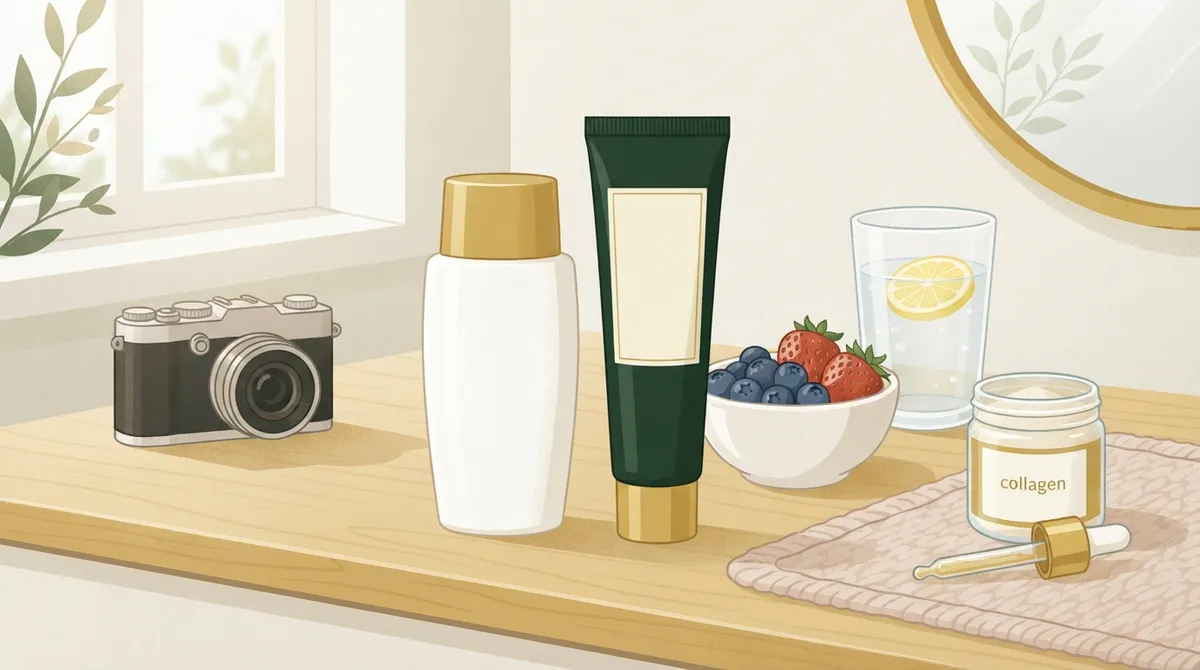
Peptide products vary widely in evidence: oral hydrolyzed collagen has the most human research, topical cosmetic peptides have limited support, and injectable peptides like GHK-Cu lack adequate human data for skin.
-
A 2025 meta-analysis found collagen benefits were concentrated in industry-funded studies, while higher-quality, non-industry-funded trials showed no significant effects, so expectations should stay modest.
-
Injectable compounded peptides such as GHK-Cu, BPC-157, and TB-500 are not FDA-approved, and their safety, dosing, and quality are uncertain, so they are not recommended for skin rejuvenation.
-
Proven basics like daily sunscreen, retinoids, quality sleep, and good nutrition deliver stronger skin benefits than peptides and should form the foundation of any skin plan.
-
Oral collagen studies typically measure results around three months, and changes are usually gradual, so track progress with consistent photos taken in the same light.
-
Talk with a licensed clinician before adding any peptide, especially if you are pregnant, breastfeeding, taking medications, or managing a medical condition.
Scroll through social media for five minutes and you will see someone swearing that a peptide changed their skin. Smoother. Firmer. Glowing. It is easy to want in. But here is the honest truth: the word “peptide” covers a huge range of products, and the proof behind them is very uneven.
If you are looking for someone to recommend peptides for healthier skin, the best advice starts with a reality check. Some peptide products have decent early evidence. Others have almost none in humans. Telling them apart can save you money, time, and a lot of frustration.
In this friendly guide, we walk through what the research actually says in 2026, which peptide types may be worth discussing, and which ones deserve a big question mark. We also share how to work with a licensed clinician so you stay safe. Whether you are a busy professional, a health optimizer, or just curious about aging well, you will leave with a clear, honest plan.

What Do People Mean by “Peptides for Skin”?
Peptides are short chains of amino acids, the building blocks of protein. Your skin is full of them. Collagen, the protein that keeps skin firm, is made of long chains of amino acids.
The problem is that “peptide therapy” is used for very different things. Mixing them up leads to wrong expectations. Here are the three main groups:
- Oral collagen peptides: powders, capsules, or drinks you swallow.
- Topical peptides: creams and serums you apply to your face.
- Injectable or compounded peptides: products given by injection, such as GHK-Cu or BPC-157.
Evidence for one group does not prove anything about the others. A study on collagen powder cannot tell us that an injection is safe or works. Keep that in mind as we go. For a simple primer, see this explainer on what are peptides.

The Evidence Snapshot: What Is Actually Supported?
Let us look at the three groups side by side. This table gives a quick, honest picture of where things stand.
| Peptide Type | How It Is Used | Strength of Human Evidence for Skin | Main Caution |
|---|---|---|---|
| Oral hydrolyzed collagen peptides | Swallowed daily as powder or capsule | Modest and mixed; some trials show benefit | Results weaker in higher-quality, non-industry-funded studies |
| Topical cosmetic peptides | Creams and serums on the skin | Limited; subtle cosmetic effects at best | Cosmetics are not approved to treat skin disease |
| Injectable GHK-Cu, BPC-157, TB-500, blends | Injected, often compounded | Not adequate in humans for skin rejuvenation | Safety, dosing, and product quality are uncertain |
See the pattern? The more invasive the product, the thinner the human proof. That is the key idea to carry through the rest of this article.
Oral Collagen Peptides: The Best-Studied Option
If someone asks us to point to the peptide type with the most skin research behind it, it is oral hydrolyzed collagen. These are collagen proteins broken into small pieces so your body can absorb them.
What the Research Shows
A 2023 systematic review and meta-analysis pulled together 26 randomized controlled trials with 1,721 participants. It found that hydrolyzed collagen improved skin elasticity compared with placebo (pooled effect size 0.72; 95% CI 0.40 to 1.03). That sounds encouraging.
But there is a twist. A 2025 meta-analysis of 23 randomized trials and 1,474 participants favored collagen for hydration, elasticity, and wrinkles overall. Yet when researchers looked closer, the benefits were concentrated in studies funded by industry. Studies without pharmaceutical-company funding, and the higher-quality studies, did not show significant effects.
That does not mean collagen peptides are useless. It means the picture is not definitive, and we should stay humble about the claims.
A Look at a Combination Product
A 2024 randomized study tested a collagen-peptide and micronutrient product in healthy women. After three months, the average global wrinkle score dropped from 5.9 to 5.0, and skin elasticity improved. One mild side effect, a facial red rash, was reported.
Here is the catch. Because the product mixed collagen peptides with vitamins and minerals, we cannot credit the peptides alone. It is a nice result, but not proof that collagen peptides are the star.
Is It Worth Trying?
For many healthy adults, oral collagen is a low-drama option to discuss with a clinician. Just keep your expectations grounded. If you want a deeper look at mistakes people make here, our guide on 9 Collagen Peptide Wrinkle Mistakes to Avoid in 2026 is a helpful read. You can also explore 5 Things to Know: Are Collagen Peptides Effective for Women? for more detail.
Topical Peptides: Gentle, Cosmetic, and Limited
Many serums and creams list “signal peptides” or “copper peptides” on the label. These are made to sit on the skin’s surface. They are very different from injections.
The research on visible benefits is generally limited. Some people like how their skin looks and feels, and that is fine. But cosmetic products are not approved to treat skin diseases, and they are not a substitute for proven care.
A key point many people miss is the difference between topical copper peptides and injectable GHK-Cu. The cream on your bathroom shelf is a cosmetic. The injectable version is a compounded drug with a very different risk profile. We break this down further in How to Evaluate GHK-Cu Peptide Safely in 2026.
Injectable Peptides for Skin: Where We Need to Pump the Brakes
This is the part we want to be extra clear about, because it is where hype runs wild. You may have heard about GHK-Cu, BPC-157, TB-500, or blends sold with names like GLOW or KLOW for skin rejuvenation.
Here is what we can honestly say: there is not adequate human clinical evidence to recommend these injectable peptides for skin rejuvenation. Findings from lab dishes or animals do not prove they are safe or effective in people.
Why Regulation Matters
In the United States, compounded drugs are not FDA-approved. The FDA does not review them for safety, effectiveness, or quality before they are sold. Unapproved injectables can carry real risks, including:
- Contamination of the product
- Uncertain or inconsistent dosing
- Injection-site reactions
- Immune responses
This is exactly why we urge caution with online sellers and “peptide parties.” If a product promises dramatic skin results with no solid human data, that is a red flag worth respecting. For more on staying safe, read How to Weigh the Risks of Peptide Therapy Safely in 2026.
What Really Moves the Needle for Healthier Skin
Here is the friendly truth that might surprise you. The biggest wins for skin often come from the basics. Peptides may be a nice extra, but they work best on top of a solid foundation.
- Daily sunscreen. Sun exposure is a leading driver of visible skin aging.
- Prescription or over-the-counter retinoids. These are among the most established tools for texture and fine lines.
- Good sleep and stress care. Skin repairs itself overnight.
- Balanced nutrition and hydration. Protein, healthy fats, and colorful plants all help.
- Hormone and lab review. Sometimes skin changes are tied to bigger shifts in the body.
That last point matters for our readers who are in midlife. Skin can change along with hormones, sleep, and energy. If that sounds like you, our piece on How to Navigate Perimenopause With BHRT and Peptides offers helpful context.
How Peptide Options Compare Against Proven Skin Care
It helps to see everything on one page. This table compares common choices by evidence and practicality.
| Option | Evidence Level | Best For | Notes |
|---|---|---|---|
| Sunscreen | Strong | Everyone | Foundation of any skin plan |
| Retinoids | Strong | Fine lines, texture | Talk to a clinician if pregnant or breastfeeding |
| Oral collagen peptides | Modest, mixed | Hydration, elasticity support | Gains may be small; industry funding affects results |
| Topical peptide serums | Limited | Added cosmetic feel | Not a treatment for skin disease |
| Injectable peptides for skin | Not established | Not recommended for skin | Regulatory and quality concerns |
Notice how the proven basics sit at the top. That is not boring. That is smart.
How to Work With a Clinician on Skin and Peptides
Instead of guessing, here is a simple way to approach it. Think of it as a short, friendly checklist you can bring to a consultation.
- Share your goals. Is it hydration, fine lines, firmness, or overall glow?
- Review your health history. Include medications, supplements, and any conditions.
- Get baseline lab work. Blood work can reveal things that affect skin, energy, and recovery.
- Start with evidence-supported steps. Sunscreen, retinoids, and lifestyle first.
- Ask about each product’s regulatory status. Is it approved, a supplement, or compounded?
- Reassess in a few months. Adjust based on what you actually see and feel.
If you are pregnant, breastfeeding, taking medications, or managing a medical condition, talk with a qualified clinician before adding any supplement or treatment. That is just good sense.
Setting Realistic Timelines
People always ask how long it takes to see change. For oral collagen studies, researchers often measure results after about three months, as in the 2024 combination-product study. That gives a rough sense, though your experience may differ. For a clearer picture, see How Long Until Peptides Improve Skin? A 2026 Timeline.
A few friendly reminders on expectations:
- Skin changes are usually gradual, not overnight.
- Photos taken in the same light help you judge progress fairly.
- Consistency with sunscreen and sleep often matters more than any single product.
Where Allura Longevity Fits In
At Allura Longevity, we believe honest guidance beats hype every time. Our telehealth model is built around personalized, medically supervised care. You start with a $50 virtual consultation, complete blood work through LabCorp, and work with licensed providers, led by Ashley, a board-certified Family Nurse Practitioner. Plans are reviewed and adjusted over time, and care is delivered to your door.
When it comes to skin, we focus on the whole picture: labs, hormones, recovery, and realistic, evidence-aware choices. We do not claim that injectable peptides are a proven skin fix, because the human data is not there yet. What we can do is help you build a thoughtful plan around your biology and goals, with clear conversations about what is supported and what is not. If you want to learn more about how this works, check out What Peptides Do for Skin: A Real-World Guide for 2026 and Do Peptides for Skin Regeneration Really Work in 2026?.
We are licensed in Florida, Georgia, Texas, Connecticut, Indiana, Maryland, New York, and California, so you can get care from home without a long commute.
Final Thoughts: Be Curious, Stay Careful
So, which peptides do experts recommend for healthier skin? The honest answer is a layered one. Oral collagen peptides have some modest, mixed support. Topical peptides can add a pleasant cosmetic touch. Injectable options like GHK-Cu and BPC-157 do not have enough human evidence for skin, and product quality is a real concern.
The good news is you do not need to chase trends. Strong sun protection, retinoids, sleep, nutrition, and a clinician who looks at your full health picture will do more than any trendy vial. Peptides, when used wisely and honestly, can be one small part of that plan.
Ready to talk through your skin and wellness goals with a licensed provider? Request a consultation with Allura Longevity today. Spots for new clients are limited each month, and you can reach us at (813) 510-6277. We would love to help you build a plan that feels smart, safe, and made for you.
FAQs
Q: Which peptides are best supported by evidence for healthier skin?
A: Oral hydrolyzed collagen peptides have the most human research, with some trials showing modest gains in hydration and elasticity. The results are mixed, though, and benefits were weaker in higher-quality, non-industry-funded studies. Topical peptides have limited evidence, and injectable options are not established for skin.
Q: Are injectable peptides like GHK-Cu safe or effective for skin rejuvenation?
A: There is not enough human clinical evidence to recommend injectable GHK-Cu, BPC-157, or TB-500 for skin rejuvenation. Lab and animal findings do not prove safety or results in people. Compounded injectables are also not FDA-approved, so quality and dosing can vary.
Q: How long might it take to see results from collagen peptide supplements?
A: Many studies check results after about three months, so that is a reasonable window to watch for gentle changes. Your results may be smaller or take longer, and they are not guaranteed. Pairing collagen with sunscreen and good sleep gives your skin its best chance.
Q: What is the difference between topical copper peptides and injectable GHK-Cu?
A: Topical copper peptides are cosmetic products applied to the skin’s surface, and their visible benefits are generally limited. Injectable GHK-Cu is a compounded drug with a very different risk profile and little human evidence for skin. Do not assume the safety of one applies to the other.
Q: How do peptide products compare with sunscreen and retinoids?
A: Sunscreen and retinoids have much stronger, long-established evidence for protecting and improving skin. Peptides are best seen as a possible add-on, not a replacement. A licensed clinician can help you build a plan that puts the proven basics first.