
Key Takeaways
-
GHK-Cu is among the most studied skin peptides, with 12-week topical studies reporting improvements in fine lines, laxity, and skin density, though these were small trials on specific products.
-
Evidence differs by peptide type: topical cosmetic peptides are promising but early, oral collagen peptides show modest hydration and elasticity effects, and injectable peptide therapy is not established for skin aging.
-
No single peptide is universally 'best'; results depend on formula, dose, skin type, and consistent use over about 8 to 12 weeks.
-
Topical peptide products are cosmetics, not FDA-approved skin rejuvenation drugs, and dramatic promises or unapproved systemic peptides should be treated as red flags.
-
Sunscreen, a gentle moisturizer, and adequate protein and sleep are foundational habits that support peptide results, so they should not be skipped.
-
Introduce one peptide product at a time and patch test it on your inner arm, so you can identify what works and what irritates your skin.
If you have ever stood in front of the mirror and wondered whether that little jar of “peptide serum” is doing anything at all, you are not alone. Peptides are everywhere in 2026. They show up in face creams, collagen powders, and even medical wellness plans. But the word “peptide” covers a lot of ground, and not every peptide works the same way.
This guide walks you through the best anti aging peptides for skin, with a friendly, honest look at what the research really says. We will cover topical peptides, oral collagen peptides, and the medical side of peptide therapy. We will also be clear about where the evidence is strong, where it is still early, and where marketing gets ahead of science.
Whether you are a health optimizer, a busy professional, or just someone who wants to age well, you will leave with a clear game plan. If you want a refresher first, check out 8 Facts That Explain What Are Peptides in 2026. Ready? Let’s dive in.
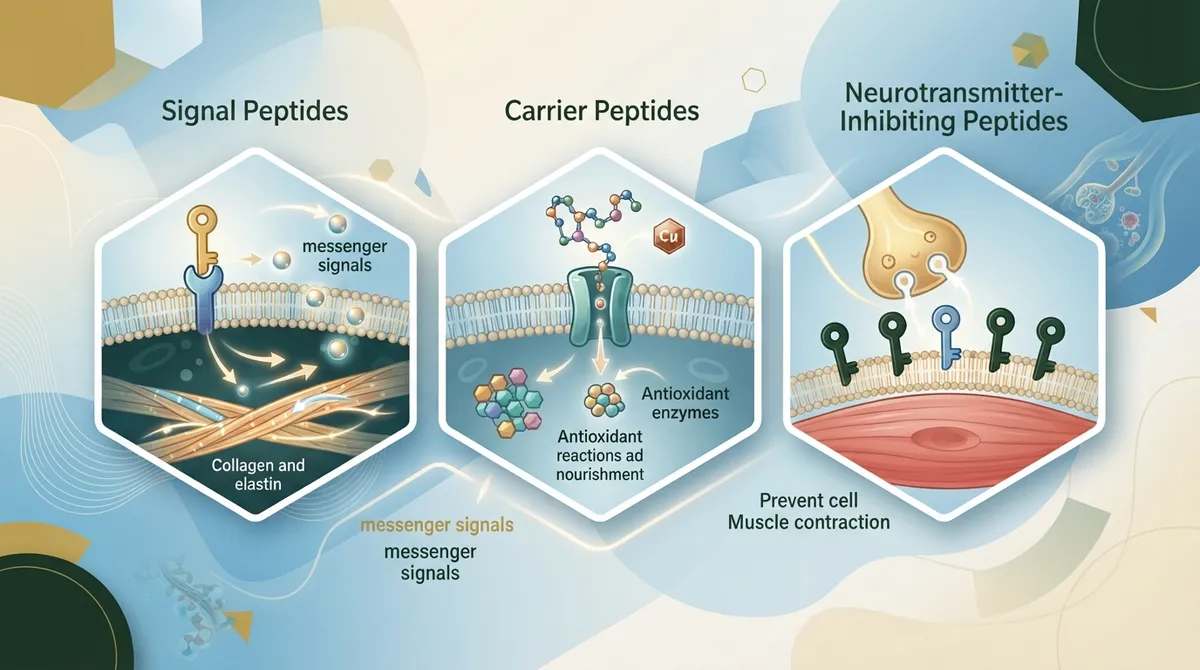
First, Understand the Three Types of Skin Peptides
Before we rank anything, we need to sort peptides into buckets. This is the number one source of confusion, so let’s clear it up.
- Topical cosmetic peptides: Creams and serums you apply to the skin, such as GHK-Cu and palmitoyl peptides.
- Oral collagen peptides: Powders, capsules, or drinks you swallow. These are supplements.
- Medical peptide therapy: Prescription or compounded peptides, often injected, that are prescribed by a licensed provider.
Here is the key point. Evidence for one bucket does not automatically apply to the others. A study on a face cream tells us about that face cream, not about an injection. Keep that in mind as we go.
| Peptide Type | How It Is Used | Evidence Level for Skin | Regulatory Status |
|---|---|---|---|
| Topical cosmetic peptides | Applied to skin | Promising but early | Cosmetic products, not FDA-approved drugs for skin rejuvenation |
| Oral collagen peptides | Swallowed daily | Modest, varies by product | Dietary supplement |
| Injectable or systemic peptides | Prescribed by a provider | Not established for skin aging | Compounded options are not FDA-approved anti-aging treatments |

The 14 Best Anti Aging Peptides for Skin
Let’s be honest right away: no single peptide is the universal “best.” Results depend on the formula, the dose, your skin, and how consistently you use it. Think of this list as a map of the most talked-about and best-studied options, not a guarantee.
1. GHK-Cu (Copper Tripeptide-1)
GHK-Cu is probably the most famous skin peptide out there. It is a small, naturally occurring tripeptide that binds copper. Researchers have studied it for its proposed role in skin remodeling and collagen-related processes.
A review of GHK-Cu research describes 12-week topical studies, including one with 71 women using a facial cream and another with 41 women using an eye cream. Reported improvements included skin appearance, laxity, fine lines, and skin density. That is encouraging. Still, these were small studies on specific products, so they do not prove one GHK-Cu product beats all others. For a deeper look, see How to Evaluate GHK-Cu Peptide Safely in 2026.
2. Palmitoyl Pentapeptide-4 (Matrixyl)
This is one of the classic “signal peptides.” The idea is that it sends messages to skin cells that encourage them to behave like younger cells. It shows up in countless wrinkle creams. Early studies are interesting, but results vary a lot by formula.
3. Palmitoyl Tripeptide-1 and Tetrapeptide-7
These two are often paired together in products. They are studied for fine lines and skin texture. Like other signal peptides, the best results tend to appear in well-designed formulas used consistently over weeks.
4. Acetyl Hexapeptide-8 (Argireline)
Often called a “gentle expression line” ingredient, this peptide is popular for lines around the eyes and forehead. It is a cosmetic ingredient, so expect subtle, not dramatic, changes.
5. Copper Peptide Eye Formulas
Eye-area products with copper peptides get their own spot because the skin there is thin and shows age early. The 41-woman eye cream study mentioned above reported improvements in lines and skin density versus comparison creams over 12 weeks.
6. Oral Hydrolyzed Collagen Peptides
This is the best-known peptide supplement. Research suggests possible modest improvements in skin hydration and elasticity. But doses, formulas, and study quality differ widely, so results are not guaranteed. For a helpful comparison, read Collagen Peptides vs. Peptide Therapy: What Women Need.
7. Peptide Complexes (Multi-Peptide Blends)
Many modern serums blend several peptides in one bottle. One small study of a peptide complex enrolled 22 women aged 40 to 60 and checked wrinkle changes after just two weeks. The sample was tiny and the timeline short, so treat it as a preliminary signal, not proof.
8. Neuropeptide-Style Topicals
These are designed to soften the look of expression lines. They are cosmetic in nature. They will not replace medical treatments, but they may be a gentle add-on in a skincare routine.
9. Peptide-Plus-Retinoid Routines
Many people pair a peptide serum with a retinoid at night. While this is a common routine, the combination has not been established as better than either ingredient alone. A dermatology professional can help you build a routine that does not irritate your skin.
10. Peptide Moisturizers With Ceramides
Hydration makes skin look plumper. Pairing peptides with barrier-supporting ingredients can help skin feel comfortable while you use active ingredients. This is more about supporting results than being a magic fix.
11. Peptide Body and Neck Creams
The neck and chest age too. Peptide formulas made for these areas follow the same logic as face products. Evidence is limited, so patience and sun protection matter just as much.
12. Collagen-Supporting Nutrition Plans
Peptides work best alongside solid habits: protein, sleep, and sunscreen. To explore this angle, see How to Trigger Collagen Stimulation With Peptides.
13. Provider-Guided Peptide Therapy for Whole-Body Aging
Here is where medical peptide therapy enters the picture. Some people work with licensed providers on personalized plans that support energy, recovery, sleep, and overall vitality, which can all show up in how your skin looks and feels. To be clear, injectable peptide therapy is not an established, proven treatment for skin aging. Think of it as supporting your overall wellness, not as a face-lift in a vial. Learn more in 12 Peptide Skin Rejuvenation Facts Worth Knowing (2026).
14. Lab-Guided Personalization
The most underrated “peptide” tip is not a peptide at all. It is knowing your baseline. Blood work can reveal hormone, nutrient, and metabolic patterns that influence how you age. A personalized plan built on your labs is far smarter than guessing.
How the Top Options Compare
| Option | Best For | What to Know |
|---|---|---|
| GHK-Cu topical | Fine lines, laxity, texture | Small studies; formula-specific results |
| Matrixyl-type peptides | Wrinkle-focused routines | Early evidence; results vary by product |
| Argireline-type peptides | Expression lines | Subtle, cosmetic effect |
| Oral collagen peptides | Hydration and elasticity support | Modest, varies by dose and brand |
| Provider-guided peptide therapy | Whole-body vitality goals | Not proven for skin aging alone |
Do Peptide Creams Actually Penetrate the Skin?
This is a fair question, and it is where honesty matters. Your skin barrier is designed to keep things out. That means peptide size, formula, and delivery method all affect how much actually reaches the deeper layers. Evidence for conventional topical collagen peptides is more limited than marketing often suggests.
A 2024 systematic review of topical peptide and exosome studies called the evidence promising but early. Outcomes varied, and the review noted a need for stronger, objective clinical trials. Some studies reported better wrinkles, texture, or elasticity. At least one found no difference in elasticity. That mixed picture is exactly why we avoid promising miracle results.
What About Regulation and Claims?
In the United States, cosmetic claims and drug claims are treated differently. A cosmetic can say it improves the look of skin. A product that claims to treat a disease or change how the body functions may fall under drug rules.
Topical peptide products are not FDA-approved as drugs for skin rejuvenation. And compounded or unapproved systemic peptides should never be described as FDA-approved anti-aging treatments. If a seller promises dramatic results, take that as a red flag. For more on this topic, read FDA-Approved vs. Compounded Peptides: What Wins?
A Simple Step-by-Step Plan for Your Skin
Here is an easy way to put this into practice without wasting money.
- Start with the basics. Use daily sunscreen, a gentle cleanser, and a moisturizer.
- Add one peptide product at a time. This helps you spot what works and what irritates.
- Give it 8 to 12 weeks. The best-known topical studies ran about 12 weeks.
- Consider oral collagen peptides. Pick a reputable brand and track hydration and texture changes.
- Talk to a licensed provider. If you want a broader longevity plan, get personalized guidance based on your labs.
Where Medical Peptide Therapy Fits In
Many people in our community are health optimizers and biohackers who like data. They want to know why their energy dipped, why recovery slowed, or why their skin looks tired. Glowing skin often follows good sleep, steady energy, balanced hormones, and solid nutrition.
That is where a personalized approach helps. Allura Longevity offers medically supervised peptide therapy through telehealth. You start with a $50 virtual consultation, complete blood work through LabCorp, and receive a customized six-month plan delivered to your home. Licensed providers, led by Ashley, a board-certified Family Nurse Practitioner, monitor your progress and adjust as needed.
To be clear, this is whole-body wellness care, and results vary from person to person. It is not a promise of wrinkle erasure. If you are curious about how this works, explore How to Start Peptide Therapy Safely and See Real Results or see What Peptides Do for Skin: A Real-World Guide for 2026. We also offer peptides for women and peptides for men through our telehealth program.
Smart Safety Tips Before You Buy Anything
- Check ingredient lists for the actual peptide names, not just the word “peptide.”
- Patch test new products on your inner arm first.
- Be wary of before-and-after photos with no source.
- Avoid buying injectable peptides from unverified sellers.
- Work with a licensed provider for any prescription or compounded peptide.
You can also learn the basics from trusted sources like what are peptides on WebMD, and explore published research through the National Library of Medicine.
Final Thoughts: Be Hopeful, Stay Realistic
Here is the friendly bottom line. There is no single “best” peptide for every face. GHK-Cu and signal peptides have some promising early research. Oral collagen peptides may modestly support hydration and elasticity. Medical peptide therapy may support your overall vitality, but it is not a proven standalone skin treatment.
The smartest move is to choose evidence-aware products, stay consistent, protect your skin from the sun, and get personalized guidance when you want to go deeper. Spots for new clients are limited each month, so if you want a plan built around your labs and goals, request a consultation with Allura Longevity or call (813) 510-6277. We are licensed in Florida, Georgia, Texas, Connecticut, Indiana, Maryland, New York, and California, and we would love to help you feel and look your best.
FAQs
Q: What are the best peptides for aging skin?
A: The most talked-about options are topical GHK-Cu and signal peptides like palmitoyl peptides, plus oral collagen peptides. Early studies look promising, but no single peptide is proven to be the universal best, and results depend on the formula and how consistently you use it.
Q: Does GHK-Cu work for wrinkles and skin firmness?
A: Small 12-week studies of GHK-Cu face and eye creams reported improvements in fine lines, laxity, and skin density. The research is limited and specific to those products, so it is a hopeful sign rather than a guarantee.
Q: Are injectable peptides effective for skin anti-aging?
A: Injectable or systemic peptide therapy is not an established treatment for skin aging. It may support overall wellness goals like energy, recovery, and sleep under a licensed provider, but it should not be promised as a wrinkle fix.
Q: Are peptide skincare products FDA-approved?
A: Topical peptide products are sold as cosmetics and are not FDA-approved as drugs for skin rejuvenation. Compounded or unapproved systemic peptides also should not be described as FDA-approved anti-aging treatments.
Q: What is the difference between topical peptides, collagen peptides, and peptide therapy?
A: Topical peptides are creams or serums you apply to your skin. Oral collagen peptides are supplements you swallow, and peptide therapy is a prescribed medical plan guided by a licensed provider. Each category has different evidence and rules, so one cannot stand in for another.





