
Key Takeaways
-
Topical peptides show measurable changes in 2-4 weeks in studies, while oral collagen peptides require 6-12 weeks; injectable peptides lack standardized timelines and limited human safety data for skin.
-
Results vary significantly based on peptide type (cream vs. pill vs. injection), application method, your starting skin condition, age, hormones, and daily habits like sleep and sun protection.
-
Track progress with baseline photos every 2 weeks using identical lighting and angles, plus notes on skin feel and habits, then compare results at 8-12 weeks rather than relying on daily mirror checks.
-
Injectable peptide therapy sold in wellness clinics often lacks FDA approval for skin rejuvenation and complete safety data; work only with licensed providers who disclose evidence limits and risks.
-
Optimize peptide effectiveness by using daily broad-spectrum sunscreen, staying hydrated, sleeping 7-9 hours, avoiding smoking, maintaining consistency, and committing to at least 12 weeks before evaluating results.
-
Red flags include guarantees of results in 7 days, missing safety information, before-and-afters without context, unmedical sales, or citing topical studies to promote injectable treatments.
You started a peptide plan, you look in the mirror every morning, and you wonder, “Is anything happening yet?” If that sounds like you, welcome to the club. Almost everyone asks how long until peptides improve skin, and honestly, it is a great question.
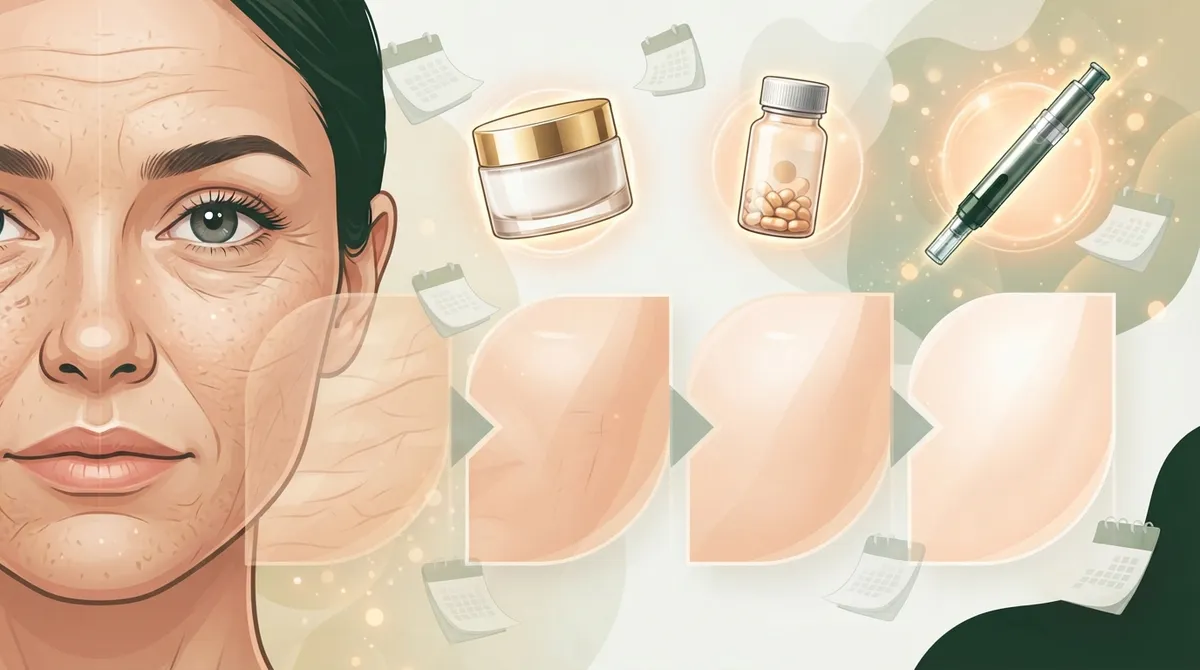
Here is the friendly, honest answer: there is no single timeline. Peptides are not one product. They come as creams, powders, and prescribed injections. Each type has its own evidence and its own pace. Small studies of skincare peptides report changes in about 2 to 4 weeks. Oral collagen peptide trials often run 6 to 12 weeks.
That said, those studies do not prove the same results for injectable or compounded peptide therapy. In this guide, we will walk through what research shows, what changes first, and how to track your progress without guessing. Whether you are a busy professional, a data-loving biohacker, or just curious about aging well, you will leave with a clear, realistic picture.
The Short Answer: It Depends on the Type of Peptide
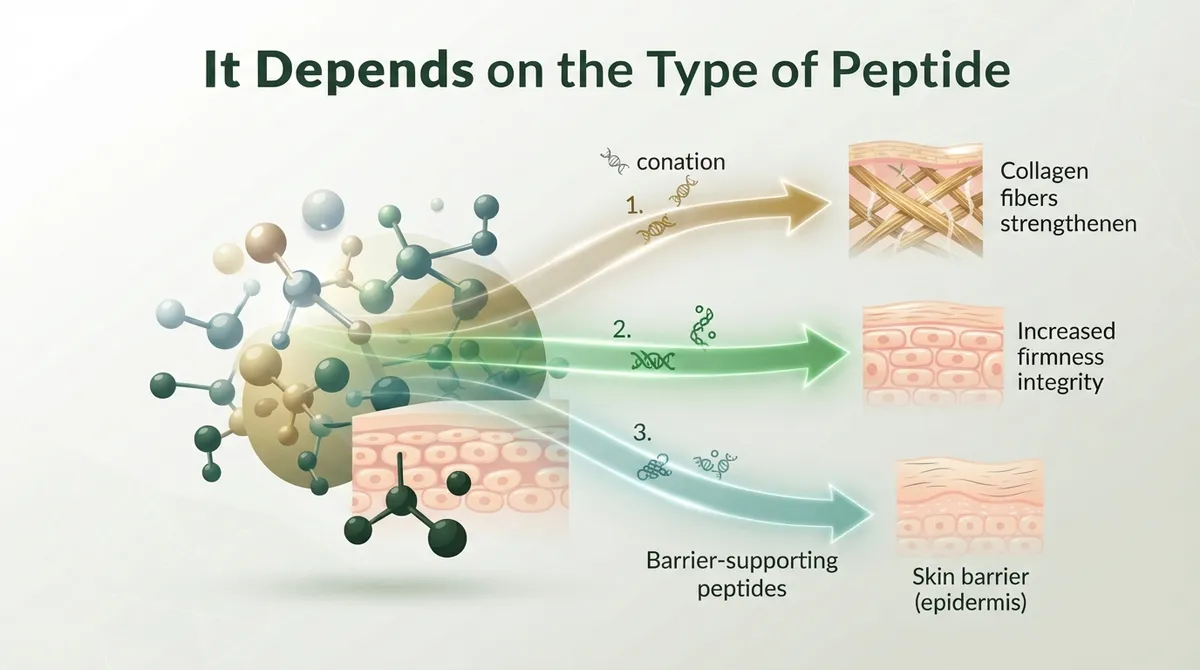
Let’s start with the most important point. The word “peptide” simply means a short chain of amino acids. If you want a refresher, check out 8 Facts That Explain What Are Peptides in 2026 or this plain-language explainer on what are peptides.
Because peptides vary so much, your timeline depends on three things:
- The peptide itself: Different peptides do different jobs.
- How you take it: Cream, pill, powder, or injection.
- Your skin goal: Hydration, fine lines, firmness, or texture.
Think of it like gardening. A fast-growing herb and a slow oak tree both count as plants, but you would never expect them to grow on the same schedule. Peptides work the same way.
Peptide Skin Timelines by Route: What Studies Report
Here is a quick snapshot of what research has measured so far. Keep in mind that these are study windows, not promises.
| Peptide Type | Study Window | What Researchers Measured | Important Limits |
|---|---|---|---|
| Topical peptide complex | About 2 weeks | Changes in measured wrinkles | Product-specific; not a typical response time |
| Topical collagen tripeptide | 4 weeks | Wrinkle measures, elasticity, skin density | Only 22 women; no control group |
| Oral collagen peptides | 6 to 12 weeks | Hydration, wrinkles, elasticity | Oral products, not injectables |
| Injectable collagen plus topical peptide serum | 12 weeks | Some outcomes at week 4; more by week 12 | Combination treatment; cannot isolate peptides alone |
Notice a pattern? Most studies stop looking after 4 to 12 weeks. That tells us researchers expect changes within a few months. It does not tell us your skin will follow the same script.
What the Research Says About Topical Peptides
Topical peptides are the ones you find in serums and creams. They are the most studied for skin, and they tend to show the earliest changes in studies.
One 4-week study followed 22 women using a topical collagen tripeptide. Researchers reported improvements in wrinkle measurements, elasticity, and skin density. That sounds exciting! But the study was small and had no control group. So we cannot say the peptide alone caused every change.
Another study of a peptide complex reported measurable wrinkle changes after just 2 weeks. Again, this was one product in one study. It does not set a rule for every serum on the shelf.
So what should you take from this? Early changes are possible with topical products. But they are often subtle, and they depend on the formula, how often you apply it, and your starting skin condition.
What the Research Says About Oral Collagen Peptides
Oral collagen peptides are the powders and capsules many people stir into coffee. These trials usually run longer than topical studies.
- A randomized, double-blind, placebo-controlled study of 64 women reported better skin hydration at weeks 6 and 12.
- A 2024 randomized trial reported improvements in several wrinkle and elasticity measures at week 12.
- A 2026 systematic review listed 19 randomized, placebo-controlled trials with treatment periods of 4 to 12 weeks, covering oral and topical products. Since it is very recent, it is smart to confirm its details before leaning on it.
The takeaway? If you try an oral collagen peptide, give it at least 8 to 12 weeks before judging. Patience matters here. For more on this topic, see How Can You Boost Collagen Naturally After 30?
What About Injectable and Prescribed Peptide Therapy?
This is where honesty matters most. Injectable peptide therapy is not one standardized treatment. And human evidence for skin results from many popular wellness peptides is limited.
Some compounded peptides sold in anti-aging settings are not FDA-approved for skin rejuvenation. Their safety and effectiveness data may be incomplete. If you want to understand the difference, read FDA-Approved vs. Compounded Peptides: What Wins?
One injectable study is worth mentioning. It tested recombinant type III collagen injections together with a topical multi-peptide serum for 12 weeks. Some results showed up at week 4, and more differences appeared by week 12. But because two treatments were combined, nobody can say how much came from peptides alone.
So when a clinic promises a firm date for skin results from injections, be careful. A trustworthy provider will talk about ranges, individual response, and the limits of the science.
A Realistic Week-by-Week Picture
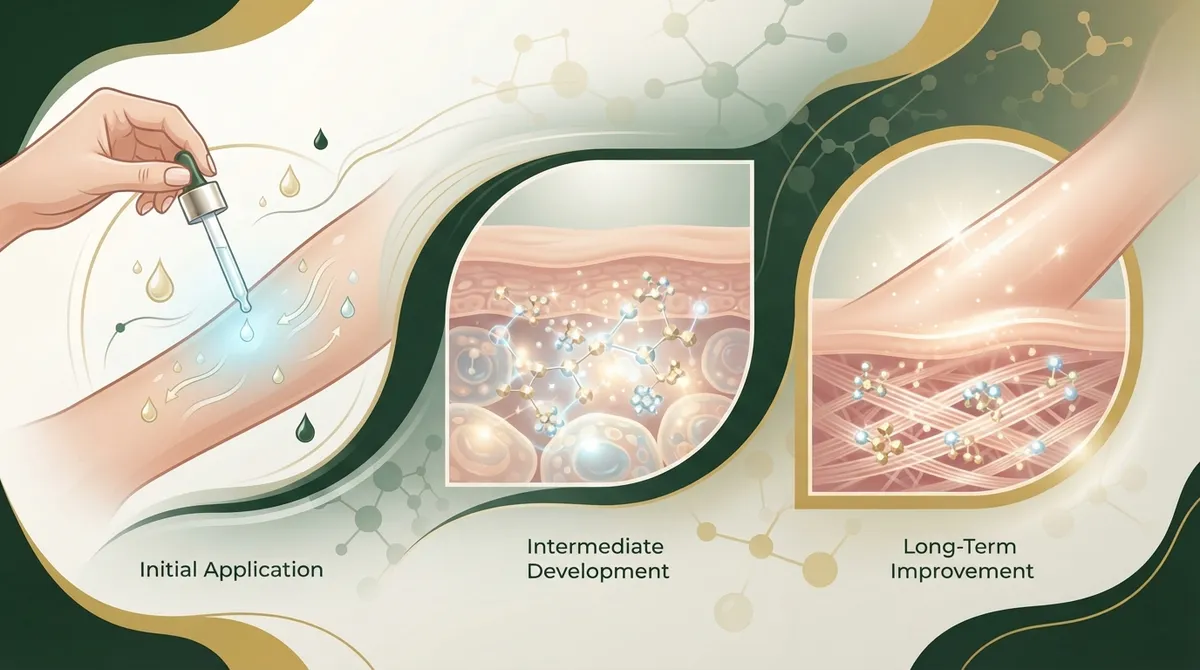
While no schedule is guaranteed, here is a general way to think about what you might notice. This is a framework, not a prediction.
- Weeks 1 to 2: Your skin may feel a bit smoother or more hydrated, especially with topical products. Many people notice nothing yet, and that is normal.
- Weeks 3 to 4: Some studies of topical peptides report measurable changes here. You might see slightly better texture or glow.
- Weeks 6 to 8: Hydration changes are often reported in oral collagen studies around this point.
- Weeks 10 to 12: Firmness and fine-line measures are often assessed at this stage in research.
- Month 3 and beyond: Skin renews on its own long cycle, so ongoing use and healthy habits matter for keeping progress.
For a broader look at timing across different goals, you can explore How Long for Peptide Therapy Results? A Real Timeline and 4 Timelines That Show When Peptide Therapy Works (2026).
Which Skin Concerns Respond First?
Not every skin concern moves at the same speed. Surface changes usually show up before deeper ones.
| Skin Concern | What Studies Often Track | General Pace |
|---|---|---|
| Dryness and hydration | Moisture levels in skin | Often earlier, around 4 to 6 weeks in some studies |
| Fine lines | Wrinkle depth and measurements | Early signs possible in weeks; fuller review at 12 weeks |
| Elasticity and firmness | Skin bounce and density | Often assessed around 4 to 12 weeks |
| Sagging skin | Visible lift and tone | Harder to change; evidence is limited |
If sagging is your main worry, a peptide serum alone may not do the job. Our guide on the best treatment for sagging skin in 2026 covers realistic options.
Why Your Results May Look Different From Someone Else’s
Ever notice your friend glows after two weeks while you see nothing? Do not worry. Several things shape how fast your skin responds.
- Your starting point: Very dry or sun-damaged skin may show different changes than healthy skin.
- Age and hormones: Collagen levels shift with age and hormone changes.
- Product quality: Formula, dose, and stability all matter.
- Consistency: Skipping days can slow things down.
- Daily habits: Sleep, sun protection, nutrition, and smoking all affect skin.
That last one is huge. Sunscreen alone can protect the collagen you already have. Peptides work best when the basics are in place. To see why results vary so much, read Why Do Peptide Therapy Results Vary So Much?
How to Track Whether Peptides Are Working
If you love data (hello, biohackers!), this section is for you. Guessing from the mirror alone is tricky because we see ourselves every day. Try this simple tracking routine:
- Take baseline photos. Use the same lighting, angle, and no makeup on day one.
- Repeat every 2 weeks. Keep the same setup each time.
- Note how your skin feels. Write down dryness, tightness, and texture changes.
- Log your habits. Track sleep, sun exposure, and new products so you can spot patterns.
- Review at 8 and 12 weeks. Compare photos side by side, not from memory.
If you are in a clinical program, blood work and check-ins add another layer of useful data. See How to Know When Your Peptide Therapy Starts Working for more ideas.
Red Flags: When a Timeline Claim Should Make You Pause
The peptide space is full of excitement, and sometimes full of hype. Watch for these warning signs:
- Promises like “visible results in 7 days, guaranteed.”
- No mention of side effects or who should avoid the product.
- Before-and-after photos with no context, lighting details, or timeline.
- Products sold without any medical review or lab work.
- Claims that cite topical studies to sell injections.
Compounded peptide injections can carry risks, and they should be guided by a licensed provider. Learn more in Is Peptide Therapy Safe? What You Really Need to Know. The National Library of Medicine is also a good place to check original research yourself.
How to Give Peptides the Best Chance to Work
Want to get the most from your routine? These habits support skin no matter which peptide route you choose:
- Wear broad-spectrum sunscreen every day.
- Stay hydrated and eat enough protein.
- Prioritize 7 to 9 hours of sleep.
- Avoid smoking and limit alcohol.
- Stick with your plan for at least 12 weeks before judging.
It also helps to match the peptide to your actual goal. A personalized approach beats a one-size-fits-all bottle. Explore What Peptides Do for Skin: A Real-World Guide for 2026 and 12 Peptide Skin Rejuvenation Facts Worth Knowing (2026) to dig deeper.
Where Personalized Peptide Care Fits In
If you want guidance instead of guesswork, a medical team can help. Allura Longevity offers personalized, medically supervised peptide therapy through telehealth. Clients start with a $50 virtual consultation and complete blood work through LabCorp. Licensed providers, led by Ashley, a board-certified Family Nurse Practitioner, then build a customized six-month plan that is delivered to your door.
That means your plan reflects your labs and goals, with ongoing monitoring and adjustments. Care is available in Florida, Georgia, Texas, Connecticut, Indiana, Maryland, New York, and California. Whether you are exploring peptides for women or peptides for men, you get a real clinical team in your corner.
Final Thoughts: Be Patient, Be Smart, Be Kind to Your Skin
So, how long until peptides improve skin? Studies report early changes in about 2 to 4 weeks for some topical products, and 6 to 12 weeks for oral collagen peptides. For injectable or compounded peptide therapy, there is no proven universal timeline. Your results will depend on the peptide, the route, your skin, and your habits.
The best approach is simple. Set realistic expectations, track your progress, protect your skin daily, and work with qualified providers. Skin change is a marathon, not a sprint, and you are allowed to enjoy the journey.
Ready to build a plan around your own labs and goals? Request a consultation with Allura Longevity today, or call (813) 510-6277. Spots for new clients are limited each month, so reach out while openings are available.
FAQs
Q: How long does it take for peptide skincare to show results?
A: Some small studies of topical peptide products report measurable changes in about 2 to 4 weeks. But results vary by product and person, so give any routine at least 8 to 12 weeks before deciding if it works for you.
Q: How long do collagen peptides take to improve skin hydration or wrinkles?
A: Oral collagen peptide trials often check results at 6 to 12 weeks. One randomized trial reported better hydration at weeks 6 and 12, and a 2024 trial reported wrinkle and elasticity changes at week 12.
Q: Are injectable peptides proven to improve skin?
A: Not in a general way. Injectable peptide therapy is not one standardized treatment, and human skin data for many popular compounded peptides is limited. A licensed provider can explain what evidence exists for any specific peptide before you start.
Q: Are peptide treatments FDA-approved for skin rejuvenation?
A: Many peptides sold in wellness and anti-aging settings are not FDA-approved for skin rejuvenation. That is why it matters to work with a licensed medical team that is open about the evidence, risks, and sourcing.
Q: How can I tell if a peptide skin treatment has credible evidence?
A: Look for human studies with a control group, clear timelines, and honest limits. Be wary of guaranteed results, missing safety information, or claims that borrow topical research to sell injections.





