

Key Takeaways
-
Peptide therapy typically shows early signs within 2-4 weeks (better sleep, energy, mental clarity) but requires 8-12 weeks to see meaningful, lasting changes in body composition, hormonal balance, and recovery metrics.
-
Different peptide types have distinct timelines: growth hormone peptides need 8-12+ weeks, healing peptides like BPC-157 show results in 4-12 weeks, and GLP-1 medications take 8-16+ weeks for weight loss goals.
-
Peptide therapy works slower than traditional hormone replacement because it stimulates your body's natural hormone production rather than directly replacing hormones, making consistency with dosing and sleep quality critical factors.
-
The 8-12 week mark is the real benchmark for evaluating peptide protocol effectiveness, with follow-up blood labs around the 3-month point confirming whether hormone levels and metabolic markers have improved.
-
Personal factors significantly impact results: baseline hormone levels, sleep quality, consistent dosing, nutrition, exercise habits, and stress levels all either accelerate or slow down your timeline and treatment success.
-
Peptide cycles typically aren't continuous—growth hormone peptides are often cycled for 3-6 months on followed by 1-3 months off to reset receptor sensitivity, while healing peptides are used for 4-12 weeks depending on injury type.
You just started peptide therapy, and now you’re checking the mirror every morning wondering if anything’s happening yet. We get it. If you’re asking “how long does hormone therapy take to work,” you’re not alone, and the honest answer is: it depends, but there’s a real pattern most people follow. Whether you’re chasing better sleep, more energy, faster recovery, or a leaner body, understanding the timeline helps you stay patient instead of giving up too soon.
This guide breaks down exactly what to expect, week by week, so you can track your own progress with confidence. We’ll cover growth-hormone-supportive peptides, healing peptides like BPC-157, and how peptide therapy compares to traditional hormone replacement in terms of speed. By the end, you’ll know exactly what “working” looks like at each stage of your journey.
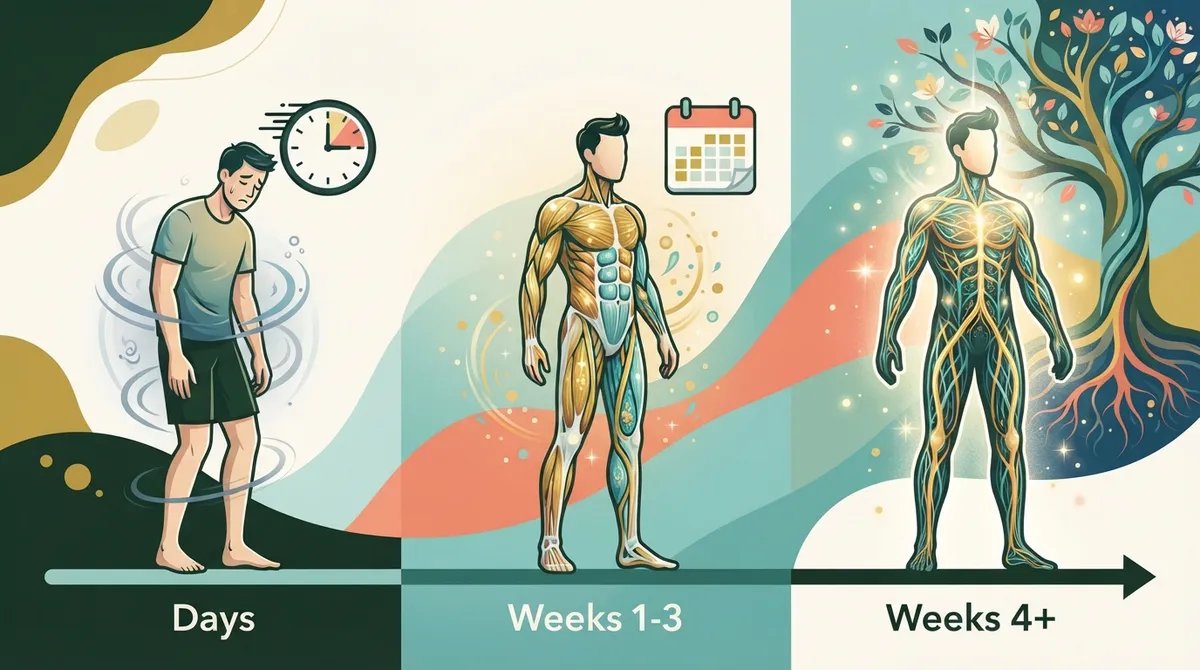
Why Peptide Therapy Takes Weeks, Not Days
Peptides that support hormone production work differently than direct hormone replacement. Instead of flooding your body with a hormone, many peptides gently nudge your pituitary gland or other systems to produce more of what you naturally need. This process takes time to build momentum.
Think of it like waking up a sleepy factory instead of shipping in finished products overnight. The factory has to restart its machines, ramp up production, and find its rhythm again. That’s why starting peptide therapy safely means setting realistic expectations from day one.
According to research compiled by the National Library of Medicine, peptide signaling pathways involve multiple steps in the body before visible results appear. This is normal biology, not a sign something’s wrong.

4 Key Timelines for Peptide Therapy Results
Here’s the big picture broken into four clear phases. Most people fall somewhere on this timeline, though your exact experience depends on your starting health, the specific peptide, and your consistency with dosing.
1. The First 3-14 Days: Early Signals
Some clinics report that clients notice subtle shifts within the first two weeks. These early signs are often small but meaningful.
- Slightly better sleep quality or falling asleep faster
- A small boost in mental clarity or mood
- Less joint stiffness in the morning
- Mild changes in appetite or digestion
- Improved motivation to exercise
These early wins don’t mean you’ve reached your final results. They’re more like a preview, letting you know your body is responding to treatment.
2. Weeks 2-4: Noticeable Momentum
This is when most people start feeling like something real is happening. Energy tends to improve, recovery from workouts feels faster, and sleep often becomes deeper and more restorative.
Many peptide therapy providers use this window to check in with clients and fine-tune dosing. If you’re working with personalized peptide therapy for women or a similar customized plan, this is a great time to report how you’re feeling so your provider can adjust as needed.
3. Weeks 8-12: The Real Turning Point
Clinic guidance consistently points to the 8-12 week mark as the true benchmark for judging whether a peptide protocol is working. This is when body composition changes, skin improvements, and hormonal balance shifts become much clearer.
Growth-hormone-supportive peptides like sermorelin, ipamorelin, and CJC-1295 typically need this longer runway to show measurable changes in muscle tone, fat loss, and recovery. If you’re curious about specific compounds, Ipamorelin peptide therapy benefits, dosing, and safety is worth a read.
4. Months 3-6: Lasting, Structural Change
By this stage, subjective feelings usually align with objective lab work. Follow-up blood panels often confirm what you’ve already started to feel: better hormone levels, improved metabolic markers, and stronger recovery capacity.
Many six-month treatment plans, like those offered through Allura Longevity, build in a 3-month lab recheck specifically because this is when the full picture becomes clear. Ongoing monitoring at this stage helps your provider decide whether to continue, adjust, or cycle off your current protocol.
How Timelines Differ by Peptide Type
Not all peptides work at the same speed. Here’s a simple breakdown comparing common categories used in personalized peptide therapy programs.
| Peptide Type | Common Goal | Early Signs | Significant Results |
|---|---|---|---|
| Growth Hormone Peptides (Sermorelin, Ipamorelin, CJC-1295) | Muscle tone, fat loss, recovery | 2-4 weeks | 8-12+ weeks |
| Healing Peptides (BPC-157) | Injury repair, gut health, inflammation | 1-2 weeks | 4-12 weeks |
| GLP-1 Medications | Weight loss, appetite control | 1-4 weeks | 8-16+ weeks |
| Testosterone Support | Energy, libido, muscle mass | 2-4 weeks | 6-12 weeks |
If injury recovery is your main goal, you might want to explore 13 facts about TB-500 peptide alongside BPC-157 options for a fuller picture of healing timelines.
Factors That Speed Up or Slow Down Results
Your body isn’t a machine that runs on a fixed schedule. Several personal factors influence how quickly you’ll notice changes.
- Baseline hormone levels: People starting with more significant imbalances sometimes see faster initial improvement simply because there’s more room to correct.
- Consistency with dosing: Skipping doses or inconsistent timing slows down your results considerably.
- Sleep quality: Since many peptides work overnight when growth hormone naturally peaks, poor sleep can blunt your results.
- Nutrition and protein intake: Your body needs raw materials to build muscle and repair tissue, so diet matters a lot here.
- Exercise habits: Regular movement, especially resistance training, tends to amplify peptide benefits.
- Stress levels: Chronic stress raises cortisol, which can work against hormone-supportive peptides.
- Age and metabolic health: Younger, metabolically healthy individuals sometimes respond a bit faster than those with more complex health histories.
This is exactly why cookie-cutter approaches often fall short. Learning how to choose the right type of peptide therapy for your unique body matters more than following a generic plan.
Peptide Therapy vs. Traditional Hormone Replacement: Speed Comparison
People often ask how peptide therapy stacks up against direct hormone replacement therapy (HRT) in terms of how fast it works. Here’s a clear comparison.
| Factor | Peptide Therapy | Traditional Hormone Replacement |
|---|---|---|
| Mechanism | Stimulates your body’s own hormone production | Directly replaces hormones |
| Speed of initial effects | 2-4 weeks | Days to 1-2 weeks |
| Time to full results | 8-12+ weeks | 4-8 weeks |
| Approach to dosing | Often cycled (weeks or months on/off) | Frequently ongoing, continuous |
Traditional HRT can sometimes work a bit faster because it supplies hormones directly rather than stimulating natural production. But many people prefer the more gradual, self-regulating approach that peptides offer. If you’re weighing your options, how to choose between bioidentical hormones and peptides covers this decision in more depth.
Signs Your Peptide Therapy Is Actually Working
It helps to know exactly what to watch for so you’re not just guessing. Here are the most commonly reported signs across the first few months.
- Waking up feeling more rested, even with the same amount of sleep
- Noticeably faster recovery after workouts
- Improved skin texture or a subtle glow
- Better focus and fewer afternoon energy crashes
- Gradual changes in body composition, especially around the midsection
- Improved mood stability throughout the day
- Stronger libido and overall sense of vitality
If you’re not seeing any of these changes by the 8-12 week mark, that’s not necessarily bad news. It’s simply a signal that your provider may need to adjust your dosing or explore common mistakes that hide whether peptide therapy works.
How Long Should You Stay on a Peptide Cycle
Most peptide protocols aren’t meant to be used forever without a break. Cycling gives your body a chance to reset receptor sensitivity and avoid diminishing returns.
- Healing peptides like BPC-157 are commonly used for 4-6 weeks for acute injuries, or 8-12 weeks for chronic issues.
- Growth-hormone-supportive peptides are often cycled for 3-6 months on, followed by 1-3 months off.
- Weight loss peptides may follow longer, more continuous protocols depending on your goals and provider guidance.
- Reassessment typically happens at the one-month mark, with more detailed lab review around the three-month point.
This structured approach is one reason working with a knowledgeable provider matters so much. According to WebMD’s overview of what are peptides, these small protein chains interact with the body in highly specific ways, which is exactly why customized dosing and cycling schedules produce better long-term outcomes than generic, one-size-fits-all plans.
Why Personalized Plans Make Such a Big Difference
Two people can start the exact same peptide and see very different timelines. That’s because hormone therapy success depends heavily on your unique blood work, lifestyle, and health history.
This is where Allura Longevity stands out as a trusted telehealth option. After a simple $50 virtual consultation and blood work through LabCorp, you receive a customized six-month treatment plan built specifically around your body’s needs. Licensed providers, led by board-certified Family Nurse Practitioner Ashley, monitor your progress and adjust your protocol along the way, so you’re never guessing whether you’re on the right track.
If you’re also exploring options like peptides for men focused on testosterone support and vitality, or interested in learning the real benefits of hormone therapy for men, a personalized consultation can help clarify which path fits your goals best.
Common Mistakes That Delay Results
Sometimes the timeline stretches longer than it should, simply because of avoidable missteps. Watch out for these common issues.
- Inconsistent dosing schedules or missed doses
- Poor sleep hygiene undermining nighttime hormone release
- Unrealistic expectations set by generic online information
- Skipping follow-up labs and dose adjustments
- Not addressing underlying inflammation or gut health issues first
Learning common mistakes that ruin how peptide therapy works can save you months of frustration and help you get the most out of your investment.
Final Thoughts on Your Peptide Therapy Timeline
So, how long does hormone therapy take to work in the world of peptide therapy? The honest answer is a few weeks for early signs, and 8-12 weeks or more for meaningful, lasting change. Some people notice subtle shifts within days, while deeper structural improvements often take a full three months to show up clearly in lab work.
The good news is that you don’t have to navigate this timeline alone. With personalized dosing, ongoing monitoring, and a plan built around your specific blood work, you can feel confident you’re on the right path from week one. Ready to find out what your personalized timeline could look like? Request a consultation with Allura Longevity today and take the first step toward feeling like yourself again. Spots are limited each month, so don’t wait to get started. You can also call (813) 510-6277 to speak with our team directly.
FAQs
Q: How long does peptide therapy take to work for hormone balance?
A: Most people notice small changes like better sleep or energy within 2-4 weeks. For a full hormone balance shift, though, plan on giving it 8-12 weeks before drawing conclusions. Your body needs time to rebuild its natural rhythm, so patience really does pay off here.
Q: When should you expect to feel results from peptide therapy?
A: You might feel subtle improvements within the first 3-14 days, like sleeping a bit deeper or having a touch more energy. The bigger, more noticeable results usually show up around weeks 8-12, so try not to judge things too early.
Q: How long does it take for growth hormone peptides to work?
A: Growth hormone peptides like sermorelin, ipamorelin, and CJC-1295 typically need 8-12 weeks to show real changes in muscle tone and recovery. Some clients notice early wins around week 2-4, but the deeper body composition shifts take a bit longer to appear.
Q: How long does BPC-157 take to work?
A: For acute injuries, BPC-157 is often used for 4-6 weeks, while chronic issues may need 8-12 weeks of consistent use. Many people report early comfort improvements within the first couple weeks, with fuller healing following over the next month or two.
Q: How does peptide therapy compare with hormone replacement therapy in speed of results?
A: Traditional hormone replacement often works a bit faster since it supplies hormones directly, sometimes showing effects within days to two weeks. Peptide therapy takes a gentler, more gradual path because it encourages your body to produce hormones naturally, usually taking 8-12 weeks for full results.





