

Key Takeaways
-
Judge each peptide individually on its own evidence and regulatory status—approval of one peptide drug does not validate safety or effectiveness of others for regenerative use.
-
BPC-157, the most popular regenerative peptide, has only preclinical and animal data with extremely limited human studies (some involving just 2 people), so human efficacy remains unproven.
-
The FDA has flagged safety concerns for compounded peptides like BPC-157 and TB-500, and unapproved injectables carry risks including contamination, inaccurate dosing, and unknown long-term effects.
-
Before starting any peptide therapy, obtain baseline blood work, disclose your full health history, verify FDA status, and work only with licensed providers who set realistic expectations.
-
Thymosin beta-4 and TB-500 are not interchangeable despite being related—TB-500 is a synthetic fragment with sparse human evidence, so results from the full molecule cannot be assumed.
-
Most regenerative peptide research is still in early stages with limited human clinical evidence; current science does not support guaranteed healing claims made by some clinics or wellness brands.
You have probably seen the buzz. Peptides for healing tendons, calming sore joints, speeding up workout recovery. It sounds amazing, and honestly, it makes sense that so many of us are curious. When your body feels stiff, tired, or slow to bounce back, any promise of renewal sounds good.
Here is the friendly truth, though. Peptide therapy regenerative care is a broad marketing phrase, not one official medical treatment. It usually points to peptides promoted for tissue repair, recovery, inflammation, or pain. Some of those peptides are well studied. Many are not. Knowing the difference can save you money, stress, and risk.
In this guide, we will walk through nine honest truths so you can make smart choices. Whether you are a busy professional, a data-loving biohacker, or simply someone who wants to age well, you deserve clear answers without the hype. Grab a coffee, and let’s dig in together.

1. Peptide Therapy Regenerative Care Is a Label, Not a Treatment
Let’s start with the biggest point. No single, standardized therapy goes by the name “regenerative peptide care.” It is a catch-all term used by clinics, brands, and wellness influencers.
Peptides themselves are short chains of amino acids, the building blocks of proteins. If you want a simple primer, this guide on what are peptides explains the basics well. You can also read our own breakdown, 8 Facts That Explain What Are Peptides in 2026.
When you hear “regenerative,” ask one question: which peptide, for which purpose, and what is the proof? That one question cuts through a lot of noise.
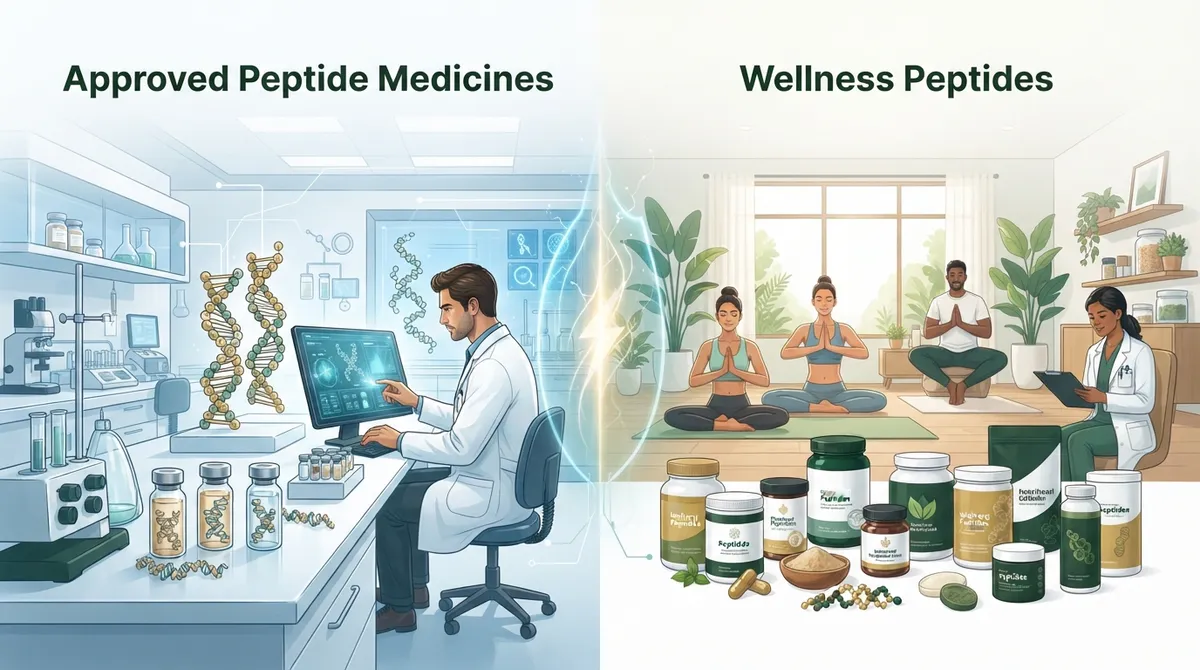
2. Approved Peptide Medicines and Wellness Peptides Are Not the Same
Some peptides are real prescription medicines with clear approvals for specific conditions. That is great news. But here is the catch: approval of one peptide drug does not prove that other peptides are safe or effective for regeneration.
Think of it like cars. Just because one car passed every safety test does not mean every vehicle on the lot did. Each peptide must be judged on its own evidence.
To see how this plays out, check out FDA-Approved vs. Compounded Peptides: What Wins? It is a helpful companion read.
| Category | What It Means | What to Ask |
|---|---|---|
| FDA-approved peptide medicine | Reviewed for a specific condition and dose | Is it approved for my goal? |
| Compounded peptide | Custom-prepared by a pharmacy; not FDA-approved | Which pharmacy, and what quality checks? |
| Research or “wellness” peptide | Studied mostly in labs or animals | Where is the human evidence? |
3. BPC-157 Has Exciting Lab Data but Very Little Human Proof
BPC-157 is probably the most talked-about name in regenerative circles. In lab and animal studies, it has shown tissue-repair effects. That is where the excitement comes from.
But a 2024 review described BPC-157 research as mostly preclinical, and noted it is not FDA-approved for medical treatment. A 2026 AAMC article also pointed out that some human reports were tiny, including one tolerability report with just two healthy people. A group that small cannot prove it works or show how safe it is.
So can BPC-157 help human tendons or muscles heal? Right now, the honest answer is that we do not know yet. If you want more detail, our post 9 BPC-157 Peptide Facts to Know Before You Start covers it, and Is BPC-157 Safe? What the Research Really Shows goes deeper on safety.
4. Thymosin Beta-4 and TB-500 Are Not Interchangeable
This one trips up a lot of people. Thymosin beta-4 is a natural molecule in the body. TB-500 is described as a synthetic fragment related to it. They are cousins, not twins.
That matters because results from studies on the full molecule cannot automatically be applied to a fragment or a store-bought product. Human evidence for TB-500, in particular, is sparse.
Curious how it compares? Read 13 Facts About TB-500 Peptide You Need in 2026 and BPC-157 vs. TB-500: Which Peptide Actually Wins?
5. Each Regenerative Peptide Has Its Own Story
Lumping all peptides together is a common mistake. Different compounds have different studied uses, different evidence, and different regulatory status. Here is a quick snapshot.
| Peptide | Commonly Promoted For | Evidence Snapshot |
|---|---|---|
| BPC-157 | Tendon, gut, and soft-tissue repair | Mostly animal and lab data; very limited human data |
| TB-500 | Recovery and tissue repair | Sparse human evidence; fragment of thymosin beta-4 |
| GHK-Cu | Skin and tissue support | Varies by use; assess individually |
| Growth-hormone-related peptides | Recovery, body composition | Studied for specific uses; status differs by compound |
| ARA-290 (cibinetide) | Nerve and pain-related research | Investigational; limited evidence |
The takeaway is simple. Judge each one on its own merits. For a closer look at one of them, see How to Evaluate GHK-Cu Peptide Safely in 2026.
6. The FDA Has Raised Real Safety Questions
Here is where we put on our careful hats. The FDA has flagged safety concerns for certain peptide substances proposed for compounding, including BPC-157 and TB-500. A 2026 CSPI article noted that the agency’s 2023 compounding review placed 19 peptide substances under heightened concern.
There is also movement in the news. A 2026 Associated Press report described an FDA advisory panel voting 8 to 6, with one abstention, in favor of easing compounding limits for certain peptides. But an advisory vote is not an approval. Rules can change, so always check current FDA guidance before you decide.
Being compounded or easy to find does not mean a product has been proven safe and effective. It is worth reading 9 BPC-157 Legal Status Mistakes That Could Cost You to stay informed.
7. Unapproved Injectables Carry Real Risks
Most people do not think about this part, but it matters. With unapproved injectable products, possible concerns include:
- Immune or allergic reactions to the peptide or its ingredients
- Contamination or impurities in poorly made products
- Inaccurate dosing, where the vial does not match the label
- Unknown long-term effects, since long studies in people are missing
Because human research is limited, reliable dosing, treatment length, and side-effect rates may not be established. That is not meant to scare you. It is meant to help you ask better questions. Our guides Is Peptide Therapy Safe? What You Really Need to Know and How to Spot and Avoid Peptide Therapy Risks can help.
8. The Research Is Still in Early Days
Good science takes time, and regenerative peptides are still early in the story. A 2024 review of peptide therapies for soft-tissue repair concluded that research on emerging peptides is at an early stage and that more studies are needed before widespread use. A 2026 narrative review on chronic pain reached a similar view: human clinical evidence is limited, and most of the discussed therapies are not FDA-approved.
You can browse the science yourself through the National Library of Medicine. For a plain-language overview, try What Are Regenerative Medicine Peptides, and Do They Work?
This does not mean peptides are useless. It means we should stay curious, stay realistic, and avoid anyone who promises guaranteed healing.
9. A Smart Plan Starts With Labs, a Provider, and Honest Talk
So what does a responsible approach look like? It looks like a conversation, not a sales pitch. A good clinician will separate approved medicines from investigational or compounded products, explain how strong the evidence is, and review your health history and current treatments.
Before you begin, consider these steps:
- Get baseline blood work so your plan fits your body, not a trend.
- Share your full health history, including medicines and supplements.
- Ask about FDA status and where each product is made.
- Set realistic goals and agree on how progress will be tracked.
- Plan follow-ups so your provider can adjust as needed.
If you like numbers, this fits the biohacker mindset perfectly. Our article on How to Use Biomarker Testing to Guide Peptide Therapy shows how data can guide decisions, and 15 Peptide Consultation Questions to Ask in 2026 gives you a ready-made list.
Questions Worth Asking Any Provider
- Is this specific peptide FDA-approved, compounded, or investigational?
- What human studies support it for my goal?
- What side effects should I watch for?
- How will we monitor my labs and symptoms?
- What happens if it does not help?
How Allura Longevity Approaches Care
If you want guidance that feels personal, Allura Longevity is a telehealth option built around exactly this kind of careful, honest approach. Your journey starts with a $50 virtual consultation and blood work through LabCorp. From there, licensed providers, led by Ashley, a board-certified Family Nurse Practitioner, build a customized six-month plan based on your labs and goals.
Your plan is delivered right to your door, with ongoing monitoring and adjustments along the way. Telehealth is available nationwide, and Allura Longevity is licensed in Florida, Georgia, Texas, Connecticut, Indiana, Maryland, New York, and California. Whether you are exploring peptides for women or peptides for men, the focus stays on safety, clarity, and your goals.
Curious about the process? Read How to Start Peptide Therapy Safely and See Real Results or Local Clinic vs. Telehealth: Best Peptide Therapy Near You?
Final Thoughts
Peptide therapy regenerative care holds real curiosity and real promise, but it also comes with real unknowns. The smartest path is the middle one: stay open-minded, ask tough questions, lean on lab data, and work with licensed providers who tell you the truth, even when the truth is “we are not sure yet.”
You deserve care that is personal, transparent, and built around you. Ready to talk it through with a team that listens? Request a consultation with Allura Longevity today, or call (813) 510-6277. Spots for new clients are limited each month, so reach out while there is room.
FAQs
Q: What is peptide therapy for regenerative care?
A: It is a broad term for using peptides that are promoted for tissue repair, recovery, inflammation, or pain. It is not one standardized or FDA-approved treatment, so each peptide should be judged on its own evidence and regulatory status.
Q: Does BPC-157 help heal tendons, ligaments, or muscles in humans?
A: BPC-157 has shown tissue-repair effects in lab and animal studies, but human evidence is extremely limited. It is also not FDA-approved for medical treatment, so no one can honestly promise it will heal an injury.
Q: What is the difference between thymosin beta-4 and TB-500?
A: Thymosin beta-4 is a natural molecule in the body, while TB-500 is described as a synthetic fragment related to it. They are not interchangeable, and results from the full molecule cannot be assumed for the fragment.
Q: What are the risks of injectable regenerative peptides?
A: Possible concerns include allergic or immune reactions, contamination, inaccurate dosing, and unknown long-term effects. Because human research is limited, working with a licensed provider who reviews your history and labs is a smart safeguard.
Q: How can I tell if a peptide product is FDA-approved or compounded?
A: Ask your provider directly and request the product’s source and status in writing. Approved medicines are reviewed for a specific use, while compounded products are custom-prepared and not FDA-approved, so always verify current FDA guidance.





