
Key Takeaways
-
Only semaglutide (Wegovy) and tirzepatide (Zepbound) are FDA-approved for weight management; popular peptides like BPC-157, CJC-1295, and ipamorelin lack adequate evidence and aren't approved for weight loss.
-
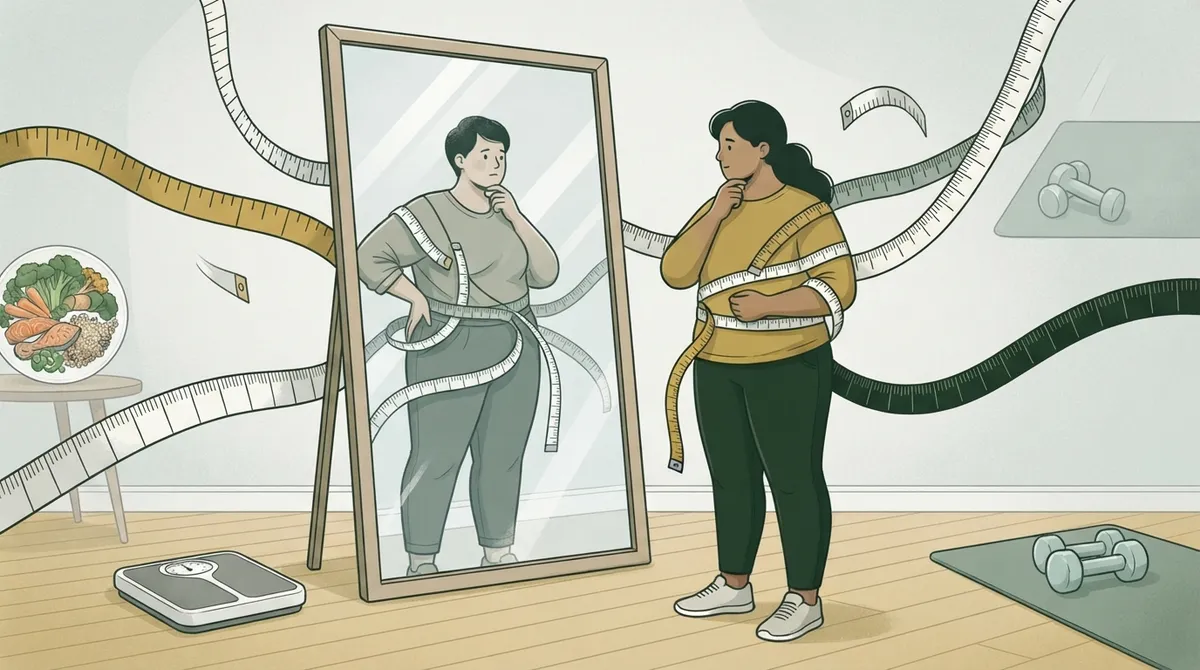
Clothing size is unpredictable from weight loss alone due to differences in body composition, fat distribution, fluid shifts, and inconsistent garment sizing—track waist measurements, energy, strength, and labs instead.
-
GLP-1 weight-management medications help eligible adults lose 3-12% more body weight than lifestyle changes alone, with 78.5% of treated participants reaching meaningful weight-loss outcomes in recent trials.
-
Weight management with peptides requires ongoing medical supervision, lifestyle changes (nutrition and exercise), and a maintenance strategy, not a short-term cosmetic fix, as weight regain can occur after stopping.
-
Compounded peptides aren't FDA-reviewed for safety or quality, and the FDA has warned about dosing errors with compounded semaglutide—always use licensed providers and FDA-approved products for safe treatment.
-
Common GLP-1 side effects include nausea, diarrhea, vomiting, and constipation; a clinician must review your medical history, current medicines, and pregnancy plans before starting treatment.
We’ve all been there. You pull a favorite pair of jeans from the closet, and they just don’t zip the way they used to. Maybe you have a wedding coming up, a big work event, or you simply want to feel great in your clothes again. It’s no surprise that many people now search for peptide therapy for clothing fit goals.
Here’s the friendly truth: “clothing fit” isn’t a medical diagnosis or a measurable treatment outcome. But the goal behind it is real and valid. You want to feel comfortable, confident, and healthy in your body. For some people, medically supervised peptide therapy can be one helpful piece of that puzzle.
In this guide, we’ll walk through what peptide therapy can and can’t do, which options are FDA-approved for weight management, how results really work, and how to start safely. No hype, no promises about dress sizes. Just honest, useful information for health optimizers, busy professionals, and anyone who wants a smarter plan.

What Does Peptide Therapy for Clothing Fit Goals Really Mean?
Peptides are short chains of amino acids that act as signaling molecules in your body. If you’re new to the topic, our guide on 8 facts that explain what are peptides in 2026 is a great starting point. You can also read this overview of what are peptides for background.
When people search for peptide therapy for clothing fit goals, they’re usually asking one of these questions:
- Can peptide medicines help me lose weight so my clothes fit better?
- Can they help me lose inches, not just pounds?
- Can they help me tone up or recover from workouts?
The most honest answer is that peptide therapy is best understood as part of medically supervised weight management. A clinician looks at your health, your labs, and your goals. Then they decide if a treatment makes sense. Clothing size is a fun motivator, but it isn’t something a provider can prescribe for or predict.

Why Clothing Size Is Hard to Predict
It’s tempting to think, “If I lose 15 pounds, I’ll drop a size.” Sometimes that works out. Often it doesn’t. Here’s why.
- Body composition differs. Two people at the same weight can wear very different sizes depending on muscle and fat.
- Fat distribution varies. Some people lose first in the face or arms. Others lose in the waist or hips.
- Fluid shifts matter. Water retention can change how clothes feel from day to day.
- Garment sizing is inconsistent. A medium in one brand can be a large in another.
Because of all this, a number on the scale can’t reliably tell you your pant size. A better approach is to track several signals, like waist measurements, energy, strength, labs, and how you feel. Our article on 12 body composition facts peptide users need in 2026 goes deeper on this.
Which Peptide Medications Are FDA-Approved for Weight Management?
This is where it pays to be careful. Not every peptide you see online is approved for weight loss. In the United States, two peptide-based medicines are FDA-approved for chronic weight management in eligible adults:
- Semaglutide (Wegovy)
- Tirzepatide (Zepbound)
Both are used alongside a reduced-calorie eating plan and more physical activity. Approval applies to specific products and indications, not to every formulation containing the same ingredient. If you’d like a clear explainer, see how to understand GLP-1 peptide therapy in 2026.
Who Typically Qualifies?
Adult weight-management labels generally cover people with:
- A body mass index (BMI) of 30 or higher (obesity), or
- A BMI of 27 or higher (overweight) with at least one weight-related health condition
Eligibility depends on your own health history and the product’s labeling, so a licensed prescriber needs to review your situation. Wanting to fit into a certain outfit, on its own, isn’t a medical reason for a prescription.
Popular Peptides vs. Evidence: A Quick Comparison
The peptide world gets noisy fast. This table shows how some commonly discussed options stack up when it comes to weight management.
| Peptide or Medicine | FDA-Approved for Weight Management? | What to Know |
|---|---|---|
| Semaglutide (Wegovy) | Yes, for eligible adults | GLP-1 medicine that reduces appetite; used with lifestyle changes |
| Tirzepatide (Zepbound) | Yes, for eligible adults | Dual-action peptide medicine; used with lifestyle changes |
| BPC-157 | No | Not an approved weight-loss treatment; evidence for fat loss claims is inadequate |
| CJC-1295 / Ipamorelin | No | Not approved for weight loss; evidence for clothing-fit claims is inadequate |
| AOD-9604 | No | Not an approved weight-loss treatment; weak supporting evidence |
Want to dig into the options? Read which weight loss peptides actually work in 2026 and 13 peptides for fat loss that really work in 2026.
What Results Can You Realistically Expect?
Let’s talk numbers, with a big reminder that individual results vary. According to the NIDDK, adults who use prescription weight-management medication as part of a lifestyle program lose, on average, about 3% to 12% more of their starting body weight after one year than people in a lifestyle program without medication.
Some studies of certain medicines found that more than half of participants lost at least 10% of their starting weight. A 2026 systematic review of 16 placebo-controlled trials of GLP-1-based agents found that about 78.5% of treated participants reached the review’s defined weight-loss outcome, compared with about 26.5% on placebo. That review showed a lot of variation between studies, so it shouldn’t be treated as a promise for any one person.
| Data Point | What It Tells You | What It Doesn’t Tell You |
|---|---|---|
| 3%–12% more weight lost vs. lifestyle alone (1 year) | Medication can add meaningful weight loss on average | Your personal result or clothing size |
| More than half lost 10%+ in some studies | Many people respond well to certain medicines | That you will be one of them |
| 78.5% vs. 26.5% (2026 review of 16 trials) | GLP-1 agents outperformed placebo overall | A direct size or inch-loss estimate |
For a plain-language timeline, check out how long to see results on GLP-1 peptide therapy.
The Honest Side: Risks and Side Effects
Good care means talking about the not-so-fun stuff too. GLP-1-based medicines can cause gastrointestinal symptoms, including:
- Nausea
- Diarrhea
- Vomiting
- Constipation
- Abdominal discomfort
Product labeling also lists important warnings and contraindications. A clinician should review your medical history, current medicines, and pregnancy plans before you start. Our guides on what causes GLP-1 side effects and how to manage them and why GLP-1 therapy causes constipation offer practical tips.
A Word of Caution on Compounded and “Research Use” Products
If you’ve browsed online, you’ve probably seen eye-catching offers for peptides sold as “research use only.” Please be careful here. These products aren’t a substitute for approved medical care.
- Compounded medicines are not FDA-approved. The FDA doesn’t review them for safety, effectiveness, or quality before they’re marketed.
- Compounded semaglutide or tirzepatide is not the same as an approved product. The FDA has warned about dosing errors and adverse events linked to compounded semaglutide.
- Marketed peptides like BPC-157, CJC-1295, ipamorelin, and AOD-9604 aren’t approved weight-loss treatments. The evidence for clothing-fit or fat-loss claims is inadequate.
To learn how to tell the difference, read FDA-approved vs. compounded peptides: what wins? and how to get prescription peptides safely in 2026.
Why Weight Management Is a Long Game
Here’s something that surprises many people. Treatment for weight management is usually part of ongoing care, not a short-term cosmetic fix. Weight regain can happen after stopping a medication. So a good plan covers more than the prescription.
A smart plan usually includes:
- Baseline labs and health review. Your provider looks at your numbers before anything starts.
- A clear, realistic goal. Think waist measurement, energy, and health markers, not just a dress size.
- Nutrition support. Enough protein and balanced meals help protect muscle.
- Regular movement. Strength training helps you keep lean mass while the scale moves.
- Follow-up and adjustments. Your provider checks in and fine-tunes your plan over time.
- A maintenance strategy. You talk about what happens after the weight comes off.
This long-view approach is explained well in 8 GLP-1 weight loss maintenance tips that last and 7 signs a weight management program actually works.
How Telehealth Makes Medically Supervised Care Easier
If you’re a busy professional, a bio-hacker who loves data, or an aging adult who wants convenience, telehealth can be a real game changer. You can meet with a licensed provider from your couch, complete lab work locally, and have treatment delivered to your door.
Allura Longevity offers exactly this kind of personalized, medically supervised care. Clients start with a $50 virtual consultation, complete blood work through LabCorp, and receive a customized six-month plan shipped to their home. Care is led by Ashley, a board-certified Family Nurse Practitioner, with ongoing monitoring and adjustments along the way. Services include GLP-1 weight loss medications, and telehealth care is available in Florida, Georgia, Texas, Connecticut, Indiana, Maryland, New York, and California.
Curious about the process? See how to get a safe online GLP-1 prescription in 2026 or how to start peptide therapy safely and see real results.
Setting Smarter Goals Than a Pant Size
Let’s make this practical. Instead of chasing one number, try tracking a mix of wins. Here are some ideas to talk through with your provider:
- Waist and hip measurements every two to four weeks
- Energy and sleep quality
- Strength and workout performance
- Lab markers like blood sugar and cholesterol
- How your favorite outfit feels, because that counts too
Using a mix of measures keeps you motivated even when the scale stalls. And it gives your provider better information to guide your care. For women and men who want tailored support, explore peptides for women and peptides for men.
Questions to Ask Before You Start
Before beginning any peptide-based weight program, it helps to come prepared. Consider asking:
- Am I a good candidate based on my BMI and health history?
- Is the product FDA-approved, or is it compounded?
- What side effects should I watch for, and how are they managed?
- How will you monitor my labs and progress?
- What is the plan if I stop the medication?
Our list of 15 peptide consultation questions to ask in 2026 can help you feel confident walking in. Prefer an evidence-first look at safety? Visit the National Library of Medicine for peer-reviewed research.
Final Thoughts: Feel Good in Your Clothes, the Safe Way
Wanting your clothes to fit better is a perfectly human goal. Peptide therapy can support that goal for some eligible people, but only as part of thoughtful, medically supervised weight management. No clinician can promise a dress size, and no treatment replaces good nutrition, movement, and follow-up care.
The best path is a simple one. Get your labs checked, talk honestly with a licensed provider, choose approved options when possible, and focus on health, not just a number on a tag. When you do that, the clothes tend to take care of themselves.
Ready to see if you’re a fit? Request a consultation with Allura Longevity today, or call (813) 510-6277. We have limited spots available for new clients each month, so reach out soon to start building your personalized plan.
FAQs
Q: Can peptide therapy help me lose weight or change how my clothes fit?
A: For eligible adults, FDA-approved peptide medicines like semaglutide (Wegovy) and tirzepatide (Zepbound) can support weight loss when paired with healthy eating and exercise. But clothing fit can’t be predicted from a scale number, since body composition and fat distribution differ for everyone. A licensed provider can help you set realistic, health-focused goals.
Q: Which peptide medications are FDA-approved for weight management?
A: Semaglutide (Wegovy) and tirzepatide (Zepbound) are FDA-approved for chronic weight management in eligible adults. Popular peptides like BPC-157, CJC-1295, ipamorelin, and AOD-9604 are not FDA-approved weight-loss treatments, and the evidence for fat-loss claims is inadequate.
Q: Who qualifies for semaglutide or tirzepatide for weight loss?
A: Adult labels generally cover people with a BMI of 30 or higher, or a BMI of 27 or higher with at least one weight-related condition. Your provider will review your medical history, current medicines, and goals to decide if treatment is right for you.
Q: What are the common side effects of GLP-1 weight-loss medications?
A: Common side effects are digestive, like nausea, diarrhea, vomiting, constipation, and belly discomfort. Product labels also list important warnings, so it’s key to review your health history with a clinician before starting.
Q: Is compounded semaglutide or tirzepatide the same as an FDA-approved product?
A: No. Compounded medicines aren’t FDA-approved, and the FDA doesn’t review them for safety, effectiveness, or quality before they’re sold. The FDA has also warned about dosing errors with compounded semaglutide, so it’s wise to talk with a licensed provider about your options.





