

Key Takeaways
-
Compounded peptides have more than twice the hospitalization reporting odds compared to FDA-approved versions, with higher rates of dosing errors and contamination—source only from verified pharmacies, not unverified online sellers.
-
FDA-approved peptides like semaglutide and tirzepatide have extensive clinical trial data, while unapproved research compounds like BPC-157 and TB-500 lack human safety studies and may not contain what labels claim.
-
Common mild side effects (nausea, diarrhea, headache) usually appear early and fade with gradual dose escalation, but serious risks include dehydration-related kidney injury, gallstones, pancreatitis, and dangerously low blood sugar when combined with other medications.
-
Always disclose peptide use to your doctor before surgery or starting new medications, as peptides that slow gastric emptying can increase anesthesia risks and affect how oral drugs are absorbed.
-
Self-administering peptides without medical training, misreading syringe units, rapidly increasing doses, or combining multiple peptides dramatically increases your risk—work with a licensed provider using blood work and personalized monitoring instead.
-
Seek immediate medical attention for severe abdominal pain, repeated vomiting, fainting, jaundice, minimal urination, or allergic reaction signs rather than waiting to see if symptoms pass on their own.
So you’re curious about peptide therapy, but you keep seeing scary headlines about side effects and bad reactions. That’s totally fair. Peptides are having a huge moment right now, and with any popular treatment comes a lot of noise. The good news? Once you understand where the real risks come from, you can make smart, confident choices for your health.
This guide breaks down peptide therapy risks in plain language. We’ll cover what’s proven, what’s still unknown, and how working with a licensed provider changes the whole picture. Whether you’re a busy professional looking for convenient care, a biohacker who loves data, or simply someone hoping to feel like yourself again, this article is for you. Let’s dig in together.

What Peptide Therapy Actually Means
The term “peptide therapy” covers a huge range of products. Some, like semaglutide, tirzepatide, and tesamorelin, are FDA-approved medicines with years of clinical trial data behind them. Others, like BPC-157, TB-500, and CJC-1295, are sold online as “research compounds” with far less human safety data. If you want a deeper primer, check out 8 Facts That Explain What Are Peptides in 2026.
Understanding this difference matters. Your actual risk depends on the specific peptide, the dose, how it’s given, your health history, and where the product came from. According to what are peptides, these small protein chains can affect everything from metabolism to tissue repair, which is exactly why quality and dosing matter so much.
Common Side Effects You Might Notice
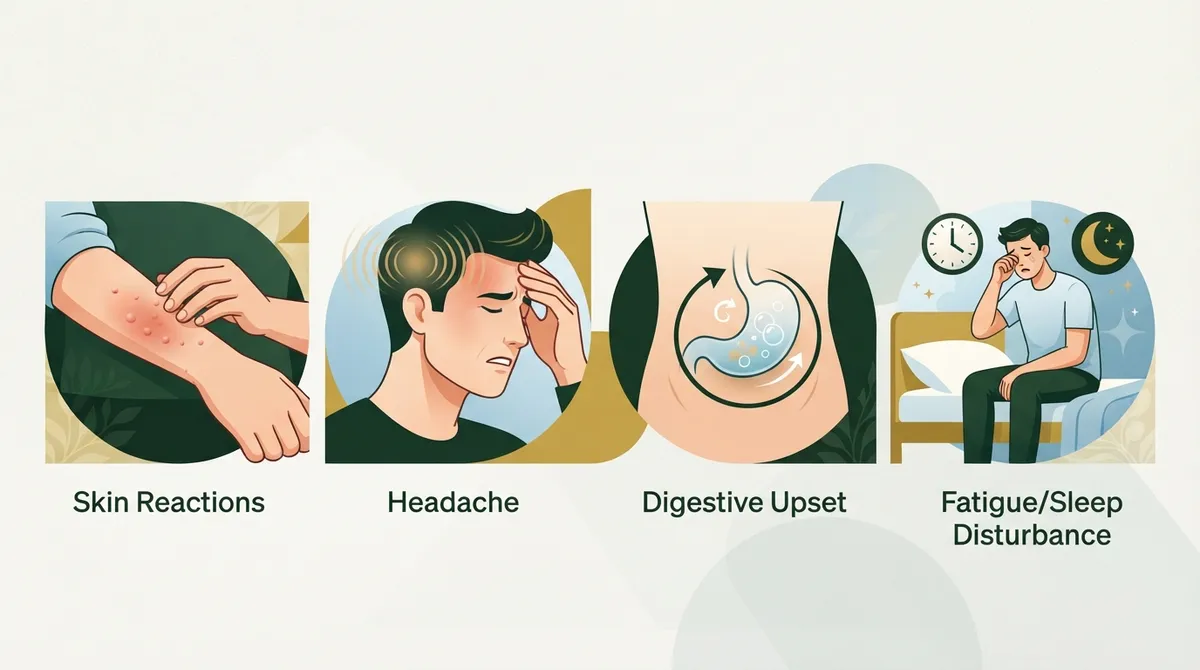
Most peptide medicines, especially GLP-1 based ones, come with a predictable set of mild side effects. These usually show up early and often fade as your body adjusts.
- Injection-site pain, redness, or mild swelling
- Nausea, vomiting, or diarrhea
- Constipation or bloating
- Headache and fatigue
- Changes in appetite
Gastrointestinal symptoms are especially common with GLP-1 receptor agonists, particularly while your dose is being increased. This is one reason gradual dose escalation matters so much. If you’re curious about managing these effects, read What Causes GLP-1 Side Effects and How to Manage Them?.
Serious but Less Common Risks to Know About
Beyond the mild stuff, there are less common risks that deserve real attention. These don’t happen to most people, but you should know the warning signs.
- Dehydration and kidney strain. Severe vomiting or diarrhea can lead to dehydration, which in rare cases can cause acute kidney injury.
- Gallbladder issues. GLP-1 therapies have been linked to gallstones and cholecystitis, especially with rapid weight loss.
- Pancreatitis. Though rare, inflammation of the pancreas is a recognized risk with some peptide medicines.
- Delayed gastric emptying. Some peptides slow down digestion, which can affect how other oral medications are absorbed.
- Low blood sugar. This risk rises when peptides are combined with insulin or other glucose-lowering drugs.
GLP-1 medicines also carry labeling warnings about thyroid C-cell tumors, based mainly on animal studies. They’re generally not recommended for people with a personal or family history of medullary thyroid carcinoma or MEN 2 syndrome. This is exactly why a licensed provider reviews your full health history before prescribing anything.
The Bigger Risk: Compounded and Unregulated Peptides
Here’s where things get serious. Compounded peptides are not FDA-approved, and the FDA does not review them for safety, effectiveness, or quality before they hit the market. That opens the door to real problems.
| Risk Factor | Why It Matters |
|---|---|
| Incorrect concentration | Products may contain more or less active ingredient than labeled |
| Dosing confusion | Mixing up milligrams, milliliters, and syringe units leads to overdosing |
| Contamination | Poor sterility practices can introduce bacteria or particles |
| Inadequate labeling | Missing or unclear instructions increase user error |
| Unauthorized ingredients | Some substances are not legally permitted for compounding |
A pharmacovigilance study reviewing over 81,000 GLP-1 receptor agonist reports in the FDA Adverse Event Reporting System found that compounded products had more than twice the reporting odds for hospitalization compared to non-compounded products (reporting odds ratio 2.35). The same study found dramatically higher reporting odds for preparation errors and contamination with compounded versions. As of April 2025, the University of Illinois Chicago Drug Information Group cited 520 adverse-event reports linked to compounded semaglutide and 480 linked to compounded tirzepatide.
Many of these dosing errors happened because patients confused milligrams, milliliters, and syringe markings, according to FDA communications. This is one of the clearest reasons self-administering unverified peptides is risky. For more on sourcing safety, see FDA-Approved vs. Compounded Peptides: What Wins?.
Popular Peptides With Limited Human Evidence
Products marketed as BPC-157, TB-500, ipamorelin, melanotan, and similar compounds are not FDA-approved for general use. Long-term effects, drug interactions, and even basic dosing safety often aren’t well studied in humans. Worse, products bought from unverified websites may not even contain what the label says. Learn more in 9 BPC-157 Peptide Facts to Know Before You Start and 13 Facts About TB-500 Peptide You Need in 2026.
What Increases Your Personal Risk
Some factors make peptide therapy riskier for certain people. Here’s what raises red flags:
- Self-injecting without proper training
- Rapidly increasing your dose instead of going slow
- Combining multiple peptides without medical guidance
- Buying from unverified or overseas websites
- Misreading syringe units, leading to accidental overdose
- Not telling your doctor you’re using a peptide before surgery or a new prescription
Certain health conditions also call for extra caution. People who are pregnant, breastfeeding, or planning pregnancy should avoid most peptide therapies. The same goes for anyone with a history of pancreatitis, gallbladder disease, severe digestive issues, kidney disease, diabetic eye disease, or endocrine tumors. If you take glucose-lowering medicine, your provider needs to know before adjusting any peptide dose.
How Peptides Can Interact With Surgery and Other Medications
Here’s something many people don’t think about: peptides that slow gastric emptying can affect anesthesia and surgery safety. If your stomach empties more slowly, there’s a higher risk during procedures that require fasting. Always tell your surgeon, anesthesiologist, or any new prescriber that you’re using a GLP-1 or other peptide medicine. This single step can prevent serious complications.
Steps to Lower Your Peptide Therapy Risks
You don’t have to navigate this alone, and honestly, you shouldn’t try to. Here’s a simple roadmap for staying safe:
- Get real blood work done first. Lab testing helps identify hormone levels, organ function, and any red flags before you start.
- Work with a licensed medical provider. They can prescribe the right peptide, right dose, and monitor your progress over time.
- Source your peptides from a legitimate pharmacy. Avoid random online sellers with no verification process.
- Start low and go slow. Gradual dose increases reduce nausea, GI upset, and other early side effects.
- Track your symptoms honestly. Report anything unusual to your provider right away instead of waiting it out.
This is exactly the model Allura Longevity uses. Every client starts with a $50 virtual consultation and complete blood work through LabCorp. From there, licensed providers, led by board-certified Family Nurse Practitioner Ashley, build a personalized six-month treatment plan. Peptides ship directly to your home, and your plan gets adjusted based on ongoing monitoring, not guesswork. If you want to understand this process from the very beginning, read How to Start Peptide Therapy Safely and See Real Results.
Comparing Approved vs. Unapproved Peptide Paths
| Factor | FDA-Approved Peptides | Compounded/Unregulated Peptides |
|---|---|---|
| Safety review | Reviewed through clinical trials | No FDA pre-market safety review |
| Dosing accuracy | Standardized manufacturing | Variable, higher error risk |
| Human evidence | Extensive trial data | Often limited or absent |
| Source verification | Licensed pharmacy channels | Often unverified online sellers |
| Medical supervision | Typically required | Frequently self-directed |
Research published in the National Library of Medicine highlights how peptide-based treatments continue to expand in medicine, but also stresses that quality control and proper clinical oversight remain essential to safety. This reinforces why choosing a supervised program matters more than chasing the newest trending compound.
Warning Signs That Need Immediate Medical Attention
Most people tolerate peptide therapy just fine, especially with proper medical guidance. But you should always know the warning signs that mean it’s time to call a doctor right away:
- Severe or ongoing abdominal pain
- Repeated vomiting or inability to keep fluids down
- Fainting or feeling extremely lightheaded
- Signs of a severe allergic reaction, like swelling or trouble breathing
- Yellowing of the skin or eyes (jaundice)
- Very little or no urination
- Confusion or symptoms of dangerously low blood sugar
If you notice any of these, don’t wait it out. Seek medical care immediately and let your provider know exactly what you’ve been taking.
Why Medical Supervision Changes the Whole Equation
Here’s the honest truth: most peptide therapy risks come from lack of oversight, not from the peptides themselves. Proper dosing, accurate sourcing, and ongoing monitoring dramatically reduce your chances of a bad outcome. That’s the entire philosophy behind working with a telehealth provider instead of going it alone online.
Allura Longevity is licensed in Florida, Georgia, Texas, Connecticut, Indiana, Maryland, New York, and California, offering nationwide telehealth convenience with real medical accountability. Whether you’re focused on weight loss, injury recovery, energy, or hormone balance, personalized plans reduce guesswork. You can explore options tailored to your goals through peptides for women or peptides for men.
Bringing It All Together
Peptide therapy risks are real, but they’re also manageable when you understand them. FDA-approved peptides have strong safety data, while compounded and “research use” products carry much bigger unknowns. Your safest path forward includes proper testing, licensed supervision, verified sourcing, and honest communication with your provider about symptoms.
You deserve to feel confident, not anxious, about your health decisions. If you’re ready to explore peptide therapy the smart way, with real blood work, a licensed provider, and a personalized plan built just for you, now is a great time to start. Spots are limited each month, so don’t wait too long to reach out. Request a consultation with Allura Longevity today and take the next step toward feeling like the best version of yourself.
FAQs
Q: Are peptide therapies safe, and which have the strongest evidence?
A: FDA-approved peptides like semaglutide, tirzepatide, and tesamorelin have the strongest safety evidence because they went through rigorous clinical trials. Compounded or ‘research use’ peptides have much less human safety data, so working with a licensed provider makes a real difference in staying safe.
Q: What are the most common side effects of peptide therapy?
A: The most common side effects include nausea, diarrhea, constipation, headache, fatigue, and mild injection-site irritation. These usually happen early in treatment and often improve as your body adjusts to the dose.
Q: What are the risks of compounded semaglutide or tirzepatide?
A: Compounded versions aren’t FDA-reviewed for safety or accurate dosing, which raises the risk of contamination, incorrect concentration, and dosing errors. Studies have shown higher hospitalization reporting rates with compounded GLP-1 products compared to approved ones, so sourcing matters a lot.
Q: Who should not use GLP-1 or other peptide therapies?
A: People who are pregnant, breastfeeding, or have a history of pancreatitis, gallbladder disease, kidney disease, or certain thyroid or endocrine tumors usually need special evaluation first. A licensed provider will review your full health history before recommending any peptide.
Q: What symptoms mean I should stop peptide therapy and seek care?
A: Severe abdominal pain, repeated vomiting, fainting, jaundice, very little urination, or signs of a severe allergic reaction all need immediate medical attention. It’s always better to call your provider right away than to wait and see if symptoms pass on their own.





