

Key Takeaways
-
Oral collagen peptides have the most human research support with modest, variable benefits for hydration and fine lines, but require 8-12 weeks of consistent daily use paired with sleep, sun protection, and nutrition to see subtle improvements.
-
Not all peptides are equal: oral collagen, topical creams, and injectable options have vastly different evidence levels—oral has most data, topical is preliminary, and injectables like GHK-Cu rely largely on preclinical studies with FDA safety concerns.
-
Topical peptide creams depend heavily on formulation and skin penetration; shop smarter by choosing products with specific named peptides, brand-provided clinical data, patch testing first, and pairing with daily sunscreen for 8-12 weeks.
-
Injectable or compounded peptides like GHK-Cu and BPC-157 lack strong human clinical evidence for skin regeneration and carry risks including limited human exposure data, immune reactions, and regulatory uncertainty—always require medical supervision.
-
Distinguish between cosmetic skin goals (hydration, fine lines) and medical wound care; peptides should never replace proper wound care for slow-healing, infected, or diabetic wounds—see a clinician if wounds don't improve within weeks.
-
Peptides work best as a supplement to foundational skin care habits: daily sunscreen, adequate protein and hydration, sufficient sleep, and gentle routines are the primary drivers of skin health, with peptides as an optional enhancement.
If you have ever stood in front of the bathroom mirror and wondered where your glow went, you are in good company. Skin changes with age, stress, sun, and sleep. And lately, it seems like everyone is talking about peptides for skin regeneration. But with so many creams, powders, and injections out there, it is hard to know what is real and what is just clever marketing.
Here is the friendly truth: peptides are not magic, but some of them show real promise. Others are still in the lab stage. The trick is knowing which is which. In this guide, we will walk through what peptides are, how they may support skin, what the research says in 2026, and how to think about safe, medically guided options.
Whether you are a health optimizer, a busy professional, or someone who simply wants your skin to feel more like you again, this article will help you sort fact from hype. Let’s dive in together!
What Are Peptides, and Why Do They Matter for Skin?
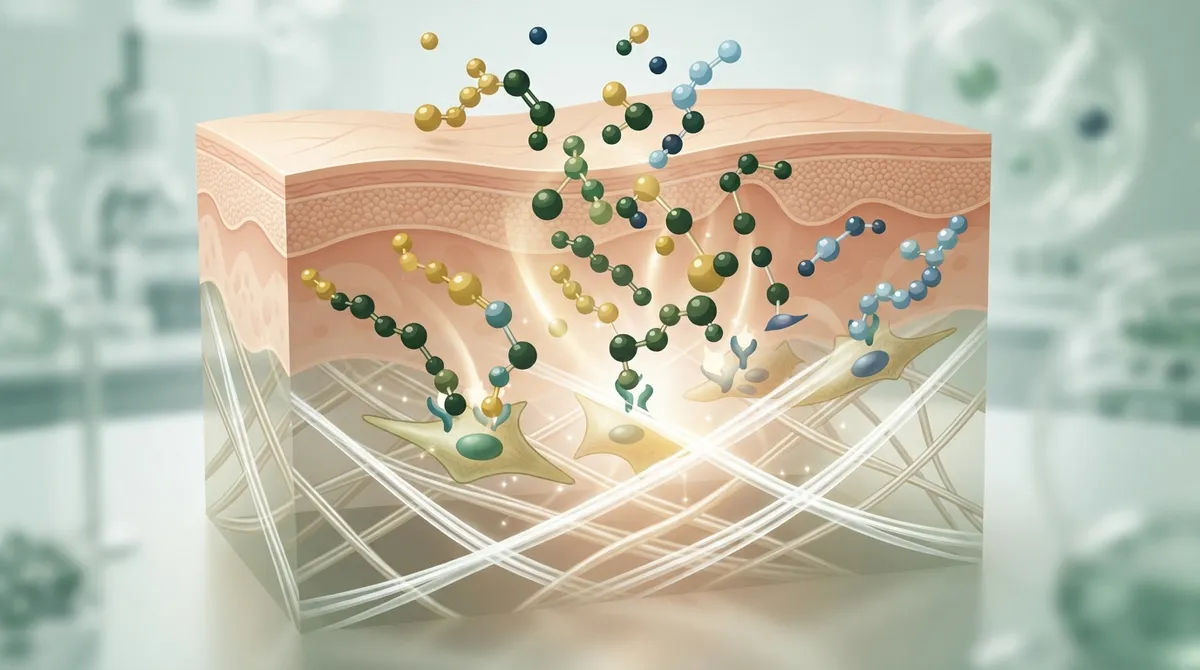
Peptides are short chains of amino acids. Amino acids are the building blocks of proteins, and proteins like collagen and elastin keep your skin firm, smooth, and bouncy. If you want a deeper primer, check out our guide on 8 facts that explain what are peptides in 2026, or this simple overview of what are peptides from WebMD.
Think of peptides like tiny text messages. Some of them may tell skin cells to make more collagen. Others may calm inflammation or help cells move to areas that need repair.
How Skin Regeneration Works
Your skin renews itself all the time. Old cells shed, new cells rise, and the support structure (called the extracellular matrix) is rebuilt. As we age, this process slows down. Collagen production drops, and skin can feel thinner, drier, and less elastic.
Researchers believe peptides may influence this process through signals that affect collagen production, inflammation, and cell migration. Some proposed pathways include TGF-β/Smad and PI3K/Akt/mTOR. Much of this mechanistic evidence, however, comes from lab and animal studies, so we should treat it as promising rather than proven in people.
The Three Main Types of Peptides for Skin
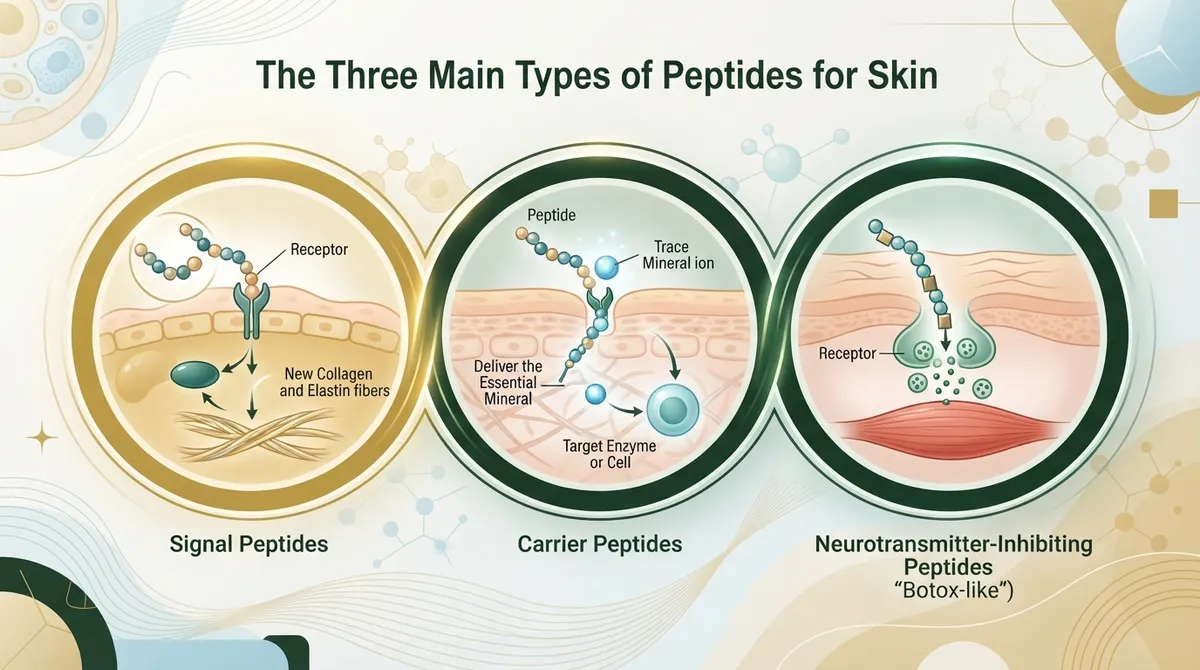
Not all peptides are the same. When people say “peptides for skin regeneration,” they may mean very different things. Each type has its own evidence level and rules.
| Type | How You Use It | Evidence Level | Regulatory Notes |
|---|---|---|---|
| Oral collagen peptides | Powder, capsule, or drink | Most human studies; results vary | Sold as supplements |
| Topical cosmetic peptides | Creams and serums | Product-specific; often preliminary | Sold as cosmetics |
| Prescription or compounded peptides | Injection or other medical routes | Mostly preclinical or limited human data | Requires medical oversight; status can change |
The big takeaway? Evidence for one type does not automatically apply to another. A study on oral collagen does not prove that a peptide injection works, and vice versa.
What Does the Research Say About Oral Collagen Peptides?
Oral collagen peptides have the most human research behind them. Several studies report improvements in some skin-aging measures, including hydration, elasticity, and the look of wrinkles. A 2026 systematic review in Frontiers in Medicine covering 19 randomized trials and 1,341 participants (studies from 2001 to 2024) reported modest improvements in wrinkles, but inconsistent results for elasticity and skin density. As with any newly published review, it is smart to read the full paper and confirm the details.
So, are collagen peptides a miracle? Not quite. They may support skin health for some people, but results vary by formulation and study. They also do not “regenerate” skin in the medical sense, and they are not a treatment for wounds.
Realistic Expectations
- Timeline: Many studies run for 8 to 12 weeks or longer before measuring changes.
- Results: Subtle improvements in hydration or fine lines are more likely than dramatic changes.
- Consistency: Daily use matters, along with sleep, sun protection, and nutrition.
Do Topical Peptide Creams and Serums Work?
Topical peptides are everywhere in skincare aisles. Some are designed to support firmness or smooth the look of fine lines. But there is a catch: skin is a great barrier, and not every peptide gets through it well. Formulation matters a lot.
A 2024 systematic review of topical exosome and peptide research found nine peptide articles and described the evidence as preliminary. That means some products may help, but you should not assume every peptide serum delivers the same results.
Here is a simple way to shop smarter:
- Look for products that name the specific peptide on the label.
- Check whether the brand shares any clinical or consumer testing data.
- Patch test on a small area before using it on your face.
- Give it at least 8 to 12 weeks, and pair it with daily sunscreen.
What About Copper Peptides Like GHK-Cu?
GHK-Cu, often called a copper peptide, gets a lot of buzz. It has proposed tissue-repair activity, and animal wound models have reported collagen production, new blood vessel growth, and wound closure. A 2024 review of local and systemic peptide therapies for soft tissue regeneration discusses these preclinical findings.
But here is the important part. Findings in animals and cells do not prove that injectable GHK-Cu works in people. FDA-related information also points to safety concerns for injectable GHK-Cu, including limited human exposure data, immune reactions (immunogenicity), and peptide-related impurities. Compounding rules and FDA policies can change, so always verify current notices.
If you are curious, you can read more in our guide on how to evaluate GHK-Cu peptide safely in 2026.
BPC-157 and Other “Regenerative” Peptides: Where Do They Stand?
BPC-157 is popular in wellness circles, especially for recovery. But when it comes to skin, it is best described as investigational. The available research does not establish strong human clinical evidence for skin regeneration, and it should not be described as approved for that use.
That does not mean the conversation is over. Science keeps moving. It simply means you deserve honest information before you decide anything. To learn more, see 9 BPC-157 peptide facts to know before you start and what are regenerative medicine peptides and do they work.
Skin Care vs. Wound Care: An Important Difference
This part matters, so let’s say it clearly. Improving skin tone, hydration, and fine lines is a cosmetic goal. Healing a wound is a medical one.
A 2024 review of bioactive peptides for skin wound healing notes that most evidence comes from cells and animals, and that clinical translation is still limited. Another 2024 review of collagen-peptide research reported wound-healing improvements of roughly 10% to 30% across reviewed models. That is not a guaranteed result in people.
Peptides should never replace proper wound care. Please see a clinician if you have a wound that is:
- Slow to heal or not improving after a couple of weeks
- Red, swollen, warm, or draining
- Related to diabetes or poor circulation
- Large, deep, or painful
For a closer look at this topic, read 6 peptides for wound healing worth knowing in 2026.
Who Might Explore Peptides for Skin Rejuvenation?
Different people come to peptides for different reasons. Here is how a few common groups often think about it:
| Reader Type | Common Goal | What to Focus On |
|---|---|---|
| Health optimizers | Better skin as part of whole-body wellness | Sleep, nutrition, and evidence-based options |
| Aging adults | Soften visible signs of aging | Realistic goals and medical guidance |
| Biohackers | Data-driven protocols | Blood work, tracking, and product quality |
| Busy professionals | Convenient, low-fuss care | Telehealth and at-home delivery |
| Wellness seekers | Go beyond basic supplements | Personalized plans from licensed providers |
If this sounds like you, you may also enjoy our deeper dives on 12 peptide skin rejuvenation facts worth knowing and what peptides do for skin.
How to Approach Peptide Therapy for Skin Safely
If you are thinking about medically guided peptide therapy, a careful approach goes a long way. Here is a simple step-by-step path:
- Set clear goals. Are you after hydration, firmness, recovery, or overall vitality?
- Get a baseline. Blood work helps a provider understand your health picture, including hormones and nutrient levels.
- Talk with a licensed provider. They can review your history, medications, and risks.
- Ask about quality and source. Product purity, route of use, and current regulations all matter.
- Monitor and adjust. Follow-ups help track how you feel and what is working.
You can learn more about safe starting points in how to start peptide therapy safely and see real results and FDA-approved vs. compounded peptides.
Simple Habits That Support Skin Along the Way
Peptides work best when the basics are in place. Think of them as the cherry on top, not the whole sundae.
- Daily sunscreen: UV light is a top driver of visible skin aging.
- Protein and hydration: Your skin needs raw materials to rebuild.
- Sleep: Repair happens overnight, so protect your rest.
- Gentle routines: Over-scrubbing can undo your progress.
For more natural ideas, see how can you boost collagen naturally after 30.
How Allura Longevity Can Help
At Allura Longevity, we offer personalized, medically supervised peptide therapy through telehealth. Clients begin with a $50 virtual consultation and complete blood work through LabCorp. From there, our licensed providers, led by board-certified Family Nurse Practitioner Ashley, build a customized six-month plan and deliver it right to your door, with ongoing monitoring along the way.
We are licensed in Florida, Georgia, Texas, Connecticut, Indiana, Maryland, New York, and California. Telehealth makes it easy to fit care into a busy schedule. You can learn about our approach for peptides for women or peptides for men, and see how a plan is built in how to build personalized treatment plans for peptides. For deeper background, the National Library of Medicine hosts peer-reviewed research on peptide science.
The Bottom Line on Peptides for Skin Regeneration
Peptides are an exciting area of skin science, but honesty is the best policy. Oral collagen peptides have the most human data, with modest and variable benefits. Topical peptides depend heavily on the product. Injectable or compounded options like GHK-Cu and BPC-157 rely largely on early or preclinical evidence, and they come with real questions about safety and regulation.
The smartest move is to go slow, ask good questions, and work with a licensed provider who puts your safety first. Your skin story is personal, and your plan should be too.
Ready to explore a plan built around your goals and your lab results? Request a consultation with Allura Longevity today, or call (813) 510-6277. Spots for new clients are limited each month, so reach out while there is room.
This article is for educational purposes only and is not medical advice. Always talk with a licensed healthcare provider before starting any new treatment.
FAQs
Q: Do collagen peptides improve skin hydration, elasticity, or wrinkles?
A: Some human studies report improvements in hydration, elasticity, and the look of wrinkles, but results vary by product and study. They may support skin health for some people, though they do not regenerate skin or treat wounds. Think of them as a gentle helper, not a miracle fix.
Q: Is BPC-157 approved or proven for skin regeneration?
A: No. BPC-157 is best described as investigational for skin, and the available research does not show strong human clinical evidence for this use. It is smart to talk with a licensed provider before considering any compounded peptide.
Q: Are peptide creams and serums actually effective?
A: It depends on the product. Skin is a tough barrier, and penetration, formulation, and clinical evidence differ from one ingredient to the next. Look for clearly labeled peptides, give them 8 to 12 weeks, and always wear sunscreen.
Q: What are the risks of injectable or compounded peptides like GHK-Cu?
A: FDA-related information notes concerns for injectable GHK-Cu, including limited human exposure data, immune reactions, and possible peptide-related impurities. That is why medical supervision, quality sourcing, and checking current FDA notices really matter.
Q: When should I see a doctor instead of trying peptides for a skin issue?
A: If you have a wound that is slow to heal, infected, painful, or linked to diabetes or poor circulation, please see a clinician first. Peptides should never replace evidence-based wound care.





