

Key Takeaways
-
Oral collagen peptides have the most human research support, but results are modest and inconsistent—expect at least 12 weeks of consistent daily use before seeing elasticity improvements.
-
The three types of peptide products (oral, topical, injectable) work differently and have vastly different levels of evidence, so research proving one type works does not apply to the others.
-
Injectable peptides like GHK-Cu and TB-500 lack high-quality human trials for skin elasticity despite online popularity; most supporting evidence comes from laboratory or animal studies only.
-
Topical peptide creams are cosmetics with variable absorption through the skin barrier; treat them as hydrating additions rather than medical treatments for improving skin firmness.
-
Before trying any peptide product, establish basics first: daily sunscreen, adequate sleep, hydration, and avoiding smoking deliver more elasticity benefits than supplements alone.
-
For injectable peptide therapy, seek evaluation from a licensed clinician with blood work and follow-up monitoring; avoid compounded products with uncertain quality, purity, and dosing.
If you have ever pinched the back of your hand and watched the skin snap back more slowly than it used to, you are not alone. Skin loses some of its bounce as we age, and many of us start wondering if there is a smart, science-backed way to help. That is where peptides for skin elasticity come in.
But here is the thing. The word “peptides” covers a lot of ground. It can mean a collagen powder in your morning coffee, a serum in your bathroom cabinet, or a prescription injection from a licensed clinician. Each one works differently, and each one has a very different level of proof behind it.
In this friendly guide, we will walk through what research really says in 2026, what is still unproven, and how to make smart choices without getting swept up in hype. Whether you are a data-driven biohacker, a busy professional, or simply someone who wants to age well, you will find clear, honest answers here.
What Are Peptides, and Why Do They Matter for Skin?
Peptides are short chains of amino acids, the building blocks of proteins. Your body makes thousands of them, and they act like tiny messengers that tell cells what to do. If you want a refresher, our guide on 8 facts that explain what are peptides in 2026 covers the basics, and this overview of what are peptides is a helpful outside reference.
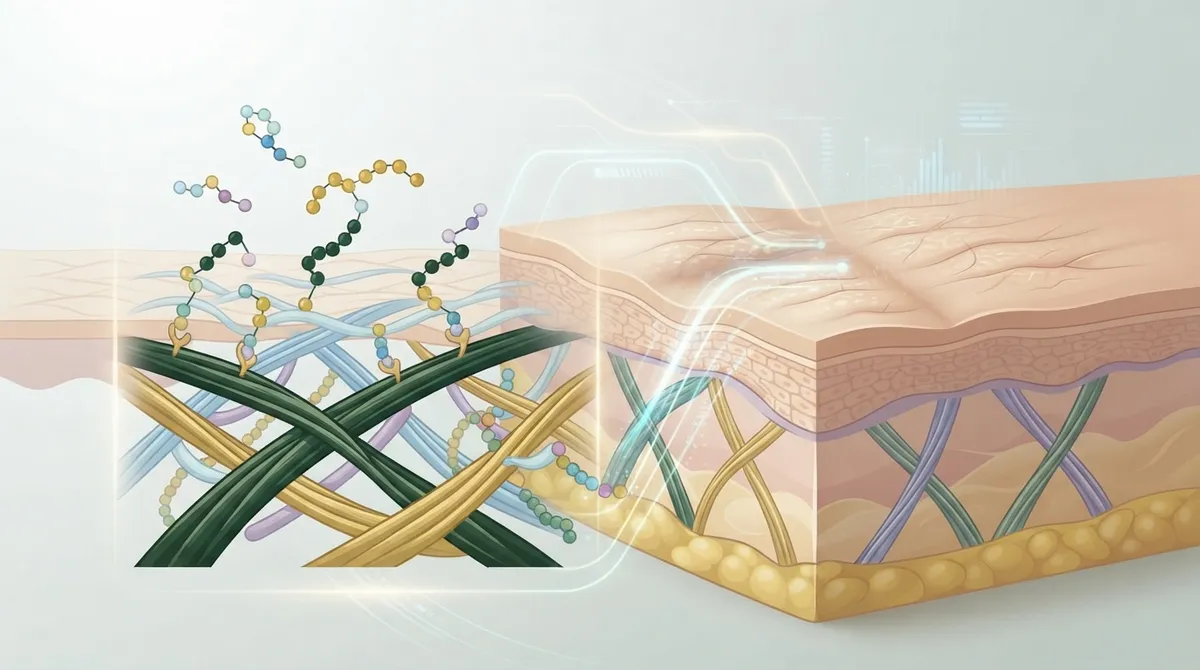
Skin elasticity depends on a network of collagen and elastin fibers in the deeper layer of skin, called the dermis. Over time, sun exposure, stress, sleep loss, and normal aging break that network down. Researchers are interested in peptides because some may nudge skin cells, called fibroblasts, to support that network.
The key word is “may.” Not every peptide does this, and not every route of use is equal. Let us break it down.
Three Very Different Ways to Use Peptides for Skin
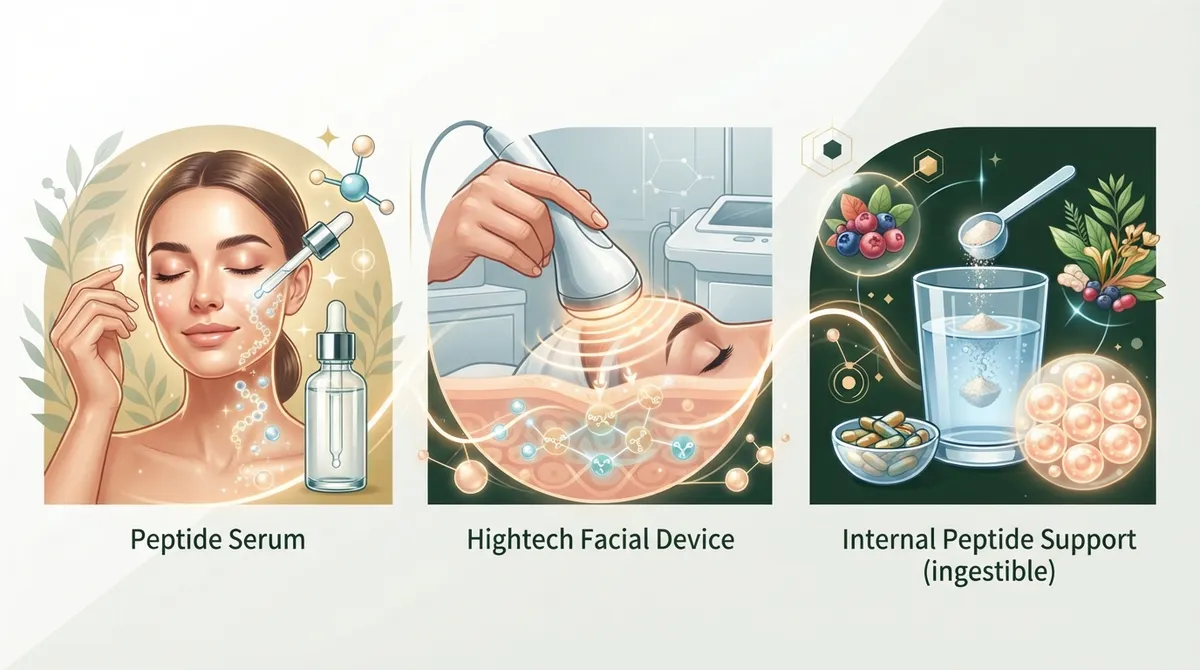
One of the biggest mistakes people make is assuming all peptide products work the same way. Evidence for one type does not carry over to another.
| Type | How It Is Used | Strength of Human Evidence | Key Caution |
|---|---|---|---|
| Oral collagen peptides | Powder, capsules, or drinks taken daily | Most studied; modest and variable results | Quality and dose differ by product |
| Topical peptides | Creams and serums applied to skin | Depends on the specific peptide and formula | Skin absorption varies |
| Injectable or systemic peptides | Prescribed injections such as GHK-Cu | Limited high-quality human data for skin | Many claims rely on lab or animal research |
Keeping these three categories separate is the best way to stay grounded. A study on oral collagen cannot prove that a face cream works, and neither one proves that an injection works.
Oral Collagen Peptides: The Best-Studied Option
Of all the peptide options, hydrolyzed collagen taken by mouth has the most human research behind it. These are collagen proteins broken into small pieces so the body can absorb them more easily.
The idea is simple. Once digested, these pieces supply amino acids and may also act as signals that encourage skin cells to make more of their own collagen and supportive matrix. That is a proposed mechanism, not a guarantee for every product.
What the Latest Reviews Found
The research picture in 2026 is encouraging but mixed, and that honesty matters. Here is what recent large reviews reported:
- One 2026 meta-analysis pooled 35 randomized controlled trials with 2,534 participants. It found statistically significant improvements in instrument-measured skin elasticity, hydration, and transepidermal water loss (a measure of skin barrier health).
- A separate 2026 systematic review pooled 19 randomized trials with 1,341 participants. It found inconsistent effects on elasticity, and the pooled elasticity effect was small and not statistically significant.
- An earlier 2023 meta-analysis of 26 trials and 1,721 participants reported significant improvements in hydration and elasticity with hydrolyzed collagen versus placebo.
Why do the results differ? Studies vary in the type of collagen, the dose, how long people took it, who took part, and how skin was measured. That variety is why experts call the benefits modest and not guaranteed.
How Long Does It Take?
The 2026 collagen meta-analysis noted that elasticity and skin barrier improvements were more apparent after at least 12 weeks of use. This is a pattern across studies, not a promise for any single person. Think of it as a patience game, not an overnight fix.
Across included trials, side effects were minimal. Still, most studies were short, so long-term safety data is limited.
Topical Peptides: Helpful Cosmetics, Not Medicine
You will see peptides listed on many serums and creams. These are cosmetic products. They may help skin look smoother or feel more hydrated, but the evidence depends heavily on the specific peptide and formula.
A big question is whether the peptide can even get through the skin barrier to reach where collagen is made. Results vary widely. Also, findings about oral collagen cannot be used to back up claims about a cream.
If you enjoy topical peptides, that is perfectly fine. Just treat them as one part of a skin routine, and be wary of any product that promises dramatic lifting or “reversing” aging.
Injectable Peptides: Where the Science Is Still Catching Up
This is the part most relevant to peptide therapy clinics, and it deserves the most careful, honest treatment. Peptides such as GHK-Cu, BPC-157, and TB-500 get a lot of attention online for skin renewal and repair.
Here is the reality. Much of the support for these comes from laboratory or animal studies. High-quality human trials showing improved skin elasticity from injectable versions are lacking. That does not mean they are useless. It means the proof is not there yet, and anyone promising results is getting ahead of the evidence.
If you are curious about the topic, our articles on how to evaluate GHK-Cu peptide safely in 2026 and 13 facts about TB-500 peptide you need in 2026 give a balanced look at each one.
A Note on FDA Status
In the United States, FDA approval is specific to a product and a use. A peptide being approved for one purpose does not mean it is approved for skin elasticity. The FDA has also raised safety concerns about certain bulk substances used in compounding, and unapproved or research-use-only products can have uncertain quality, purity, and dosing.
That is why where your peptides come from matters so much. Learn more in FDA-approved vs. compounded peptides: what wins? and how to get prescription peptides safely in 2026.
Comparing Your Options at a Glance
| Question | Oral Collagen | Topical Peptides | Injectable Peptides |
|---|---|---|---|
| Human trial support for elasticity | Yes, mixed and modest | Varies by product | Limited |
| Typical time frame in studies | 12+ weeks | Varies | Not well established |
| Clinician involvement | Optional | Optional | Recommended and required for prescriptions |
| Main limitation | Results vary widely | Absorption questions | Evidence gap for skin |
How to Approach Peptides for Skin Elasticity Wisely
Ready to take a smart, low-stress approach? Here is a simple step-by-step path many people find helpful:
- Start with the basics. Daily sunscreen, good sleep, hydration, and not smoking do more for skin elasticity than any single supplement.
- Decide which category you are exploring. Oral, topical, or injectable. Do not mix up the evidence between them.
- Check product quality. For collagen supplements, look for clear labeling of the collagen type, dose per serving, and third-party testing.
- Give it time. Studies suggest at least 12 weeks before judging oral collagen, so track changes in photos or notes.
- Talk to a licensed clinician. This matters most before trying any injectable peptide, especially if you are pregnant, take medications, or manage a health condition.
What to Look for in a Collagen Peptide Supplement
If you decide to try oral collagen, a few quick checks can help you choose well:
- Hydrolyzed collagen or collagen peptides listed clearly on the label
- A stated dose per serving, so you can compare to studied amounts
- Third-party testing for purity and contaminants
- No exaggerated claims like “erases wrinkles” or “guaranteed results”
- A realistic plan to use it consistently for at least three months
Where Personalized Peptide Care Fits In
Healthy-looking skin is rarely about one thing. Hormones, sleep, stress, inflammation, and nutrition all play a part. That is why a personalized approach can make sense for people who want to look at the whole picture.
At Allura Longevity, licensed providers design customized treatment plans based on your blood work and health goals, delivered through convenient telehealth with at-home administration. We believe in honest conversations about what peptide therapy can and cannot do, including where the skin research is still developing. If you want to explore related topics, read what peptides do for skin: a real-world guide for 2026 or how to trigger collagen stimulation with peptides.
You can also see our service pages for peptides for women and peptides for men, and learn the process in how to start peptide therapy safely and see real results.
Safety and Realistic Expectations
Here is the friendly but important reminder. Peptide products are not all the same, and results differ from person to person. Clinical trials on oral and topical peptides have generally reported few side effects, but they were mostly short, and they do not cover every product on the market.
For anyone considering injectable therapy, the safest path involves a real medical evaluation, appropriate lab work, a licensed prescriber, and follow-up monitoring. Our guide on whether peptide therapy is safe goes into more detail, and the National Library of Medicine is a trustworthy place to explore peer-reviewed research yourself.
The Bottom Line
So, do peptides help with skin elasticity? The honest answer is: possibly, in modest ways, and it depends on which kind you mean. Oral collagen peptides have the most human research, with results that are encouraging yet inconsistent. Topical peptides can be pleasant cosmetic additions. Injectable peptides promoted for skin have exciting theories but limited human proof so far.
The best approach is a patient, informed one that combines solid daily habits with realistic expectations and professional guidance. If you would like a personalized look at your health goals, you are welcome to request a consultation with Allura Longevity. We offer a $50 virtual consultation, and new client spots are limited each month. You can also call us at (813) 510-6277. Your skin story is yours, and we would love to help you write the next chapter thoughtfully.
FAQs
Q: Do collagen peptides improve skin elasticity?
A: They might, a little. Some 2026 reviews found small but significant gains in elasticity and hydration, while another found the elasticity effect was small and not statistically significant. Results depend on the product, dose, and how long you use it.
Q: How long does it take for collagen peptides to affect skin elasticity?
A: In study-level data, benefits looked more apparent after at least 12 weeks of daily use. That is a general pattern, not a promise for every person, so patience and consistency are key.
Q: Are injectable peptides like GHK-Cu proven to improve skin elasticity?
A: Not yet. Most support comes from laboratory or animal research, and high-quality human trials showing better skin elasticity are lacking. A licensed clinician can help you weigh the pros and cons honestly.
Q: Are peptides for skin elasticity FDA-approved?
A: FDA approval is specific to each product and each use, so you should not assume a peptide is approved for skin elasticity. Always ask a qualified provider about a product’s regulatory status, quality, and sourcing before you start.
Q: Can topical peptide creams increase collagen or improve skin firmness?
A: Some may help skin look smoother or feel more hydrated, but results depend on the specific peptide and formula. Because absorption varies, it is best to see topical peptides as cosmetic support rather than a medical treatment.





