
Key Takeaways
-
Collagen production naturally slows starting in your mid-20s and significantly declines by your 40s-50s; peptide therapy stimulates your own fibroblast cells to produce collagen rather than adding it externally.
-
GHK-Cu (copper peptide) is the most extensively researched option for collagen stimulation, with proven benefits for wound healing, elasticity, and collagen synthesis backed by clinical studies.
-
Results take time: hydration improvements appear at 4-8 weeks, visible texture changes at 8-12 weeks, and full results over 3-6 months; consistency and ongoing use are required to maintain benefits.
-
Combining oral and topical peptides often produces better results than either approach alone, with oral peptides supporting overall hydration and topical options targeting localized firmness improvements.
-
Peptide therapy has a stronger safety profile than invasive alternatives like microneedling or aggressive retinoids, with minimal irritation for most users when guided by a licensed healthcare provider.
-
Collagen stimulation benefits extend beyond skin to joint health, tissue repair, and exercise recovery, making it a valuable component of comprehensive longevity and wellness strategies.
Ever look in the mirror and notice your skin just doesn’t bounce back the way it used to? You’re not imagining it. Your body’s natural collagen production starts slowing down in your mid-20s, and by the time you hit your 40s or 50s, that decline gets even more noticeable. The good news? Collagen stimulation through peptide therapy is one of the most exciting, science-backed ways to help your skin (and body) fight back.
This isn’t about slathering on another cream and hoping for magic. It’s about understanding how specific peptides talk to your skin cells and encourage them to do what they naturally do best: make collagen. Whether you’re a busy professional squeezing in self-care between meetings, or a wellness seeker who’s already doing everything right and wants to go further, this guide will walk you through exactly how collagen stimulation works and how to get started the smart way.
What Is Collagen Stimulation, Really?
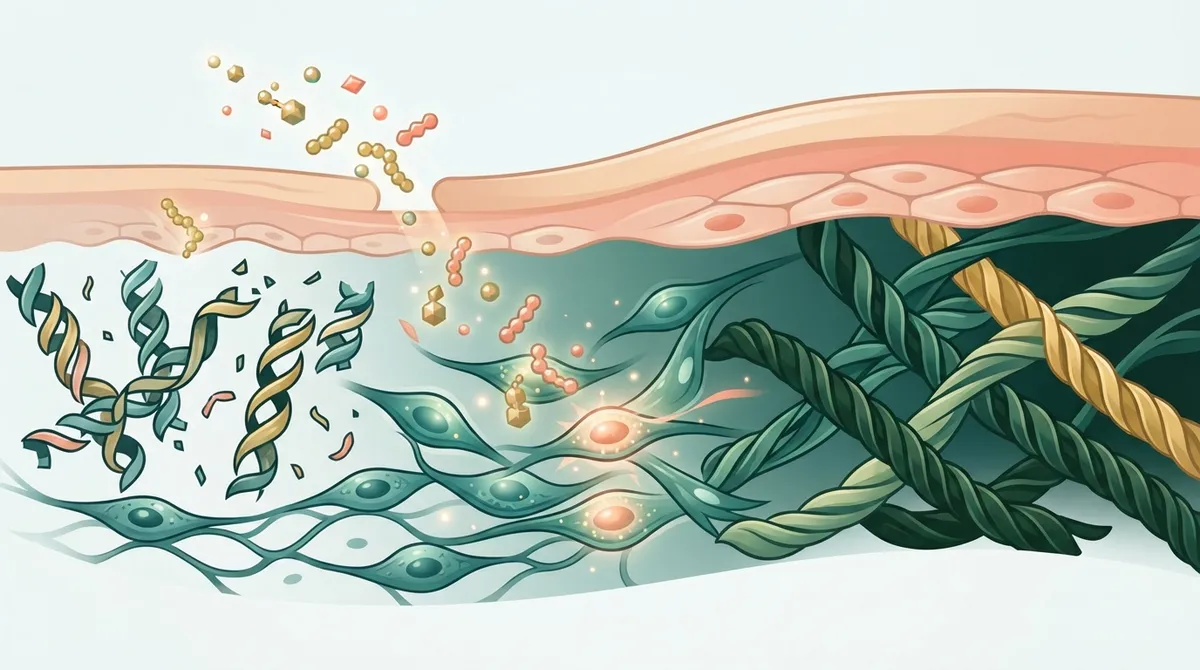
Collagen stimulation means using specific compounds, like signal peptides, to encourage your skin cells to produce more collagen on their own. It’s different from just applying collagen directly to your skin, which mostly just sits on the surface.
Think of signal peptides as tiny messengers. They tap your fibroblasts (the cells responsible for making collagen and elastin) on the shoulder and say, “Hey, get to work.” This is a big part of what makes what are peptides such an interesting topic in modern skincare and wellness science.
Unlike collagen supplements that simply add collagen from an outside source, these peptides work with your body’s own repair systems. That’s a meaningful distinction if you’re someone who cares about how and why a treatment actually works, not just whether it sounds good on a label.
The Science Behind the Signal
When fibroblasts get the signal to ramp up production, they don’t just make more collagen. They also support elastin and the extracellular matrix, which is basically the scaffolding that keeps your skin firm and structured. Over time, this process can lead to smoother texture, better hydration, and a more even tone.
It’s a gradual process, though. Collagen remodeling doesn’t happen overnight, and anyone promising instant results is stretching the truth a bit. Real change takes consistency, which we’ll get into shortly.
The Peptides Behind Collagen Stimulation
Not all peptides are created equal when it comes to boosting collagen. Some have much stronger research behind them than others. Here’s a breakdown of the most talked-about options in this space right now.
| Peptide | Primary Role | What the Research Shows |
|---|---|---|
| GHK-Cu (Copper Peptide) | Skin repair and collagen synthesis | Widely studied for wound healing, elasticity, and collagen production |
| Palmitoyl Tripeptide-5 | Collagen and elastin support | Shown to promote collagen production in skin cell studies |
| Palmitoyl Hexapeptide-12 | Elasticity improvement | Associated with firmer, more elastic skin over time |
| Oral Collagen Peptides | Hydration and matrix support | Improved skin hydration by week 8; collagen density gains as early as week 4 |
GHK-Cu tends to get the most attention, and for good reason. It’s one of the most studied peptides in skin-rejuvenation research, with links to wound healing, improved elasticity, and collagen synthesis. But it’s worth remembering that peptides work best as part of a bigger picture, not as a standalone miracle fix.
How Peptide Therapy Encourages Natural Collagen Production
Here’s the part a lot of people get wrong: peptides don’t add collagen to your skin directly. Instead, they encourage your own cells to make more of it. This distinction matters because it means the results tend to be more natural-looking and gradual, rather than an obvious “overdone” appearance.
According to a review published by the National Library of Medicine, signal peptides can stimulate fibroblasts to increase collagen production and improve skin elasticity. This lines up with what many clients experience: subtle, steady improvement rather than dramatic overnight change.
Steps Your Body Takes During Collagen Stimulation
- Peptides bind to receptors on fibroblast cells, signaling them to activate.
- Fibroblasts increase production of type I and type III collagen.
- Elastin and glycosaminoglycan production also rises, supporting skin structure.
- The extracellular matrix begins remodeling itself, replacing older, weaker collagen fibers.
- Over several weeks, skin gradually becomes firmer, more hydrated, and more resilient.
This is a biological process, not a switch you flip. That’s why patience and consistency matter so much here, something our team at Allura Longevity emphasizes with every client we work with.
How Long Until You See Results?
This is probably the question we get asked most, and it’s a fair one. Nobody wants to invest time and money into something without knowing what to expect.
- Hydration improvements can begin as early as 4 to 8 weeks in.
- Dermal collagen density changes have been noted as early as 4 weeks in clinical trials.
- Most visible skin-texture benefits show up around the 8 to 12 week mark.
- Full results, including improved elasticity and brightness, tend to build over 3 to 6 months.
- Maintaining results requires ongoing, consistent use rather than a one-time treatment.
A 2026 systematic review backs this up, concluding that oral and topical peptides produce modest but significant improvements in skin-aging measures, especially hydration and brightness, all with a strong safety profile. Modest doesn’t mean unimpressive here. It means realistic, sustainable change rather than a short-lived fix.
Oral vs. Topical: Which Approach Wins?
This is a common source of confusion, so let’s clear it up. Both delivery methods have research behind them, but they work a bit differently.
| Factor | Oral Collagen Peptides | Topical Peptides |
|---|---|---|
| Delivery Method | Taken by mouth, absorbed systemically | Applied directly to skin surface |
| Primary Benefit | Hydration, overall skin structure support | Localized firmness and texture improvement |
| Onset of Results | 4 to 8 weeks | 8 to 12 weeks |
| Best Paired With | Whole-body wellness protocols | Targeted skincare routines |
Honestly, many people benefit from using both approaches together as part of a broader, personalized plan. This is exactly the kind of decision that’s best made with guidance from a licensed provider who can look at your individual health picture rather than a one-size-fits-all recommendation.
Collagen Peptides vs. Other Skin-Aging Treatments
It’s natural to wonder how peptides stack up against more familiar options like retinoids or microneedling. Here’s an honest look.
- Retinoids work by speeding up cell turnover and can be more aggressive, often causing irritation or peeling for some users.
- Microneedling creates controlled micro-injuries to trigger the body’s healing response, which does stimulate collagen but comes with downtime.
- Collagen-stimulating peptides tend to be gentler, with a strong safety profile and minimal irritation for most people.
- Combination approaches, where peptides support procedural treatments, often produce the most well-rounded results.
Peptides aren’t meant to replace these other tools entirely. Think of them as a supportive teammate rather than a solo act. If you’re building out a broader anti-aging strategy, understanding how to pick the best peptides for aging can help you create a plan that actually fits your goals.
Who Benefits Most From Collagen Stimulation Therapy?
While almost anyone can benefit from healthier skin, certain groups tend to see the most meaningful improvements.
- Aging adults noticing fine lines, sagging, or dullness in their 40s, 50s, and beyond
- Health optimizers looking for science-backed, non-invasive ways to support skin and tissue health
- Biohackers who track measurable changes in skin hydration, elasticity, and recovery markers
- Busy professionals who want visible improvement without frequent in-office procedures
- Wellness seekers already using supplements or skincare who want a more targeted, personalized approach
If any of these describe you, it might be worth exploring a customized plan rather than guessing your way through over-the-counter products.
Getting Started the Right Way
Jumping into peptide therapy without guidance is a bit like trying to fix your car engine from a YouTube video. It might work out, but it’s risky, and you could miss something important. A licensed provider can look at your blood work, health history, and goals before recommending a plan.
Simple Steps to Begin Your Journey
- Schedule an initial virtual consultation to discuss your skin and wellness goals.
- Complete lab work to get a clear picture of your current health status.
- Receive a personalized treatment plan based on your specific needs.
- Start your peptide protocol with clear instructions for at-home use.
- Check in regularly with your provider to track progress and make adjustments.
This is exactly the process we use at Allura Longevity. Clients start with an affordable virtual consultation, complete blood work through LabCorp, and receive a customized six-month plan delivered straight to their door. Ashley, our board-certified Family Nurse Practitioner, leads care with ongoing monitoring every step of the way. If you’re curious about the full process, our guide on how to start peptide therapy safely and see real results is a great next read.
Safety Considerations Worth Knowing
Peptides used for collagen stimulation generally have a strong safety record, especially compared to more invasive procedures. That said, “safe” doesn’t mean “one-size-fits-all.”
- Individual health conditions can affect which peptides are appropriate for you
- Quality and sourcing of peptides matter significantly for both safety and effectiveness
- Working with a licensed provider reduces the risk of improper dosing or interactions
- Ongoing monitoring helps catch any issues early and allows for plan adjustments
This is one of the biggest reasons telehealth-based, medically supervised care makes such a difference. You’re not guessing your way through this alone.
Beyond Skin: How Collagen Support Fits Into Overall Longevity
Here’s something a lot of people don’t realize: collagen isn’t just about wrinkles. It plays a role in joint health, tissue repair, and even how well your body recovers from injury or exercise. That’s why collagen stimulation often fits naturally into a broader longevity and wellness plan.
If you’re already exploring other areas of peptide therapy, like recovery, energy, or metabolic support, collagen-focused peptides can complement those efforts nicely. Many of our clients combine skin-focused protocols with other goals, creating a more complete approach to aging well rather than tackling one issue in isolation.
Ready to Take the Next Step?
Collagen stimulation isn’t about chasing perfection. It’s about giving your body the support it needs to do what it already knows how to do, just a little more efficiently. With the right peptides, realistic expectations, and a bit of patience, real and lasting improvement is absolutely within reach.
If you’re ready to explore a personalized plan built around your own blood work and goals, our team at Allura Longevity is here to help. We’re licensed across Florida, Georgia, Texas, Connecticut, Indiana, Maryland, New York, and California, with telehealth care available nationwide. Spots for new clients are limited each month, so don’t wait too long to get started. Request a consultation today and let’s build a plan that helps you look and feel your best, inside and out.
FAQs
Q: What are collagen-stimulating peptides?
A: They’re signal peptides that tell your skin’s fibroblast cells to ramp up natural collagen and elastin production. Instead of adding collagen from the outside, they wake up your body’s own repair processes, which many people love because it feels more natural.
Q: Does GHK-Cu really boost collagen?
A: Yes, GHK-Cu is one of the most studied peptides for skin rejuvenation, with strong links to collagen synthesis, wound healing, and improved elasticity. It’s a favorite in this space for good reason, though results still take time and consistency.
Q: Are oral collagen peptides better than topical peptides?
A: Honestly, it depends on your goals! Oral peptides tend to support hydration and overall skin structure, while topical options target specific areas more directly. Many people see the best results combining both as part of a personalized plan.
Q: How long does it take to see results from collagen peptides?
A: Most people notice hydration improvements around 4 to 8 weeks, with visible texture changes showing up between 8 and 12 weeks. Full results tend to build over 3 to 6 months, so a little patience really pays off here.
Q: Are peptide treatments for collagen stimulation safe?
A: Generally, yes, they carry a strong safety profile, especially compared to more invasive procedures. That said, working with a licensed provider ensures the right peptides and dosing are chosen for your unique health picture.





