
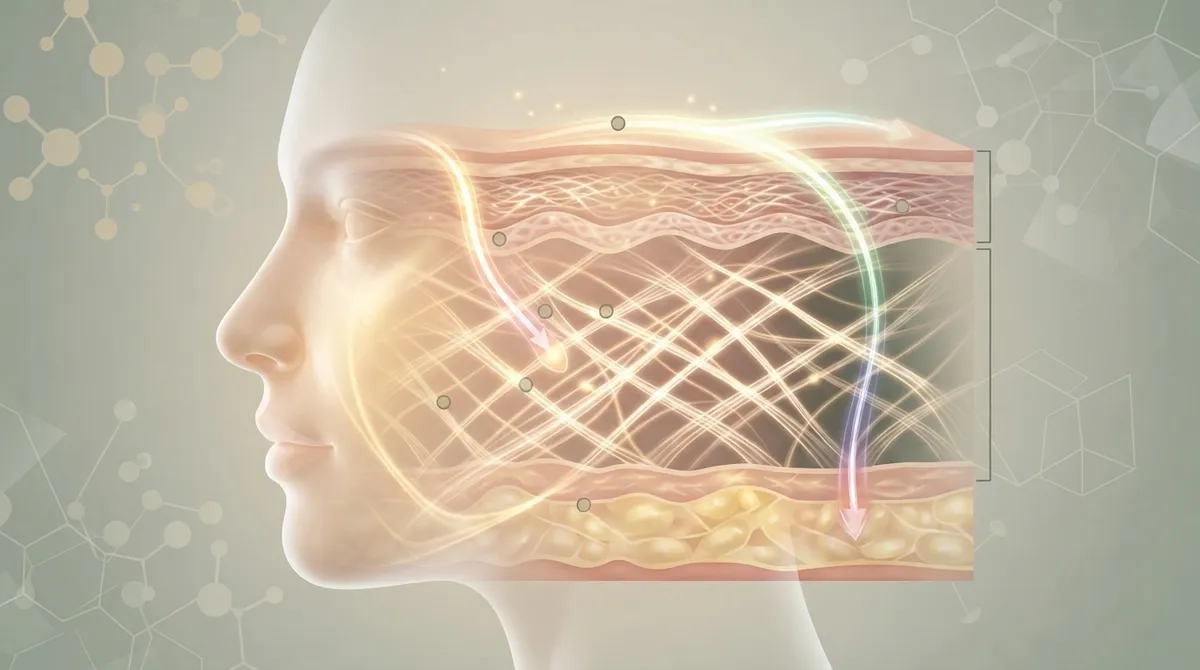
Key Takeaways
-
Oral hydrolyzed collagen peptides have the strongest human evidence with a 2023 meta-analysis of 26 trials showing modest improvements in skin elasticity, but results require 8-12 weeks and are gradual rather than dramatic.
-
Injectable peptides for skin elasticity lack published human evidence and are not FDA-approved, so avoid them unless a licensed clinician can explain the specific sourcing and safety plan.
-
Topical GHK-Cu (copper tripeptide) shows promise in small studies of 41-71 women over 12 weeks, but results are formula-specific, meaning one product's success doesn't guarantee another's effectiveness.
-
Evidence does not transfer between peptide routes—oral, topical, and injectable peptides have different levels of scientific support, so comparing them directly is misleading.
If you have ever stood in front of the mirror and wondered where your bounce went, you are in good company. Skin loses firmness as we age, and many of us start hunting for the best peptides for skin elasticity. Here is the tricky part: the word “peptides” covers a lot of ground. A collagen powder, a copper peptide serum, and an injectable peptide are very different things, with very different evidence behind them.
This guide sorts it all out in plain, friendly language. We will look at what the research really shows, where it is strong, and where it is thin. If you are a health optimizer, a busy professional, or simply someone who likes to know what you are putting into your body, this is for you. Peptides can be a smart part of a wider wellness plan, but honest expectations matter. For a quick refresher on the basics, see 8 Facts That Explain What Are Peptides in 2026.
Why Skin Loses Elasticity as We Age
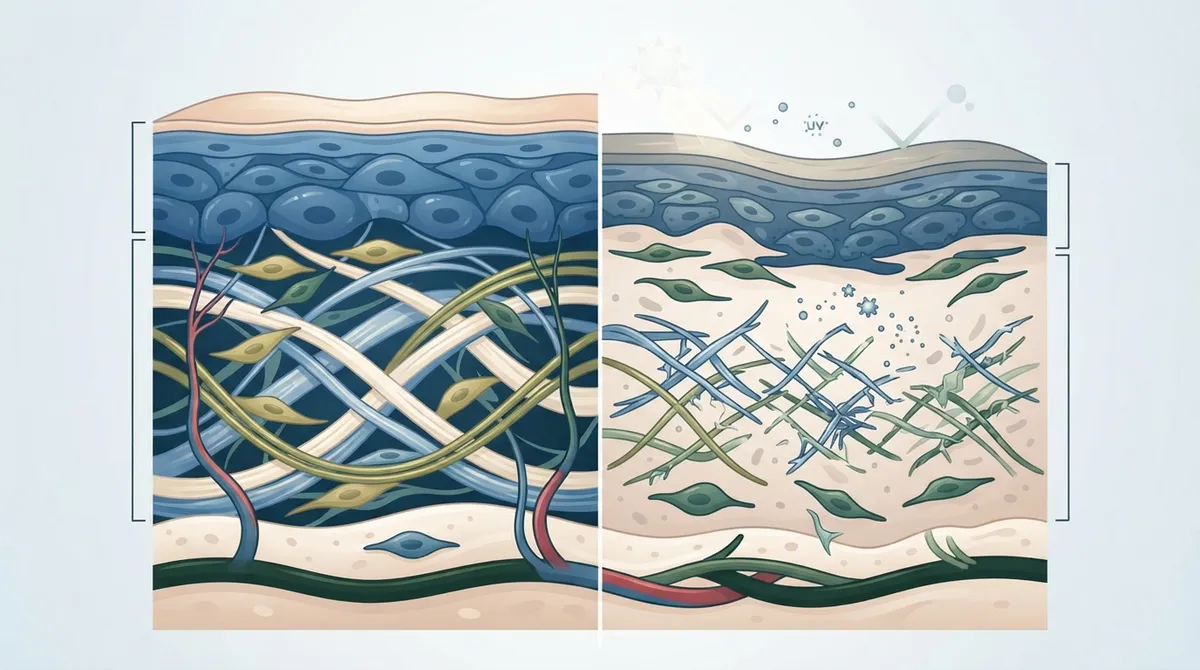
Skin gets its stretch and snap from collagen and elastin. These proteins form a supportive network in the deeper layer of skin. Over time, sun exposure, stress, poor sleep, and normal aging break that network down and slow the production of new fibers.
Peptides are short chains of amino acids, the building blocks of proteins. Some act as signals that may nudge skin cells to behave more youthfully. Others, like collagen peptides, are broken-down pieces of collagen meant to be absorbed through digestion. If you want a deeper primer, what are peptides is a helpful starting point.

First, Know the Three Routes
Before we rank anything, let’s get the routes straight. The evidence for one route does not transfer to another. That is the single most important idea in this article.
| Route | Example | Strength of Evidence for Elasticity |
|---|---|---|
| Oral | Hydrolyzed collagen peptides | Strongest human trial data, modest effects |
| Topical | GHK-Cu (copper tripeptide-1) serums | Small, product-specific studies |
| Injectable | Systemic peptides marketed by clinics | Limited human evidence for skin elasticity |
The 8 Best Peptides and Peptide Approaches for Skin Elasticity
Here is our honest, evidence-focused look at the options people ask about most. Some are strong contenders. Others are interesting but unproven. We have flagged which is which.
1. Oral Hydrolyzed Collagen Peptides
If you want the best peptides for skin elasticity backed by human trials, start here. A 2023 meta-analysis pooled 26 randomized controlled trials with 1,721 participants. It reported statistically significant improvements in skin hydration and elasticity with hydrolyzed collagen supplements.
There are caveats. The products, doses, and study lengths varied a lot, and the effects were modest. Think of collagen as a gentle supporter, not a miracle. Most people take it daily for a couple of months before judging results.
2. Topical GHK-Cu (Copper Tripeptide-1)
GHK-Cu is a naturally occurring peptide that shows up often in skincare. A review of topical studies describes a 12-week facial cream study in 71 women with photoaged skin. It reported better skin density and thickness and less laxity.
Another 12-week eye-cream study with 41 women reported improvements in lines and skin thickness compared with other creams. These are small studies, and they tested specific formulas. They do not prove that every copper peptide product will work the same way.
3. Other Topical Signal Peptides
You will see other cosmetic peptides in serums and moisturizers. Many are designed to look like pieces of collagen and send a “make more” message to skin cells. Results are formulation-specific, so one cream’s findings cannot be copied onto another.
Also, collagen itself is a large molecule. In its native form, it has limited ability to pass through intact skin. So a cream that simply lists “collagen” is not the same as a well-studied peptide formula.
4. Injectable GHK-Cu
Here is where we slow down and read carefully. The clinical studies behind GHK-Cu and skin firmness mostly looked at topical use. Published human evidence for injected GHK-Cu improving skin elasticity is lacking.
GHK-Cu is also not an approved drug, and compounded or research-use products should not be treated like FDA-approved therapies. If someone offers this to you, ask about the source, the evidence, and the safety plan.
5. BPC-157
BPC-157 comes up often in recovery conversations. For skin elasticity specifically, there is no strong clinical evidence that it works as a treatment. It is better known in the wellness world for injury recovery interest. You can read more in 9 BPC-157 Peptide Facts to Know Before You Start.
6. Peptides That Support Whole-Body Aging
Some peptides are discussed for broader vitality, such as sleep, recovery, and body composition. Better sleep and recovery can help skin look and feel healthier. But that is an indirect link, not proof that these peptides tighten skin. For the big picture, see How to Pick the Best Peptides for Aging in 2026.
7. Collagen Plus Vitamin C Pairings
Many collagen products add vitamin C, because the body uses it to build collagen. This is a sensible pairing. Still, the strongest evidence we have is for hydrolyzed collagen peptides as a group, so treat added nutrients as supportive rather than proven boosters.
8. A Personalized, Clinician-Guided Plan
The last item is not a single peptide at all. It is the habit of getting guided. A licensed provider can look at your goals, your health history, and your labs before suggesting anything. That matters most for injectable options, pregnancy, medical conditions, or medication use. Learn more in How to Trigger Collagen Stimulation With Peptides.
Quick Comparison: What the Evidence Really Says
| Option | Human Evidence | Typical Timeframe in Studies | Main Limitation |
|---|---|---|---|
| Oral collagen peptides | 26-trial meta-analysis | Varied by study | Modest effects, mixed methods |
| Topical GHK-Cu | Small studies (41 to 71 women) | About 8 to 12 weeks | Formula-specific results |
| Injectable GHK-Cu | Lacking for skin elasticity | Not established | Not an approved drug |
| BPC-157 | No strong skin elasticity data | Not established | Marketing outpaces evidence |
How to Choose Wisely: A Simple Step-by-Step
Feeling a little overwhelmed? Totally normal. Here is an easy way to move forward without wasting money.
- Name your goal. Is it firmer skin, fewer fine lines, or better hydration? Different tools fit different goals.
- Start with the best-studied route. For most people, that means oral collagen peptides and a quality topical routine.
- Check the product, not just the ingredient. Look for clear dosing, testing, and a trustworthy brand.
- Give it time. Studies often run 8 to 12 weeks or longer before changes show.
- Talk to a clinician before injectables. Ask about sourcing, safety, and what the research actually supports.
What Peptide Therapy Can and Cannot Promise
Peptide therapy is a growing part of longevity care, and many people enjoy it as part of a wider plan. Honest providers will tell you what is well supported and what is still experimental. For skin elasticity, the most reliable evidence sits with oral collagen and certain topical formulas, not with injections.
That does not mean injectable peptides have no place in your wellness journey. Many clients use them for goals like recovery, energy, or metabolism. Just keep the claims separate. Read about safety in Is Peptide Therapy Safe? What You Really Need to Know, and see how results are judged in When Do Peptide Therapy Before and After Results Show?.
Safety Tips Before You Start
- Avoid buying research-use peptides online. Quality and purity can vary.
- Tell your provider about pregnancy, medical conditions, and medications.
- Be wary of any promise of guaranteed results.
- Patch test new topical products to check for irritation.
- Pair any plan with sunscreen, sleep, and protein. These basics move the needle.
If you want to dig into the legal and sourcing side, FDA-Approved vs. Compounded Peptides: What Wins? is worth a read. For wider skin-focused context, try What Peptides Do for Skin: A Real-World Guide for 2026. The National Library of Medicine also hosts peer-reviewed research you can explore yourself.
Where Allura Longevity Fits In
At Allura Longevity, we believe in personalized, medically supervised care. Our licensed providers, led by board-certified Family Nurse Practitioner Ashley, start with a $50 virtual consultation and LabCorp blood work. From there, you get a customized six-month plan delivered to your home, with ongoing monitoring and adjustments.
Skin rejuvenation is one of the areas people explore with us, always alongside honest conversations about evidence. We offer peptides for women and peptides for men, with telehealth available nationwide, including in Florida, Georgia, Texas, Connecticut, Indiana, Maryland, New York, and California. If you are still deciding how to begin, How to Start Peptide Therapy Safely and See Real Results walks you through it.
The Bottom Line
The best peptides for skin elasticity, based on today’s human evidence, are oral hydrolyzed collagen peptides and well-formulated topical options like GHK-Cu. Both show promise, and both come with modest, product-specific results. Injectable peptides for skin firmness remain unproven, so approach them with questions, not hype.
You deserve clear answers and a plan built around you. Allura Longevity offers personalized peptide therapy with licensed providers, and spots for new clients are limited each month. Ready to talk it through? Request a consultation or call (813) 510-6277, and let’s build a plan that fits your goals.
FAQs
Q: What are the best peptides for improving skin elasticity?
A: Based on current human evidence, oral hydrolyzed collagen peptides and certain topical GHK-Cu formulas have the most support. The effects are modest, and results depend on the specific product. Injectable peptides for skin elasticity do not have strong clinical backing yet.
Q: Do collagen peptides improve skin elasticity, and how long do they take?
A: A 2023 meta-analysis of 26 randomized trials found improvements in skin hydration and elasticity with collagen supplements. Studies vary, but many run around 8 to 12 weeks or longer, so patience helps. Results are usually gradual and subtle.
Q: Is GHK-Cu better as a topical serum or an injection?
A: The clinical studies on skin firmness mostly tested topical GHK-Cu, not injections. Human evidence for injected use on skin elasticity is lacking, and GHK-Cu is not an approved drug. A licensed clinician can help you weigh the options safely.
Q: Are injectable peptides for skin elasticity FDA-approved?
A: No injectable peptide is established as an approved treatment specifically for skin elasticity. Compounded or research-use products should not be treated as FDA-approved therapies. Always ask your provider about sourcing and the evidence behind any recommendation.
Q: What are the risks of peptide therapy for skin?
A: Risks depend on the route and product. Topical products can cause irritation, while injectables carry added safety and sourcing concerns. A provider can review your health history, pregnancy status, and medications before you begin.





