

Key Takeaways
-
Most regenerative peptides like BPC-157 and TB-500 lack sufficient human clinical evidence; research is primarily based on animal studies with only a handful of small human trials, so they remain investigational rather than proven treatments.
-
Product quality varies dramatically outside regulated channels—peptides may be contaminated, mislabeled, or incorrectly dosed, making medical supervision and verified sourcing essential to avoid serious health risks.
-
Medical supervision from a licensed provider is non-negotiable; they should review your labs, medical history, and medication interactions while sourcing quality-controlled products with ongoing monitoring.
-
BPC-157 has only three published human studies (including one with just 12 patients and one with 2 people), with no completed randomized controlled trials proving efficacy for tendon, ligament, or muscle healing in humans.
-
TB-500 (synthetic thymosin beta-4) differs significantly from naturally occurring thymosin beta-4; injectable TB-500 products lack sufficient human evidence despite marketing claims about athletic recovery and tissue repair.
-
Realistic expectations are critical—view peptide therapy as an investigational support to physical therapy and proven treatments, not a standalone replacement, while monitoring for unknown long-term effects and drug interactions.
If you’ve ever pulled a hamstring, dealt with a stubborn shoulder injury, or just wished your body could bounce back faster, you’ve probably heard whispers about regenerative peptide therapy. It sounds like something out of a sci-fi movie, right? Peptides that help your body repair itself! But before you get too excited (or too skeptical), let’s slow down and talk through what this actually means, what the science really says, and how to approach it the smart way. Grab a cup of coffee and let’s chat like friends who both care about doing this right.
Regenerative peptide therapy is a hot topic among health optimizers, biohackers, and aging adults who want their bodies to recover like they used to. But it’s also a space full of big promises and, honestly, a lot of confusion. This guide will walk you through what the term really means, which peptides get the most buzz, what human research actually shows, and how to make safe, informed choices with the help of a licensed provider. No hype, just honest information you can use.
What Is Regenerative Peptide Therapy, Really?
Regenerative peptide therapy is an umbrella term. It describes the investigational use of small protein-like molecules, called peptides, to support the body’s natural repair processes. Think of peptides as tiny messengers that tell your cells what to do, like reduce inflammation, grow new blood vessels, or help tissue heal.
This is not one single, standardized treatment. It’s not FDA-approved as its own medical category either. Instead, it’s a growing area of interest built on early research, a handful of small human studies, and a lot of laboratory and animal data. Understanding what are peptides and how they behave in the body is the first step to making sense of all this.
The Proposed Benefits People Talk About
People exploring regenerative peptide therapy are usually hoping for help with:
- Faster recovery from tendon, ligament, or muscle injuries
- Reduced inflammation after workouts or physical strain
- Support for gut lining and digestive tissue
- Skin healing and collagen support
- Better blood flow and tissue remodeling
- General wear-and-tear recovery as we age
These are appealing goals, especially if you’re a busy professional trying to stay active despite a packed schedule, or an aging adult who wants to keep moving without constant aches. But wanting something to work and having solid proof it works are two very different things.

The Most Talked-About Regenerative Peptides
A few names show up again and again in this space. Let’s break down what each one is supposed to do, according to current research and marketing claims.
| Peptide | Proposed Use | Research Status |
|---|---|---|
| BPC-157 | Tendon, ligament, gut, and muscle repair | Mostly animal studies; very limited human data |
| TB-500 (Thymosin Beta-4) | Wound healing, muscle recovery, flexibility | Some human research on natural thymosin beta-4; injectable products largely unstudied |
| GHK-Cu | Skin repair, collagen support, wound healing | Topical use has more human data than injectable use |
| KPV | Anti-inflammatory support, gut health | Early-stage research, mostly preclinical |
| MOTS-c | Metabolic support, cellular energy | Emerging research, still developing |
If you want a deeper dive into one of these compounds specifically, our article on 9 BPC-157 Peptide Facts to Know Before You Start covers the details. We also have a full breakdown in 13 Facts About TB-500 Peptide You Need in 2026.
What Does the Science Actually Say?
This is the part where we need to be honest with you, because that’s what good care looks like. The research on regenerative peptides is still young, and the gap between animal studies and human proof is significant.
BPC-157: Promising Lab Data, Thin Human Evidence
Most of what we know about BPC-157 comes from lab and animal research. Studies have looked at injured tendons, muscles, gut tissue, nerves, and skin in animals, and some results looked encouraging. But animal results don’t automatically translate to humans. Dosing, safety, and effectiveness in people remain largely unknown.
A 2025 narrative review found only three published human studies on BPC-157. One was a small case series of 12 patients with knee pain, where 7 people reported pain relief lasting more than six months. Another looked at interstitial cystitis, and a third was a tiny two-person pilot study using intravenous BPC-157. That pilot found no short-term adverse events, but two people simply isn’t enough to prove anything about safety or effectiveness.
There are currently no completed, published randomized controlled trials in humans proving BPC-157 works for tendon, ligament, muscle, or gut healing. It is not FDA-approved for any medical use in people.
TB-500 vs. Thymosin Beta-4: What’s the Difference?
This mix-up trips people up constantly. Thymosin beta-4 is a naturally occurring protein in the body, and it has been studied in limited human research, including wound healing and certain eye conditions. TB-500 is a synthetic, shortened version marketed for injectable use in athletic recovery and tissue repair.
The research gap here is important. While natural thymosin beta-4 has some human data behind it, injectable TB-500 products sold for regeneration or recovery do not have sufficient human evidence to support those specific claims.
What a 2024 Review Concluded
A 2024 review looking at local and systemic peptide therapies for soft tissue regeneration came to an honest conclusion: this field is still in its infancy. The researchers said more studies are needed before these peptides can be widely recommended for tissue repair. That’s not a dismissal, it’s a call for patience and caution.
Understanding the Real Risks
It’s easy to get swept up in exciting marketing, but regenerative peptides come with real considerations you deserve to know about.
- Product quality varies wildly. Peptides bought outside regulated channels may be contaminated, mislabeled, or contain the wrong dose entirely.
- Injection site reactions can happen. Redness, swelling, or irritation at the injection site are possible with any injectable peptide.
- Allergic or immune reactions are possible. Your body may respond unpredictably, especially with unregulated products.
- Unknown drug interactions exist. Peptides can interact with medications or existing health conditions in ways that aren’t fully studied.
- Angiogenesis needs caution. Some peptides may promote new blood vessel growth, which theoretically could affect other biological processes if not properly monitored.
This is exactly why working with a licensed medical provider matters so much. According to the National Library of Medicine, ongoing research and monitoring are essential parts of understanding how these compounds behave in the human body.
How Regenerative Peptides Are Typically Administered
Depending on the peptide and the goal, administration methods vary. Here’s a simple breakdown:
- Subcutaneous injection: The most common method for peptides like BPC-157
- Intra-articular injection: Directly into a joint, used in some small studies
- Topical application: Common for skin-focused peptides like GHK-Cu
- Oral or intravenous: Less common, with very limited human research behind it
The route of administration matters a lot for safety and absorption. This is not something to guess at on your own, which is why medical guidance is non-negotiable here.
How to Approach Regenerative Peptide Therapy the Smart Way
If you’re still interested in exploring this space (and many wellness seekers are), here’s how to do it responsibly.
Step-by-Step Guide
- Get real lab work done. Blood work through a trusted lab helps establish your baseline health and identifies what your body actually needs.
- Talk to a licensed provider, not a forum. Online communities mean well, but they aren’t a substitute for medical guidance tailored to your body.
- Ask about product sourcing. Quality control matters enormously in this space. Vague answers are a red flag.
- Set realistic expectations. Understand that most human evidence is early-stage, not a guaranteed fix.
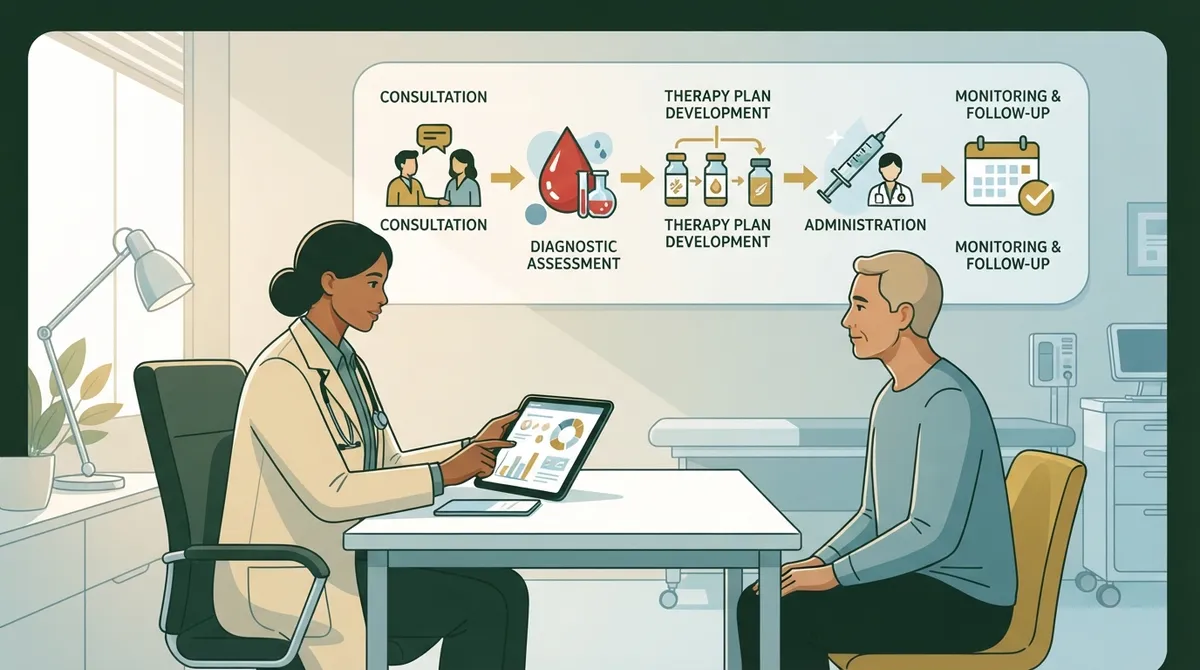
- Start with a personalized plan. Your goals, health history, and current condition should shape any protocol.
- Monitor progress with follow-ups. Regular check-ins help catch issues early and adjust your plan as needed.
- Combine with proven care. Peptides should support, not replace, physical therapy, rehab, or medical treatment when needed.
If you want a broader look at getting started safely, check out How to Start Peptide Therapy Safely and See Real Results. We also recommend reading Is Peptide Therapy Safe? What You Really Need to Know before making any decisions.
Comparing Investigational vs. Approved Peptide Options
| Category | Examples | Regulatory Status | Best For |
|---|---|---|---|
| Investigational Regenerative Peptides | BPC-157, TB-500 | Not FDA-approved for human use | Discussion with your provider, not self-treatment |
| Approved Peptide Medicines | Certain GLP-1 medications, growth hormone secretagogues | FDA-approved for specific indications | Weight management, metabolic support, hormone optimization |
| Topical Peptide Compounds | GHK-Cu based skincare | Cosmetic use, limited regulation | Skin support, mild wound care |
This is why an honest, personalized approach matters more than chasing trends. Every body is different, and your treatment plan should reflect that. Our friends at What Are Regenerative Medicine Peptides, and Do They Work? dig even deeper into this topic if you’re curious.
Why Medical Supervision Changes Everything
Here’s the honest truth: regenerative peptide therapy isn’t something to DIY based on internet forums or unverified suppliers. The difference between a safe, informed experience and a risky one usually comes down to who is guiding your care.
At Allura Longevity, treatment starts with a simple $50 virtual consultation and blood work through LabCorp. From there, licensed providers, led by board-certified Family Nurse Practitioner Ashley, build a customized six-month plan based on your actual health data, not guesswork. Peptides are shipped right to your door, and you get ongoing monitoring so your plan can be adjusted as your body responds.
This kind of personalized, medically supervised approach matters even more in a field where the science is still catching up to the marketing. Whether you’re focused on recovery, energy, or long-term vitality, having a licensed provider in your corner gives you peace of mind that self-sourced products simply can’t match.
Who Should Consider This Approach
Regenerative peptide therapy conversations tend to resonate most with:
- Athletes and active adults dealing with nagging injuries
- Aging adults who want to support joint and tissue health proactively
- Biohackers who track labs and want data-driven, personalized protocols
- Busy professionals who need convenient, at-home care options
- Wellness seekers already investing in preventive health who want to go further
If any of these describe you, the smartest first move is an honest conversation with a licensed provider who can review your labs and health history before recommending anything.
Frequently Overlooked Safety Steps
Before starting any peptide protocol, keep these safety basics in mind:
- Always disclose your full medical history, including medications and supplements
- Ask specifically about sourcing, testing, and third-party quality checks
- Understand the expected timeline and realistic outcomes
- Report any side effects immediately to your provider
- Never combine unregulated products without medical guidance
These steps might seem basic, but they’re the difference between an informed decision and a risky guess. For more on injection prep specifically, take a look at How to Prepare for Safe, Effective Peptide Injections.
Final Thoughts on Regenerative Peptide Therapy
Regenerative peptide therapy sits at an exciting but still-developing edge of wellness science. The lab and animal research is genuinely promising, and early human data offers a hopeful glimpse of what might be possible down the road. But we’re not there yet in terms of definitive proof, and it’s important to approach this space with curiosity balanced by caution.
The good news? You don’t have to navigate this alone or guess your way through unregulated products. Working with licensed providers who understand your labs, your goals, and the current state of the science is the safest, smartest path forward. If you’re ready to explore what a personalized, medically supervised peptide plan could look like for you, request a consultation with the team at Allura Longevity today. With licensed providers, at-home delivery, and ongoing monitoring, you’ll have real support every step of the way. Spots are limited each month, so don’t wait to start the conversation about your health goals.
FAQs
Q: What is regenerative peptide therapy?
A: It’s an umbrella term for using bioactive peptides to support tissue repair, reduce inflammation, and encourage healing. It’s still an evolving area of research, not a single approved treatment, so working with a licensed provider is key.
Q: Does BPC-157 actually heal tendons, ligaments, or muscles in humans?
A: Honestly, we don’t have strong proof yet. Most of the encouraging results come from animal studies, and human research is still very limited, so it’s best viewed as investigational rather than a guaranteed fix.
Q: Is BPC-157 FDA-approved or legal to use as a medical treatment?
A: No, BPC-157 isn’t FDA-approved for any human medical use. That doesn’t mean it’s off the table for discussion, but it does mean you should only explore it under the guidance of a licensed medical provider.
Q: What is the difference between TB-500 and thymosin beta-4?
A: Thymosin beta-4 is the naturally occurring protein with some limited human research behind it, while TB-500 is a synthetic version marketed for injectable use. The injectable products don’t have the same level of human evidence yet.
Q: Are regenerative peptides safe, and what side effects can occur?
A: Safety really depends on product quality and medical supervision. Possible issues include injection site reactions, allergic responses, and unknown long-term effects, which is why sourcing and monitoring matter so much.





