

Key Takeaways
-
Most people notice meaningful changes between 4-16 weeks, with appetite changes and lab shifts appearing early (days to weeks) while visible body composition changes take 8-24 weeks or longer depending on the peptide type.
-
GLP-1 peptides like semaglutide show appetite suppression within days to 2 weeks, but measurable weight loss appears around week 4 and continues building through 68+ weeks of consistent use.
-
Growth hormone secretagogues (CJC-1295, ipamorelin) require 8-24 weeks for noticeable improvements in sleep, recovery, and body composition, though lab markers may shift within 4 weeks.
-
Inconsistent dosing, doses too low for your body weight, poor sleep, high stress, and low-quality peptide sources are common reasons people don't see expected results—discuss adjustments with your provider.
-
Baseline blood work and consultation with a licensed provider before starting peptides significantly improves outcomes; personalized dosing based on your actual biology prevents wasted time on generic protocols.
-
BPC-157 and cosmetic peptides like GHK-Cu have limited human evidence, making timelines less predictable than FDA-approved peptides—expect 2-4 weeks for subjective improvements but manage expectations given ongoing research limitations.
If you just started peptide therapy—or you’re still deciding whether to try it—you probably want a straight answer. How long does it take for peptides to work? We get it. Waiting for results can feel like watching water boil. The good news is that many people notice small changes early, while bigger changes build over weeks and months. Let’s walk through exactly what to expect, peptide by peptide, so you can feel confident and patient at the same time.
Peptide therapy isn’t a magic switch. It’s more like planting a garden. Some seeds sprout fast. Others need time, care, and the right conditions before you see anything above the soil. Your body works the same way. Your dose, your health history, your goals, and the specific peptide you’re using all shape your timeline. Below, we break down nine real, evidence-informed timelines so you know what’s normal, what’s exciting, and what might need a second look from your provider.
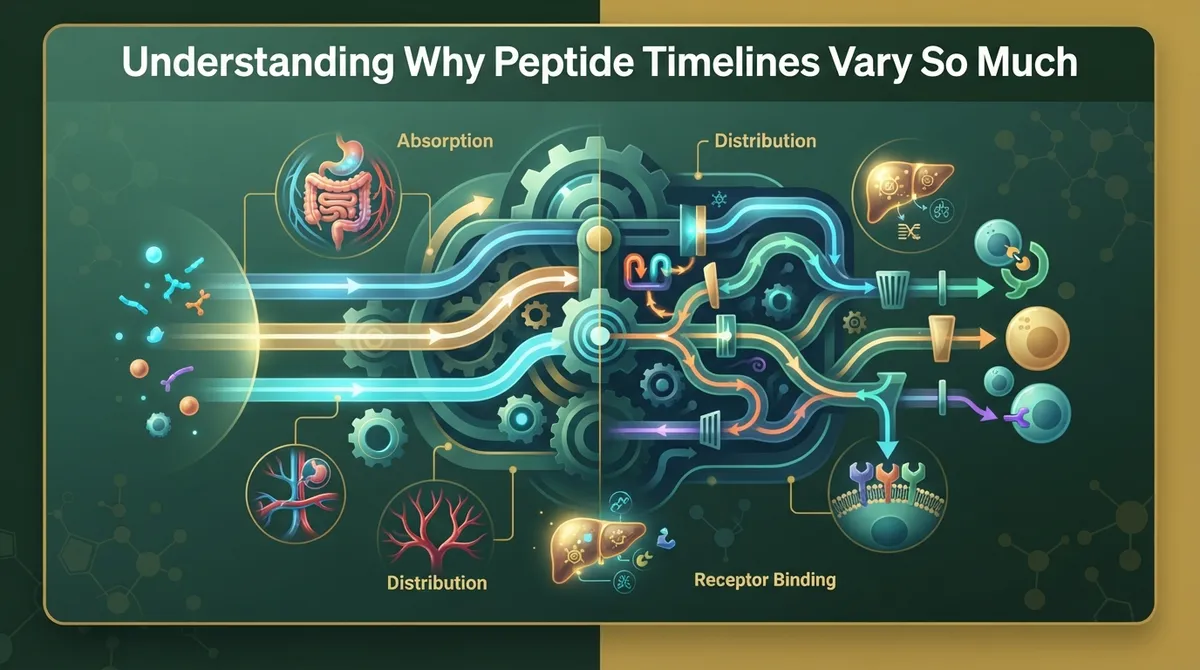
1. Understanding Why Peptide Timelines Vary So Much
There’s no single stopwatch for peptide therapy. Onset depends on the peptide itself, your dose, how it’s delivered, and what result you’re tracking. Are you watching the scale? Your energy levels? A lab report? Each of these moves at its own pace.
Some effects show up in minutes. Others take months to become obvious. This is normal and expected. According to what are peptides, these small protein chains act as messengers in the body, and messengers need time to deliver instructions and get a response.
- The specific peptide you’re taking
- Your starting dose and titration schedule
- Your baseline health and hormone levels
- Whether you’re measuring symptoms, labs, or physical changes
- How consistently you take your treatment
If you’re new to this world, our guide on 8 Facts That Explain What Are Peptides in 2026 is a great place to start before diving into timelines.

2. GLP-1 Peptides: Appetite Changes Come First
If you’re using semaglutide or tirzepatide for weight goals, you may notice appetite changes within days to a couple weeks. Your hunger may feel quieter. Food may feel more satisfying in smaller amounts.
But visible weight loss usually takes longer. Research from the STEP-1 trial found measurable weight differences appeared around week 4, with results continuing to build through 68 weeks. That trial reported about 14.9% average weight loss at 68 weeks, compared to roughly 2.4% with placebo.
Tirzepatide showed even bigger changes in the SURMOUNT-1 trial, with participants losing between 15% and 21% of body weight over 72 weeks, depending on their dose. Compare that to about 3.1% in the placebo group.
- Week 1–2: Appetite changes begin
- Week 4: Measurable weight difference appears
- Week 8–16: Clear body composition shifts
- Month 6+: Full results with continued dosing
Want a deeper breakdown of these medications? Check out How to Understand GLP-1 Peptide Therapy in 2026 and 8 GLP-1 Weight Loss Facts Worth Knowing in 2026.
3. Growth Hormone Secretagogues: Slow and Steady
Peptides like CJC-1295 and ipamorelin work by nudging your pituitary gland to release more growth hormone. This isn’t instant. Early biochemical shifts, like changes in IGF-1 levels, may show up in blood work within a few weeks.
But the results people actually care about—better sleep, improved recovery, changes in body composition—usually take 8 to 24 weeks to become noticeable. Patience really matters here.
- Weeks 1–4: Lab markers may start shifting
- Weeks 4–8: Sleep quality often improves
- Weeks 8–16: Recovery and energy gains build
- Months 3–6: Body composition changes become visible
For more detail, see How to Use CJC-1295 Peptide Safely for Real Results and Ipamorelin Peptide Therapy: Benefits, Dosing & Safety.
4. BPC-157 for Recovery: Managing Expectations
BPC-157 gets a lot of buzz for tendon and joint recovery. Some users report feeling less discomfort within a couple weeks. But here’s the honest truth: much of the human evidence for BPC-157 is still limited.
Most research comes from animal studies or small, preliminary human data. That doesn’t mean it can’t help—it just means results vary more, and timelines are less predictable than with FDA-approved medications.
If you’re curious about this peptide, our article 9 BPC-157 Peptide Facts to Know Before You Start covers what’s known and what’s still uncertain.
5. Insulin and Fast-Acting Peptide Medicines
Not every peptide takes weeks. Rapid-acting insulin analogs like insulin lispro and insulin aspart start working in about 10 to 15 minutes. This shows just how wide the range really is across peptide therapy.
This fast onset happens because insulin has a very direct, well-mapped biological action. Most wellness peptides work more subtly, through signaling pathways that take longer to produce a noticeable change.
6. Tesamorelin and Visceral Fat Reduction
Tesamorelin has strong clinical trial support, particularly for reducing visceral fat in people with HIV-associated lipodystrophy. Studies tracked results over about 26 weeks and found reductions of roughly 17% to 18% compared to placebo.
This is a great example of a peptide where the timeline is well documented because of formal FDA trial data, unlike many wellness peptides sold without the same level of testing.
Why This Timeline Matters for You
If your provider prescribes tesamorelin or a similar peptide, expect a longer runway. Don’t judge your progress at week 2. Judge it at month 6, when the real data shows change.
7. Skin, Hair, and Cosmetic Peptides
Peptides like GHK-Cu are popular for skin renewal and collagen support. Subjective improvements, like smoother texture, may appear within a few weeks. But real collagen remodeling takes longer, often 3 months or more.
Think of it like retraining a muscle. Your skin cells need repeated signals over time to build new collagen structure that actually holds.
- Weeks 2–4: Skin may feel smoother or more hydrated
- Weeks 6–12: Fine lines may soften
- Months 3–6: Visible collagen remodeling
Learn more in How to Trigger Collagen Stimulation With Peptides.
8. Muscle Gain and Body Composition Peptides
If your goal is lean muscle, patience is your best friend. Peptides that support muscle growth typically need 8 to 16 weeks before changes are noticeable on a scale or in the mirror.
Combine your peptide protocol with resistance training and proper nutrition for the best chance at real, lasting results. Peptides support your effort—they don’t replace it.
- Consistent strength training 3–5 times weekly
- Adequate protein intake daily
- Sufficient sleep for recovery
- Regular check-ins with your provider to adjust dosing
For a deeper dive, read 14 Peptides for Muscle Gain Worth Knowing (2026) and Peptides for Muscle Building: What Really Works in 2026.
9. When to Talk to Your Provider About Your Timeline
If weeks have passed and you’re not seeing any change, don’t panic and don’t quit on your own. Reach out to your provider first. They may need to adjust your dose, check your labs, or review how consistently you’re taking your treatment.
A lack of dramatic results after one or two doses doesn’t always mean something’s wrong. But ongoing frustration deserves a real conversation, not guesswork. According to the National Library of Medicine, proper monitoring and dose adjustment are key parts of safe, effective peptide treatment.
| Peptide Type | Early Signs | Full Results Timeline |
|---|---|---|
| GLP-1 (Semaglutide/Tirzepatide) | Days to 2 weeks (appetite) | 8–16+ weeks (weight loss) |
| Growth Hormone Secretagogues | 2–4 weeks (labs, sleep) | 8–24 weeks (body composition) |
| BPC-157 | Days to 2 weeks (subjective) | Variable, limited evidence |
| Tesamorelin | Weeks (labs) | 26 weeks (fat reduction) |
| Skin/Collagen Peptides | 2–4 weeks (texture) | 3–6 months (remodeling) |
How to Set Realistic Expectations From Day One
The best way to avoid disappointment is to start with clear, honest expectations. This starts with a good consultation and proper lab work before you ever begin treatment.
- Get baseline blood work through a trusted lab like LabCorp
- Discuss your specific goals with a licensed provider
- Understand which peptide fits your situation
- Follow your titration schedule exactly as prescribed
- Track your progress with photos, labs, and how you feel
- Schedule follow-ups to adjust your plan as needed
This is exactly the model we follow at Allura Longevity. Every client starts with a $50 virtual consultation and complete blood work, so your six-month plan is built around your actual biology, not guesswork. To learn more about the process, read How to Start Peptide Therapy Safely and See Real Results.
Common Reasons People Don’t See Expected Results
Sometimes the timeline stretches out longer than expected. Here are common culprits worth reviewing with your provider.
- Inconsistent dosing or missed doses
- Dose too low for your body weight or goals
- Underlying hormone imbalance not yet addressed
- Poor sleep, high stress, or nutrition gaps
- Using unregulated or low-quality peptide sources
If you’re comparing your at-home routine to a local clinic option, our article Local Clinic vs. Telehealth: Best Peptide Therapy Near You? can help you weigh your options.
Why Personalized, Licensed Care Makes a Real Difference
Peptide therapy isn’t one-size-fits-all. Two people using the same peptide can see very different timelines based on their labs, lifestyle, and health history. That’s why working with licensed medical providers matters so much.
At Allura Longevity, treatment plans are built around your individual blood work and goals, led by Ashley, a board-certified Family Nurse Practitioner. You get ongoing monitoring, dose adjustments, and support delivered right to your door through telehealth, available across Florida, Georgia, Texas, Connecticut, Indiana, Maryland, New York, and California.
Curious how peptides could fit your specific goals, whether that’s weight loss, recovery, or vitality? You can request a consultation to get personalized guidance instead of guessing on your own.
Final Thoughts on Your Peptide Therapy Timeline
So, how long does it take for peptides to work? The honest answer is: it depends, but most people see meaningful change somewhere between 4 and 16 weeks, with full results often building over several months. Some effects, like appetite changes or lab shifts, show up early. Others, like visible body changes or tissue remodeling, take patience and consistency.
The most important thing you can do is stay consistent, track your progress, and stay in close contact with your provider. Peptide therapy is a partnership, not a solo project. With the right support, realistic expectations, and a personalized plan, you’re setting yourself up for real, lasting results. Ready to get started the right way? Request a consultation today and take the guesswork out of your peptide journey. Limited spots are available for new clients each month, so don’t wait too long to claim yours.
FAQs
Q: How soon do peptide injections start working?
A: It really depends on the peptide! Some, like fast-acting insulin, work within minutes, while others like growth hormone secretagogues take a few weeks to show early signs. Most people notice subtle changes within the first 2 to 4 weeks, with bigger results building over months.
Q: How long does semaglutide or tirzepatide take to reduce appetite and weight?
A: Appetite changes often show up within days to two weeks. Measurable weight loss usually becomes clear around week 4, with results continuing to build through 68 to 72 weeks based on clinical trial data.
Q: When should I expect results from growth-hormone-releasing peptides?
A: Lab markers may shift within a few weeks, but the results you actually feel—better sleep, recovery, and body composition changes—usually take 8 to 24 weeks. Staying consistent is key here.
Q: How long does BPC-157 take to work for an injury, and what evidence supports it?
A: Some people report feeling relief within a couple weeks, but human research on BPC-157 is still limited. Most current evidence comes from animal studies, so results and timelines can vary quite a bit person to person.
Q: Why am I not seeing results from peptide therapy after several weeks?
A: This happens more often than you’d think, and it’s usually fixable! Common culprits include inconsistent dosing, a dose that needs adjusting, or lifestyle factors like sleep and nutrition. Your provider can help pinpoint what’s going on.





