
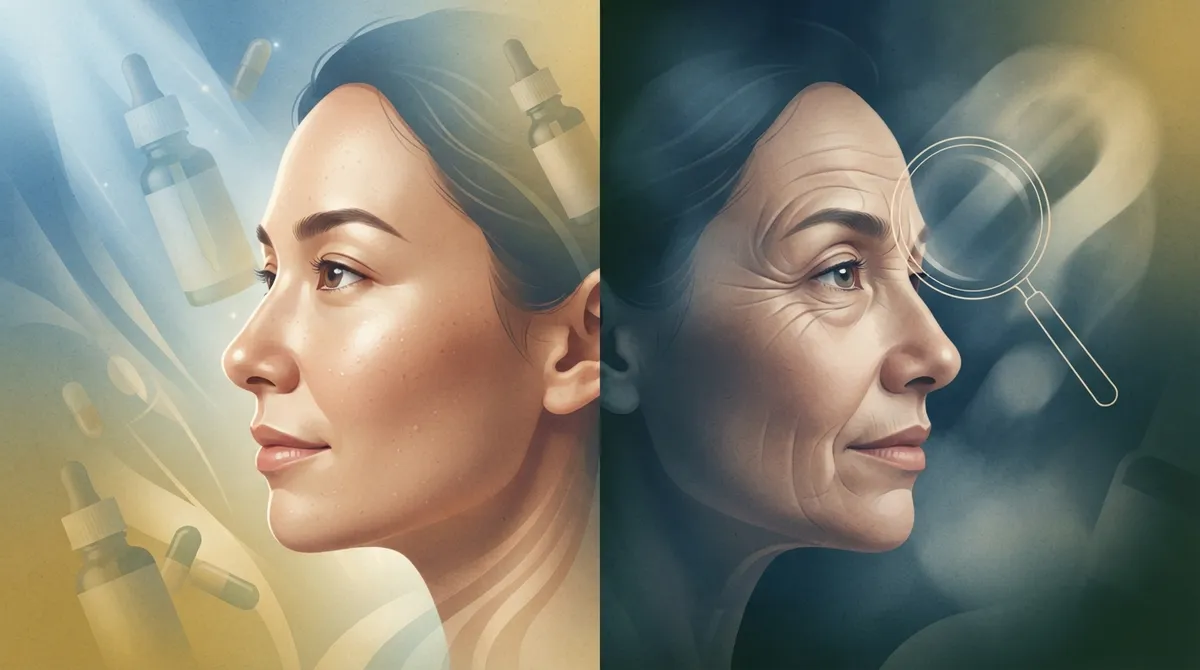
Key Takeaways
-
Oral collagen peptides show the most consistent evidence for improved skin hydration and elasticity, but wrinkle results are inconsistent and not robust based on recent meta-analyses of 35+ trials.
-
No peptide treatment—especially injectables—has been proven to broadly reverse facial wrinkles; evidence strength varies dramatically by peptide type, form, and delivery method.
-
Topical peptide creams show only limited evidence for modest cosmetic benefits; the most cited study (Argireline) was small and older, making it unreliable for evaluating today's products.
-
Injectable and systemic peptides marketed for anti-aging lack strong clinical evidence for wrinkle reduction and should not be assumed effective based on studies of other peptide types or purposes.
-
Peptides work best as a supporting add-on, not a replacement; sunscreen, retinoids, and cosmetic procedures have much stronger evidence and should form the foundation of any anti-wrinkle strategy.
-
Compounded peptides lack FDA approval and controlled human safety data, creating potential risks; working with licensed providers and completing blood work before starting therapy is essential.
You have seen the ads. A tiny jar of cream, a trendy supplement, or a peptide injection that promises smoother, younger-looking skin. It is easy to feel hopeful. It is also easy to feel confused. So, do peptides help with wrinkles, or is it just clever marketing?
The honest answer is: it depends. “Peptide” is a big word that covers many different things. A cream you rub on your face is not the same as a collagen powder you stir into coffee. Neither one is the same as a prescription peptide given by a licensed provider. Each has different evidence behind it.
In this friendly guide, we will walk you through what the research says in 2026, where the hype gets ahead of the science, and how to make smart choices. Whether you are a busy professional, a data-driven biohacker, or simply someone who wants to age well, you will leave with a clear game plan.
What Are Peptides, and Why Do They Matter for Skin?
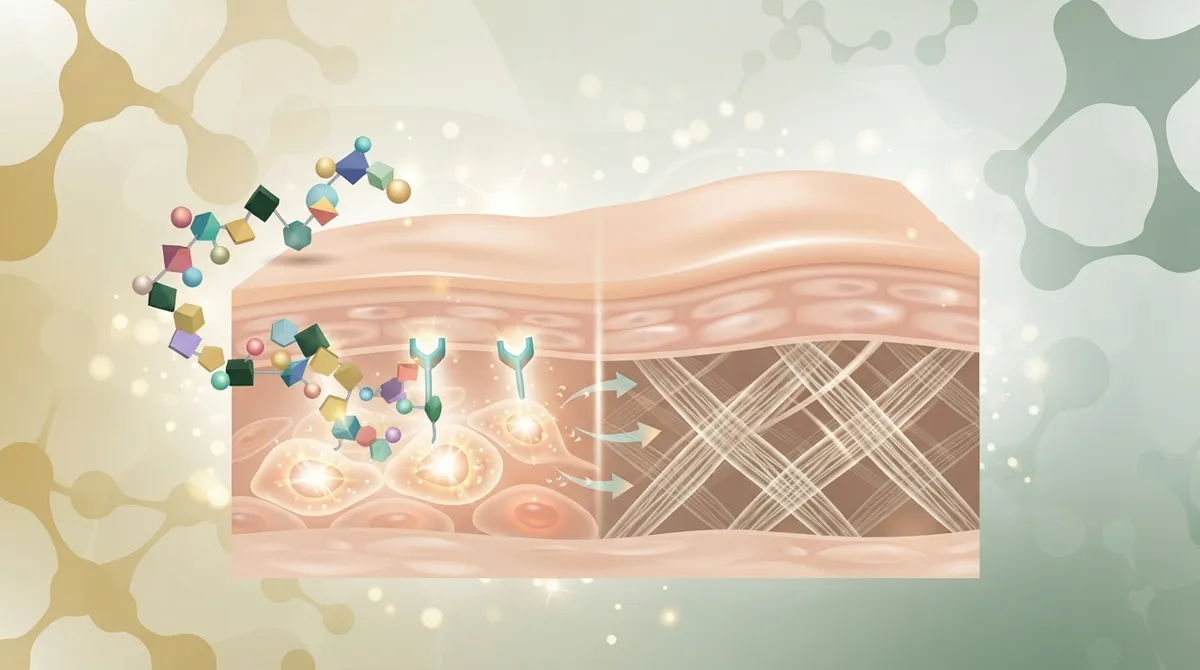
Peptides are short chains of amino acids. Amino acids are the small building blocks that make up proteins. Your skin is full of proteins like collagen and elastin, which keep it firm and bouncy. If you want a refresher, you can read 8 Facts That Explain What Are Peptides in 2026, or check this overview of what are peptides.
As we age, collagen breaks down faster than the body makes it. Sun exposure, stress, poor sleep, and smoking speed this up. The result is fine lines, deeper wrinkles, and thinner skin.
The idea behind skin peptides is simple. Some peptides may act like little messengers. They may nudge skin cells to make more collagen or support the skin barrier. That is a promising idea. But a promising idea is not the same as proven results.
The Short Answer: Maybe, Depending on the Peptide and How You Use It
Here is the big takeaway. Peptides may offer modest benefits for skin appearance in some forms. But the strength of the evidence changes a lot by type, and no peptide has been shown to erase wrinkles.
Evidence about topical creams and oral collagen peptides does not prove that injectable or systemic peptide treatments reduce wrinkles. Mixing these up is the most common mistake people make.
| Peptide Type | How It Is Used | What Research Suggests | Evidence Strength for Wrinkles |
|---|---|---|---|
| Topical cosmetic peptides | Creams and serums | Small studies hint at possible cosmetic benefits | Limited |
| Copper peptides | Creams and serums | Proposed to influence collagen pathways | Limited |
| Oral collagen peptides | Powders, capsules, drinks | Better data for hydration and elasticity | Mixed for wrinkles |
| Injectable or systemic peptides | Prescribed by a provider | No strong evidence for facial wrinkle reversal | Not established |
What the Research Says About Oral Collagen Peptides
Oral collagen peptides are among the most studied options. These are collagen proteins broken into small pieces so the body can absorb them. Several recent reviews have looked at them closely.
- A 2023 meta-analysis, summarized in a 2026 review, included 26 randomized controlled trials and 1,721 participants. It found meaningful improvements in skin hydration and elasticity with hydrolyzed collagen.
- A 2026 review of oral collagen peptides covered 35 randomized trials and 2,534 participants. It reported better hydration, elasticity, and barrier measures. But when researchers tested the results more strictly, wrinkle outcomes were inconsistent and not robust.
- Another 2026 systematic review pooled 19 randomized trials with 1,341 participants. It found a small wrinkle benefit (MD 0.27, p=0.04), largely driven by oral polypeptides. These findings are recent, so they should be read with some caution until they are confirmed.
So what does that mean in plain English? Oral collagen peptides may help skin feel more hydrated and springy. Wrinkle results are less clear. And none of this tells us anything about other peptides, or about peptide injections. You can read more in this review from the National Library of Medicine on peptide science.
What the Research Says About Topical Peptides
Topical peptides are the ones you see in anti-aging serums. Some are called signal peptides. Others are copper peptides. They are thought to influence collagen-related pathways in the skin.
One older review from 2009 mentioned a small study on a peptide called Argireline. After 30 days, wrinkle depth dropped by more than 30% compared with about 10% for placebo. That sounds exciting! But it was a small and older study. It should not be treated as proof for today’s products.
In short, topical peptides may give some cosmetic benefit. But the evidence is limited, and no one can honestly promise dramatic wrinkle reduction from a cream.
Do Peptide Injections Reduce Wrinkles?
This is where we want to be extra clear and honest with you. There is no strong clinical evidence showing that commonly marketed systemic or injectable peptide therapies broadly reverse facial wrinkles.
Many injectable peptides are used for other goals. Some are studied for tissue repair, metabolism, sleep, or recovery. A peptide made for one purpose should not be assumed to be an anti-wrinkle treatment. Peptides are not interchangeable. Each has its own dose, route, risks, and research history.
That said, some people explore peptide therapy as part of a whole-body longevity plan. Better sleep, balanced hormones, and healthy metabolism can all support how your skin looks and feels. Skin is not separate from the rest of you. For a deeper look, see 12 Peptide Skin Rejuvenation Facts Worth Knowing (2026) and What Peptides Do for Skin: A Real-World Guide for 2026.
Understanding the Safety and Regulatory Side
Safety matters just as much as results. Here are a few facts worth knowing.
- Compounded drugs are not FDA-approved. They do not go through the same premarket review for safety, effectiveness, and quality as approved drugs.
- The FDA has raised concerns about some compounded peptide substances. These include limited or missing controlled human data and possible immune reactions (called immunogenicity).
- These concerns are specific to certain substances. They should not be applied to every peptide.
This is why working with licensed medical providers matters. It is also why checking where a product comes from is so important. Learn more in FDA-Approved vs. Compounded Peptides: What Wins? and Is Peptide Therapy Safe? What You Really Need to Know.
How to Decide If a Peptide Product Is Worth Your Money
Ready for a simple, step-by-step way to judge any peptide claim? Try this checklist the next time an ad catches your eye.
- Name the exact peptide. “Peptide complex” is vague. Look for the specific ingredient or drug name.
- Check the form. Is it a cream, an oral supplement, or an injection? Evidence does not carry over from one form to another.
- Look for human studies. Lab or animal results are a start, but you want controlled trials in people.
- Match the study to the product. The study should test the same peptide, dose, and route you are considering.
- Check the regulatory status. Is it FDA-approved, a cosmetic, a supplement, or a compounded product?
- Watch for big promises. Words like “erases wrinkles” or “reverses aging” are red flags.
- Talk to a licensed provider. A professional can review your health history and labs before you start.
Proven Wrinkle Fighters to Pair With Any Peptide Plan
Here is some good news. Several habits and treatments have a stronger track record for wrinkles than any peptide on the market today. Peptides, if you choose them, work best as a supporting player.
| Approach | Why It Helps | Evidence Foundation |
|---|---|---|
| Daily broad-spectrum sunscreen | Slows sun damage, a top cause of wrinkles | Strong |
| Clinician-guided topical treatments | Targets lines with proven ingredients | Strong |
| Professional cosmetic procedures | Directly treat texture and deeper lines | Strong |
| Oral collagen peptides | May support hydration and elasticity | Moderate |
| Topical peptides | May offer modest cosmetic benefits | Limited |
Peptides should not replace sunscreen, retinoids, or cosmetic procedures. Think of them as a possible bonus, not the main event.
How Whole-Body Wellness Supports Healthier-Looking Skin
Your skin reflects what is happening inside. Many of our readers, from health optimizers to wellness seekers, are surprised by how much daily habits matter.
- Sleep: Skin repairs itself overnight. Poor sleep can leave it looking dull.
- Nutrition: Protein, vitamin C, and healthy fats support collagen production.
- Stress care: High stress hormones can speed up skin aging.
- Hormone balance: Shifts in hormones can change skin thickness and moisture.
- Hydration and no smoking: Both make a visible difference over time.
If you want to explore this bigger picture, check out How to Trigger Collagen Stimulation With Peptides and How Can You Boost Collagen Naturally After 30?.
Where Personalized Peptide Therapy Fits In
So where does a clinic like Allura Longevity come in? Honest peptide therapy does not start with a promise to erase wrinkles. It starts with you.
Allura Longevity offers personalized, medically supervised peptide therapy through telehealth. Your journey begins with a $50 virtual consultation. You then complete blood work through LabCorp. A licensed provider, led by Ashley, a board-certified Family Nurse Practitioner, builds a customized six-month plan based on your labs and goals. Your treatment is delivered to your door, with ongoing monitoring and adjustments.
Skin rejuvenation is one area of wellness the team can discuss with you. The focus is on safe, realistic expectations. That means talking about what the evidence supports and what it does not. Telehealth is available nationwide, and Allura Longevity is licensed in Florida, Georgia, Texas, Connecticut, Indiana, Maryland, New York, and California.
You can learn more about getting started in How to Start Peptide Therapy Safely and See Real Results, and read about Anti-Aging Peptides: What Actually Works in 2026.
Realistic Expectations: What Results Might Look Like
Let us talk about timing, because patience matters. Skin changes are slow.
- Hydration changes: Some oral collagen studies report better hydration within weeks to a few months.
- Elasticity changes: These often take a couple of months of steady use.
- Wrinkle changes: If they happen, they tend to be small and gradual.
Results vary from person to person. Genetics, sun history, and lifestyle all play a role. If a product promises overnight miracles, it is wise to be skeptical. For general timelines, see How Long for Peptide Therapy Results? A Real Timeline.
Final Thoughts: Be Hopeful, Be Smart
So, do peptides help with wrinkles? Some forms may give modest cosmetic benefits. Oral collagen peptides show the most consistent gains for hydration and elasticity. Topical peptides show some promise. But no peptide, especially injectables, has been proven to broadly reverse wrinkles.
The best path is a balanced one. Protect your skin with sunscreen, lean on proven treatments, support your whole-body health, and treat peptides as a possible add-on rather than a magic fix. Ask questions. Look for real evidence. And choose providers who tell you the truth.
Ready to talk through your goals with a licensed provider? New client spots are limited each month. Request a consultation with Allura Longevity, or call (813) 510-6277 to see whether a personalized peptide plan makes sense for you.
FAQs
Q: Do peptide injections reduce wrinkles?
A: There is no strong clinical evidence that commonly marketed injectable or systemic peptides broadly reverse facial wrinkles. Research on creams and oral collagen peptides cannot be applied to injections. If you are curious, a licensed provider can review the exact product and the evidence behind it.
Q: Do copper peptides help with wrinkles?
A: Copper peptides are thought to influence collagen-related pathways, and small studies hint at possible cosmetic benefits. But the evidence is limited, so it is not strong enough to promise real wrinkle reduction. Think of them as a possible bonus, not a guaranteed fix.
Q: How long does it take for collagen peptides to affect skin?
A: Some studies report better skin hydration and elasticity after several weeks to a few months of steady use. Wrinkle results are less consistent and tend to be small. Patience and realistic expectations go a long way here.
Q: Can peptide therapy replace sunscreen or retinoids?
A: No, it cannot. Daily broad-spectrum sunscreen and clinician-guided treatments have a much stronger evidence base for wrinkles. Peptides are best seen as a possible add-on, never a replacement.
Q: Are peptide treatments safe?
A: Safety depends on the specific peptide, its form, and where it comes from. The FDA notes that compounded drugs are not FDA-approved and may lack controlled human data. That is why working with licensed providers and getting proper blood work first is so important.





