

Key Takeaways
-
Peptide therapy can help eligible adults lose weight, but the main evidence comes from FDA-approved prescription medicines like semaglutide and tirzepatide, not unapproved 'research' peptides.
-
Semaglutide and tirzepatide are approved for chronic weight management, not for menopause-related weight gain specifically, so they do not replace hormone or menopause care.
-
In major trials, average weight loss ranged from about 15% to 21% over 68-72 weeks, compared with roughly 2-3% on placebo, though individual results vary.
-
Weight often returns after stopping treatment; in the STEP 1 extension, people regained about two-thirds of lost weight within a year, so long-term planning matters.
-
Protecting muscle through protein intake and strength training is essential during medication-assisted weight loss to support metabolism and avoid feeling weak.
-
Compounded or online peptide products may lack the evidence, quality checks, and regulatory status of approved medicines, so work only with a licensed prescriber and pharmacy.
You eat the same foods. You move the same way. Yet the scale keeps creeping up, and your waistline feels like it has a mind of its own. If that sounds familiar, you are in good company. Midlife weight gain frustrates millions of adults, and many of them are asking a fair question: can peptide therapy help midlife weight gain?
The short answer is yes, for some people, with an important catch. Certain prescription peptide-based medicines can produce real, measurable weight loss in eligible adults. But they are not a magic fix for “normal” aging, and they are not menopause-specific treatments. In this guide, we will walk through what the research shows, who may qualify, what to watch for, and how to avoid the confusing marketing around peptides. Let’s make this simple and honest, so you can have a smart conversation with a licensed provider.
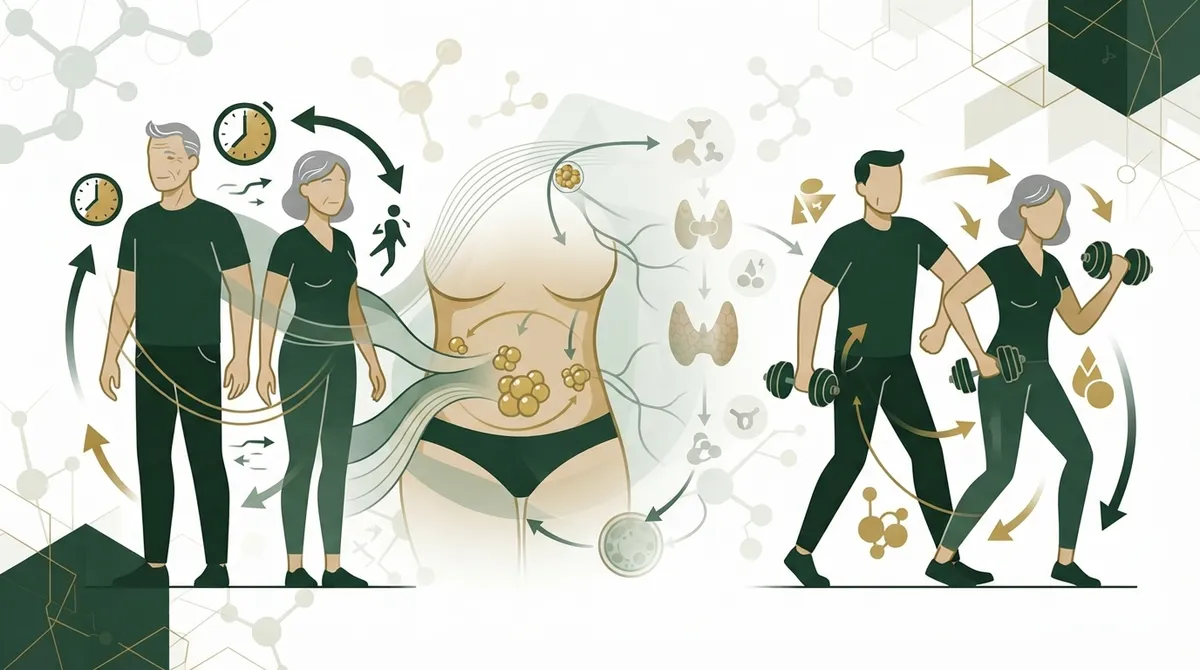
Why Weight Creeps Up in Midlife
Midlife weight gain rarely has just one cause. It is usually a mix of changes that stack up over the years. Menopause plays a role for many women, but it is not the whole story.
Here are the most common contributors:
- Aging and slower muscle growth. Muscle mass tends to decline with age, and muscle helps you burn energy even at rest.
- Changes in fat distribution. Many people carry more belly fat in midlife, even when the number on the scale barely moves.
- Sleep disruption. Poor sleep can affect hunger, cravings, and energy for activity.
- Less activity. Busy careers and family demands often push workouts aside.
- Medications. Some common prescriptions can nudge weight upward.
- Hormone shifts. Menopause is often linked to more abdominal fat and less lean mass.
Because the causes are layered, the best plan starts with finding out what is driving your weight gain. If you are curious about the hormone side, our guide on hormone therapy for weight gain breaks it down.

What Does “Peptide Therapy” Actually Mean?
Peptides are short chains of amino acids, the building blocks of proteins. Your body makes many of them naturally, and they act like tiny messengers. If you want a plain-language primer, what are peptides from WebMD is a helpful starting point.
Here is where it gets tricky. The phrase “peptide therapy” covers a wide range of products. Some are FDA-approved medicines with years of trial data. Others are unapproved, compounded, or sold as “research peptides” with very little human evidence. They are not the same, and they should never be treated as interchangeable.
For a deeper look at the difference, see approved peptides vs. wellness peptides.
The Peptide-Based Medicines With the Best Weight Evidence
When it comes to weight, the strongest evidence belongs to prescription incretin medicines. These are peptide-based drugs that mimic gut hormones involved in appetite and blood sugar.
Semaglutide
Semaglutide is a GLP-1 receptor agonist. In the United States, the brand Wegovy is FDA-approved for chronic weight management in eligible adults, alongside a reduced-calorie eating plan and more physical activity.
Tirzepatide
Tirzepatide acts on both GIP and GLP-1 receptors. The brand Zepbound is FDA-approved for chronic weight management in eligible adults, also paired with diet and activity changes.
Want a side-by-side look? Check out semaglutide vs. tirzepatide, or learn the basics in how GLP-1 works for weight loss.
What the Clinical Trials Actually Showed
Numbers help set realistic expectations. Here is a snapshot of two major trials in adults with obesity or overweight and a weight-related condition, without diabetes.
| Trial | Medication | Length | Average Weight Change | Placebo Group |
|---|---|---|---|---|
| STEP 1 (2021) | Semaglutide 2.4 mg | 68 weeks | −14.9% | −2.4% |
| SURMOUNT-1 (2022) | Tirzepatide 5 mg | 72 weeks | −15.0% | −3.1% |
| SURMOUNT-1 (2022) | Tirzepatide 10 mg | 72 weeks | −19.5% | −3.1% |
| SURMOUNT-1 (2022) | Tirzepatide 15 mg | 72 weeks | −20.9% | −3.1% |
Many participants also hit meaningful milestones. In STEP 1, 86.4% of people on semaglutide lost at least 5% of their body weight, compared with 31.5% on placebo. In SURMOUNT-1, between 85.1% and 90.9% of people on tirzepatide lost at least 5%, compared with 34.5% on placebo.
These are averages, not promises. Individual results vary, and the trials were not designed to prove these medicines work differently in midlife or during menopause. So think of the data as a helpful guide, not a menopause-specific guarantee.
Are These Medicines Approved for Menopause Weight Gain?
No. This is one of the most important points in this article. Semaglutide and tirzepatide are approved for chronic weight management, not specifically for menopause-related weight gain. A midlife adult who meets the eligibility criteria may benefit, but these are not hormone treatments and they do not replace menopause care.
If menopause symptoms are a big part of your story, a well-rounded plan might look at both. Explore perimenopause with BHRT and peptides and hormone therapy for women for context.
Who May Qualify for Prescription Weight Treatment?
Eligibility depends on your health history and the product label, so a licensed clinician must decide. Commonly, treatment is considered for adults with:
- Obesity, or
- Overweight plus at least one weight-related condition, such as high blood pressure, high cholesterol, or prediabetes.
A provider will also review your medications, medical history, and any pregnancy plans. For a clear walkthrough, read how you qualify for GLP-1 medication.
Side Effects and Safety: The Honest Part
Good care means talking about downsides too. These medicines commonly cause stomach-related effects like nausea, diarrhea, constipation, or vomiting. Most people find these ease over time, but not everyone does.
In SURMOUNT-1, discontinuation because of adverse events happened in 4.3%, 7.1%, and 6.2% of people on tirzepatide 5 mg, 10 mg, and 15 mg, compared with 2.6% on placebo. The prescribing information also lists important warnings and contraindications, so a clinician should review your full picture before you begin.
Struggling with digestion? Our tips on GLP-1 constipation can help. You can also review general safety in weighing the risks of peptide therapy.
Will the Weight Come Back If You Stop?
This is a big one, and it deserves a straight answer. Weight regain is common after stopping treatment. In the STEP 1 off-treatment extension, participants regained about two-thirds of their prior semaglutide-associated weight loss during the year after treatment ended.
That is why many experts describe obesity as a chronic condition that often needs long-term planning. It is not a willpower failure. It is biology. Building habits that protect muscle and support your metabolism makes the plan more durable. Our article on GLP-1 weight loss maintenance offers practical tips.
Peptide Therapy vs. Lifestyle: It Is Not Either/Or
Medication works best as a partner to healthy habits, not a replacement. Here is how the pieces fit together.
| Piece of the Plan | Why It Matters in Midlife |
|---|---|
| Prescription peptide medicine | Helps reduce appetite and supports meaningful weight loss for eligible adults |
| Protein and balanced nutrition | Helps protect lean muscle while you lose weight |
| Strength training | Builds and maintains muscle, which supports metabolism |
| Sleep and stress care | Supports appetite regulation and recovery |
| Lab work and medical review | Finds hidden drivers like thyroid or hormone issues |
Muscle matters a lot here. Losing weight too fast without protecting lean mass can leave you feeling weak. Learn more in fat loss peptides that protect muscle and whether metabolism peptides work after 40.
Watch Out for Compounded and “Research” Peptide Products
Scroll through social media and you will see plenty of peptide weight-loss promises. Be careful. Compounded or unapproved products may not have the same evidence, quality checks, or regulatory status as FDA-approved medicines. Do not assume they are equivalent.
A few smart safety habits:
- Work with a licensed prescriber who reviews your health history.
- Use a licensed pharmacy, and ask where the product comes from.
- Ask whether the product is FDA-approved or compounded.
- Be wary of anyone promising guaranteed or menopause-specific results.
- Skip “research use only” products sold without a prescription.
For more detail, read how to evaluate compounded GLP-1 medication safely and the research overview from the National Library of Medicine.
What a Safe Telehealth Weight Plan Looks Like
Many busy professionals and health-minded adults prefer the convenience of telehealth. A good program should feel personal, medical, and well monitored. At Allura Longevity, licensed providers build plans around your labs and goals, and your treatment is delivered to your home.
Here is the typical path:
- Virtual consultation. You talk with a licensed provider about your history and goals.
- Blood work. Labs help guide safe, personalized decisions.
- Custom plan. Your provider designs a treatment plan, which may include prescription weight management options when appropriate.
- Home delivery. Medication arrives at your door.
- Ongoing monitoring. Your provider checks in and adjusts as needed.
Curious how this works in practice? See how to lose weight with peptide therapy and what lab work to expect.
Questions to Ask Your Provider
Walk into your consultation prepared. These questions keep the conversation focused and useful:
- Do I meet the eligibility criteria for an FDA-approved weight medication?
- Could another issue, like thyroid, sleep, or a medication, be driving my weight gain?
- What side effects should I expect, and how will we manage them?
- How will we protect my muscle during weight loss?
- What is the long-term plan if I stop treatment?
For more ideas, our list of peptide consultation questions is a great companion.
The Bottom Line
So, can peptide therapy help midlife weight gain? For eligible adults, FDA-approved peptide-based medicines like semaglutide and tirzepatide can produce clinically meaningful weight loss. They are not menopause treatments, they are not for everyone, and they work best alongside nutrition, strength training, sleep, and medical oversight. The wise move is to start with labs, a clear plan, and a licensed provider you trust.
Ready to see if a personalized plan could fit your life? Spots for new clients are limited each month, so request a consultation with Allura Longevity today, or call (813) 510-6277 to talk with the team. Telehealth care is available in Florida, Georgia, Texas, Connecticut, Indiana, Maryland, New York, and California.
FAQs
Q: Can semaglutide or tirzepatide help with weight gain during menopause?
A: They can help eligible adults lose weight, including some people in midlife. But the trials were not built to prove they work differently during menopause, so results vary. A licensed provider can tell you if you qualify and what to expect.
Q: Who qualifies for prescription peptide-based weight-loss medication?
A: Treatment is commonly considered for adults with obesity, or overweight plus a weight-related condition like high blood pressure or prediabetes. A clinician will review your health history, medications, and pregnancy plans before deciding. Eligibility always depends on the product label and your individual situation.
Q: Will weight come back if I stop taking a GLP-1 medication?
A: It often does. In the STEP 1 extension, people regained about two-thirds of their lost weight within a year of stopping semaglutide. That is why long-term planning, strength training, and good nutrition matter so much.
Q: Are compounded or online peptide weight-loss products safe and FDA-approved?
A: Not always. Compounded and unapproved products can differ from FDA-approved medicines in evidence, quality, and regulatory status. Stick with a licensed prescriber and pharmacy, and always ask whether a product is approved or compounded.
Q: Can lifestyle changes help alongside weight-loss medication?
A: Absolutely, and they are a key part of the plan. Strength training, enough protein, better sleep, and stress care help protect muscle and support lasting results. Medication works best as a partner to these habits, not a replacement.





