

Key Takeaways
-
Hormone therapy (estrogen/progesterone) and peptide therapy are fundamentally different: hormones directly replace sex hormones while peptides are signaling molecules that support specific functions, making them complementary rather than interchangeable.
-
Estrogen therapy remains the gold standard for hot flashes and night sweats per The Menopause Society, with proven efficacy that no currently available peptide can match for these specific symptoms.
-
Women with an intact uterus must take progesterone alongside estrogen to prevent endometrial hyperplasia and reduce cancer risk, making this combination a non-negotiable safety requirement.
-
Starting hormone therapy before age 60 or within 10 years of your last period offers the most favorable benefit-risk ratio; delaying increases risks of stroke, blood clots, and heart disease.
-
Transdermal estrogen delivery (patches, gels) may carry lower blood clot and stroke risk compared to oral pills, making delivery method selection an important individualized decision with your provider.
-
Comprehensive blood work must precede any treatment plan to establish actual hormone levels and screen for contraindications like unexplained bleeding, clotting history, or hormone-sensitive cancers.
If you’ve been Googling hot flashes at 2 a.m. or wondering why your energy has vanished, you’re in good company. So many women reach a point where they want real answers about hormone therapy for women, not just another supplement that promises the moon. And with peptide therapy trending everywhere, it’s natural to wonder how these two paths fit together. This guide breaks it all down in plain language, so you can walk into your next doctor’s visit feeling confident and prepared.
We’ll cover what hormone therapy actually is, where peptides fit in (and where they don’t), and how to protect yourself from marketing hype. Think of this as the friendly, no-nonsense chat you wish you could have with a knowledgeable friend who happens to know a lot about women’s health. Let’s get into it.
1. Hormone Therapy and Peptide Therapy Are Not the Same Thing
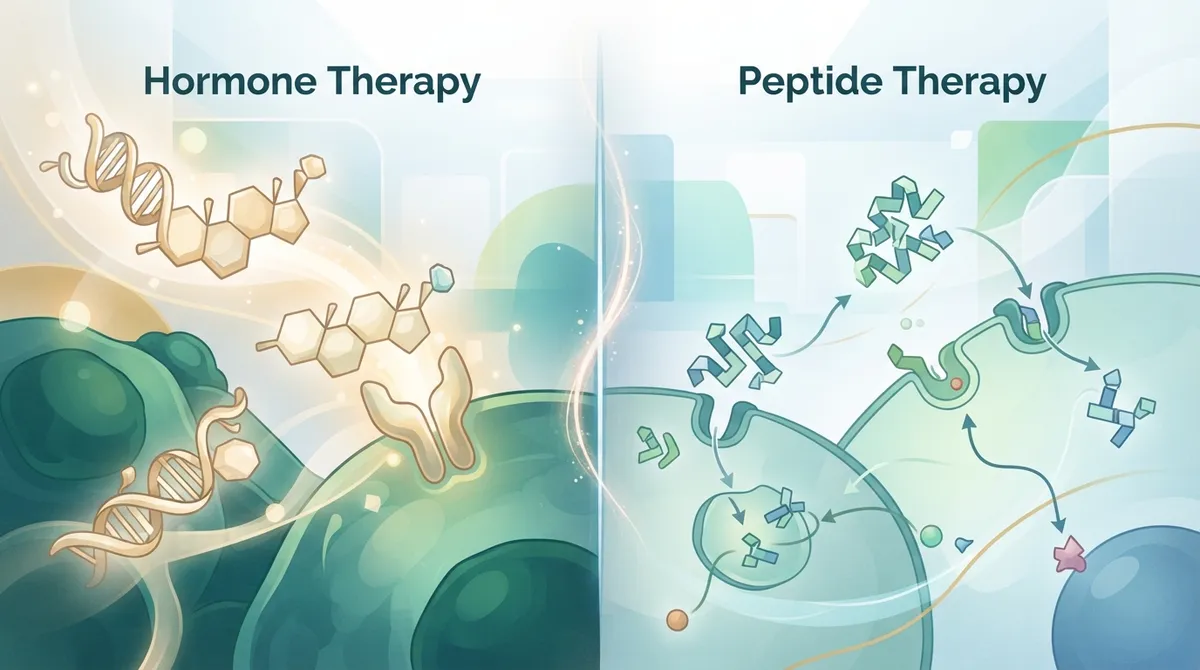
This mix-up trips up a lot of people, so let’s clear it up first. Hormone therapy, often called HT, means replacing or supplementing hormones like estrogen and progesterone. Peptides work differently. They’re small chains of amino acids that act like messengers, nudging your body’s systems to do something specific, whether that’s supporting metabolism, tissue repair, or sleep quality.
Peptides generally do not replace estrogen or progesterone. If you’re curious about the basics, this guide on what peptides actually are is a great starting point. Understanding this distinction helps you make smarter choices about your care.

2. Estrogen Therapy Remains the Gold Standard for Hot Flashes
According to The Menopause Society’s 2022 position statement, hormone therapy is the most effective treatment available for hot flashes and night sweats. It also helps with genitourinary symptoms like vaginal dryness and discomfort. No peptide currently on the market has this same level of proven, direct evidence for these specific symptoms.
That doesn’t mean peptides have no place in your wellness routine. It simply means they serve a different purpose. If hot flashes are your main concern, estrogen-based hormone therapy is still the most researched, most reliable option.
3. Women With a Uterus Usually Need Progesterone Too
Here’s an important safety detail. If you still have your uterus, estrogen alone can raise your risk of endometrial hyperplasia, a thickening of the uterine lining that can lead to cancer. Adding a progestogen helps protect against that risk.
Women who’ve had a full hysterectomy may be able to use estrogen alone, but this always depends on your individual health history. Your provider will walk through this with you before starting any plan.
4. Age and Timing Matter More Than You Might Think
Research shows the sweet spot for starting hormone therapy is before age 60 or within 10 years of your last period. In this window, the benefit-risk ratio tends to be favorable for healthy women without contraindications.
Wait longer than that, and the risks of stroke, blood clots, and heart disease start to rise. This is why your doctor will always ask detailed questions about your menopause timeline before recommending anything.
Quick Comparison: Hormone Therapy vs. Peptide Therapy
| Feature | Hormone Therapy (Estrogen/Progesterone) | Peptide Therapy |
|---|---|---|
| What it does | Replaces or supplements sex hormones directly | Signals the body to support specific functions |
| FDA-approved for menopause | Yes, multiple formulations | Generally no, evidence is preliminary |
| Best for hot flashes | Most effective option per Menopause Society | Not established as a primary treatment |
| Requires progestogen with uterus | Usually yes | Not applicable |
| Common delivery | Pills, patches, gels, vaginal rings | Injections, some oral formulas |
5. Route of Delivery Can Change Your Risk Profile
Not all hormone therapy is created equal. Transdermal estrogen, meaning patches or gels absorbed through skin, may lower the risk of blood clots and stroke compared to some oral pills. Lower doses can also make a difference.
Still, no delivery method eliminates all risk. This is exactly why ongoing medical supervision matters so much, and why working with a knowledgeable provider beats guessing on your own.
6. Local Vaginal Estrogen Solves a Different Problem
If your main struggle is vaginal dryness, discomfort during intimacy, or urinary symptoms, you might not need systemic hormone therapy at all. Low-dose vaginal estrogen, vaginal DHEA, or oral ospemifene can target these issues directly with less systemic exposure.
This is a great example of why individualized care beats a one-size-fits-all approach. What works for your friend’s hot flashes might not be what your body needs.
7. Peptides Marketed for Menopause Are Still an Emerging Field
You’ve probably seen ads for peptides claiming to “balance hormones” or “fight menopause naturally.” Here’s the honest truth: evidence for peptides like kisspeptin, BPC-157, and thymosin-related compounds in menopause is still preliminary or indirect.
Major menopause guidelines do not currently endorse these as replacements for established hormone therapy. That doesn’t mean they’re useless, but it does mean claims should be evaluated carefully. If you’re exploring options beyond hormones, this article on BPC-157 facts is worth a read before you decide.
8. One Peptide Actually Has FDA Approval, But Not for Menopause
Bremelanotide, sold as Vyleesi, is an FDA-approved peptide-related treatment. But its approval is specifically for acquired, generalized hypoactive sexual desire disorder in premenopausal women. It is not approved for hot flashes, low estrogen, or general hormone imbalance.
This matters because marketing sometimes blurs these lines. Always ask what a treatment is actually approved for, not just what it’s rumored to help with.
9. Compounded Products Deserve Extra Scrutiny
Compounded peptides and compounded bioidentical hormones can vary in quality, potency, and sterility. Before starting anything compounded, ask your provider about sourcing, testing, and whether the specific product has solid safety data for your intended use.
This is one reason working with a licensed telehealth provider who orders proper lab work matters so much. Quality control shouldn’t be an afterthought.
10. Blood Work Should Come Before Any Treatment Decision
You wouldn’t build a house without checking the foundation first, right? The same logic applies here. Comprehensive blood work helps your provider understand your actual hormone levels, not just your symptoms.
At Allura Longevity, clients start with an affordable virtual consultation and complete labs through LabCorp before any treatment plan is built. This ensures your six-month plan is based on real data, not guesswork.
Steps to Starting Hormone or Peptide Therapy Safely
- Schedule a virtual consultation with a licensed provider
- Complete comprehensive blood work to check hormone levels
- Review your personal and family medical history for contraindications
- Discuss your specific symptoms and goals in detail
- Receive a customized treatment plan based on your labs
- Start therapy with clear instructions for at-home use
- Schedule follow-up labs and check-ins to adjust as needed
11. Contraindications Are Non-Negotiable
Certain conditions mean systemic hormone therapy is not appropriate without specialist input. These include unexplained vaginal bleeding, some estrogen-dependent cancers, a history of blood clots or stroke, and significant liver disease.
Peptide products require their own safety screening too, including checking for drug interactions and confirming the product’s regulatory status. A thorough intake process protects you from unnecessary risk.
- Unexplained vaginal bleeding needs evaluation before starting hormone therapy
- History of blood clots or stroke requires specialist review
- Active liver disease can change how hormones are processed
- Certain hormone-sensitive cancers may rule out systemic estrogen
- Peptide sourcing and purity should always be verified
12. Libido Support Involves More Than Just Hormones
Low sex drive after menopause is common, and it’s frustrating. Hormone therapy can help in some cases, especially when low estrogen is contributing to discomfort during intimacy. For hypoactive sexual desire disorder specifically, bremelanotide has FDA approval in premenopausal women.
If sexual wellness is a priority for you, it’s worth having an honest conversation with your provider about which approach, or combination, fits your situation. You can learn more in this piece on real treatments for low libido in women.
13. Telehealth Makes Personalized Care More Convenient
Gone are the days when getting quality hormone care meant sitting in a waiting room for hours. Telehealth has made it possible to get labs, consultations, and follow-up care from your couch. This matters a lot for busy professionals and anyone juggling a packed schedule.
Allura Longevity offers this exact model. Licensed providers, led by board-certified Family Nurse Practitioner Ashley, build six-month plans based on your labs and goals, then ship treatments straight to your door. If you want to see how this compares to traditional options, check out Local Clinic vs. Telehealth: Best Peptide Therapy Near You.
14. Ongoing Monitoring Is Where Real Results Happen
Starting a treatment plan is just step one. The magic really happens with follow-up labs, dose adjustments, and honest check-ins about how you’re feeling. Hormone needs shift over time, and your plan should shift with them.
This is true whether you’re on hormone therapy, exploring peptides, or considering both under medical guidance. According to research published by the National Library of Medicine, individualized, monitored care produces better outcomes than static, one-time prescriptions. For more on the science behind these molecules, this overview of what are peptides offers helpful context.
Every woman’s hormone journey looks a little different, and that’s exactly why cookie-cutter solutions rarely work well. Whether you’re dealing with hot flashes, low energy, or just want to feel like yourself again, the right plan starts with real data and a provider who actually listens. Allura Longevity keeps spots limited each month so every client gets the attention they deserve, and licensed care is available in Florida, Georgia, Texas, Connecticut, Indiana, Maryland, New York, and California. If you’re ready to stop guessing and start feeling better, request a consultation today and take the first step toward a plan built just for you.
FAQs
Q: What is the difference between hormone replacement therapy and peptide therapy for women?
A: Hormone replacement therapy directly replaces estrogen and progesterone, while peptide therapy uses signaling molecules that support different body functions. They work in different ways, so think of them as complementary tools rather than interchangeable options.
Q: Can peptides increase estrogen or progesterone during perimenopause or menopause?
A: Most peptides do not directly raise estrogen or progesterone levels. If hormone replacement is what you need, established hormone therapy remains the better-studied path, and your provider can help you figure out which approach fits your labs and symptoms.
Q: Are any peptides FDA-approved for menopause symptoms?
A: Currently, no peptide is FDA-approved specifically for treating menopause or its core symptoms like hot flashes. Bremelanotide is approved, but only for hypoactive sexual desire disorder in premenopausal women, not for menopause itself.
Q: Which treatment is most effective for hot flashes and night sweats?
A: According to The Menopause Society, hormone therapy remains the most effective treatment for hot flashes and night sweats. If these symptoms are your biggest concern, this is the option with the strongest evidence behind it.
Q: What blood tests are useful before starting hormone or peptide therapy?
A: A comprehensive panel typically checks estrogen, progesterone, thyroid function, and other key markers depending on your symptoms. At Allura Longevity, this happens through LabCorp before any treatment plan is created, so your care is based on real numbers, not guesswork.





