
Key Takeaways
-
No single peptide melts fat while protecting muscle; the best-supported options are FDA-approved incretin medicines like semaglutide and tirzepatide, used alongside healthy habits.
-
A 2024 meta-analysis of GLP-1 drugs found average losses of 3.55 kg body weight, 2.95 kg fat, and 0.86 kg lean mass, so roughly one-quarter of weight lost was lean mass.
-
Lean mass is not the same as muscle; it includes water, organs, and connective tissue, so track strength and daily function alongside scan results.
-
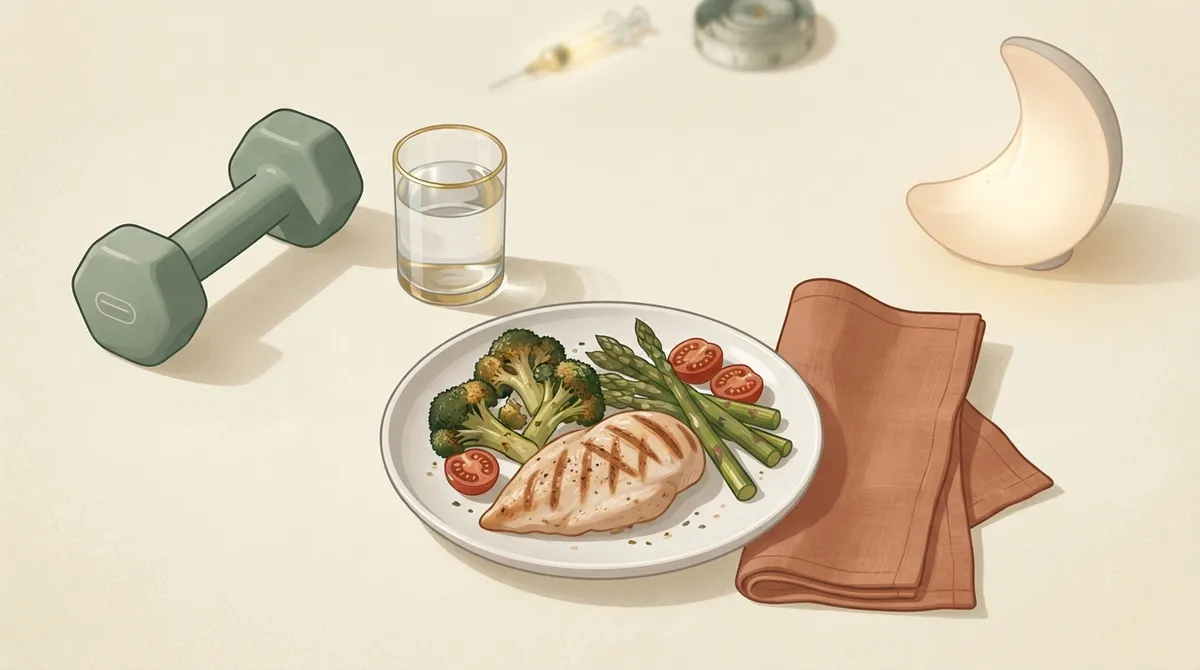
Resistance training two to three times weekly, adequate protein (guided by your clinician), enough total food, daily walks, and good sleep are the most practical muscle protectors.
-
Be cautious with CJC-1295, ipamorelin, and BPC-157; they lack established proof for fat loss or muscle preservation, and FDA materials flag safety and compounding quality concerns.
-
Red flags include guaranteed muscle retention, no lab work before starting, no licensed provider review, and pressure to buy a large stack immediately.
If you have tried to lose weight and felt weaker, flatter, or more worn out afterward, you are not alone. Many people want to drop body fat without losing the muscle that keeps them strong, steady, and energized. That goal makes sense, especially as we age.
Here is the honest truth about fat loss while preserving muscle peptides: it is not one single treatment category. The best evidence points to approved medicines used with smart habits, not a magic peptide that melts fat and protects muscle on its own. Some clinics promise more than the science can back up.
In this guide, we walk through five practical truths. You will learn what the research says, where the claims get shaky, and how to build a safer plan. Whether you are a health optimizer, a busy professional, or someone who wants to age well, this is for you. Let’s keep it simple, friendly, and honest.
Truth 1: There Is No Single “Muscle-Sparing Fat Loss Peptide”
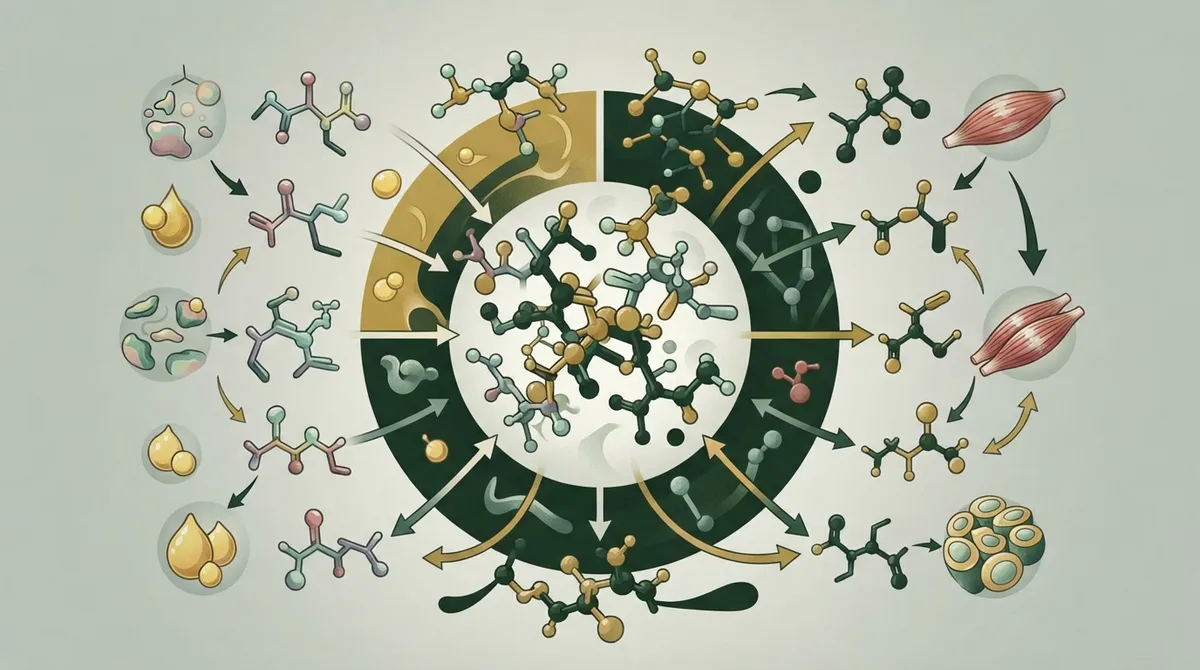
Let’s start with the big one. When people search for fat loss while preserving muscle peptides, they often hope for a product that targets fat only. Right now, that product does not exist as an established treatment.
What does exist is a group of approved prescription medicines, called incretin-based therapies, that help with weight management in the right patients. Semaglutide and tirzepatide are the best-known examples. They help lower appetite and body weight, and they have the strongest clinical support.
If you are new to the basics, what are peptides is a good starting point. Peptides are short chains of amino acids, and they act as signals in the body. Some are approved medicines. Others are still being studied.
Approved vs. Investigational: Know the Difference
| Category | Examples | Evidence for Fat Loss | Evidence for Muscle Preservation |
|---|---|---|---|
| FDA-approved incretin medicines | Semaglutide, tirzepatide, liraglutide | Strong, from randomized trials | Mixed; some lean mass is lost |
| Growth hormone secretagogues | CJC-1295, ipamorelin | Not established as approved fat-loss treatments | Not proven |
| “Research” peptides | BPC-157, TB-500 | Inadequate human evidence | Not proven |
| Investigational combinations | Activin receptor blockade plus GLP-1 | Early research | Promising in preclinical work only |
This table is not meant to scare you. It is meant to help you ask better questions. A good provider will always tell you which category a treatment falls into.
You can also read more in our guide on approved peptides vs. wellness peptides.

Truth 2: Weight Loss Medicines Reduce Fat, But Some Lean Mass Goes Too
Here is where the facts get interesting. A 2024 systematic review and network meta-analysis looked at 22 randomized trials with 2,258 participants. The researchers pooled the results for GLP-1 receptor agonists.
The results showed average reductions of about 3.55 kg in body weight, 2.95 kg in fat mass, and 0.86 kg in lean mass. In plain terms, lean mass made up roughly one-quarter of the total weight lost. The findings varied by drug, population, and how body composition was measured.
That number is an average, not a promise. Your own result could be better or worse. It depends on your age, starting weight, training habits, protein intake, and the specific medicine.
What the Numbers Mean for You
- Most of the loss is fat. That is the encouraging part.
- Some lean mass is lost too. This is common with many weight loss methods, including dieting alone.
- Results vary. In that analysis, liraglutide was the only GLP-1 option that significantly reduced weight without a statistically significant drop in lean mass. That is a study-level finding, not a guarantee for every person.
If you want a deeper look at how these medicines work, check out how GLP-1 works for weight loss. You can also compare options in semaglutide vs. tirzepatide.
Truth 3: Lean Mass Is Not the Same as Muscle
This one trips up a lot of smart people. When a scan says you lost “lean mass,” that does not always mean you lost muscle. Lean mass includes water, organs, connective tissue, and other non-fat tissue. Muscle is only one part of it.
So a small drop in lean mass does not automatically mean you are losing strength or function. Likewise, a scan that looks fine does not prove your muscles are fully protected. Body composition data has limits, and good providers say so openly.
What matters most day to day? How you feel and perform. Are you still lifting what you used to lift? Can you climb stairs, carry groceries, and keep up with your workouts? Those real-world signs often tell you more than one number on a chart.
Why This Matters for Biohackers and Data Fans
If you love tracking, this is worth knowing. Different tools measure body composition in different ways. DEXA scans, bioimpedance scales, and skinfold tests can all give different answers.
Try to use the same method each time and look at trends, not single readings. Pair the numbers with strength tests, like a push-up count or a grip test. That gives you a fuller picture.
Truth 4: Habits Are the Real Muscle Protectors
If peptides are not the muscle-saving hero, what is? The answer is a bit unglamorous, but it works. Resistance training, enough nutrition, and the right protein intake are the practical tools for keeping muscle while you lose weight.
Here is a simple plan most people can build on. Always talk with a clinician first, especially if you have kidney disease, frailty, older age, or other conditions that affect nutrition or exercise.
- Lift weights two to three times a week. Focus on big movements like squats, rows, presses, and deadlifts. Even bodyweight work helps if you are just starting.
- Ask your clinician about protein. Many people aim for a steady protein serving at each meal, but the right amount depends on your health and kidney function.
- Do not under-eat. Appetite can drop a lot on weight loss medicines. Eating too little makes muscle loss more likely.
- Walk daily. Easy movement supports fat loss, mood, and recovery without wearing you down.
- Protect your sleep. Poor sleep makes recovery harder and cravings louder.
- Recheck labs and progress. Adjust your plan with your provider as your body changes.
For a closer look at how this connects to hormones, see 10 ways peptides affect your fat-to-muscle ratio. And if you are over 40, how to build muscle after 40 is a helpful companion read.
Quick Daily Checklist
- Strength training done or planned
- Protein included at every meal
- Enough total food and fluids
- A short walk in the books
- Seven or more hours of sleep when possible
Truth 5: Be Careful With CJC-1295, Ipamorelin, and “Research Peptides”
Some clinics market growth hormone secretagogues like CJC-1295 and ipamorelin for body composition. It sounds appealing. But the available evidence does not establish them as proven, FDA-approved fat-loss or muscle-preservation treatments.
FDA materials have also raised cautions. They note a lack of clinical safety data for subcutaneous ipamorelin in the reviewed context. They also flagged possible concerns with compounded products, such as formulation, storage, impurities, and peptide aggregation. Quality can vary a lot from one source to another.
BPC-157 and TB-500 sit in a similar spot. Human evidence is limited, and safety and product-quality questions remain. They should not be sold as proven muscle-preserving weight loss therapies.
We cover these topics in more detail in our guides on CJC-1295 safety and ipamorelin benefits, dosing, and safety.
Red Flags to Watch For
- Promises of “fat loss only” or guaranteed muscle retention
- No lab work before starting
- No licensed provider reviewing your history
- Vague answers about where the product comes from
- Pressure to buy a big stack right away
It is also smart to understand the rules around compounding. Regulatory status can change by date and location, so always verify the current FDA information. Our post on evaluating compounded GLP-1 medication safely can help you ask the right questions.
What Is Still Being Studied
Researchers are working on better ways to protect lean mass during weight loss. A 2024 preclinical study explored blocking activin type II receptors alongside GLP-1 receptor agonism. A 2025 review also looked at drug approaches to preserve lean mass.
These are exciting directions. But they are investigational. They are not routine add-ons you can request at a clinic today. As new data arrives, the guidance may change, and a trustworthy provider will update your plan accordingly.
How to Build a Safer Plan
So what does a smart, step-by-step approach look like? Here is a simple path many people follow.
- Start with your goals. Do you want lower body fat, better energy, more strength, or all three?
- Get lab work. Blood work helps your provider see your hormones, metabolic health, and any risks.
- Check your eligibility. Approved weight loss medicines are meant for certain patients. Read how you qualify for GLP-1 medication to see if you may be a fit.
- Pair medicine with muscle habits. Strength training and protein planning are part of the plan, not an afterthought.
- Follow up often. Your dose, diet, and training may need tweaks as you go.
This is where personalized care shines. Our post on how a peptide therapy plan gets personalized shows what that process can look like. And if you are curious about the lab side, see lab work for peptide therapy.
Where Allura Longevity Fits In
At Allura Longevity, we believe weight loss should protect your strength and your long-term health. Our licensed providers, led by a board-certified Family Nurse Practitioner, review your blood work and build a plan around you. You start with a simple virtual consultation, complete labs, and get a customized treatment plan delivered to your home.
We offer GLP-1 weight loss options, along with support for energy, recovery, and metabolism, in states where we are licensed: Florida, Georgia, Texas, Connecticut, Indiana, Maryland, New York, and California. We will always be upfront about what is proven and what is not.
Curious how the process works from home? Read how to lose weight with peptide therapy or 15 weight management peptide facts. For a broader view of the science, the National Library of Medicine is a trusted place to explore peer-reviewed research.
The Bottom Line
Real fat loss while preserving muscle takes a team effort. Approved medicines can help many people lose fat, but some lean mass may be lost too. Strength training, protein planning, good sleep, and medical oversight are what help protect muscle. And be cautious with unapproved peptides that promise more than the science can show.
You deserve a plan that is honest, personal, and built around your body. Spots for new clients are limited each month, so if you are ready to take the next step, request a consultation with our team today. You can also call (813) 510-6277. We would love to help you feel strong, steady, and confident.
FAQs
Q: Which peptides are FDA-approved for weight loss?
A: Approved incretin-based medicines like semaglutide and tirzepatide are prescribed for eligible patients with obesity or related conditions. Peptides such as CJC-1295, ipamorelin, and BPC-157 are not established as approved fat-loss treatments. A licensed provider can tell you what fits your health history.
Q: Can semaglutide or tirzepatide cause muscle loss?
A: These medicines mostly reduce fat, but some lean mass can be lost too. In one meta-analysis of GLP-1 medicines, lean mass was about one-quarter of total weight lost. Strength training and enough protein can help, so talk with your clinician about a plan.
Q: What is the difference between lean mass and muscle mass?
A: Lean mass includes muscle, but also water, organs, and other non-fat tissue. So a drop in lean mass does not always mean lost muscle or strength. Tracking how you perform, along with your scans, gives you a clearer picture.
Q: Are CJC-1295 and ipamorelin proven for fat loss or muscle preservation?
A: No, they are not established as proven, FDA-approved treatments for either goal. FDA materials have also noted safety data gaps and quality concerns with some compounded products. It is best to use them only with careful medical guidance, if at all.
Q: How can I preserve muscle while taking a weight loss medication?
A: Focus on resistance training, steady protein intake, and enough total food, with guidance from your provider. People with kidney disease, frailty, or older age should check with a clinician first. Regular follow-ups help you adjust as your body changes.





