

Key Takeaways
-
Skin glow is a look (radiance, hydration, even tone, smooth texture), not a medical diagnosis, so the right peptide depends on which trait you want to improve.
-
GHK-Cu is the most-discussed peptide, but the evidence is thin: one small 20-person, one-month study saw procollagen rise in 70% of users, which does not prove visible glow.
-
Topical cosmetic peptides have more skin-focused research than injectables, though studies remain small and mixed, and no FDA-approved medical-grade topical peptide exists for skin rejuvenation.
-
Injectable compounded GHK-Cu is not an established skin treatment; the FDA notes limited human safety data and possible immune risks from aggregation and impurities, so consult a licensed clinician first.
-
Give any new routine at least eight weeks before judging results, and get the basics right first: daily broad-spectrum sunscreen, gentle cleansing, moisturizer, sleep, and hydration.
-
Avoid products labeled "research use only" and anyone guaranteeing a glow; a clinician-guided plan with photo tracking is the safest way to measure real progress.
Everyone wants that lit-from-within look. You know the one. Skin that looks bright, smooth, and well rested, even after a long week. If you have been searching for the best peptide therapy for skin glow, you are in good company, and you are asking a smart question.
Here is the honest truth, shared with a smile: “glow” is not a medical diagnosis. It usually means skin that looks hydrated, even-toned, bright, and smooth. Peptides may support some of that, but results depend on what is dulling your skin in the first place. Dryness, sun damage, and uneven pigmentation each need a different game plan.
In this guide, we will walk you through what peptides can and cannot do, how topical and injectable options differ, and how to build a plan with a licensed clinician. Think of it as a friendly roadmap, minus the hype. Whether you are a busy professional, a data-loving biohacker, or simply someone who wants to age well, you will leave with clear steps you can use today.

What “Skin Glow” Really Means (and Why It Matters)
Before picking a treatment, let’s define the goal. Skin glow is a look, not a lab value. Most people mean a mix of these traits:
- Radiance: skin that reflects light evenly
- Hydration: a plump, soft feel instead of tight or flaky
- Even tone: fewer dark spots and less redness
- Smooth texture: softer fine lines and less roughness
Why does this matter? Because the best peptide therapy for skin glow depends on which of these traits you want to improve. A dry, dehydrated complexion needs a different approach than sun-damaged skin or stubborn pigmentation. Sleep, stress, smoking, sunscreen habits, and hormones all play a part too.
If you are curious about the bigger picture, you can read What Peptides Do for Skin: A Real-World Guide for 2026 for more background.
Peptides 101: Quick Basics for Skin
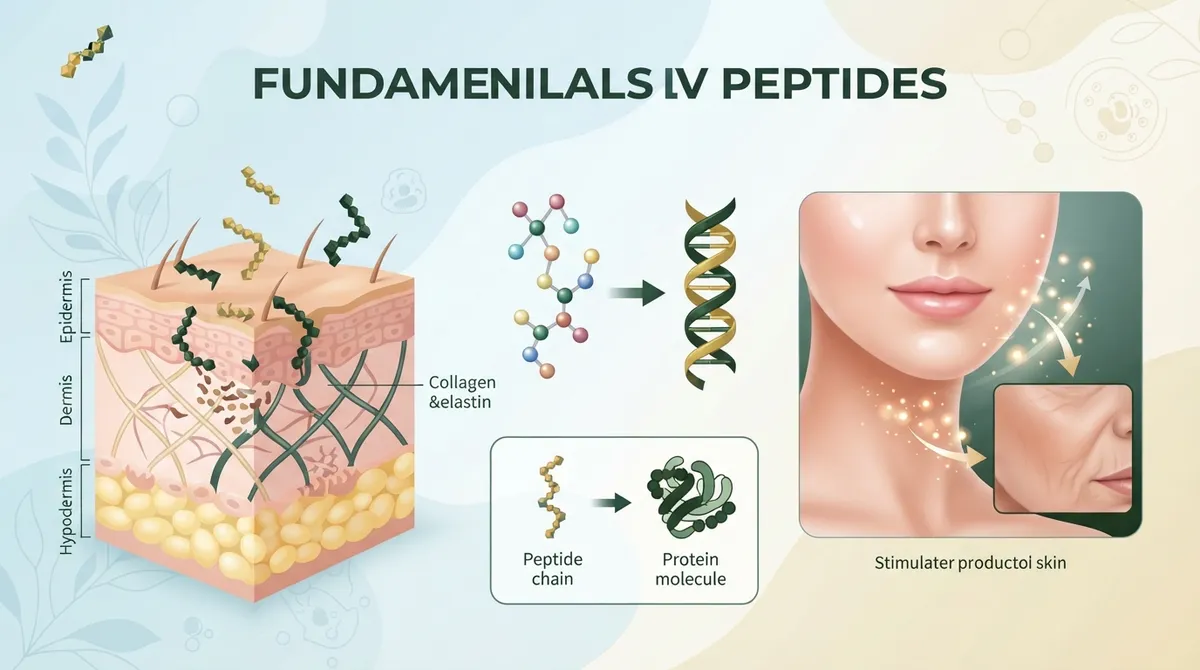
Peptides are short chains of amino acids, the building blocks of proteins. Your skin uses proteins like collagen and elastin to stay firm and bouncy. In skincare and wellness, peptides are discussed as signaling molecules that may nudge skin cells to behave in helpful ways.
In the skin world, you will usually hear about two very different categories:
- Topical cosmetic peptides: serums and creams you apply to your skin
- Injectable or compounded peptides: prescription-based options given under a clinician’s guidance
These two are not interchangeable. The evidence, safety questions, and regulation look very different for each, so let’s compare them side by side.
| Feature | Topical Cosmetic Peptides | Injectable / Compounded Peptides |
|---|---|---|
| How you use it | Applied to skin as serum or cream | Prescribed and self-injected under clinician guidance |
| Main goal | Skin appearance (texture, lines, hydration) | Varies by peptide and clinical plan |
| Evidence for glow | Small, mixed studies; more relevant to skin look | Limited and uncertain for skin glow specifically |
| Regulation | Cosmetics generally do not need FDA approval for efficacy | Compounded products are not FDA-approved drugs |
| Key caution | Results vary by product and formula | Quality, dose, and safety data can vary |
Meet the Star Ingredient: GHK-Cu
If you have researched this topic at all, you have likely met GHK-Cu, also called copper tripeptide-1. It is the peptide most often linked to skin appearance, and for good reason. Lab and animal research suggests it may influence collagen and other skin components.
Here is where we keep it real, though. A 2024 review of topical GHK noted a surprising lack of strong clinical studies in people. One small study of 20 volunteers over one month found procollagen synthesis increased in 70% of the GHK-Cu group. That compared with 50% for vitamin C and 40% for retinoic acid.
That sounds exciting, and it is a nice early signal. But the group was small and the study was short. It does not prove GHK-Cu is better for visible glow, and it is not a reason to expect dramatic results. For a deeper look, see How to Evaluate GHK-Cu Peptide Safely in 2026.
Step-by-Step: How to Find the Best Peptide Therapy for Skin Glow
Ready to build your plan? Follow these steps in order. They keep you safe, save you money, and help you avoid chasing trends.
- Name your glow goal. Pick your top one or two concerns, such as dullness, dryness, uneven tone, or fine lines.
- Fix the basics first. Daily sunscreen, gentle cleansing, moisturizer, sleep, and hydration give peptides a better foundation.
- Start with topicals for appearance. Peptide serums have more skin-focused evidence than injectables, though the research is still limited.
- Get a clinician’s assessment. A licensed provider can look at your health history, labs, and goals before suggesting anything stronger.
- Ask about evidence and sourcing. Any provider should be able to explain what is proven, what is not, and where products come from.
- Track your results. Take photos in the same lighting every few weeks and adjust with your provider.
That fourth step is where many people skip ahead, and it is worth slowing down. Our guide on 3 Peptide Consultation Mistakes That Waste Your First Visit can help you show up prepared.
What the Research Says About Topical Peptides
Topical peptides are the most skin-relevant option, so they deserve a closer look. A 2024 systematic review found some studies reporting better wrinkles, texture, elasticity, or overall skin look. The authors also stressed that the number and quality of studies were limited, and that better trials are needed.
Another 2024 review noted that no FDA-approved medical-grade topical peptide therapy existed for dermatologic rejuvenation at the time. Cosmetic peptide products are not the same as approved drugs, and they generally do not go through premarket FDA approval to prove they work.
One 2024 study tested a product that combined retinol, pea peptide, and antioxidants in 30 adults. After eight weeks, people saw improvements from baseline in hydration, radiance, and brightness. Because it was a blend, we cannot credit the peptides alone. Still, it hints that smart combinations may help glow. You can browse the National Library of Medicine to explore peptide research yourself.
| What the Studies Suggest | What It Does Not Prove |
|---|---|
| Some topical peptides may improve texture, lines, or skin look | That any single peptide guarantees a glow |
| GHK-Cu may raise procollagen in small, short studies | That it beats vitamin C or retinoids for visible results |
| Blend products can improve hydration and radiance | That peptides alone caused the change |
The Truth About Injectable Peptides for Skin Glow
Now for the part that needs extra care. You may see injectable GHK-Cu marketed as a glow booster. Please know this: it is not an established or proven skin-rejuvenation treatment.
FDA information notes that injectable compounded GHK-Cu may carry immunogenicity risks tied to peptide clumping (aggregation) and impurities. It also notes that human safety data are limited. In plain language, we simply do not know enough yet to promise safety or results.
Compounded peptides are also not FDA-approved drugs. Compounding does not prove a product is safe or effective, and quality, sterility, and dose can vary. Here are smart guardrails to keep in mind:
- Talk with a licensed clinician before any injection
- Avoid anything labeled “research use only”
- Ask where the product is made and how it is tested
- Be wary of anyone who guarantees a glow
For a balanced view of safety, check out How to Weigh the Risks of Peptide Therapy Safely in 2026.
How Long Until You See a Difference?
Patience is your best friend here. Skin renews itself in cycles, so changes tend to be gradual. In the 2024 combination-product study, benefits were measured at eight weeks. That is a helpful rule of thumb for topical routines, though your timeline may differ.
Plan to use a product consistently for at least two months before judging it. Take photos, note how your skin feels, and stay realistic. If you want a clearer picture, How Long Until Peptides Improve Skin? A 2026 Timeline breaks it down further.
Treatments With Stronger Evidence for Brightness
Here is a friendly reminder: peptides are one tool, not the whole toolbox. Some well-studied basics often matter more for glow than any single peptide. A few worth discussing with a dermatology professional or your clinician include:
- Daily broad-spectrum sunscreen to protect against dullness and dark spots
- Retinoids to support smoother texture and tone
- Vitamin C and antioxidants to support brightness
- Good sleep and hydration to help skin repair overnight
Pairing these basics with a thoughtful peptide routine is a great way to stack the odds in your favor. Our post on 9 Collagen Peptide Wrinkle Mistakes to Avoid in 2026 shares more pitfalls to dodge.
Who Can Benefit From a Personalized Approach?
Different people want different things from their skin, and that is perfectly fine. Here is how a tailored approach can fit common lifestyles:
- Health optimizers and wellness seekers: You like adding science-backed layers to your routine. A clinician can help you prioritize what is worth trying.
- Aging adults: You want to support healthy-looking skin over time. Gentle, evidence-aware plans make sense.
- Biohackers: You love data. Labs, photo tracking, and clear check-ins fit right in.
- Busy professionals: Telehealth means no waiting rooms and a plan that fits your calendar.
Because your hormones, nutrition, and overall health all show up on your skin, a personalized plan often beats a one-size-fits-all product. Learn more in 15 Ways a Peptide Therapy Plan Gets Personalized (2026).
Where Allura Longevity Fits In
If you want expert guidance instead of guesswork, Allura Longevity offers personalized, medically supervised peptide therapy through telehealth. You begin with a $50 virtual consultation, complete blood work through LabCorp, and receive a customized six-month plan delivered to your door. Licensed providers, led by board-certified Family Nurse Practitioner Ashley, monitor your care and adjust as needed.
Allura Longevity is licensed in Florida, Georgia, Texas, Connecticut, Indiana, Maryland, New York, and California. A provider will review your goals, health history, and the evidence honestly, so you know what to expect and what to skip. New client spots are limited each month, so it helps to reach out early. You can also call (813) 510-6277.
Quick Checklist Before You Start
Keep this handy as you compare options:
- I know my main glow goal (hydration, tone, texture, or lines).
- My daily sunscreen and basic routine are in place.
- I understand topical and injectable peptides are not the same thing.
- I have talked with a licensed clinician about my plan.
- I will give any new product at least eight weeks before judging it.
- I will avoid research-use-only products and big promises.
Final Thoughts: Glow Smart, Not Fast
So, what is the best peptide therapy for skin glow? The honest answer is that there is no single magic peptide. GHK-Cu is the most talked-about, and topical peptide products have the most skin-focused research. Even so, the evidence is still small and growing, and injectable options come with extra unknowns.
The smartest path blends good skin basics, realistic expectations, and a licensed clinician who puts safety first. You deserve a plan built around you, not a trend. If you are ready to talk it through, request a consultation with Allura Longevity and let’s map out your next steps together. Your best skin days may be closer than you think.
FAQs
Q: What is the best peptide for glowing skin?
A: There is no single proven winner, but GHK-Cu (copper tripeptide-1) is the one people talk about most. The research is still small, so results are not guaranteed. A licensed clinician can help you decide what fits your skin and your goals.
Q: Does GHK-Cu improve skin glow or collagen?
A: Lab and animal studies suggest GHK-Cu may influence collagen, and one small 20-person study saw procollagen rise in 70% of users. That is encouraging, but the study was short and small. It does not prove a reliable glow for everyone.
Q: Are peptide injections safe for skin rejuvenation?
A: Injectable GHK-Cu is not an established skin treatment, and the FDA notes limited human safety data and possible immune-related risks. Compounded peptides are also not FDA-approved. Always talk with a licensed clinician before trying any injection.
Q: How long does it take for peptide skincare to show results?
A: Skin changes happen gradually, so give a new routine at least eight weeks. One 2024 study measured improvements in hydration and radiance at that mark. Consistent use and daily sunscreen help you get the most out of it.
Q: Are peptide skin treatments FDA-approved?
A: Cosmetic peptide products are generally not FDA-approved for effectiveness, and a 2024 review found no FDA-approved medical-grade topical peptide for skin rejuvenation. Compounded injectable peptides are not FDA-approved drugs either. That is why working with a licensed provider matters.





