

Key Takeaways
-
No single peptide therapy has been proven to slow whole-body aging or extend lifespan in healthy people; the phrase "best whole body anti aging peptide therapy" is largely a marketing term.
-
Growth hormone peptides like CJC-1295, ipamorelin, and sermorelin are not FDA-approved for anti-aging, and research in older adults mainly shows body composition changes, not better strength, function, or longevity.
-
Common risks of GH-raising peptides include fluid retention, joint and muscle aches, and higher blood sugar, and long-term safety in healthy older adults remains uncertain.
-
Start with blood work and a clear list of goals, then work with a licensed clinician to build a personalized plan rather than following a generic peptide stack.
-
Peptide stacks are not established care: combining compounds makes it harder to tell what is working or what is causing side effects.
-
Evidence-based habits such as strength training, quality sleep, adequate protein, regular movement, stress care, and routine labs form the foundation that any peptide plan should build on.
If you have searched for the best whole body anti aging peptide therapy, you have probably seen big promises. Some websites say one peptide stack can turn back the clock from head to toe. It sounds great. But here is the honest truth: the phrase is more of a marketing term than a medical one.
No single peptide plan has been proven to slow whole-body aging or extend lifespan in healthy people. That does not mean peptides are useless. It means the smartest path is a careful, personal one, guided by real lab work and a licensed provider.
In this guide, we will walk through what the science says, which peptides come up most often, what the risks are, and how to build a safer plan. Whether you are a health optimizer, a busy professional, or a biohacker who loves data, you will find clear answers here. For a friendly primer, you can also read 8 Facts That Explain What Are Peptides in 2026.

Is There Really a “Best” Whole Body Anti Aging Peptide Therapy?
Short answer: no. There is no single best peptide therapy proven to slow aging across the whole body. Human studies on popular longevity peptides are limited, and long-term benefits and risks are still unclear.
So why do you see the phrase everywhere? Because “whole body” sounds complete and “anti aging” sounds exciting. But in medicine, aging is not one switch. It touches your hormones, muscle, skin, sleep, metabolism, and immune system. Different peptides may target different pieces of that puzzle, and the evidence for each one varies.
A better question is this: which peptide approach fits your body, goals, and lab results? That is where personalized care comes in. It is also why Can Peptide Therapy Really Help Slow Aging? is such a popular question.
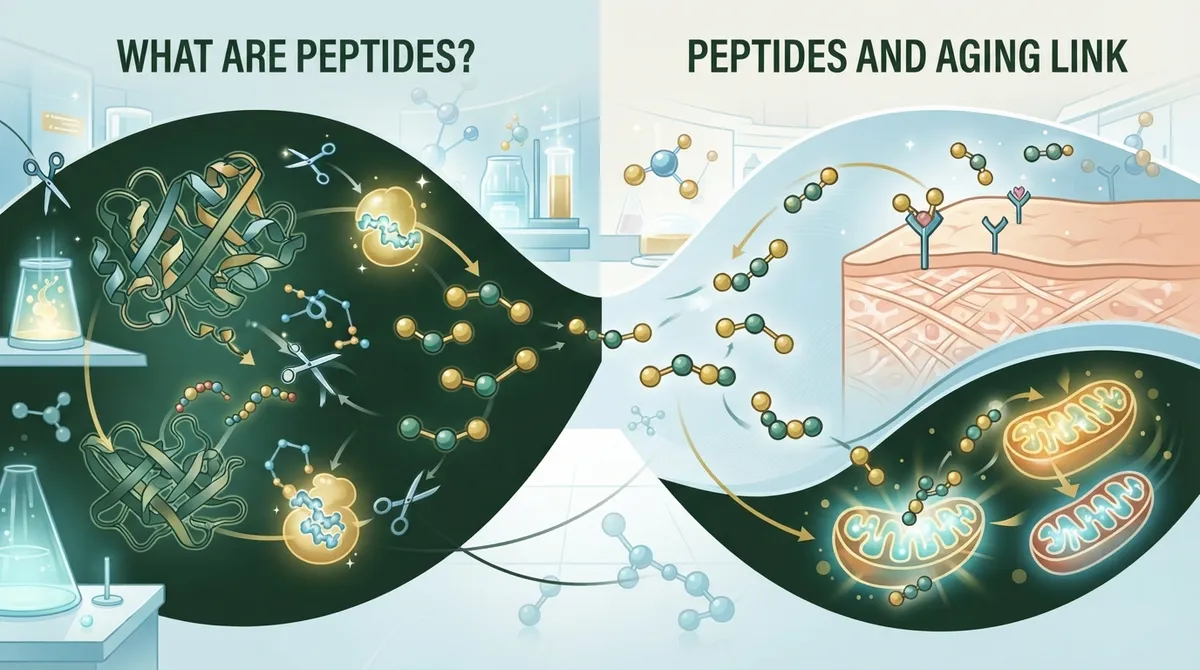
What Are Peptides, and Why Do People Link Them to Aging?
Peptides are short chains of amino acids. Your body makes thousands of them. They act like tiny messengers, telling cells to do things like release hormones, repair tissue, or calm inflammation. If you want a plain-language overview, what are peptides is a helpful starting point.
As we age, some of these signals fade. Growth hormone output drops. Recovery slows. Skin changes. Sleep gets lighter. That is why people hope that giving the body extra signals might help. The idea makes sense. The proof, though, is still catching up.
The Peptides Most Often Linked to Anti Aging
Several compounds show up again and again in longevity conversations. Here is a quick, honest look at each. Notice the “evidence” column. It matters.
| Peptide | What It Is Promoted For | Evidence in Healthy Adults | FDA Status for Anti-Aging |
|---|---|---|---|
| CJC-1295 | Raising growth hormone signals | Limited human data on aging outcomes | Not approved |
| Ipamorelin | Growth hormone release, recovery, sleep | Limited; mostly short-term studies | Not approved |
| Sermorelin | Growth hormone support | Some clinical history; aging benefits unproven | Not approved for anti-aging |
| BPC-157 | Tissue and gut repair | Mostly animal research | Not approved |
| TB-500 | Tissue repair and recovery | Very limited human data | Not approved |
| GHK-Cu | Skin and collagen support | Some skin-focused studies | Not approved for broad anti-aging |
| Epitalon | Cellular aging, sleep | Limited and mixed | Not approved |
This table is not meant to scare you. It is meant to keep you grounded. Many of these compounds are discussed in clinics, but they are not FDA-approved for broad anti-aging or healthspan use. If you want to go deeper on a few of them, check out Ipamorelin Peptide Therapy: Benefits, Dosing & Safety and 9 BPC-157 Peptide Facts to Know Before You Start.
What the Research Says About Growth Hormone Peptides
Growth hormone (GH) peptides get the most attention for anti-aging. They are often called growth hormone secretagogues. They nudge your body to release more of its own GH. To learn how they work, see Growth Hormone Peptides: What They Are & How They Work.
So what do studies show? Research in older adults shows changes in body composition more consistently than gains in strength, physical function, or thinking skills. In plain terms, you may see a bit less fat or a bit more lean mass. But better function, a longer life, or improved healthspan has not been proven.
A 2025 clinical review in Frontiers in Aging concluded that GH is not advised as an anti-aging treatment for healthy older adults. It also noted that long-term safety and efficacy for healthy aging remain uncertain. Another review in Endotext (NCBI) called for long-term studies tracking real outcomes like falls, fractures, heart disease, and death. You can also browse the National Library of Medicine for peer-reviewed peptide research.
That is a lot of “we need more data.” And that is okay. Good science takes time. Good care means being honest while we wait.
Approved Treatment vs. Longevity Marketing
Here is one of the most important ideas in this whole article. There is a big difference between treating a diagnosed condition and chasing a longevity goal.
| Approach | Example | Evidence Level | Typical Use |
|---|---|---|---|
| Approved prescription therapy | GH for diagnosed GH deficiency; GLP-1 medicines for weight management | Strong, studied for specific conditions | Treating a diagnosed medical need |
| Compounded or unapproved peptides | CJC-1295, ipamorelin, BPC-157 | Limited human data | Wellness or longevity goals, under clinician care |
| Foundational habits | Sleep, strength training, nutrition, labs | Strong and well proven | Everyone |
GH treatment, for example, is appropriate for diagnosed medical conditions under clinician supervision. It is not meant for normal age-related changes. Likewise, compounded drugs are not FDA-approved as finished products for safety and effectiveness. If you are curious about the difference, read FDA-Approved vs. Compounded Peptides: What Wins?
The Real Risks You Should Know About
Every treatment has trade-offs. Being a smart consumer means knowing them upfront. Raising GH and IGF-1 levels can come with side effects, and long-term safety data in healthy older adults are not strong enough yet.
- Fluid retention or swelling (edema): Common with higher GH levels.
- Joint and muscle aches: Often dose-related.
- Higher blood sugar: GH can affect insulin sensitivity and may raise diabetes risk.
- Unresolved heart and cancer questions: Researchers are still studying long-term effects.
- Product quality concerns: With unapproved or compounded peptides, purity, sterility, and dose consistency can vary.
This is exactly why who prescribes your peptides matters so much. A licensed clinician can screen for risks, order labs, and watch for problems early. For a deeper safety read, see Is Peptide Therapy Safe? What You Really Need to Know and How to Get Prescription Peptides Safely in 2026.
How to Build a Smarter, Personalized Anti Aging Plan
Since there is no one-size-fits-all answer, the best whole body approach is a personal one. Think of it as building a plan around your own data. Here is a simple path many people follow.
- Start with your goals. Do you want more energy, better sleep, faster recovery, healthier skin, or a lean body? Be specific.
- Get real lab work. Blood tests show hormone levels, blood sugar, inflammation markers, and more. Guessing is not a plan.
- Talk with a licensed provider. A clinician can tell you whether you have a diagnosable issue and which options may help.
- Fix the foundations first. Sleep, protein, strength training, stress, and alcohol all move the needle.
- Add targeted therapy only if it makes sense. If a peptide fits, start low and monitor closely.
- Re-test and adjust. Follow-up labs and check-ins keep you safe and on track.
If you like step-by-step guidance, How to Start Peptide Therapy Safely and See Real Results and How to Pick the Best Peptides for Aging in 2026 are great companions.
Why Peptide “Stacks” Are Not Established Care
You may see ads for a “stack,” meaning several peptides taken together. It sounds powerful. But a stack is not a proven standard of care. Combining compounds can make it harder to tell what is working, and harder to spot what is causing a side effect.
A thoughtful provider may sometimes use more than one peptide, but only with a clear reason, solid labs, and close monitoring. If you are comparing options, read Single Peptides vs. Peptide Stacks: Which Wins? to see the pros and cons.
Who Might Be a Good Fit for Peptide Therapy?
Peptide therapy is not for everyone. It tends to be explored by adults who already care about their health and want a more tailored plan. Common groups include:
- Health optimizers who want better energy, recovery, and sleep.
- Aging adults who want to protect vitality and function.
- Biohackers who track labs and want data-driven protocols.
- Busy professionals who need easy, at-home telehealth care.
- Wellness seekers who already invest in prevention and want to go further.
Not sure if you qualify? Who Is a Candidate for Peptide Therapy in 2026? breaks it down. Men and women may also have different needs, which is why we offer paths for peptides for women and peptides for men.
What Peptide Therapy Looks Like With Allura Longevity
At Allura Longevity, we believe good care starts with honest conversation. We do not promise to reverse aging. We focus on helping you feel and function your best, using personalized, medically supervised plans.
Here is how it works. You begin with a $50 virtual consultation. Next, you complete blood work through LabCorp. Then your licensed provider designs a customized six-month plan based on your labs and goals. Your treatment is delivered right to your home, and you get ongoing monitoring and adjustments along the way. Our care is led by Ashley, a board-certified Family Nurse Practitioner.
Telehealth makes it easy for busy schedules. We are licensed in Florida, Georgia, Texas, Connecticut, Indiana, Maryland, New York, and California. Curious how telehealth stacks up against a local clinic? See Local Clinic vs. Telehealth: Best Peptide Therapy Near You?
Evidence-Based Habits That Support Healthy Aging
Before any peptide, there are habits with strong proof behind them. Think of these as the base of your anti aging pyramid. Peptides, if used, sit on top.
- Strength training: Protects muscle and bone as you age.
- Quality sleep: Supports hormones, mood, and recovery.
- Enough protein and whole foods: Helps maintain lean mass.
- Regular movement: Walking and cardio support heart and brain health.
- Stress care: High stress can disrupt sleep and hormones.
- Routine checkups and labs: Catch issues early.
Pair these with a personalized plan, and you give yourself the best shot at long-term vitality. For more ideas, see How to Build a Smart Longevity Care Plan in 2026.
Final Thoughts: Aim for Honest, Personal, and Supervised
So, what is the best whole body anti aging peptide therapy? The most honest answer is that the “best” plan is the one built around your labs, your goals, and your safety, with a qualified clinician guiding every step. No peptide is a magic fountain of youth, and anyone who says otherwise is selling a story.
But with the right support, you can make smart, informed choices that help you feel strong, clear, and energized. That is something worth working toward.
Ready to see what a personalized plan could look like for you? Request a consultation with Allura Longevity today, or call us at (813) 510-6277. Spots for new clients are limited each month, so reach out while there is room.
FAQs
Q: What is the best peptide therapy for anti-aging?
A: There is no single best peptide proven to slow aging in healthy people. The right choice depends on your labs, goals, and health history, so it is best to work with a licensed provider who can build a plan around you.
Q: Do anti-aging peptides actually work in humans?
A: Evidence is mixed and still growing. Some growth hormone peptides may change body composition, but benefits for lifespan, strength, or thinking skills have not been clearly proven. That is why honest expectations and medical supervision matter.
Q: Are CJC-1295 and ipamorelin FDA-approved?
A: No, they are not FDA-approved for anti-aging or healthspan use. They are often discussed in wellness settings, so it is wise to ask your provider about product quality, safety, and monitoring before you start.
Q: Are growth hormone peptides safe for older adults?
A: Long-term safety data in healthy older adults are limited. Possible risks include fluid retention, joint aches, and higher blood sugar, so these therapies should only be used under clinician care with regular lab checks.
Q: What evidence-based habits support healthy aging?
A: Strength training, good sleep, balanced nutrition with enough protein, regular movement, stress care, and routine labs all have strong support. These are the foundation, and any peptide plan should build on top of them.





