

Key Takeaways
-
Amino acid peptides are short chains of about 2 to 50 amino acids, while proteins are longer; the boundary is a convention, so sources may draw it differently.
-
Peptide is a molecule type, not a single treatment: each peptide has its own approved use, dose, route, evidence, and risks, so one approval doesn’t validate others.
-
Know the regulatory status before using any peptide: FDA-approved prescription drugs differ from compounded preparations and research-market products, which lack equivalent safety and quality review.
-
Many peptides marketed for anti-aging, recovery, or muscle growth lack strong controlled human studies, and ‘research chemical’ labels are a red flag rather than reassurance.
-
Peptide risks include allergic or immune reactions, dosing errors, contamination, impurities, and unknown long-term effects, so verify product quality and sourcing before treatment.
-
Work with a licensed clinician who reviews your health history, orders baseline labs, and provides ongoing monitoring rather than relying on one-time purchases or testimonials.
Have you ever scrolled past a wellness post about peptides and thought, “Wait, what are amino acid peptides, and why is everyone talking about them?” You are not alone. In 2026, peptides are everywhere, from skin care aisles to telehealth clinics. The buzz is loud, but the facts can get lost in it.
Here is the friendly truth. Amino acid peptides are tiny chains of building blocks that your body already uses every day. Some have become real prescription medicines. Others are still being studied, and a few are sold with big promises and thin proof.
In this guide, we will walk through what amino acid peptides are, how they work, and how to tell solid science from hype. Whether you are a health optimizer, a busy professional, or just curious, you will leave with clear steps for making smart choices. Think of this as a chat with a well-read friend who wants you to feel confident, not confused.
What Are Amino Acid Peptides? A Simple Definition
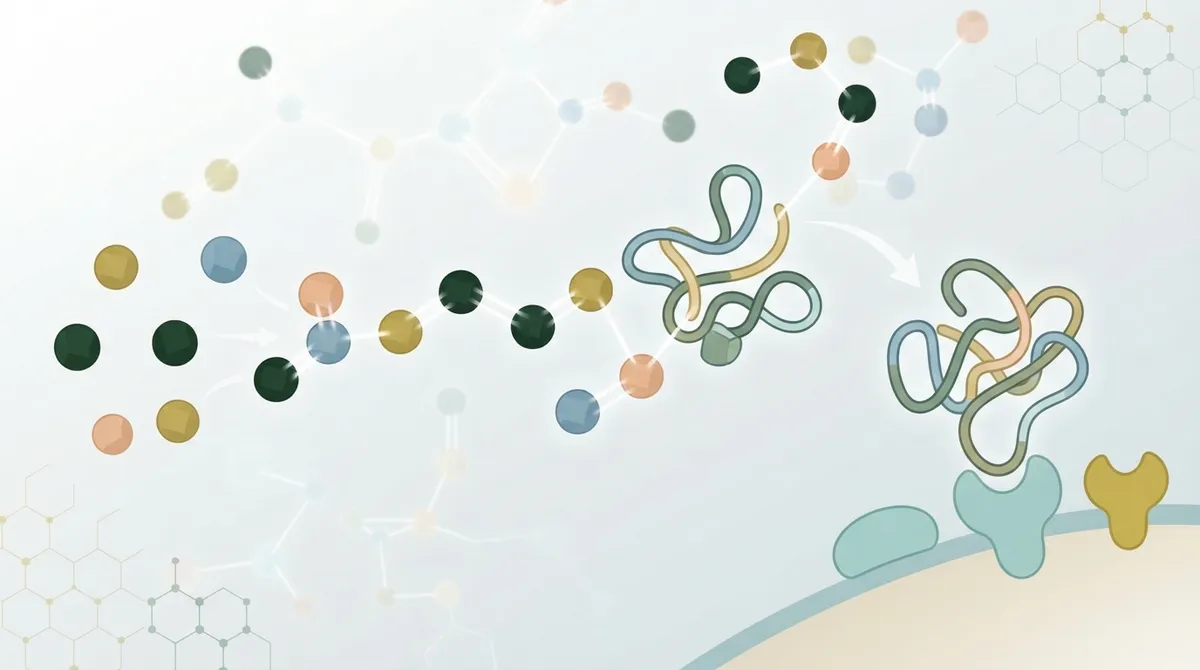
Amino acids are the small building blocks of life. When a few of them link together, they form a peptide. The links are called peptide bonds. Many scientists describe peptides as chains of roughly 2 to 50 amino acids. Longer chains are usually called polypeptides or proteins, although the exact line is not fixed (NCBI Bookshelf).
If you want a quick picture, think of amino acids as letters. A peptide is a short word. A protein is a long sentence. The order of the letters matters a lot, because it changes the meaning.
For a broader look at the basics, you can read How to Understand Peptide Therapy: A 2026 Overview. For a general overview from a trusted health site, see this explainer on what are peptides.
Peptides vs. Proteins at a Glance
| Feature | Peptides | Proteins |
|---|---|---|
| Typical length | About 2 to 50 amino acids | Usually more than 50 amino acids |
| Size | Small | Large and complex |
| Common role | Signals, messengers, medicines | Structure, enzymes, transport |
| Example | Some hormones | Collagen, hemoglobin |
Keep in mind that this boundary is a convention, not a hard rule. Some sources draw the line in slightly different places.
How Amino Acid Peptides Work in the Body
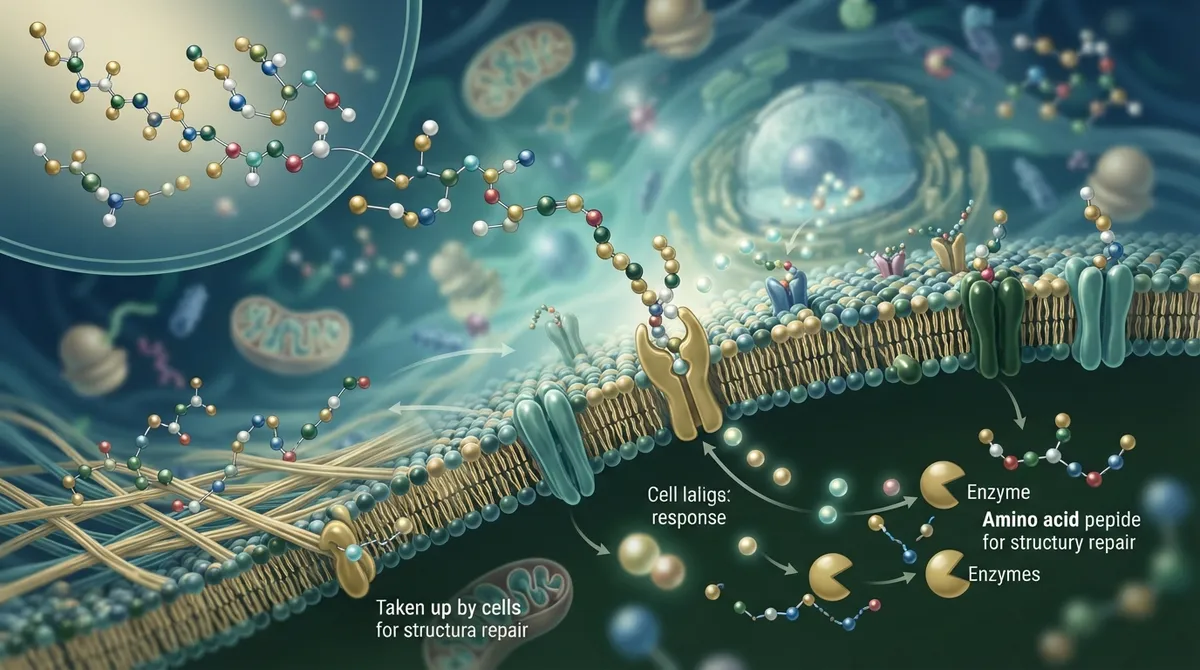
A peptide does its job based on two things: its amino acid order and its three-dimensional shape. That shape lets it fit into receptors, enzymes, and other targets, much like a key fits a lock.
Your body already makes many peptides. Some act as signaling molecules, including certain hormones. They carry messages from one part of the body to another, such as “time to release energy” or “time to feel full.”
What Therapeutic Peptides Can Do
In medicine, researchers design peptides to work with these natural systems. A therapeutic peptide may:
- Mimic a natural signal your body already uses
- Modify how a signal behaves, making it last longer or work differently
- Block a signal that is causing a problem
Here is the key point. “Peptide” is a type of molecule, not a single treatment. Each peptide medicine has its own approved use, dose, route, evidence, and risks. Calling something a peptide tells you what it is made of, not whether it works or whether it is safe.
Which Peptides Have Real Medical Backing?
Some peptide-based drugs are well established. Semaglutide and tirzepatide are two examples used for specific metabolic conditions. They went through formal review for those uses. If weight management is on your mind, you can explore How to Understand GLP-1 Peptide Therapy in 2026 and 8 GLP-1 Weight Loss Facts Worth Knowing in 2026.
But here is an important caution. Approval of one peptide for one use does not prove that other peptides are safe or effective. Each product stands on its own evidence.
Evidence Levels: A Quick Comparison
| Peptide Type | Typical Status | What to Know |
|---|---|---|
| Prescription peptide drugs (such as semaglutide, tirzepatide) | FDA-approved for specific indications | Reviewed for safety and effectiveness for those uses |
| Compounded peptide preparations | Not FDA-approved | Not reviewed for safety, effectiveness, or quality in the same way |
| Research-market peptides (such as BPC-157) | Not approved as treatments | Limited controlled human evidence for common wellness claims |
If you want to dig deeper into this difference, check out FDA-Approved vs. Compounded Peptides: What Wins? and 9 BPC-157 Peptide Facts to Know Before You Start.
Wellness Claims: Separating Hope From Hype
Many people look at peptides for better recovery, healthy aging, muscle support, or general wellness. These are understandable goals. Health optimizers and biohackers especially like the idea of data-driven tools that support performance.
The honest picture is mixed. Many peptides promoted for recovery, anti-aging, or muscle growth do not yet have strong controlled human studies behind those claims. Some are sold online as “research chemicals,” and that label is a red flag, not a reassurance.
A few friendly reminders:
- “Natural” does not automatically mean “safe.” Many strong medicines are natural or made from amino acids.
- A peptide used in a lab study is not the same as a proven therapy.
- Glowing testimonials are not the same as controlled trials.
To see how these topics are discussed with an evidence-first lens, read Anti Aging Peptide Treatment: What Really Works in 2026 and Is Peptide Therapy Safe? What You Really Need to Know.
Understanding the Risks of Peptide Products
Every peptide has its own risk profile, and that depends on the specific peptide, dose, route, product quality, and the person using it. Here are common concerns worth knowing about:
- Allergic or immune reactions. The body can sometimes react to a peptide. FDA materials note that immune responses can affect both safety and effectiveness, and that injectable routes can carry these concerns. Severe reactions such as anaphylaxis are possible.
- Dosing mistakes. Injectables need careful, accurate dosing.
- Contamination or sterility problems. Poor-quality injectables can be risky.
- Impurities and aggregation. FDA has raised concerns about impurities and limited human safety data for certain peptides proposed for compounding.
- Interactions and unknown long-term effects. Some peptides simply have not been studied for long.
None of this means peptides are “bad.” It means quality, oversight, and the right clinical guidance matter a great deal. A broader look at this topic is available in How to Spot and Avoid Peptide Therapy Risks.
How to Evaluate a Peptide or Provider: 6 Steps
Ready to put this knowledge to work? Here is a simple process you can follow before trying any peptide.
- Name the exact product. Ask for the specific peptide name, not just “a healing peptide.”
- Ask about its regulatory status. Is it an FDA-approved medicine, a compounded preparation, or a research-market product? The answer changes everything.
- Match the use to the evidence. Approval applies to a specific use. Ask whether your goal matches the approved indication.
- Check who is prescribing. Look for a licensed clinician who reviews your health history and orders appropriate lab work.
- Ask about quality and sourcing. Where is it made, and how is it handled and shipped?
- Plan for follow-up. Good care includes monitoring and adjustments, not a one-time purchase.
You can also use 15 Peptide Consultation Questions to Ask in 2026 as a handy checklist, and How to Verify FDA Approval Before Peptide Therapy for a closer look at step two.
Do Peptides Need to Be Injected?
This is a very common question. Many peptides are injected because stomach acid and digestive enzymes can break peptides down before they reach the bloodstream. Others are delivered differently, depending on the product and its design.
Route matters for both effectiveness and safety. Injectable products need clean handling and correct technique, while oral peptide supplements may not behave the same way as injectable medicines. If you are curious, see 8 Facts: Peptide Injections vs Oral Peptides (2026) and How to Prepare for Safe, Effective Peptide Injections.
Why Personalized, Lab-Guided Care Makes Sense
Because every peptide and every person is different, a one-size-fits-all approach rarely makes sense. Your age, hormones, sleep, metabolism, and medications all shape what might be appropriate for you.
That is why thoughtful clinics start with blood work and a real conversation about your goals. Busy professionals often love that telehealth makes this possible from home, without taking time off to sit in a waiting room. Aging adults and wellness seekers benefit from ongoing monitoring that adjusts as their needs change.
At Allura Longevity, licensed providers design personalized peptide plans based on your labs and goals. The process starts with a $50 virtual consultation, followed by LabCorp blood work and a customized six-month plan delivered to your door. Care is led by Ashley, a board-certified Family Nurse Practitioner, with ongoing monitoring along the way. Allura Longevity is licensed in Florida, Georgia, Texas, Connecticut, Indiana, Maryland, New York, and California. If you are weighing options, How to Get Prescription Peptides Safely in 2026 and Local Clinic vs. Telehealth: Best Peptide Therapy Near You? can help you compare paths.
A Quick Look at the Allura Longevity Process
| Step | What Happens |
|---|---|
| 1. Virtual consultation | $50 telehealth visit to talk goals and health history |
| 2. Blood work | Labs completed through LabCorp |
| 3. Custom plan | Six-month personalized treatment plan from a licensed provider |
| 4. Home delivery | Medication shipped directly to your home |
| 5. Monitoring | Ongoing check-ins and adjustments as needed |
Whether you are exploring peptides for women or peptides for men, the goal is the same: informed, supervised care that fits your life.
Common Myths About Amino Acid Peptides
Let us clear up a few popular misunderstandings so you can shop and ask questions with confidence.
- Myth: All peptides work the same way. Truth: Each peptide has its own effects, evidence, and risks.
- Myth: If it is made from amino acids, it must be harmless. Truth: Origin does not equal safety.
- Myth: Compounded means FDA-approved. Truth: Compounded drugs are not FDA-approved, and compounding follows specific legal conditions.
- Myth: Online peptides are just as good as prescribed ones. Truth: Quality, purity, and oversight can vary widely.
For more on timing and expectations, see How Long for Peptide Therapy Results? A Real Timeline.
Ready to Take the Next Step?
So, what are amino acid peptides? They are short chains of amino acids that act as signals in your body, and some have become important prescription medicines. They are not magic, and they are not all the same. The smartest approach is simple: learn the basics, verify the exact product and its regulatory status, and work with a licensed clinician who tracks your labs and your progress.
If you would like personalized, medically supervised guidance, you can request a consultation with Allura Longevity or call (813) 510-6277. New client spots are limited each month, so reach out when you feel ready. We would love to help you feel informed, supported, and confident about your next move.
FAQs
Q: What are amino acid peptides, and how are they different from proteins?
A: Amino acid peptides are short chains of amino acids joined by peptide bonds, often described as about 2 to 50 amino acids long. Proteins are longer, more complex chains. The line between the two is a convention, so you may see slightly different cutoffs depending on the source.
Q: Are peptides used for anti-aging or muscle growth proven to work?
A: Many peptides marketed for anti-aging, recovery, or muscle growth do not yet have strong controlled human evidence for those claims. A few peptide medicines are well studied for specific conditions, but that does not carry over to every peptide. It is always smart to ask a licensed clinician about the evidence for your exact goal.
Q: What is the difference between an FDA-approved peptide drug and a compounded peptide?
A: An FDA-approved peptide drug has been reviewed for safety and effectiveness for a specific use. A compounded peptide is a custom preparation that is not FDA-approved and is not reviewed for safety, effectiveness, or quality in the same way. Always ask which type you are being offered.
Q: Are peptide injections safe, and what risks should I know about?
A: Safety depends on the specific peptide, dose, product quality, and your own health. Possible concerns include allergic or immune reactions, dosing errors, contamination, impurities, and unknown long-term effects. Working with a licensed provider who monitors you over time helps lower these risks.
Q: How can I tell if a peptide provider is legitimate?
A: Look for licensed clinicians, lab work before treatment, clear answers about each product’s regulatory status, and a plan for ongoing follow-up. Be cautious of anyone selling peptides as “research chemicals” or promising guaranteed results. A trustworthy provider will happily answer your questions.





