
Key Takeaways
-
Peptides are not a substitute for testosterone, estrogen, or thyroid medication; established hormone treatments have decades of research behind them and should not be skipped for trending peptides.
-
Some peptides have FDA-approved roles for specific conditions, such as insulin for diabetes and certain growth hormone products for diagnosed growth hormone deficiency.
-
Evidence for popular wellness peptides like CJC-1295, ipamorelin, and BPC-157 as add-ons to hormone therapy is limited, so their benefits alongside standard hormone replacement are not well established.
-
Peptides marketed as "research use only" are not approved for human treatment and should be avoided; compounded peptides also carry concerns about impurities and lack of solid safety data.
-
Peptides that affect the growth hormone and IGF-1 pathway may cause fluid retention, joint or muscle symptoms, or blood sugar changes, and long-term safety for many unapproved peptides is unknown.
-
A safe approach starts with a clinician consultation and baseline lab work, since hormones interact and changing one can shift another, making ongoing blood testing essential.
You have probably heard the buzz. Friends, podcasts, and social feeds all seem to be talking about peptides. Maybe you are already on hormone therapy and wondering if adding peptides could take your results further. Or maybe you are just curious. Either way, you are in the right place.
So, can peptides support hormone therapy? The honest answer is: it depends. Some peptide medicines have clear, FDA-approved roles in specific hormone-related conditions. Others, especially the popular wellness peptides, have limited evidence as add-ons to standard hormone replacement. That does not mean peptides are off the table. It means the smart path is a careful, clinician-guided one.
In this guide, we will walk through what peptides are, where they fit with hormone therapy, what the research does and does not show, and how to stay safe. If you want a primer first, check out 8 Facts That Explain What Are Peptides in 2026. Let’s dive in.
What Are Peptides, and How Are They Different From Hormones?
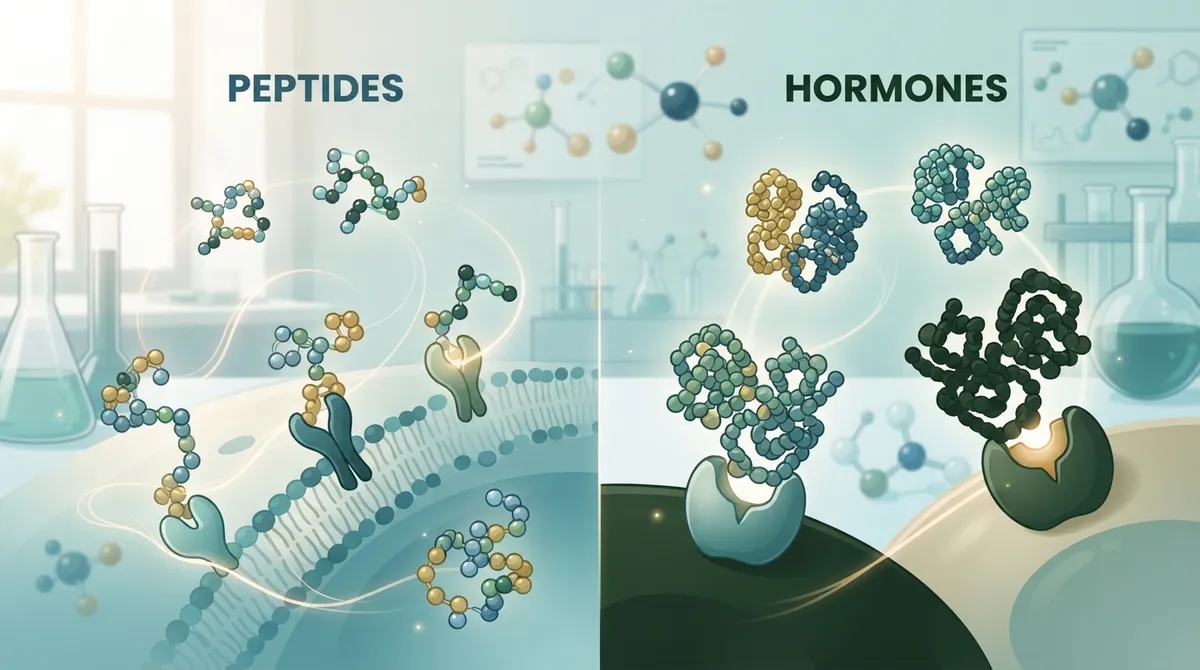
Peptides are short chains of amino acids, the building blocks of protein. Your body makes thousands of them. Some act as hormones. Others act as messengers that tell your glands to release hormones. For a plain-language overview, what are peptides is a handy starting point.
Here is the key idea. Hormones like estrogen, testosterone, and thyroid hormone are chemical messengers that travel through your blood. Traditional hormone therapy replaces them directly. Many peptides work differently. They send a signal that nudges your body to make or release its own hormones.
It is also important to know that “peptide therapy” is not one single treatment. It is a broad label. The evidence and legal status depend on the exact drug and the exact reason it is used.
Peptides vs. Hormone Replacement at a Glance
| Feature | Traditional Hormone Therapy | Peptide Therapy |
|---|---|---|
| How it works | Replaces the hormone directly | Signals the body to release or regulate hormones |
| Common examples | Estrogen, testosterone, thyroid hormone | GLP-1 medicines, growth hormone secretagogues |
| Evidence base | Well established for defined conditions | Varies widely by peptide and use |
| Regulatory status | Many FDA-approved options | Some approved, many not approved for wellness use |
Where Peptides Have a Proven Place in Hormone Care
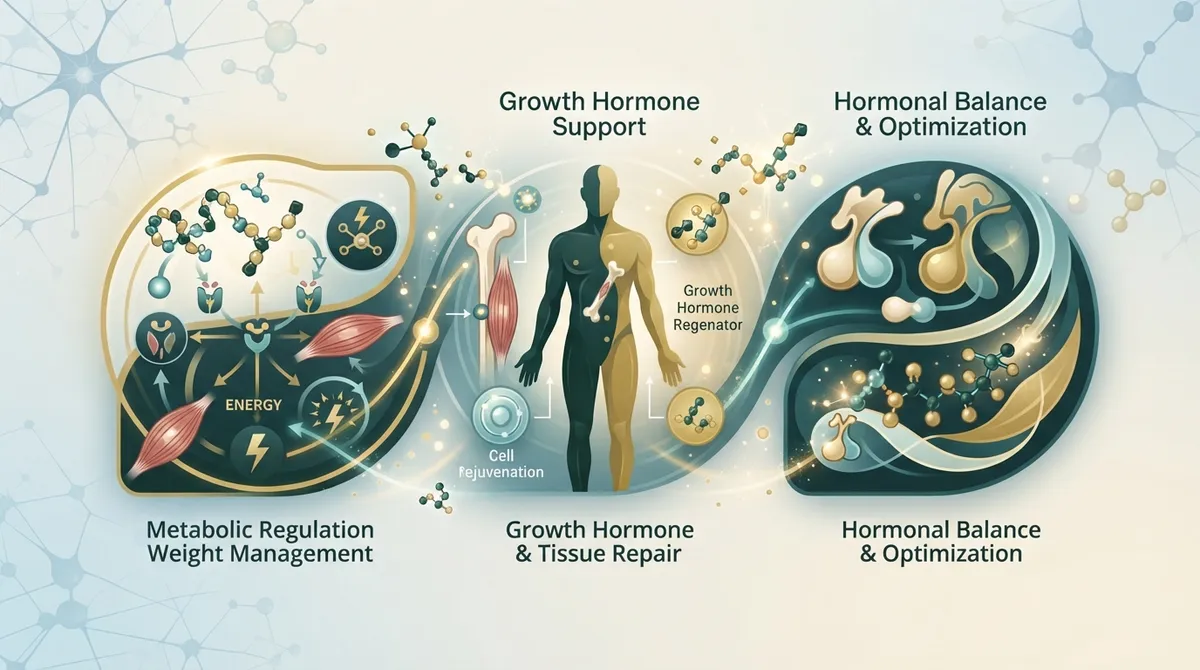
Let’s start with the good news. Some peptide-based medicines are FDA-approved for specific hormone-related conditions. Insulin for diabetes is the classic example. Certain growth hormone products are approved for diagnosed growth hormone deficiency.
These are real, well-studied medicines. But they are not general substitutes for estrogen, testosterone, or thyroid hormone replacement. They treat specific problems, and they are used under medical supervision.
GLP-1 medicines are another peptide-based group. They are used for blood sugar and weight management, which are closely tied to hormone health. If this area interests you, read How to Understand GLP-1 Peptide Therapy in 2026.
What About Wellness Peptides Like CJC-1295 and Ipamorelin?
This is where things get more nuanced. Growth hormone releasing hormone analogues and secretagogues, such as CJC-1295 and ipamorelin, act on the growth hormone and IGF-1 pathway. That is a real biological effect. You can learn more in Growth Hormone Peptides: What They Are & How They Work.
But here is the catch. Affecting a hormone pathway does not automatically mean a treatment safely improves your symptoms or outcomes. Research on these peptides explains how they act on growth hormone pathways. A review in the National Library of Medicine archive covers this kind of mechanism. Yet mechanism studies do not tell us how much real-world benefit you get when you combine them with standard hormone replacement.
In plain terms, the evidence for CJC-1295, ipamorelin, and BPC-157 as hormone-therapy add-ons is limited. We do not have strong data showing they improve results when stacked on top of estrogen, testosterone, or thyroid therapy.
That is not a reason to panic. It is a reason to ask good questions and work with a provider who will give you straight answers. Our deep dives on Ipamorelin Peptide Therapy: Benefits, Dosing & Safety and 9 BPC-157 Peptide Facts to Know Before You Start are good next reads.
How Peptides Might Fit Alongside Hormone Therapy
So can peptides support hormone therapy in any meaningful way? In a thoughtful plan, they may play a supporting role for certain goals. The key word is may, and only when there is a clear clinical reason.
Here are a few ways a provider might consider peptides alongside a hormone plan:
- Metabolic support: GLP-1 based medicines can help with weight and blood sugar, which affect how you feel on hormone therapy.
- Targeted recovery goals: Some people ask about peptides for muscle or tissue recovery alongside testosterone therapy.
- Specific diagnosed conditions: Approved peptide medicines may be used when a condition like growth hormone deficiency is confirmed.
Many people pair these ideas on purpose. If you are curious about that combination, see Why Does Testosterone Injection Therapy Get Paired With Peptides? and How Does Hormone Therapy Work With Peptides?
Peptides vs. Hormones: Who Is It For?
Not everyone needs both. Some people do well on hormone therapy alone. Others have goals, like body composition or recovery, that lead them to explore peptides. Our comparisons can help you sort it out:
- Hormone Therapy vs. Peptide Therapy: Which Wins?
- TRT vs. Peptides: Which Hormone Fix Wins for Men?
- Testosterone vs. Peptides for Women: Which Wins?
Are Peptides a Substitute for Testosterone, Estrogen, or Thyroid Medication?
No. This is one of the most important points in the whole article. Peptides are not a replacement for these medicines.
If you have low testosterone, menopause symptoms, or a thyroid problem, the established treatments exist for good reasons. They have been studied for decades. Skipping them for a trending peptide could leave your real problem untreated.
Hormone symptoms also have many possible causes. Fatigue, low libido, poor sleep, and brain fog can come from thyroid issues, sleep problems, stress, medications, or other conditions. A clinician should confirm the cause first. Our guide on How to Know If You Need Hormone Therapy in 2026 walks through that process.
Safety First: What the Research and Regulators Say
Let’s talk about the part many people skip. Safety matters a lot here.
The FDA has raised concerns about certain compounded peptides. These include worries about impurities, clumping of the peptide (called aggregation), immune reactions, and a lack of solid safety data. Also, a peptide being removed from one FDA review category does not make it FDA-approved or automatically legal to compound.
Products sold as “research use only” are not approved for human treatment. Please avoid them. To understand the difference, read FDA-Approved vs. Compounded Peptides: What Wins?
Possible Risks of Changing the Growth Hormone Pathway
When a peptide pushes the growth hormone and IGF-1 axis, it can have side effects. Risks vary by compound, dose, route, patient, and how long you use it. Long-term safety for many unapproved peptides is not established.
| Possible Concern | What It Can Look Like |
|---|---|
| Fluid retention | Swelling in hands or feet |
| Joint or muscle symptoms | Aches, stiffness, or tingling |
| Glucose changes | Shifts in blood sugar regulation |
| Other endocrine effects | Changes in other hormone levels |
For a broader safety picture, see Is Peptide Therapy Safe? What You Really Need to Know.
What a Safe, Smart Process Looks Like
If you are on hormone therapy, or thinking about it, and want to explore peptides, here is a simple path to follow.
- Start with a real consultation. Talk to a licensed provider about your symptoms, history, and goals.
- Get lab work first. Blood tests show where your hormones and metabolic markers actually stand.
- Confirm the diagnosis. Rule out other causes before adding anything new.
- Review contraindications and interactions. Your provider should check how a peptide fits with your current medicines.
- Use a legitimate source. Avoid anything labeled for research use only.
- Monitor and adjust. Follow-up visits and repeat labs keep your plan safe and on track.
Learn more about getting started in How to Start Peptide Therapy Safely and See Real Results and How to Get Prescription Peptides Safely in 2026.
Why Labs and Monitoring Matter So Much
If you love data, you will like this part. Hormones do not work alone. They talk to each other. Changing one can shift another.
That is why blood work is the foundation of any good plan. It helps your provider spot problems before they grow, pick the right dose, and track how you respond over time. Biohackers and busy professionals alike benefit from this approach because it replaces guesswork with numbers.
For more on this, see How to Use Biomarker Testing to Guide Peptide Therapy and Why Does Hormone Level Testing Matter for Peptides?
How Allura Longevity Approaches It
At Allura Longevity, we keep things simple and safe. We are a telehealth clinic offering personalized, medically supervised peptide therapy for both peptides for women and peptides for men.
Here is how it works. You start with a $50 virtual consultation. You complete blood work through LabCorp. Then your licensed provider builds a customized six-month plan based on your labs and goals, and your medication is delivered to your home. Ongoing monitoring and adjustments are part of the care, led by Ashley, a board-certified Family Nurse Practitioner. We offer care in Florida, Georgia, Texas, Connecticut, Indiana, Maryland, New York, and California.
We will always tell you what the evidence supports and what it does not. If a hormone plan alone is the better fit for you, we will say so. If a peptide has a real clinical reason in your plan, we will explain why. Spots for new clients are limited each month, so it helps to reach out early.
The Bottom Line
So, can peptides support hormone therapy? In some cases, yes, but not in the sweeping way social media suggests. Approved peptide medicines have solid roles for specific conditions. Popular wellness peptides have limited evidence as add-ons, and safety and sourcing questions matter a lot.
The best results come from a personalized plan built on labs, guided by a licensed provider, and monitored over time. You deserve care that is honest, careful, and tailored to you.
Ready to see what fits your body and goals? Request a consultation with Allura Longevity today, or call (813) 510-6277. We would love to help you take the next step with confidence.
FAQs
Q: Can peptides be used alongside hormone replacement therapy?
A: Sometimes, yes, but only when there is a clear clinical reason and a licensed provider is guiding you. Your provider should review your labs, current medicines, and goals first. Evidence for popular wellness peptides as add-ons to hormone therapy is still limited.
Q: Are peptides a substitute for testosterone, estrogen, or thyroid medication?
A: No, they are not. Established hormone treatments exist for good reasons and have years of research behind them. Peptides may support certain goals, but they should not replace these medicines without medical guidance.
Q: Which peptide therapies are FDA-approved for hormone-related conditions?
A: A few peptide-based medicines are approved for defined conditions, such as insulin for diabetes and certain growth hormone products for diagnosed growth hormone deficiency. Many peptides marketed for wellness are not FDA-approved for those uses, so it is smart to ask your provider about the status of any peptide you are offered.
Q: What are the risks of combining peptides with hormone therapy?
A: Risks depend on the peptide, dose, and your health. Peptides that affect the growth hormone pathway may cause fluid retention, joint or muscle symptoms, or changes in blood sugar. Long-term safety is not established for many unapproved peptides, which is why lab work and monitoring are so important.
Q: What tests do I need before starting peptide treatment?
A: Most plans begin with a consultation and comprehensive blood work to check your hormone and metabolic markers. Your provider uses those results to confirm your needs, spot any concerns, and set up follow-up monitoring. At Allura Longevity, labs are completed through LabCorp before your plan is built.





