

Key Takeaways
-
Peak performance health requires personalized medical oversight, comprehensive blood work, and conservative dosing adjusted based on individual response rather than marketed promises or one-size-fits-all protocols.
-
FDA-approved peptides like semaglutide and tirzepatide have strong clinical evidence for metabolic health, while investigational peptides (BPC-157, TB-500, CJC-1295) lack sufficient human safety data and require careful medical guidance.
-
Competitive athletes must verify current WADA anti-doping rules before starting any peptide therapy, as many performance-focused peptides are prohibited while semaglutide and tirzepatide are only monitored.
-
Work exclusively with licensed medical providers who verify pharmacy sourcing and require ongoing lab monitoring, as unverified suppliers risk contamination, sterility failures, and inconsistent dosing that compromise safety.
-
Avoid common derailment mistakes including skipping blood work, purchasing from unverified online sellers, expecting overnight results, and mixing multiple peptides without professional guidance.
-
Peak performance health is built on four connected pillars—energy and mental clarity, recovery and body composition, quality sleep, and metabolic health—each requiring different evidence-based approaches.
Do you ever feel like your energy, focus, and recovery just aren’t what they used to be? You’re not alone. Whether you’re a busy professional juggling back-to-back meetings, an athlete chasing your next personal best, or someone who simply wants to feel like themselves again, the idea of “peak performance health” probably sounds pretty appealing. But what does it actually mean, especially when peptide therapy enters the conversation?
Here’s the friendly truth: peak performance health isn’t a magic switch you flip. It’s a personalized approach to feeling your best, built on real science, real lab work, and realistic expectations. In this guide, we’ll walk through what peak performance health really means in the world of peptide therapy, which peptides have solid evidence behind them, which ones are still experimental, and how to build a safe, smart plan with the help of a licensed provider. Let’s dig in together.

What Does Peak Performance Health Mean in Peptide Therapy?
Peak performance health is more of a wellness concept than an official medical term. In the peptide world, it usually points to a mix of goals: better recovery after exercise, improved body composition, steadier energy, deeper sleep, and healthy aging. It’s less about becoming a superhero overnight and more about optimizing the systems your body already relies on every day.
Peptides are short chains of amino acids that act like tiny messengers in your body. According to what are peptides, these molecules can influence hormones, metabolism, tissue repair, and even immune function. That’s why they’ve become such a popular topic for people chasing better health, not just athletes.
It’s important to remember that “peak performance” is a marketing-friendly phrase, not a diagnosis. A trustworthy peptide therapy provider will always start with your actual health data, not a buzzword, before recommending anything.
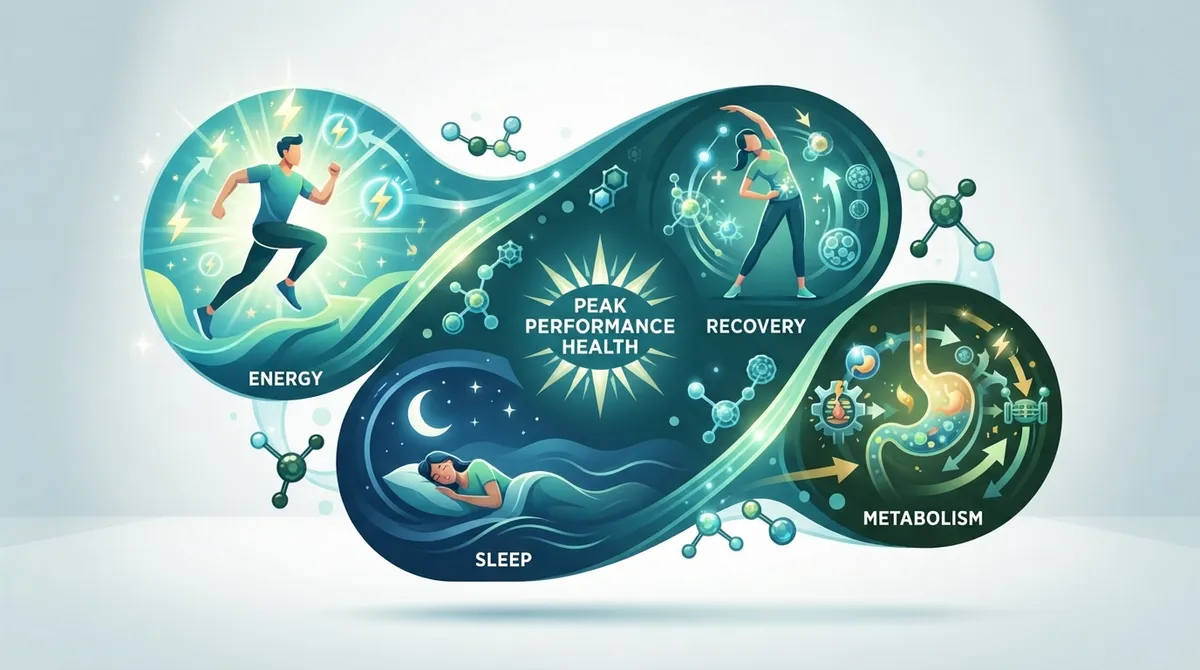
The Building Blocks: Energy, Recovery, Sleep, and Metabolism
When people talk about peak performance health, they’re usually describing a handful of connected pillars. Let’s break them down.
Energy and Mental Clarity
Low energy and brain fog can wreck your productivity and your mood. Many clients turn to peptide therapy hoping to support steadier energy throughout the day. If this sounds familiar, our guide on how to pick peptides for energy that actually work breaks down which options have the most support.
Recovery and Body Composition
Whether you’re recovering from a tough workout or an old injury, your body’s repair systems matter a lot. Some peptides are studied for supporting tissue repair and inflammation response, though evidence varies widely by product.
Sleep and Healthy Aging
Quality sleep is often called the foundation of good health, and for good reason. Growth-hormone-related peptides are frequently marketed for sleep and anti-aging support, though claims should always be weighed against available clinical evidence.
Metabolic Health
This is where the strongest science lives. GLP-1 medications like semaglutide and tirzepatide have real, FDA-approved data behind them for specific indications, and their benefits often ripple outward into better energy and mobility.
FDA-Approved vs. Investigational Peptides: Know the Difference
This distinction matters more than almost anything else in peptide therapy. Not all peptides are created equal, and knowing the difference protects your health and your wallet.
| Category | Examples | Evidence Level |
|---|---|---|
| FDA-Approved Medicines | Semaglutide, Tirzepatide, Tesamorelin, Somatropin | Strong, for specific approved indications |
| Growth Hormone Secretagogues | CJC-1295, Ipamorelin, Sermorelin, GHRP-2, GHRP-6 | Limited; often marketed without high-quality clinical data |
| Investigational/Research Peptides | BPC-157, TB-500, AOD-9604, MOTS-c | Early-stage; human safety and dosing data are limited |
One important nuance: FDA approval applies to a specific product, dose, route, and use, not to peptides as a broad category. A peptide approved for one condition isn’t automatically safe or effective for a different, unapproved purpose. If you’re curious how these categories compare in more detail, check out FDA-Approved vs. Compounded Peptides: What Wins?
Popular Peptides People Ask About for Performance
Let’s talk about some of the peptides that come up again and again in performance-focused conversations.
- Semaglutide and Tirzepatide: Approved for diabetes and/or weight management, these support metabolic health, which indirectly benefits energy and mobility. Learn more in How to Understand GLP-1 Peptide Therapy in 2026.
- CJC-1295 and Ipamorelin: Often marketed for recovery and body composition, though claims need more research. See Ipamorelin Peptide Therapy: Benefits, Dosing & Safety for a closer look.
- BPC-157: Frequently discussed for injury recovery, but it remains investigational in the U.S. Our article 9 BPC-157 Peptide Facts to Know Before You Start covers the essentials.
- TB-500: Another recovery-focused peptide with limited human data. Explore 13 Facts About TB-500 Peptide You Need in 2026 before considering it.
- Sermorelin: A growth-hormone-releasing peptide sometimes used for sleep and vitality support. Details are in 10 Sermorelin Peptide Therapy Facts to Know in 2026.
Notice a pattern? Some peptides have strong backing, while others are promising but unproven. A good provider will walk you through this honestly instead of overselling results.
Safety First: What to Watch For
Peak performance health should never come at the cost of your safety. Compounded or research-grade peptides can carry real risks if they’re not sourced carefully.
- Contamination or incorrect concentration in poorly manufactured products
- Sterility failures that can lead to infection
- Unexpected immune reactions to unregulated substances
- Drug interactions with medications you’re already taking
- Inconsistent dosing standards across unverified sources
This is exactly why working with a licensed clinician and a verified pharmacy matters so much. According to research published by the National Library of Medicine, peptide therapies show promise across many applications, but quality control and medical oversight remain essential for safe use.
How to Build a Safe, Personalized Peak Performance Plan
Ready to explore peptide therapy the right way? Here’s a simple roadmap.
- Start with a consultation. A licensed provider should review your health history and goals before recommending anything.
- Get comprehensive blood work. Labs reveal hormone levels, metabolic markers, and other clues that guide your plan.
- Review your personalized options. Your provider should explain which peptides fit your goals and which ones to avoid.
- Start low and monitor closely. Dosing should be conservative at first, with adjustments based on your response.
- Schedule follow-up labs. Ongoing monitoring helps catch side effects early and confirms your plan is working.
- Adjust as needed. Peak performance health is a moving target, not a one-time fix.
If you want a deeper dive into starting safely, our guide on How to Start Peptide Therapy Safely and See Real Results is a great next read. You might also enjoy comparing options in Local Clinic vs. Telehealth: Best Peptide Therapy Near You?
Athletes: Check Anti-Doping Rules Before You Start
If you compete in regulated sports, this section is especially important for you. The World Anti-Doping Agency updates its Prohibited List every year, and peptides are a major focus.
| Category | 2026 Status | Examples |
|---|---|---|
| Prohibited at All Times | Banned (S2 category) | Growth hormone, CJC-1295, Ipamorelin, BPC-157, TB-500, IGF-1 analogues, AOD-9604 |
| Monitoring Program | Not banned, but tracked | Semaglutide, Tirzepatide |
| Non-Approved Substances | Prohibited (S0 category) | Various investigational compounds |
WADA’s 2026 Prohibited List took effect on January 1, 2026, and it clearly bans many peptide hormones and growth factors at all times. Meanwhile, semaglutide and tirzepatide appear in the 2026 Monitoring Program rather than the Prohibited List, which is an important distinction. Monitoring simply means WADA is tracking usage patterns, not that the substance is banned. If you’re an athlete, always verify current rules with your sport’s anti-doping organization before starting any peptide, and our article on 11 Best Peptides for Athletes Worth Knowing in 2026 offers more helpful context.
How to Spot a Legitimate Peptide Therapy Provider
Not all peptide clinics are created equal. Here’s what to look for.
- Licensed medical providers who review your full health history
- Required blood work before any prescription is written
- Peptides sourced from verified, regulated pharmacies
- Clear explanations of risks, benefits, and evidence levels
- Ongoing monitoring with scheduled follow-up labs
- Transparent pricing with no pressure to buy unnecessary add-ons
At Allura Longevity, this process starts with an affordable $50 virtual consultation and comprehensive blood work through LabCorp. From there, our licensed providers, led by board-certified Family Nurse Practitioner Ashley, build a customized six-month plan tailored to your labs and goals. Everything ships straight to your door, with ongoing monitoring along the way. You can learn more about this approach in How to Get Prescription Peptides Safely in 2026.
Common Mistakes That Derail Peak Performance Goals
Even well-intentioned people run into roadblocks. Here are a few to avoid.
- Skipping blood work and guessing at dosing
- Buying peptides from unverified online sellers
- Expecting overnight results instead of gradual improvement
- Ignoring side effects instead of reporting them to a provider
- Mixing multiple peptides without medical guidance
Avoiding these missteps is often the difference between disappointing results and real, sustainable progress. For more on this, take a look at 12 Mistakes That Ruin How Peptide Therapy Works.
Bringing It All Together
Peak performance health isn’t about chasing a trendy label. It’s about understanding your body, working with real data, and choosing therapies that are backed by evidence and prescribed responsibly. Some peptides, like semaglutide and tirzepatide, have strong FDA approval behind specific uses. Others, like BPC-157 or CJC-1295, are promising but still need more research and careful medical oversight.
The good news is you don’t have to figure this out alone. Whether you’re a busy professional looking for convenient telehealth care, a biohacker who loves tracking your labs, or someone simply hoping to feel more like yourself again, personalized peptide therapy can be part of a smart, sustainable wellness plan. Allura Longevity is proud to offer nationwide telehealth peptide therapy, licensed in Florida, Georgia, Texas, Connecticut, Indiana, Maryland, New York, and California, with spots limited each month for new clients.
If you’re ready to explore what a personalized plan could look like for you, why not request a consultation today? You can also give our team a call at (813) 510-6277 to ask questions before you get started. Your journey toward feeling energized, balanced, and truly at your best can begin with one simple conversation.
FAQs
Q: What is peak performance health in peptide therapy?
A: It’s a friendly way of describing a personalized approach to feeling your best, covering energy, recovery, sleep, and metabolic health. It’s not a strict medical term, more of a wellness goal that combines lab data with individualized peptide protocols.
Q: Which peptide therapies are FDA-approved for metabolic health?
A: Semaglutide and tirzepatide are approved for specific diabetes and weight-management indications, and they have the strongest clinical evidence in the peptide world. Other peptides marketed for performance often lack this same level of approval, so it’s worth asking your provider about the evidence behind each option.
Q: Are BPC-157, TB-500, or CJC-1295 safe and legal?
A: These peptides are considered investigational in the United States, meaning human safety data is still limited. They’re also banned for competitive athletes under WADA’s 2026 Prohibited List, so it’s smart to talk with a licensed provider and check current anti-doping rules before starting.
Q: What blood tests are recommended before starting peptide therapy?
A: Most reputable clinics start with comprehensive blood work, often through a trusted lab like LabCorp, to check hormone levels and metabolic markers. This helps your provider build a plan that’s actually tailored to your body instead of guessing.
Q: How can I tell if a peptide clinic is legitimate?
A: Look for licensed medical providers, required lab work, verified pharmacy sourcing, and clear communication about risks and benefits. If a clinic promises guaranteed results without ever reviewing your labs, that’s a big red flag worth avoiding.





