

Key Takeaways
-
BHRT is the gold standard for menopause symptoms like hot flashes and vaginal dryness, backed by major medical organizations; peptides work differently and cannot replace estrogen/progesterone despite being promoted for wellness.
-
Avoid compounded BHRT products—they lack FDA approval and rigorous testing, causing potential dose variability; choose FDA-approved options and work with licensed providers who order reliable blood work.
-
Bremelanotide (Vyleesi) is only FDA-approved for premenopausal women with sexual desire disorder, not for postmenopausal women or general menopause treatment, despite marketing buzz.
-
Build a personalized plan with a licensed provider using complete blood work and medical history review; ask upfront whether treatments are FDA-approved and how progress will be monitored.
If you’ve been researching BHRT for women, you’ve probably also stumbled across peptide therapy, and maybe you’re wondering how the two connect. That’s a great question, and you’re not alone in asking it. Many women exploring hormone health want to know whether peptides can help alongside, or even instead of, traditional bioidentical hormone replacement therapy.
Here’s the friendly truth: BHRT and peptide therapy are cousins, not twins. They work differently, they’re regulated differently, and they solve different problems. This guide breaks down what BHRT actually is, where peptides fit into the bigger picture of women’s wellness, and how to make smart, informed choices for your body. Whether you’re a busy professional squeezing in research between meetings or a dedicated biohacker who loves a good lab report, we’ve got you covered.

1. Understand What BHRT for Women Really Means
BHRT stands for bioidentical hormone replacement therapy. It uses hormones that are chemically identical to the ones your body naturally makes. For women, this usually means estradiol and progesterone, and sometimes testosterone or DHEA.
These hormones help manage symptoms tied to perimenopause and menopause. Think hot flashes, night sweats, mood swings, and vaginal dryness. According to the National Library of Medicine, bioidentical hormones are often praised for feeling more “natural,” but that doesn’t mean they skip clinical oversight.
- BHRT can be delivered as pills, patches, creams, gels, or pellets
- Dosing depends on your symptoms, labs, and personal health history
- It directly replaces hormones your ovaries produce less of over time
- It requires a licensed provider to prescribe and monitor treatment
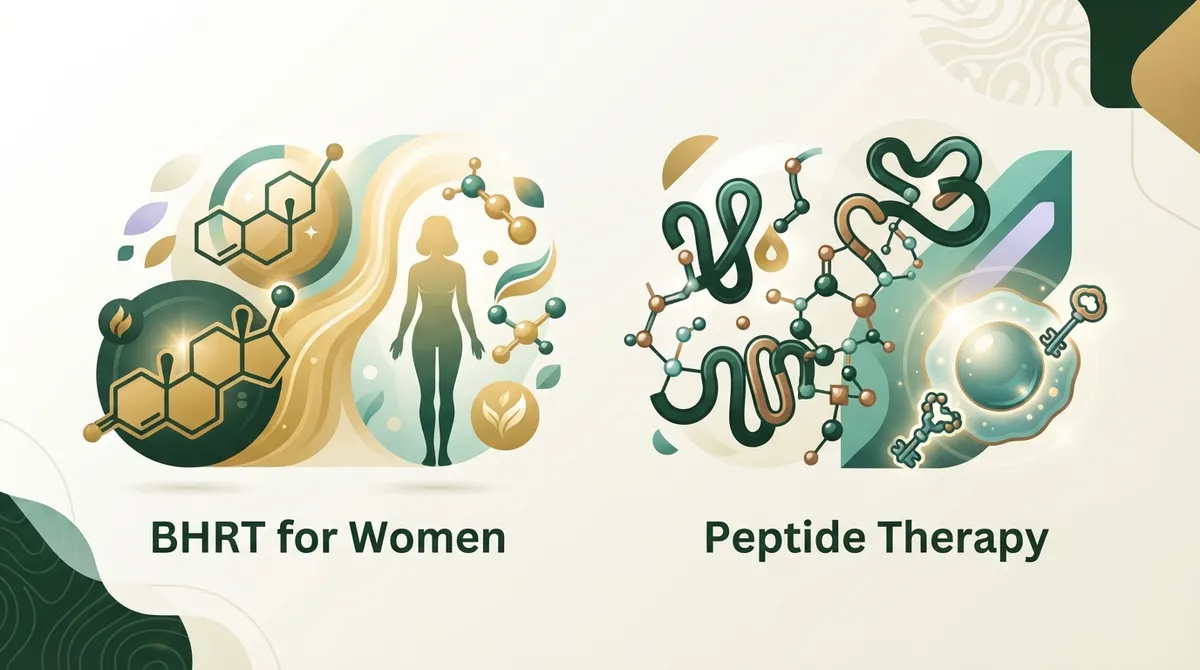
2. Know the Real Difference Between BHRT and Peptide Therapy
This is the part that trips people up the most, so let’s clear it up right now. BHRT replaces hormones. Peptide therapy uses short chains of amino acids that act like tiny messengers in your body.
Peptides don’t typically replace estrogen or progesterone. Instead, they may support things like metabolism, sleep, tissue repair, or growth hormone pathways. If you’re curious about the basics, our article on what peptides are and how they work is a great starting point.
| Feature | BHRT | Peptide Therapy |
|---|---|---|
| What it does | Replaces estrogen, progesterone, testosterone | Signals cells to perform specific actions |
| Main use in women | Menopause and perimenopause symptoms | Metabolism, recovery, sexual wellness, energy |
| FDA-approved options | Yes, many products | Some, like semaglutide and bremelanotide |
| Treats hot flashes? | Yes, most effective option | No established evidence |
3. Learn Why Hormone Therapy Still Leads for Menopause Symptoms
Let’s give credit where it’s due. The North American Menopause Society’s 2022 position statement says hormone therapy is the most effective treatment for hot flashes and night sweats. It also helps with vaginal dryness and protects against bone loss.
For healthy women younger than 60, or within 10 years of their last period, the benefits generally outweigh the risks. That said, every woman’s situation is unique. Your medical history, symptoms, and personal risk factors all matter.
- Review your full medical history with a licensed provider
- Discuss whether you need estrogen alone or estrogen plus progestogen
- Choose a delivery method that fits your lifestyle, like a patch or pill
- Schedule regular follow-ups to adjust your dose over time
- Watch for warning signs like unexplained bleeding and report them right away
4. See Where Peptides Fit Into Women’s Wellness
Peptides aren’t a replacement for BHRT, but they can play a supportive role in specific areas. Think of them as specialized tools rather than an all-purpose fix. Here’s where the science currently stands.
- Sexual wellness: Bremelanotide, sold as Vyleesi, is FDA-approved for premenopausal women with low sexual desire disorder
- Weight management: GLP-1 peptides like semaglutide help with weight loss and metabolic health, though they don’t treat menopause symptoms
- Recovery and repair: Peptides like BPC-157 are popular in wellness circles, though large human trials are still limited
- Energy and sleep: Some peptides are explored for supporting better rest and daily vitality
If weight changes during midlife have you frustrated, you might enjoy reading about which peptides actually support fat loss. It’s a helpful next step for anyone curious about metabolic support beyond hormones.
5. Recognize What Bremelanotide (PT-141) Can and Cannot Do
Let’s talk about one peptide getting a lot of buzz: bremelanotide, also known as PT-141. The FDA approved it specifically for premenopausal women with acquired, generalized hypoactive sexual desire disorder.
Here’s the catch. It is not approved for postmenopausal women, general sexual enhancement, or as a treatment for estrogen deficiency. The FDA prescribing information notes it should be used no more than once daily and no more than eight times per month.
| Detail | Information |
|---|---|
| Approved use | Premenopausal women with HSDD |
| Dose | 1.75 mg subcutaneous injection |
| Timing | At least 45 minutes before activity |
| Frequency limit | Once per 24 hours, up to 8 times monthly |
Curious about how peptides intersect with intimacy and confidence? Our piece on peptide facts redefining sexual wellness dives deeper into this topic.
6. Avoid the Compounded Hormone Trap
Here’s a friendly warning we want every woman to hear. Compounded BHRT is not FDA-approved for safety or effectiveness. That means it hasn’t gone through the same rigorous testing as approved hormone products.
According to research summarized on PMC’s review of bioidentical hormones, compounded preparations may have dose variability and inconsistent labeling. Major medical organizations recommend choosing FDA-approved products whenever they suit your needs.
- Ask your provider whether an FDA-approved option is available first
- Request clear information about dosing consistency and lab testing
- Avoid salivary or urine hormone testing for dosing decisions, since these are considered unreliable
- Choose licensed pharmacies with transparent quality practices
If you’re weighing your options, this guide on choosing between bioidentical hormones and peptides can help you ask the right questions during your consultation.
7. Build a Safe, Personalized Plan With the Right Support
The best results come from working with a licensed provider who actually listens. That means a full review of your symptoms, blood work, and medical history before anything gets prescribed.
At Allura Longevity, care starts with a simple virtual consultation and lab work through LabCorp. From there, a licensed provider builds a treatment plan tailored to your goals, whether that’s better energy, weight management, or overall vitality. Everything ships straight to your door, which is perfect for busy professionals who don’t have time for extra clinic visits.
- Complete an initial virtual consultation with a licensed provider
- Get blood work done to understand your current hormone and metabolic status
- Receive a personalized six-month plan based on your specific needs
- Start treatment with peptides delivered directly to your home
- Stay in touch with your provider for monitoring and adjustments along the way
Learn more about what to expect by reading how to start peptide therapy safely and see real results. It’s a great primer before your first appointment.
Questions to Ask Before Starting Any Hormone or Peptide Plan
Before you commit to any treatment, a little homework goes a long way. These questions can help guide a productive conversation with your provider.
- Is this treatment FDA-approved, or is it compounded?
- What symptoms or lab results support this specific plan?
- How will my progress be monitored over time?
- What are the realistic risks and benefits for someone my age and health history?
- Will this interact with any other medications I currently take?
For more guidance on avoiding common pitfalls, check out mistakes that hide whether peptide therapy works. It’s a helpful reality check before you invest time and money.
Bringing It All Together
BHRT and peptide therapy both have real value, but they aren’t interchangeable. BHRT remains the gold standard for managing menopause symptoms like hot flashes and bone loss, backed by decades of research from organizations like the what are peptides resource and menopause specialty groups. Peptides, meanwhile, offer exciting support for metabolism, recovery, and sexual wellness, but they work through different pathways entirely.
The smartest approach is personalized care from a licensed provider who understands your full health picture. That means real lab work, honest conversations, and a plan built around your actual goals, not guesswork.
Ready to feel like yourself again, with a plan built just for you? Request a consultation with Allura Longevity today and take the first step toward personalized, medically supervised care. Spots for new clients are limited each month, so don’t wait too long to get started. You deserve a wellness plan that actually fits your life, and we’re here to help you find it.
FAQs
Q: What is BHRT for women, and how does it work?
A: BHRT stands for bioidentical hormone replacement therapy, and it uses hormones that match what your body naturally makes. It’s mainly used to ease menopause symptoms like hot flashes, mood swings, and vaginal dryness by restoring estrogen and progesterone levels.
Q: Can peptide therapy replace estrogen or progesterone during menopause?
A: Not really, and that’s an important thing to know upfront. Peptides work through different pathways in the body, and most don’t replace estrogen or progesterone, so they shouldn’t be seen as a menopause hormone therapy substitute.
Q: Is bremelanotide or PT-141 approved for menopausal women?
A: Bremelanotide, sold as Vyleesi, is FDA-approved only for premenopausal women with a specific sexual desire disorder. It’s not approved for postmenopausal women or as a general treatment for menopause symptoms.
Q: Are compounded bioidentical hormones safer than FDA-approved hormone therapy?
A: Actually, it’s the opposite in terms of regulation. Compounded BHRT isn’t reviewed by the FDA for safety or effectiveness, so most experts recommend trying FDA-approved products first whenever they fit your needs.
Q: Does insurance cover BHRT, peptide therapy, or GLP-1 medications?
A: Coverage really depends on your specific plan and the treatment involved, so it’s worth checking directly with your insurance provider. Many women choose telehealth clinics with transparent pricing, like Allura Longevity, to avoid unexpected costs.





