

Key Takeaways
-
Most popular recovery peptides like BPC-157 and TB-500 have strong animal and lab data but very limited human evidence, so they should be considered investigational rather than proven.
-
TB-500 is only a fragment of thymosin beta-4, so research on the full molecule cannot prove that TB-500 products are safe or effective.
-
Raising growth hormone or IGF-1 levels does not by itself prove faster or safer injury recovery; benefits and risks depend on the specific drug, dose, and purpose.
-
Many peptides marketed for recovery are not FDA-approved for that use, and the FDA has flagged immunogenicity and impurity risks with compounded BPC-157.
-
Buying peptides online without a clinician leaves dosing, product quality, and drug interactions unverified; baseline blood work and a verifiable pharmacy source reduce these risks.
-
Peptides are not a substitute for diagnosis and rehab; sleep, protein intake, graded strengthening, and stress management remain the foundation of recovery.
You pushed hard in the gym, tweaked a shoulder on a weekend hike, or maybe you are just tired of feeling sore for days. So you start searching for answers, and one question keeps popping up: how does peptide therapy help recovery? It is a fair question, and the honest answer is a little more nuanced than most online ads would have you believe.
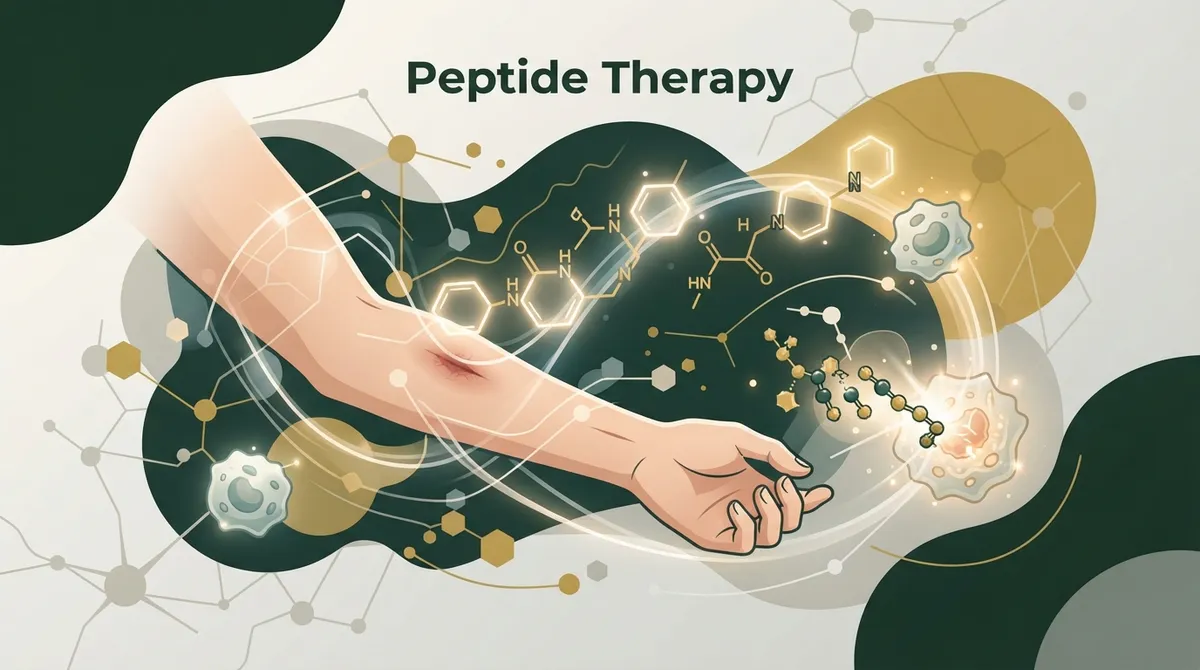
Here is the friendly truth. Peptides are short chains of amino acids that act as signals in your body. Some may influence tissue repair, inflammation, blood flow, and growth signaling. That sounds exciting! But the proof in people varies a lot from one peptide to the next. Many popular “recovery” peptides have strong stories online and thin human research behind them.
In this guide, we walk through the six most common mistakes people make when they explore peptides for recovery. We also show you what a smarter, safer path looks like in 2026. If you want a quick refresher first, check out our guide: 8 Facts That Explain What Are Peptides in 2026.
How Does Peptide Therapy Help Recovery? The Short Answer
Peptide therapy uses short amino-acid chains as medicines or investigational treatments. When people ask how peptide therapy helps recovery, they usually mean one of a few proposed effects:
- Tissue repair signaling: Some peptides may encourage cells to migrate and rebuild damaged tissue.
- Inflammation balance: Certain peptides may influence how your body handles swelling after an injury.
- Blood-vessel formation: New blood flow can bring nutrients to healing areas.
- Growth hormone signaling: Some peptides prompt your body to release more growth hormone and IGF-1.
Now the important part. These are proposed mechanisms. A mechanism in a lab dish or an animal study is not proof that a treatment speeds up recovery in real people. According to the National Library of Medicine, peptides are a broad class of molecules, and some are approved for specific conditions while many marketed for recovery are not.
That is why a good peptide therapy plan starts with an honest look at the evidence. Let us dig into the mistakes that trip people up.
Mistake 1: Treating Animal Results Like Human Proof
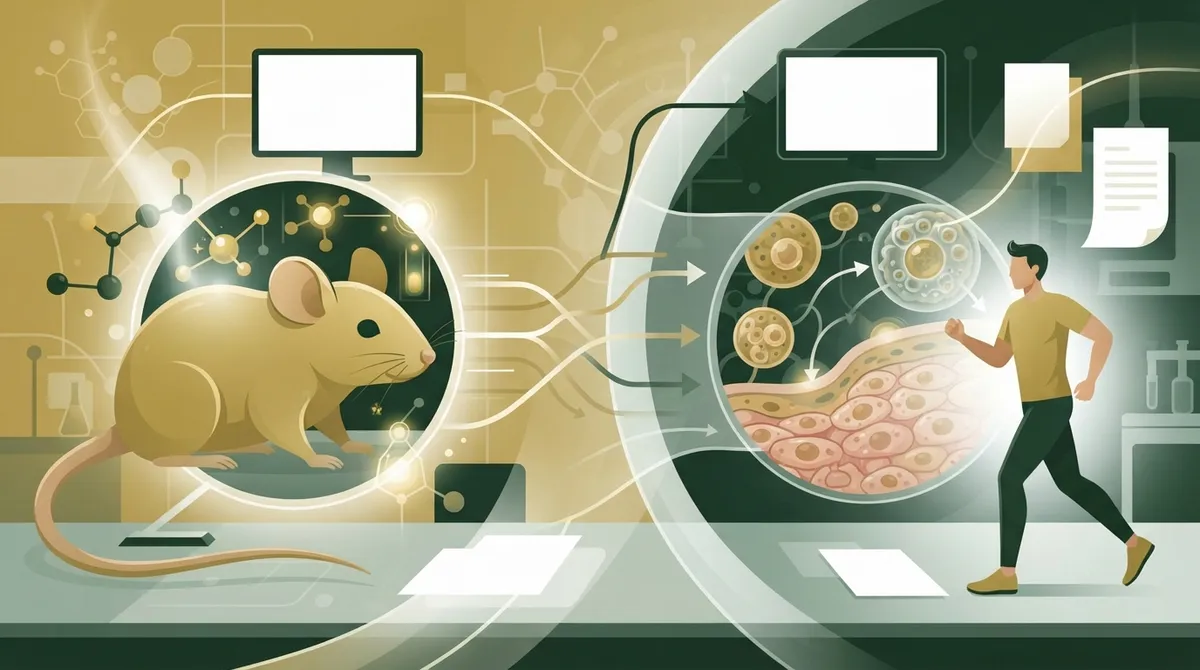
This is the biggest one. A lot of the excitement around recovery peptides comes from rat and mouse studies. Those studies are useful for generating ideas. They are not the same as testing a treatment in people.
Take BPC-157, one of the most talked-about recovery peptides. It has shown tissue-healing effects in animal and laboratory studies. But a 2026 review reports that human evidence is very limited. Across three published human studies, fewer than 30 participants were involved, and none was a randomized controlled trial. The same review reports no completed Phase II trial and no validated clinical dosing regimen.
That does not mean BPC-157 is useless. It means the honest label is “investigational.” If you are curious, our deep dive on 9 BPC-157 Peptide Facts to Know Before You Start covers what we do and do not know.
How to avoid this mistake
- Ask whether the claim comes from human studies, animal studies, or testimonials.
- Look for randomized controlled trials when evaluating any recovery claim.
- Treat a lack of human data as a reason to be cautious, not as a reason to give up.
Mistake 2: Assuming TB-500 Is the Same as Thymosin Beta-4
TB-500 is often marketed as a go-to recovery peptide. But here is a detail many people miss: TB-500 is a fragment of thymosin beta-4, not the whole molecule. Research on the full thymosin beta-4 molecule cannot automatically prove that TB-500 products are safe or effective.
Robust human efficacy evidence for TB-500 is lacking. Plus, the FDA notes that it has not identified human exposure data for drug products containing the TB-500 fragment. It also lists concerns around immunogenicity, aggregation, and peptide impurities.
Want the full picture? Read 13 Facts About TB-500 Peptide You Need in 2026 and our head-to-head BPC-157 vs. TB-500: Which Peptide Actually Wins?.
Mistake 3: Believing More Growth Hormone Always Means Faster Healing
Growth-hormone-related peptides, often called secretagogues, are popular with active adults. The idea is simple: raise growth hormone or IGF-1, and your muscles recover faster. It sounds logical, but it is not that tidy.
Raising growth hormone or IGF-1 does not, by itself, prove faster or safer injury recovery. Benefits and risks depend on the specific drug, the dose, and the reason it is being used. A peptide that boosts a lab number is not automatically a recovery tool.
If you are curious how these work, see Growth Hormone Peptides: What They Are & How They Work and How Do GHRP Peptides Really Work in Your Body?.
Mistake 4: Ignoring the Difference Between Approved and Unapproved Uses
This one matters for your safety. Some peptides are FDA-approved for specific conditions. Many peptides sold for injury or exercise recovery are not approved for those uses. The two are not the same thing, even when they sit side by side on a website.
| Category | What It Means | Recovery Example |
|---|---|---|
| Approved for a specific condition | Reviewed by the FDA for a defined use | Peptide drugs approved for other indications |
| Investigational | Studied but not approved for the claimed use | BPC-157 for tissue healing |
| Marketed for recovery without approval | Sold with recovery claims, limited human data | TB-500 fragment products |
The FDA says compounded BPC-157 may pose immunogenicity and peptide-impurity risks, and that it has limited safety information for proposed routes of administration. Learn more in FDA-Approved vs. Compounded Peptides: What Wins? and Is BPC-157 Safe? What the Research Really Shows.
Mistake 5: Buying Peptides Online Without a Clinician
We get it. Online listings are easy, fast, and sometimes cheap. But for most recovery peptides, dosing, route, duration, interactions, long-term effects, and product quality are not well established. When you buy from an unverified source, you add one more unknown: what is actually in the vial.
Quality problems like impurities and aggregation can raise the risk of unwanted immune reactions. And without a clinician, nobody is checking whether a peptide fits your health history, your medications, or your goals. You can read more about the broader risks in discussions of injectable peptides and unregulated biohacking practices.
What safer access looks like
- A licensed medical provider reviews your history and goals.
- Baseline blood work guides decisions instead of guesswork.
- Products come from a pharmacy pathway you can verify.
- Follow-up visits track how you feel and adjust the plan.
See How to Get Prescription Peptides Safely in 2026 for a step-by-step look.
Mistake 6: Using Peptides Instead of Diagnosis and Rehab
This final mistake is the one that can cost you the most time. Peptides are not a substitute for a proper diagnosis, a physical therapy plan, or rest. If you have a torn tendon, a stress fracture, or a joint that keeps swelling, you need a clinician to find out what is really going on.
Think of peptides, if your provider recommends them at all, as one possible piece of a bigger puzzle. The foundation still looks like this:
- Get the right diagnosis. Know what you are healing before you choose a tool.
- Protect the injury. Follow your clinician’s guidance on rest and load.
- Rebuild with rehab. Progressive strengthening and mobility work matter.
- Fuel recovery. Enough protein, calories, and hydration support tissue repair.
- Sleep well. Much of your repair happens while you rest.
Our article on How to Evaluate Muscle Recovery Peptides Safely adds more ways to think this through.
What Peptides Might Offer for Muscle, Tendon, and Ligament Recovery
So can peptide therapy help muscle, tendon, or ligament injuries? The most honest answer is: it might, for some people, but we cannot promise it. Here is a simple snapshot of where the evidence stands.
| Peptide Type | Proposed Recovery Role | Human Evidence Level |
|---|---|---|
| BPC-157 | Tissue healing, blood-vessel growth | Very limited; no completed Phase II trial |
| TB-500 | Cell migration, tissue repair signaling | Robust human efficacy data lacking |
| Growth hormone secretagogues | Muscle and body composition support | Depends on the drug and indication |
For a deeper look at tissue repair, browse 14 Facts About Peptides for Tissue Repair (2026), What Are the Best Peptides for Muscle Recovery in 2026?, and 6 Peptides for Wound Healing Worth Knowing in 2026.
How to Approach Recovery the Smart Way in 2026
If you are a health optimizer, a busy professional, or someone who loves tracking labs and data, you are in a great spot to do this right. Here is a simple game plan that respects the science and your time.
- Start with a conversation. Share your injury, history, and goals with a licensed provider.
- Get baseline blood work. Labs help your provider see the bigger picture.
- Ask about evidence. Request a clear explanation of what is proven and what is investigational.
- Build a personalized plan. Good care is tailored to you, not copied from a forum post.
- Track and adjust. Regular follow-ups show what is working and what is not.
Not sure how long things take? Our timeline article, 4 Timelines That Show When Peptide Therapy Works (2026), sets realistic expectations. And if you want help picking a path, How to Start Peptide Therapy Safely and See Real Results is a great next read.
Why Telehealth Makes Clinician-Guided Care Easier
Busy schedules are real. The good news is you do not have to choose between safe care and convenience. At Allura Longevity, care is delivered through telehealth, so you can start with a $50 virtual consultation, complete blood work through LabCorp, and receive a customized six-month plan at your door.
Your plan is built by licensed providers, led by Ashley, a board-certified Family Nurse Practitioner. Ongoing monitoring means your plan can be adjusted as you go. Allura Longevity serves clients in Florida, Georgia, Texas, Connecticut, Indiana, Maryland, New York, and California. Curious about how this stacks up against walking into a clinic? See Local Clinic vs. Telehealth: Best Peptide Therapy Near You?.
A smart plan is not about chasing the trendiest peptide. It is about matching your goals with evidence-based care. If you are curious about men’s or women’s options, explore peptides for men or peptides for women.
Evidence-Based Habits That Support Recovery Right Now
While you sort out whether peptides belong in your plan, there are plenty of proven habits that help your body heal. These are free, low-risk, and worth doing no matter what.
- Prioritize sleep: Aim for consistent, quality rest every night.
- Eat enough protein: Your muscles and connective tissue need building blocks.
- Move smartly: Follow a graded rehab plan instead of pushing through pain.
- Manage stress: High stress can slow down your recovery.
- Stay hydrated: Simple, but often overlooked.
These basics set the stage so that any additional therapy has a better chance of helping. For muscle-focused readers, 7 Muscle Loss Recovery Facts That Actually Matter is a handy companion.
Final Thoughts: Be Curious, Stay Safe, Get Guided
So, how does peptide therapy help recovery? In theory, certain peptides may influence repair, inflammation, blood flow, and growth signaling. In practice, human evidence for the most popular recovery peptides is still limited, and product quality and dosing remain real concerns. That is not a reason to feel discouraged. It is a reason to be thoughtful.
Avoid the six mistakes we covered: leaning on animal data, mixing up TB-500 and thymosin beta-4, assuming more growth hormone equals faster healing, skipping the approved-versus-unapproved distinction, buying without a clinician, and skipping diagnosis and rehab. Do that, and you are already ahead of most people.
If you want personalized, medically supervised support, request a consultation with Allura Longevity today. Spots for new clients are limited each month, and you can also call (813) 510-6277 to talk with our team. Your recovery deserves a plan built around you.
FAQs
Q: Does peptide therapy actually speed up injury recovery?
A: It might for some people, but we cannot promise it. Most recovery peptides, like BPC-157 and TB-500, have strong lab and animal data but very limited human evidence, so a clinician should help you weigh the pros and cons.
Q: Are BPC-157 and TB-500 FDA-approved for injury recovery?
A: No, they are not approved for injury recovery. The FDA has raised concerns about compounded versions, including immunogenicity and peptide-impurity risks, so it is best to talk with a licensed provider before considering them.
Q: What are the risks of using compounded or online recovery peptides?
A: Risks can include impurities, unwanted immune reactions, unclear dosing, and limited safety information. Working with a licensed clinician and a verifiable pharmacy pathway helps lower those unknowns.
Q: Can peptide therapy help muscle, tendon, or ligament injuries?
A: Some peptides are proposed to support tissue repair, but reliable human proof is still limited. The best foundation is still a proper diagnosis, guided rehab, good nutrition, and quality sleep, with peptides only as a possible add-on.
Q: How do I get started with clinician-guided peptide therapy?
A: At Allura Longevity, you begin with a $50 virtual consultation, complete blood work through LabCorp, and then receive a personalized six-month plan from licensed providers. It is a simple, at-home way to get expert guidance.





