
Key Takeaways
-
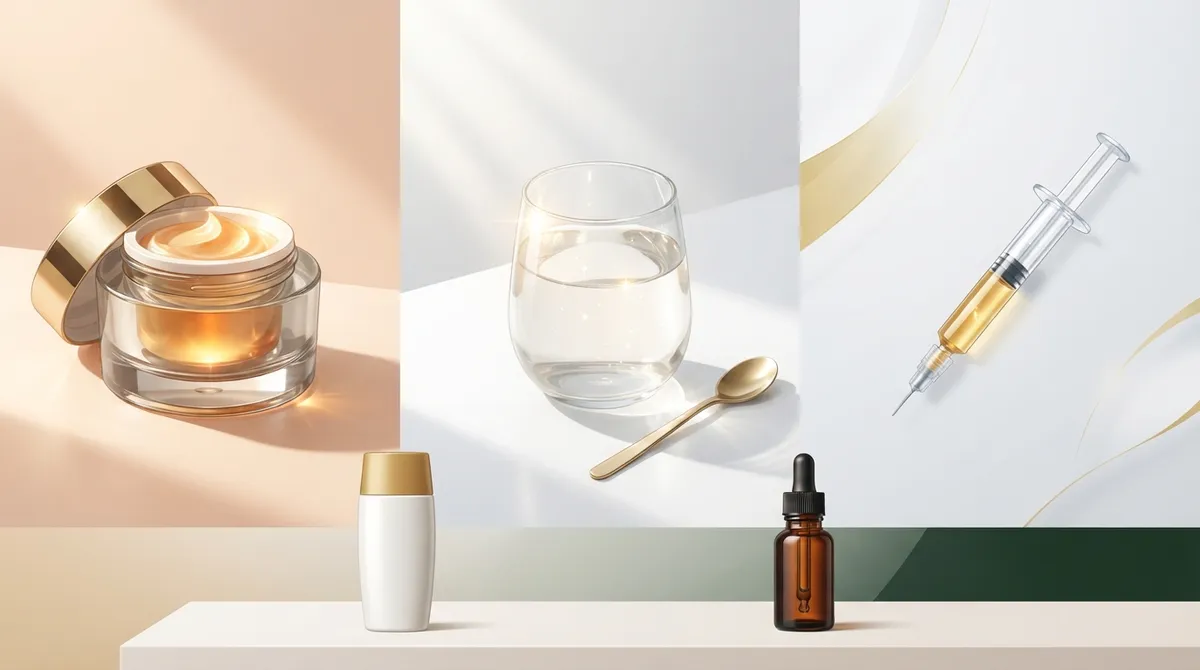
Distinguish between three distinct peptide categories—topical creams, oral collagen supplements, and injectable therapy—as evidence for one route does not automatically apply to another, preventing wasted money and disappointment.
-
Oral collagen peptides have the strongest research support: a 2023 meta-analysis of 26 randomized trials with 1,721 participants showed statistically significant improvements in skin hydration and elasticity compared to placebo.
-
Topical peptide performance depends heavily on formulation, concentration, stability, and delivery through the skin barrier, meaning two creams with the same peptide ingredient can perform very differently.
-
Injectable peptides are not FDA-approved for anti-aging skin treatment; research on topical GHK-Cu does not establish that injectable versions are effective or safe for skin aging.
-
Sunscreen and retinoids remain the most evidence-backed anti-aging foundations; peptides work best as one part of a comprehensive routine, not as replacements for proven basics.
-
Give topical peptide products at least 8-12 weeks before evaluating results, as studies show only subtle improvements in skin appearance, not dramatic transformations promised in marketing claims.
If you are looking for anti aging skin peptides, you have probably noticed one thing right away: the word “peptide” means very different things depending on who is selling it. One brand means a face cream. Another means a collagen powder. Another means a vial you inject at home. Those are not the same thing, and mixing them up is the fastest way to waste money or end up disappointed.
The good news? Once you can tell these three categories apart, shopping gets much easier. You will know what each one can realistically do, what the research actually shows, and where a licensed provider fits in.
Whether you are a busy professional who wants a simple routine, a biohacker who loves reading studies, or someone in midlife who just wants skin that feels fresh again, this guide is for you. Let’s walk through the three types, one at a time, with honest notes about the evidence. If you want a quick refresher first, our post on 8 facts that explain what are peptides in 2026 is a great starting point.
Why “Anti-Aging Skin Peptides” Can Mean Three Different Things
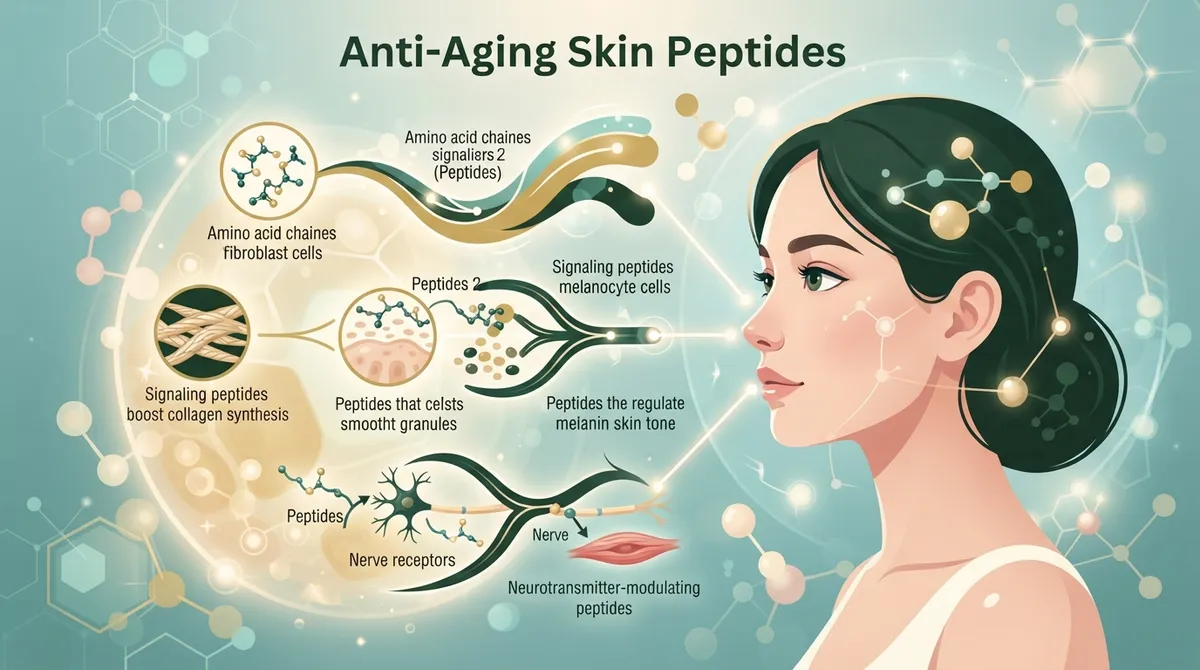
Peptides are short chains of amino acids. Your body uses them as tiny messengers. Because the term is so broad, the beauty and wellness worlds use it in several ways. As what are peptides explains, these chains play many roles in the body, which is why products using the word can look so different.
Here is the big takeaway: evidence for one route does not automatically carry over to another. A promising cream study does not prove an injection works for skin. A collagen supplement trial does not prove a serum works. Keep each category in its own lane.
| Type | How You Use It | Regulatory Picture | Evidence Level |
|---|---|---|---|
| Topical peptides | Cream, serum, or eye product on the skin | Cosmetic products | Small human studies, strong lab research |
| Oral collagen peptides | Powder, capsule, or drink | Dietary supplements | Broader trial literature, varies by formula |
| Injectable peptide therapy | Prescribed injections, often compounded | Not an approved skin-aging treatment | Limited and not established for skin |
1. Topical Peptides: The Cream and Serum Route
This is the category most people mean when they are looking for anti aging skin peptides. Topical peptides are cosmetic ingredients you apply to the face, neck, or around the eyes.
GHK-Cu (Copper Tripeptide-1)
GHK-Cu is one of the most talked-about topical peptides. It has plausible mechanisms. Laboratory and preclinical research suggest it may influence collagen and other support structures in the skin. That sounds exciting, and it is worth watching.
But let’s keep it honest. The human studies are small. A review of the GHK-Cu literature describes a 12-week facial-cream study with 71 women and a 12-week eye-area study with 41 women. These are early findings. They do not prove GHK-Cu is an established anti-aging treatment, and they do not tell us anything about injections. If you want a deeper look, read our guide on how to evaluate GHK-Cu peptide safely in 2026.
Pal-KTTKS and Argireline-Style Peptides
Palmitoyl pentapeptide-4 (often written Pal-KTTKS) and acetyl hexapeptide-8 (often marketed as Argireline) are other common cosmetic peptides. Results vary by product. A study on one formula cannot be applied to every product with the same ingredient on the label.
What Makes a Topical Peptide Work (or Not)
Skin is a tough barrier. That is its job. So performance depends on several things:
- Formulation: How the peptide is blended with other ingredients.
- Concentration: Too little may do nothing.
- Stability: Some peptides break down in the jar.
- Delivery: Whether the peptide can actually get through the skin barrier.
This is why two creams with the same “hero peptide” can perform very differently. For more on how peptides fit into skin routines, see what peptides do for skin: a real-world guide for 2026.
2. Oral Collagen Peptides: The Supplement Route
Oral collagen peptides are hydrolyzed collagen, broken into small pieces so they are easy to mix into coffee or smoothies. They are dietary supplements. They are not injectable peptide therapy.
The research here is broader than for most topical options. A 2023 meta-analysis cited in recent research reviews included 26 randomized controlled trials and 1,721 participants. It reported statistically significant improvements in skin hydration and elasticity compared with placebo.
That is encouraging. Still, a few notes matter:
- Study formulas differ, so results are not identical across brands.
- Outcomes vary from trial to trial.
- Supplements support skin from the inside, but they are not a replacement for sun protection.
A newer systematic review result also pointed to 19 randomized trials with 1,341 participants across oral and topical peptides. Most were oral, and only two were topical. Because that review is dated 2026, it is smart to check the original source yourself before leaning on it. It does suggest one useful thing, though: the oral research is deeper than the topical research right now.
If you are curious about the supplement side, our post on how to choose the best collagen peptides for women in 2026 breaks it down in plain English. You can also compare it with collagen peptides vs. peptide therapy.
3. Injectable Peptide Therapy: The Clinical Route
Now we reach the category that gets the most hype and needs the most care. Injectable peptides are prescribed and compounded by licensed providers. They are a different world from creams and powders.
Here is what to know up front:
- Injectable peptides are not FDA-approved anti-aging skin treatments.
- Compounded or research-use peptides should never be promoted as proven skin care.
- The research we have on topical GHK-Cu does not establish that injectable GHK-Cu is effective or safe for skin aging.
- You should always check a product’s regulatory status and talk with a licensed clinician about risks.
So where does peptide therapy fit? Many people explore it as part of a broader longevity plan that looks at energy, sleep, recovery, and overall vitality. Skin appearance is often a nice side conversation, not a guaranteed result. A responsible provider will be upfront about that. To understand the landscape, read FDA-approved vs. compounded peptides: what wins? and how to get prescription peptides safely in 2026.
A good clinical experience usually starts with labs and a real conversation about your goals, not a one-size-fits-all vial. At Allura Longevity, clients begin with a virtual consultation, complete blood work, and receive a personalized plan overseen by licensed providers. It is a thoughtful way to explore peptide therapy, with ongoing monitoring along the way.
Quick Comparison: Which Route Fits Your Goals?
| Your Priority | Route to Explore First | Why |
|---|---|---|
| Simple, low-commitment routine | Topical peptide serum or cream | Easy to add to your morning or evening skin care |
| Hydration and elasticity from within | Oral collagen peptides | Broader trial literature on skin hydration and elasticity |
| Whole-body longevity plan | Provider-guided peptide therapy | Labs, monitoring, and personalization |
| Maximum evidence for visible aging | Sunscreen and proven basics first | Peptides work best as one part of a bigger routine |
How Peptides Compare With the Skin Care Basics
Let’s be real for a moment. No peptide beats daily sunscreen. Sun exposure is one of the biggest drivers of visible skin aging. Retinoids also have a long track record in skin care. Peptides are a nice addition, not a replacement.
A smart routine often looks like this:
- Wear broad-spectrum sunscreen every morning.
- Add a gentle cleanser and moisturizer.
- Layer in a peptide serum if you like, and give it time.
- Ask a professional before combining multiple active ingredients.
- Support your skin with sleep, hydration, and good nutrition.
If your skin feels sensitive, introduce one new product at a time. Patch test first. Peptide creams are often gentle, but every formula is different.
Red Flags When You Are Shopping
The peptide market is crowded. Keep an eye out for these warning signs:
- Promises to “reverse aging” or “rebuild collagen” with dramatic before-and-after claims.
- Injectable peptides sold as proven skin treatments.
- Products labeled “for research use only” that are marketed to consumers.
- No licensed provider involved and no lab work.
- No clear ingredient list or concentration information.
A trustworthy source shares what is known, what is early, and what is still unproven. For more on staying safe, see is peptide therapy safe? what you really need to know. The National Library of Medicine is also a helpful place to read peer-reviewed research for yourself.
What Results Can You Realistically Expect?
Patience matters here. Studies on topical peptides often run for 8 to 12 weeks, so most people should expect to give a product at least that long before judging it. Even then, changes in studies are usually subtle improvements in how skin looks and feels, not dramatic transformations. Reported percentages from one study should not be treated as a promise for your skin.
For a clearer sense of timing across peptide types, check out how long until peptides improve skin: a 2026 timeline.
Where Allura Longevity Fits In
Allura Longevity offers personalized peptide therapy through telehealth, with licensed providers and a plan built around your labs and goals. Treatments are delivered right to your door, which is a big win for busy professionals. Care is led by a board-certified Family Nurse Practitioner and focuses on areas like energy, sleep, recovery, and overall vitality. Our peptides for women and peptides for men pages explain more about how it works. Allura is licensed in Florida, Georgia, Texas, Connecticut, Indiana, Maryland, New York, and California.
To be clear, no provider can promise a specific skin outcome from peptide therapy. What a good clinic can do is help you decide whether peptide therapy suits your wider wellness goals, check your labs, and keep things safe and monitored. If you want to understand the process, read how to start peptide therapy safely and see real results.
Ready to Take the Next Step?
Looking for anti aging skin peptides does not have to feel confusing. Remember the three types: topical peptides for your skin care shelf, oral collagen peptides for your daily routine, and provider-guided peptide therapy for a bigger-picture longevity plan. Each has its own evidence, its own rules, and its own place.
If you want expert eyes on your goals, request a consultation with Allura Longevity. It starts with a $50 virtual visit, and new client spots are limited each month. You can also call (813) 510-6277 to chat with the team. Your future self will thank you for starting with the facts.
FAQs
Q: What are the best peptides for aging skin?
A: It depends on the route. Topical options like GHK-Cu have promising early research, while oral collagen peptides have broader trial data for skin hydration and elasticity. No single peptide is proven best for everyone, so it helps to start with your goals and talk with a licensed provider.
Q: Are peptide injections FDA-approved for anti-aging skin treatment?
A: No. Injectable peptides, especially compounded or research-use products, should not be presented as FDA-approved skin-aging treatments. Always check a product’s regulatory status and review the risks with a licensed clinician.
Q: Does GHK-Cu really work for wrinkles?
A: GHK-Cu has some small human cosmetic studies, including 12-week facial and eye-area trials, plus a lot of lab research. The findings are early, so it is best viewed as a promising ingredient, not a proven wrinkle treatment. Results from creams also do not apply to injections.
Q: Do oral collagen peptides improve skin hydration?
A: A 2023 meta-analysis of 26 randomized trials with 1,721 participants reported improvements in skin hydration and elasticity compared with placebo. Formulas and outcomes vary between studies, so results can differ from product to product.
Q: How long does it take for topical peptides to show results?
A: Many studies run for 8 to 12 weeks, so give a product at least that long before judging it. Changes are usually subtle, and results differ based on the formula, your skin, and how consistently you use it.





