

Key Takeaways
-
Hormone optimization with peptides is a marketing phrase, not a formal diagnosis; peptide therapy usually aims to prompt your pituitary to release its own growth hormone rather than replacing a missing hormone.
-
Strong evidence supports growth hormone replacement only for adults with a confirmed deficiency, while research on marketed peptide protocols for people without deficiency is limited.
-
The FDA has raised safety and immunogenicity concerns about certain compounded peptides, and compounded drugs do not carry the same safety, effectiveness, or quality assurance as FDA-approved products.
-
Ask providers to name the exact substance, source, route of administration, and whether it is compounded or FDA-approved; avoid anyone promising guaranteed results or skipping labs and medical history.
-
A responsible evaluation includes a history review, appropriate lab work, stimulation testing when deficiency is suspected, an individualized conservative plan, and ongoing monitoring such as IGF-1 and HbA1c.
-
Sleep, strength training, protein intake, and stress management remain the biggest levers, and peptide-related changes, when they occur, tend to be gradual.
You have probably seen the phrase everywhere lately. Social media, podcasts, wellness blogs, even your group chat. Hormone optimization with peptides sounds exciting, and it makes a big promise: more energy, better sleep, leaner body, younger feel. But what does it actually mean?
Here is the honest answer. It is a marketing phrase, not a formal medical diagnosis. In peptide therapy, it usually points to compounds meant to nudge your body’s own growth hormone signaling. That is very different from replacing a hormone you are truly missing.
If you are a health optimizer, a busy professional, or someone who simply wants to feel like yourself again, this guide is for you. We will walk through what peptides can and cannot do, what the research says in 2026, what safety questions to ask, and how to find a provider who does it the right way. Grab a coffee and let’s dive in. No hype, just clear answers.

What Is Hormone Optimization With Peptides?
Hormones are chemical messengers. They help run your sleep, mood, metabolism, muscle, skin, and energy. Peptides are short chains of amino acids that also act as signals in the body. Put the two together, and you get a topic that is both exciting and easy to misunderstand. If you are brand new to the basics, our guide on 8 Facts That Explain What Are Peptides in 2026 is a friendly place to start.
In most peptide therapy settings, hormone optimization with peptides refers to using growth hormone secretagogues. These are compounds meant to prompt your pituitary gland to release more of its own growth hormone (GH). Think of it like asking your body to turn up its own volume knob, rather than blasting in outside sound.
It is not the same as hormone replacement
This is the biggest point of confusion. Hormone replacement therapy gives your body a hormone it lacks, such as testosterone or estrogen, after proper testing. Peptide-based approaches aim to influence signaling instead. They are not interchangeable. You can learn more about that distinction in What Is Hormone Replacement Therapy, And Do You Need It?
It is not a standardized diagnosis
No medical textbook lists “needs optimization” as a condition. That is why a careful, lab-guided approach matters so much. The goal should be to understand your unique biology, not to chase a number or a trend.
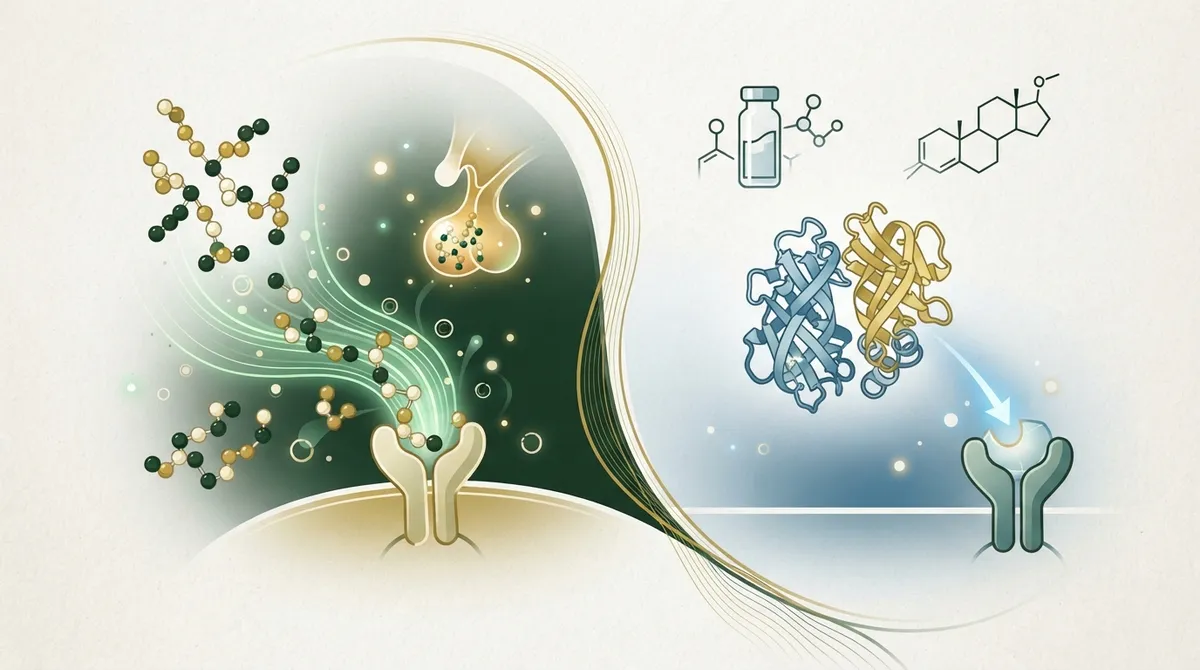
Growth Hormone Peptides vs. Prescription HGH
Many people hear “growth hormone” and picture one single product. In reality, there are two very different paths.
| Feature | Growth Hormone Peptides (Secretagogues) | Prescription HGH (Somatropin) |
|---|---|---|
| How it works | Signals the body to release its own GH | Supplies GH directly |
| Typical use | Marketed for wellness and recovery goals | Approved for diagnosed GH deficiency |
| Diagnosis needed? | Clinical review and labs are wise | Yes, confirmed with biochemical testing |
| FDA status | Often compounded; not FDA-approved as the compounded product | FDA-approved for specific conditions |
| Evidence in people without deficiency | Limited | Not intended for general anti-aging |
For a deeper look at how these compounds work, see Growth Hormone Peptides: What They Are & How They Work and How Do GHRP Peptides Really Work in Your Body?
Peptides you may hear about
- Sermorelin: a growth-hormone-releasing hormone analogue. Learn more in 10 Sermorelin Peptide Therapy Facts to Know in 2026.
- CJC-1295: another GHRH analogue often discussed alongside others. See How to Use CJC-1295 Peptide Safely for Real Results.
- Ipamorelin: a growth hormone secretagogue. Read Ipamorelin Peptide Therapy: Benefits, Dosing & Safety.
- Tesamorelin: a GHRH analogue with its own approved use in specific settings.
Does It Work If You Are Not Growth Hormone Deficient?
Here is where we get real. Strong evidence supports growth hormone replacement for adults who are truly deficient. That diagnosis requires proper clinical context and, when indicated, validated stimulation testing. It is not made from symptoms alone or from one random GH reading.
For people without a diagnosed deficiency, the research on marketed peptide protocols is limited. No broadly reliable statistic shows that “optimization” delivers consistent benefits in this group. Anyone promising guaranteed results is stretching the truth.
So why do people try it? Often because they feel tired, sleep poorly, recover slowly, or notice changes in body composition after 40. Those are real concerns. They deserve a real workup, not a one-size-fits-all fix. You can find a thoughtful overview in How to Approach Hormone Balance With Peptide Therapy.
What the current research landscape looks like
If you enjoy digging into studies, the National Library of Medicine hosts a wide range of peer-reviewed peptide research. Reading primary sources helps you separate evidence from advertising.
The Safety and Regulatory Picture in 2026
Let’s talk safety, because it matters. The FDA has raised concerns about certain compounded peptides. For example, the agency notes that compounded GHRP-2 may carry immunogenicity risks and cites reports of serious adverse events, although cause has not been established. For ipamorelin acetate, the FDA cites potential immunogenicity concerns and says there is not enough information to judge safety for some routes of administration.
Also remember this key point: compounded drugs are not FDA-approved drugs. Compounding can be appropriate for specific patient needs, but it does not prove the same level of safety, effectiveness, or quality as FDA approval. For a plain-English comparison, check out FDA-Approved vs. Compounded Peptides: What Wins? and 4 Compounded Peptides Facts You Need in 2026.
Possible side effects to know about
Prescription GH replacement, which is the better-studied option, can cause side effects. These include:
- Fluid retention and swelling
- Joint or muscle pain
- Tingling or carpal tunnel-type symptoms
- Higher blood sugar
GH treatment can also change how much thyroid or adrenal hormone support a person needs. That is one more reason ongoing clinical monitoring is not optional. For a balanced overview, see Is Peptide Therapy Safe? What You Really Need to Know.
How a Responsible Evaluation Should Look
A good provider does not hand you a protocol after a two-minute chat. A careful process usually follows steps like these:
- Review your history. Symptoms, medications, sleep, stress, training, and past conditions all matter.
- Order the right labs. Your clinician decides which tests fit your situation. Our article on 5 Blood Work Analysis Steps Before Peptides in 2026 walks through what that can look like.
- Consider testing for suspected GH deficiency. When appropriate, this may include stimulation testing rather than guessing.
- Build an individualized plan. No universal “optimization dose” exists. Dosing should be personal and conservative.
- Monitor and adjust. Follow-up may include markers such as IGF-1, glucose or HbA1c, side effects, and other hormone needs.
Why labs beat guesswork
Biohackers love data, and for good reason. Numbers keep everyone honest. Pairing symptoms with lab results helps you see what is really going on, rather than assuming. Learn more in Why Does Hormone Level Testing Matter for Peptides? and How to Use Biomarker Testing to Guide Peptide Therapy.
Peptides, Testosterone, and Estrogen: How They Fit Together
Growth hormone signaling is only one piece of your hormone puzzle. Testosterone, estrogen, progesterone, thyroid, and cortisol all play roles too. Some people need classic hormone therapy. Others may explore peptides. Some may use both under supervision, depending on labs and goals.
| Approach | Best Fit | What to Know |
|---|---|---|
| Hormone replacement (such as TRT or menopausal therapy) | Confirmed deficiency or clear clinical need | Requires labs and monitoring |
| GH-signaling peptides | Select adults after clinician review | Evidence in non-deficient adults is limited |
| Lifestyle foundations (sleep, strength training, nutrition) | Everyone | Often the biggest lever you control |
Want to compare options? Try Hormone Therapy vs. Peptide Therapy: Which Wins? or TRT vs. Peptides: Which Hormone Fix Wins for Men? For women, 8 Best Hormone Therapy Peptides for Women in 2026 offers helpful context.
Who might be a good candidate?
Candidacy depends on your health history, labs, and goals. It is a clinician’s call, not a quiz result. You can read more in Who Is a Candidate for Peptide Therapy in 2026?
Red Flags to Watch For
A little healthy skepticism goes a long way. Be cautious if a provider or website does any of the following:
- Promises guaranteed anti-aging or physique results
- Skips labs and medical history entirely
- Cannot tell you whether a product is compounded or FDA-approved
- Will not name the exact substance, source, or route of administration
- Pressures you to buy a large bundle on the first call
To dig into this topic, read How to Spot and Avoid Peptide Therapy Risks and How to Get Prescription Peptides Safely in 2026. It also helps to know the basics of what are peptides from a trusted general health source.
Why Telehealth Works So Well for Busy People
Let’s be honest. Between work, family, and everything else, driving to a clinic can feel like one more chore. Telehealth removes that friction. You meet with a licensed provider online, complete lab work at a local lab, and get your plan delivered to your door.
That is the model at Allura Longevity. Clients begin with a $50 virtual consultation, complete blood work through LabCorp, and receive a customized six-month plan. Care is led by Ashley, a board-certified Family Nurse Practitioner, with ongoing monitoring and adjustments along the way. Telehealth is available in Florida, Georgia, Texas, Connecticut, Indiana, Maryland, New York, and California. Curious how the process feels? Read What Really Happens During a Peptide Telehealth Visit? or How to Start Peptide Therapy Safely and See Real Results.
Realistic Expectations: What Progress Can Look Like
Peptide therapy is not a lightning bolt. Changes, when they happen, tend to be gradual, and they depend on your biology, your lifestyle, and your protocol. Sleep, strength training, protein intake, and stress management still do the heavy lifting.
If you want a grounded timeline, How Long for Peptide Therapy Results? A Real Timeline sets honest expectations. You can also review 12 Things to Expect From Peptide Therapy in 2026 before you begin.
Your Next Step Toward Smarter Hormone Health
Hormone optimization with peptides is a real conversation worth having, as long as it stays grounded in facts. The best path starts with your story, your labs, and a licensed provider who explains your options in plain language, including the unknowns.
If you are ready for a personalized, medically supervised plan, request a consultation with Allura Longevity or call (813) 510-6277. Allura Longevity offers personalized plans, licensed providers, and convenient at-home delivery, and new client spots are limited each month. You deserve to feel energized, clear, and confident. Let’s get you there the smart, safe way.
FAQs
Q: What does hormone optimization with peptides mean?
A: It is a broad marketing phrase, not a formal medical diagnosis. In peptide therapy, it usually refers to compounds meant to influence your body’s own growth hormone release, which is different from replacing a hormone you are truly missing.
Q: Are peptides like ipamorelin or GHRP-2 FDA-approved?
A: Not in their compounded form. The FDA has flagged safety and quality concerns for certain compounded peptides, so it is smart to ask your clinician and pharmacist about the exact substance, source, and regulatory status.
Q: How is adult growth hormone deficiency diagnosed?
A: It takes proper clinical context and, when indicated, validated stimulation testing, not symptoms or a single GH reading alone. Your provider decides which tests make sense for you.
Q: What monitoring is needed during treatment?
A: Monitoring can include markers like IGF-1, blood glucose or HbA1c, side effects, and other hormone needs such as thyroid or adrenal support. Your clinician tailors this to you and adjusts your plan over time.
Q: Can I do peptide therapy through telehealth?
A: Yes, many people do. With Allura Longevity, you start with a $50 virtual consultation, complete LabCorp blood work, and receive a personalized plan from licensed providers, with treatment delivered to your home in our licensed states.





