
Key Takeaways
-
Scale weight alone cannot distinguish between fat and muscle loss; body composition analysis reveals that peptide users losing 14.9-21.3% body weight actually lose 19.3-33.9% fat mass, meaning muscle is better preserved than total weight suggests.
-
Resistance training 2-3 times weekly combined with adequate protein intake significantly protects lean muscle during peptide therapy and is proven to improve muscle quality even as volume decreases slightly.
-
Tirzepatide and semaglutide preferentially target visceral fat around organs while maintaining or improving lean mass ratios, reducing heart disease and diabetes risk more effectively than scale weight alone indicates.
-
DXA scans provide gold-standard accuracy for tracking body composition changes, but pairing periodic DXA scans with at-home bioelectrical impedance (BIA) offers both precision and convenient trend monitoring between clinical visits.
-
After stopping peptide therapy, appetite returns to baseline levels often causing weight regain that skews toward fat unless resistance training and nutrition habits are maintained long-term.
-
Lean mass loss during peptide therapy doesn't equal muscle loss—it includes water, organs, and connective tissue; clinical data shows 26-40% of weight lost is lean tissue while fat loss comprises 60-74% of total weight reduction.
Ever step on the scale after weeks of hard work and feel confused when the number barely moves? You’re not alone. So many of our clients at Allura Longevity ask the same question: “Am I actually losing fat, or just water weight?” That’s where body composition comes in, and honestly, it’s the missing piece most people never learn about.
If you’re using or considering peptide therapy like semaglutide or tirzepatide, understanding body composition changes everything. It’s not just about the number on the scale. It’s about what that number is actually made of, fat, muscle, water, or bone. This guide breaks down exactly what happens to your body during peptide therapy, backed by real clinical data, so you can protect your muscle while losing the fat you actually want gone.

1. Body Composition Means More Than Your Scale Weight
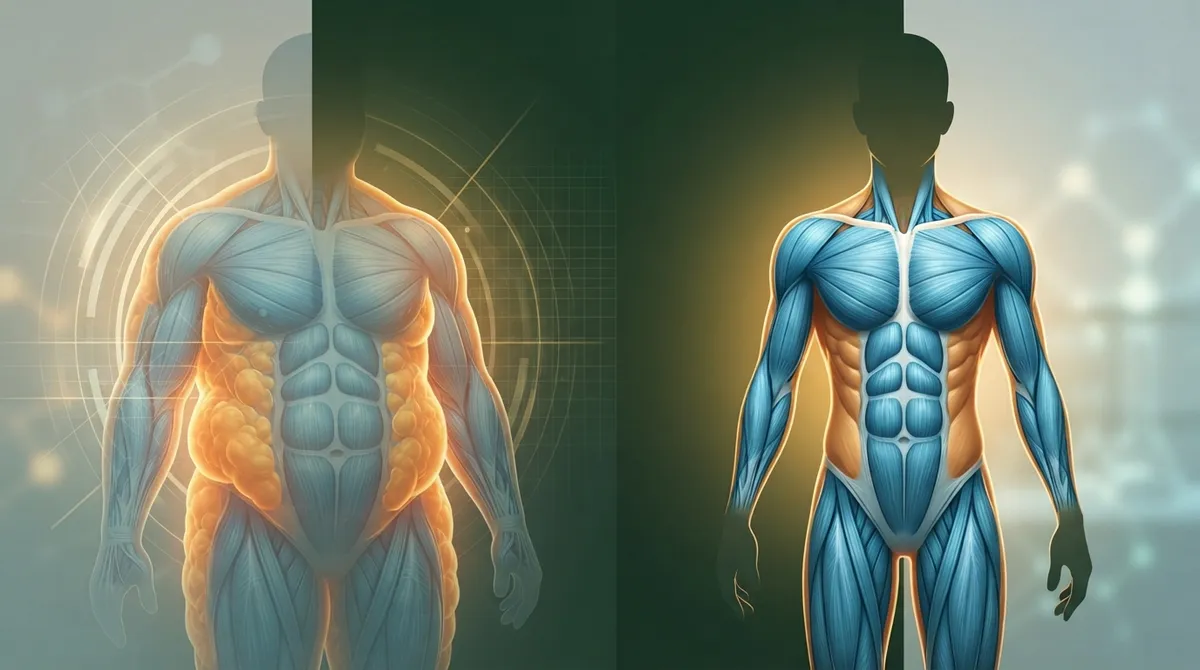
Body composition is simply the breakdown of what makes up your total body weight. This includes fat mass, lean mass (muscle, organs, water), skeletal muscle, visceral fat around your organs, and bone mineral content. Two people can weigh exactly the same and look completely different because their composition is different.
Your bathroom scale can’t tell fat from muscle. It just gives you one number. That’s why so many people get discouraged during weight loss, they’re losing fat and gaining muscle tone, but the scale barely budges. If you want a deeper primer on how peptides work in the body, check out this guide on what peptides actually are before diving deeper.

2. Why Peptide Therapy Changed the Weight Loss Conversation
Peptides like semaglutide and tirzepatide work differently than older weight loss drugs. These are incretin-based therapies. Semaglutide is a GLP-1 receptor agonist, and tirzepatide combines GIP and GLP-1 activity. Both reduce appetite and help you eat less without constant hunger battles.
The result? Substantial weight loss that is mostly fat loss. But here’s the honest truth: some lean mass loss happens too. That doesn’t mean you’re doomed to lose muscle. It means you need a smart plan alongside your treatment. Curious which options might fit your goals? This breakdown of which weight loss peptides actually work is a great next read.
The Numbers Behind Semaglutide’s Effect on Your Body
In the STEP 1 clinical trial, researchers used DXA scans to measure exactly what semaglutide users lost. Body weight dropped by about 14.9% after 68 weeks. Fat mass fell by roughly 19.3%. Lean mass dropped about 9.7%.
Here’s the encouraging part: because fat mass dropped more than lean mass, the proportion of lean mass in the body actually went up. You’re carrying less fat and a healthier ratio of muscle to fat, even though some lean tissue was lost in absolute terms.
What Tirzepatide Does Differently
The SURMOUNT-1 trial gave us even more detail. After 72 weeks, tirzepatide users saw body weight drop by 21.3%. Fat mass dropped a huge 33.9%. Lean mass dropped 10.9%.
Breaking it down further, about 74% of the weight lost was fat, and 26% was lean mass. Compare that to people who lost weight through lifestyle changes alone (roughly 75% fat, 25% lean), and you’ll see the ratios are remarkably similar. This tells us peptide-driven weight loss isn’t wildly different from natural weight loss in terms of what gets burned.
| Trial | Medication | Duration | Body Weight Change | Fat Mass Change | Lean Mass Change |
|---|---|---|---|---|---|
| STEP 1 | Semaglutide 2.4mg | 68 weeks | -14.9% | -19.3% | -9.7% |
| SURMOUNT-1 | Tirzepatide (pooled doses) | 72 weeks | -21.3% | -33.9% | -10.9% |
| SURPASS-3 (MRI) | Tirzepatide | 52 weeks | -10.4% | Proportional to weight loss | Improved muscle quality |
3. Lean Mass Loss Doesn’t Automatically Mean Muscle Loss
This is a big point of confusion, and honestly, it’s understandable. Lean mass isn’t just muscle. It includes organs, connective tissue, water, and skeletal muscle all bundled together. So when a study says “lean mass decreased,” that doesn’t mean you’re losing pure muscle.
A separate analysis of the STEP 1 data found about 10.4 kg of fat mass loss compared to 6.9 kg of lean soft tissue loss, with lean tissue making up roughly 40% of total weight lost in that particular subgroup. Numbers shift depending on how researchers define and measure things, which is exactly why working with a knowledgeable provider matters so much.
4. What Tirzepatide’s Muscle Quality Research Reveals
Here’s something exciting from the SURPASS-3 MRI substudy. Researchers found that while muscle volume did decrease proportionally with weight loss, muscle quality actually improved. That means less fat was infiltrating the muscle tissue itself.
Think of it like this: your muscles may get slightly smaller, but they’re becoming “cleaner” and more efficient, with less fatty tissue mixed in. This is a nuanced finding, and it’s one reason experts now say we should look at muscle quantity and muscle quality separately, not just as one combined number.
5. Steps to Protect Your Muscle During Peptide Therapy
You don’t have to just accept lean mass loss as inevitable. There are proven ways to protect your muscle while your body burns fat. Here’s a simple, practical approach we recommend to clients:
- Start resistance training two to three times per week, even bodyweight exercises count
- Increase your protein intake to support muscle repair and growth
- Follow a gradual dose escalation plan instead of jumping to high doses quickly
- Stay hydrated, since dehydration can skew body composition readings
- Get regular check-ins with your provider to track your progress accurately
- Track strength and physical function, not just weight on the scale
These steps aren’t complicated, but they do require consistency. If you’re just getting started, this article on how to start peptide therapy safely walks through the basics in a friendly, approachable way.
6. How to Actually Measure Body Composition Changes
Not all measurement tools are created equal. Here’s a quick rundown of your options:
- DXA scans: The gold standard used in clinical trials, measures fat mass, lean tissue, and bone density with high accuracy
- Bioelectrical impedance (BIA): Useful for tracking trends over time, but sensitive to hydration levels and time of day
- Scale weight alone: Cannot tell you anything about what type of tissue you’re losing
- Waist circumference: A simple, low-cost way to track visceral fat changes at home
- Skinfold calipers: Affordable but requires practice for consistent results
For the most accurate picture, many clients pair periodic DXA scans with at-home BIA tracking. This combination gives you both precision and convenience between formal check-ins.
7. Factors That Influence Your Individual Results
No two bodies respond identically to peptide therapy. Several factors shape your personal body composition outcome:
- Your starting body size and composition
- Age and biological sex
- Whether you have diabetes or insulin resistance
- Dose and how long you’ve been on treatment
- How fast you’re losing weight
- Diet quality, especially protein intake
- Physical activity level, especially resistance training
- Hydration status at the time of any measurement
This is exactly why cookie-cutter treatment plans don’t work well. At Allura Longevity, every plan starts with real blood work through LabCorp, so your provider can tailor dosing and recommendations to your actual biology, not a generic template.
8. Visceral Fat: The Hidden Health Risk Peptides Target Well
Visceral fat is the fat that wraps around your internal organs. It’s linked to higher risks of heart disease, type 2 diabetes, and inflammation. The encouraging news is that GLP-1 and GIP/GLP-1 therapies appear to preferentially reduce this type of fat.
According to a body-composition review, these peptide therapies generally maintain or even improve the proportion of lean mass while specifically targeting visceral adipose tissue. That’s a meaningful health win that goes beyond just looking leaner in the mirror.
9. What Happens to Body Composition After Stopping Treatment
This is one of the most common questions we hear. Stopping semaglutide or tirzepatide can lead to appetite returning to previous levels, which often means some weight regain. Without continued healthy habits, that regained weight can lean more toward fat than the muscle you worked hard to preserve.
This is why a long-term, sustainable plan matters so much more than a quick fix. Many of our clients transition to lower maintenance doses or focus heavily on strength training and nutrition once they’ve hit their goals, protecting the composition improvements they’ve earned.
10. Approved Medications vs. Compounded Peptides
It’s important to understand the difference between FDA-approved peptide products and compounded or research-use versions. Approved products go through rigorous testing for safety and dosing accuracy. Compounded versions can vary in quality depending on the pharmacy and sourcing.
Claims that any peptide “selectively builds muscle” or “guarantees fat-only weight loss” simply aren’t supported by current clinical evidence. Be wary of any provider making those promises. According to the what are peptides resource from WebMD, peptides are powerful tools, but they work best within a well-monitored, evidence-based plan.
11. Why Working With a Licensed Provider Matters So Much
Body composition tracking and peptide dosing aren’t a guessing game, they require medical oversight. A licensed provider can interpret your blood work, adjust your dose safely, and help you understand what your body composition numbers actually mean for your health.
At Allura Longevity, care begins with a simple $50 virtual consultation and blood work through LabCorp. From there, our team, led by board-certified Family Nurse Practitioner Ashley, builds a personalized six-month plan delivered right to your door. It’s convenient, medically sound, and designed around your actual biology, not a one-size-fits-all template.
12. Building Your Personalized Body Composition Plan
Here’s a simple roadmap for anyone starting peptide therapy with body composition goals in mind:
- Get baseline blood work and, if possible, a DXA scan or BIA reading
- Start your peptide therapy under medical supervision with a gradual dose increase
- Add resistance training at least twice weekly from day one
- Prioritize protein at every meal to support lean tissue
- Schedule follow-up labs and composition checks every few months
- Adjust your plan with your provider based on real results, not guesswork
This approach protects your muscle, targets stubborn fat, and gives you measurable proof of progress beyond the scale. For those exploring options for fat loss specifically, this list of peptides for fat loss that really work offers some great additional context.
Comparing Semaglutide and Tirzepatide Side by Side
| Feature | Semaglutide | Tirzepatide |
|---|---|---|
| Mechanism | GLP-1 receptor agonist | Dual GIP/GLP-1 receptor agonist |
| Average fat mass loss | ~19.3% (STEP 1) | ~33.9% (SURMOUNT-1) |
| Average lean mass loss | ~9.7% (STEP 1) | ~10.9% (SURMOUNT-1) |
| Best studied use | Weight management, type 2 diabetes | Weight management, type 2 diabetes |
| Delivery | Weekly injection | Weekly injection |
Both medications show strong results, and the right choice depends on your goals, health history, and provider guidance. If you’re weighing your options, this comparison on GLP-1 vs. dual-agonist peptides dives even deeper into the differences.
Bringing It All Together
Understanding body composition transforms how you think about weight loss. It’s not about chasing a number, it’s about building a healthier ratio of fat to muscle, protecting your strength, and supporting your long-term vitality. The research on semaglutide and tirzepatide is clear: real fat loss is achievable, and with the right habits, you can protect the muscle you’ve worked hard to build. For a deeper look at the science behind these mechanisms, the National Library of Medicine offers excellent peer-reviewed research on peptide therapies and metabolic health.
Whether you’re a busy professional looking for convenient at-home care, a biohacker who wants precise lab-based tracking, or simply someone ready to feel like yourself again, body composition is the key metric that tells the real story. Ready to get personalized guidance backed by real blood work and licensed medical oversight? Request a consultation with our team today, spots fill up each month, and we’d love to help you build a plan that actually fits your body and your goals.
FAQs
Q: What is body composition, and how is it different from body weight or BMI?
A: Body composition looks at what your weight is actually made of, like fat, muscle, water, and bone, instead of just one number on a scale. BMI only compares your height and weight, so it can’t tell the difference between a muscular person and someone carrying extra fat. That’s why we always encourage clients to think beyond the scale and focus on real composition changes.
Q: Can peptide therapy cause muscle loss?
A: Clinical trials do show some lean mass loss alongside fat loss, but lean mass includes water, organs, and connective tissue, not just muscle. With resistance training and enough protein, most people preserve meaningful muscle function while losing fat. It’s really about pairing your peptide plan with smart habits, not something to fear.
Q: How much of the weight lost with GLP-1 therapy comes from fat versus lean mass?
A: In the SURMOUNT-1 tirzepatide trial, about 74% of weight lost was fat and 26% was lean mass, which is actually very close to natural lifestyle weight loss ratios. Semaglutide studies show similar patterns, with fat mass dropping more sharply than lean mass. So you’re mostly losing what you want to lose, fat.
Q: Is DXA or bioelectrical impedance better for tracking body composition changes?
A: DXA scans are the gold standard and give the most accurate picture of fat, muscle, and bone. Bioelectrical impedance is great for tracking trends at home between formal scans, though it’s sensitive to hydration and timing. We often recommend using both together for the clearest, most reliable results.
Q: What happens to body composition after stopping semaglutide or tirzepatide?
A: Appetite often returns to previous levels once you stop treatment, which can lead to some weight regain if habits aren’t maintained. That regained weight tends to skew more toward fat unless you keep up resistance training and good nutrition. A gradual transition plan with your provider really helps protect your hard-earned progress.





