
Key Takeaways
-
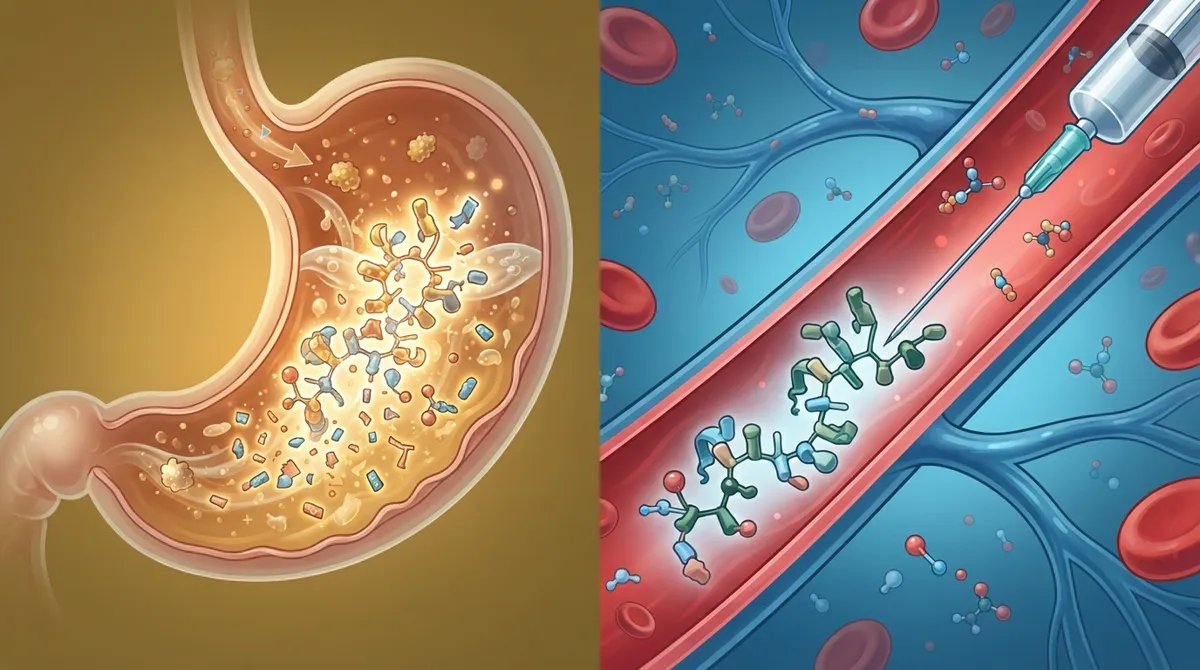
Most peptides have bioavailability below 1% when taken orally due to stomach acid, digestive enzymes, mucus layers, and intestinal barriers; injections bypass these obstacles entirely for more predictable results.
-
Oral peptides require completely different formulations, doses, and special absorption enhancers (like SNAC technology) compared to injectable versions; you cannot simply convert an injectable dose into an oral one.
-
Oral semaglutide (Rybelsus) is currently the only FDA-approved oral peptide with proven absorption; most other therapeutic peptides still require injection due to lack of effective oral formulations.
-
Daily oral peptides often require strict adherence rules (empty stomach, 30+ minute wait times before eating), while weekly injectable peptides may offer greater convenience despite requiring needle administration.
-
Safety depends on the specific peptide product quality and regulatory oversight, not the delivery method; both oral and injectable peptides carry risks if sourced from unverified sellers without medical supervision.
-
Your choice between injections and oral peptides should be based on your specific treatment goal, available formulations, lifestyle habits, digestive health, and personalized medical assessment with blood work data.
If you’ve been researching peptide therapy, you’ve probably wondered: do I really need needles? It’s a fair question. Many of us would love to swap injections for a simple pill. But when it comes to peptide therapy, the answer isn’t as simple as picking your favorite option off a menu.
Peptides are delicate little molecules, and how you take them matters a lot. Some work beautifully as injections but fall apart (literally) in your stomach. Others have been carefully engineered to survive the trip through your gut. Understanding these differences can save you time, money, and frustration on your wellness journey.
In this guide, we’ll break down exactly how peptide injections and oral peptides stack up against each other. We’ll cover the science in plain language, share real facts, and help you figure out which approach fits your goals. Whether you’re a busy professional squeezing in self-care or a longtime biohacker who tracks every metric, this one’s for you.

1. Your Gut Is Tough on Peptides (Here’s Why Injections Often Win)
Think of your stomach as a tiny demolition zone. Acid, enzymes, and mucus all work together to break down anything you eat, including peptides. This is great for digesting your lunch but terrible for keeping a peptide molecule intact.
According to a 2024 scientific review, four major barriers stand between an oral peptide and your bloodstream: harsh stomach acid, digestive enzymes, a thick mucus layer, and the intestinal wall itself. Most peptides simply can’t get past all four. That’s why injections, which go straight under the skin or into a vein, tend to be the more reliable choice for many therapies. You can learn more about how these molecules work in our article on what peptides are and how they function in the body.
Why Bioavailability Matters
Bioavailability just means how much of a substance actually makes it into your bloodstream to do its job. For oral peptides, this number is often shockingly low. Research shows that whole-peptide oral bioavailability is typically under 1%, and sometimes under 0.1%, depending on the specific peptide and formulation used.
Injections skip this whole obstacle course. When a peptide goes under your skin, it heads straight into circulation. That means more predictable results and less guesswork about dosing.
2. Oral Peptides Aren’t Automatically Weaker Copies of Injections
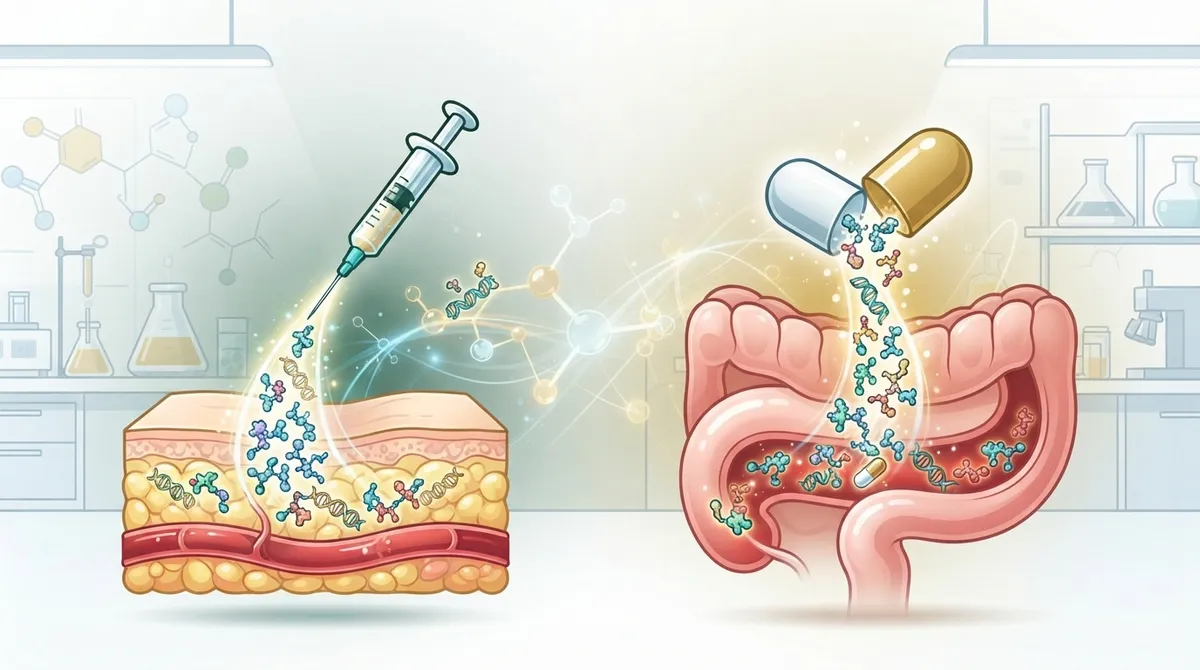
Here’s something important to understand: you can’t just take an injectable dose and turn it into a pill. Oral peptides need entirely different formulations, doses, and delivery technology to work at all.
Drug makers have to get creative. They use special coatings, absorption enhancers, and precise timing instructions to help a tiny fraction of the peptide survive the journey through your gut. This is a completely different science than formulating an injectable version.
The SNAC Breakthrough
The best example of successful oral peptide engineering is oral semaglutide. Researchers found a way to help this GLP-1 peptide survive digestion using an absorption enhancer called SNAC, short for sodium N-(8-[2-hydroxybenzoyl]amino)caprylate. This compound helps protect the peptide and assists it in crossing the stomach lining.
Oral semaglutide, sold under the brand name Rybelsus, received FDA approval in 2019 for improving blood sugar control in adults with type 2 diabetes. It’s a genuine success story, but it’s also the exception rather than the rule. Most peptides don’t have an equivalent oral breakthrough yet.
3. Comparing Injectable and Oral Peptide Therapy Side by Side
Sometimes a simple side-by-side comparison makes everything click. Here’s how these two delivery methods stack up across the factors that matter most.
| Factor | Peptide Injections | Oral Peptides |
|---|---|---|
| Bioavailability | Higher, more predictable | Often below 1%, varies widely |
| GI Degradation Risk | Bypassed entirely | High risk without special formulation |
| Dosing Frequency | Can be daily or weekly (long-acting options) | Usually daily, with strict timing rules |
| Convenience | Requires needle comfort | No needles, but strict food/water rules |
| Clinical Evidence | Well established for many peptides | Limited to specific approved products |
| Administration Complexity | Moderate (injection technique needed) | Can be complex (empty stomach, wait times) |
As you can see, neither option is universally “better.” It really depends on the specific peptide and your personal preferences. If you want to explore how a licensed provider builds a plan around your needs, our guide on how to start peptide therapy safely is a great next read.
4. Dosing Frequency: The Convenience Factor People Forget
When people think about convenience, they usually picture needles versus no needles. But dosing frequency matters just as much, especially for busy professionals.
Some injectable peptides are long-acting, meaning you only need one dose per week. Oral peptides, on the other hand, commonly require daily dosing along with strict rules about food and timing.
What Rybelsus Requires
Take oral semaglutide as an example. According to product labeling, you must take it on an empty stomach with no more than about 4 ounces of plain water. Then you wait at least 30 minutes before eating, drinking anything else, or taking other oral medications.
That’s a lot of rules to follow every single day. Compare that to a once-weekly injection, and suddenly the “no needle” option doesn’t seem quite as convenient for everyone. This is exactly the kind of tradeoff our providers walk clients through during a personalized consultation.
5. Which Peptides Actually Come in Oral Form?
Not every peptide has a legitimate oral version. In fact, very few do. Here’s a quick rundown of what’s currently available and backed by real clinical evidence.
- Oral semaglutide (Rybelsus): FDA-approved in 2019 for type 2 diabetes, using SNAC technology for absorption.
- Injectable GLP-1 peptides: Includes exenatide, liraglutide, lixisenatide, dulaglutide, and injectable semaglutide, with dosing ranging from daily to weekly.
- Most other therapeutic peptides: Still require injection due to lack of oral formulations with proven absorption.
If you’re curious about specific weight-related peptides and how they’re typically delivered, check out our breakdown of which weight loss peptides actually work. We also cover fat-loss-specific options in our article on peptides for fat loss that really work.
6. Safety Isn’t About the Route, It’s About the Product
Here’s a myth we want to bust right away: oral peptides are not automatically safer just because they avoid needles. Safety really comes down to the specific peptide, the dose, the formulation, and where you get it from.
FDA-approved products have gone through rigorous testing for specific uses. Compounded or unapproved peptide products, whether injected or swallowed, may carry different risks. These can include uncertain potency, contamination concerns, and limited clinical research.
Red Flags to Watch For
- Peptides labeled “research use only” being marketed for human wellness use
- No licensed prescriber or medical oversight involved
- Vague sourcing with no verifiable pharmacy information
- Claims that sound too good to be true for anti-aging or fat loss
- No mention of blood work or individualized health assessment
Understanding the difference between properly regulated products and questionable ones is crucial. Our article comparing FDA-approved versus compounded peptides dives deeper into this topic. According to a peer-reviewed source published through the National Library of Medicine, product quality and regulatory oversight play a major role in peptide therapy safety outcomes.
7. Side Effects: Needles vs Swallowing, What to Expect
Every method of taking medicine comes with its own set of possible downsides. Let’s compare what you might experience with each option.
| Potential Issue | Injections | Oral Peptides |
|---|---|---|
| Site Reactions | Bruising, redness, mild discomfort | Not applicable |
| Digestive Effects | Rare | Nausea, upset stomach possible |
| Infection Risk | Low, with proper technique | Not applicable |
| Storage Needs | Often requires refrigeration | Usually room temperature |
| Interaction Risk | Lower | Higher due to timing with food/other meds |
Neither list is scary, honestly. Most people tolerate both methods well when they’re guided by a licensed provider. If injection technique is a concern for you, our guide on how to prepare for safe, effective peptide injections walks through simple steps to make the process comfortable.
8. How to Choose the Right Route for Your Goals
So how do you actually decide? Here’s a simple step-by-step approach we recommend to clients.
- Identify your treatment goal. Are you focused on weight loss, muscle recovery, energy, or hormone support? Different goals point toward different peptides.
- Check what’s actually available orally. Remember, most peptides simply don’t have a proven oral version yet.
- Consider your lifestyle. If you travel often or hate rigid timing rules, weekly injections might suit you better than daily oral dosing.
- Review your health history. Digestive issues can affect oral absorption even further, while certain skin conditions might make injections trickier.
- Get proper blood work done. A knowledgeable provider will use your labs to match the right peptide and delivery method to your body’s needs.
- Work with a licensed provider. Self-treating with unverified products is where most safety problems happen.
This is exactly the kind of decision-making process that a good telehealth provider should walk you through, not leave you to figure out alone. According to the WebMD overview of what peptides are, individualized medical guidance is key to using these compounds safely and effectively.
Why Personalized Guidance Beats Guesswork Every Time
We get it. Comparing injections and oral peptides on your own can feel like reading a foreign language. That’s exactly why Allura Longevity built its entire model around personalized, physician-guided care.
Every client starts with blood work through LabCorp, so your provider actually knows what your body needs before recommending anything. From there, our board-certified Family Nurse Practitioner, Ashley, and her team design a custom six-month plan just for you. Peptides show up right at your door, ready for simple at-home use, whether that means injectable or oral, depending on what’s clinically appropriate for your goals.
This approach removes the guesswork completely. You’re not trying to self-diagnose which peptide to take or how to take it. You have a licensed medical professional making that call based on real data about your unique health picture. If you’re interested in comparing peptides for men versus peptides for women, our team can help tailor a plan for either.
Frequently Overlooked Considerations Before You Decide
Before wrapping up, let’s cover a few practical things people often forget to think about.
- Cost differences: Oral formulations with absorption enhancers can sometimes cost more due to specialized manufacturing.
- Insurance coverage: Coverage varies wildly between injectable and oral peptide products, so it pays to check ahead of time.
- Storage and travel: Injectable peptides often need refrigeration, which can complicate travel plans.
- Adherence habits: Be honest with yourself. Can you remember to take a pill on an empty stomach every single morning?
These little details can make a big difference in how consistent you are with your treatment, which directly affects your results. For more on building sustainable habits around your therapy, take a look at our piece on how to lose weight with peptide therapy the smart way.
Ready to Get Personalized Guidance?
Choosing between peptide injections and oral peptides doesn’t have to be a solo research project. The right choice depends on your specific peptide, your health goals, and your everyday lifestyle. What works wonders for your neighbor might not be the best fit for you, and that’s perfectly okay.
At Allura Longevity, we believe great results start with a real conversation and real data, not guesswork. Our licensed providers review your blood work, listen to your goals, and build a plan designed around you specifically. With telehealth available across Florida, Georgia, Texas, Connecticut, Indiana, Maryland, New York, and California, quality care is closer than you think.
Spots fill up fast each month, so if you’ve been on the fence, now’s a great time to take the next step. Request a consultation today and let’s figure out the right path for your body, together. You can also call us directly at (813) 510-6277 to speak with our team.
FAQs
Q: Are peptide injections more effective than oral peptides?
A: For most peptides, yes! Injections bypass your digestive system entirely, so more of the peptide actually reaches your bloodstream. Oral peptides can still work, but only when they use special absorption technology, like the SNAC enhancer in oral semaglutide.
Q: Can I just convert my injectable peptide dose into an oral one?
A: Nope, and this is a common misconception. Oral peptides need completely different formulations and doses because so much gets lost during digestion. Your provider will calculate an appropriate oral dose separately, not simply convert your injectable amount.
Q: Which peptides are actually available in oral form right now?
A: Oral semaglutide, sold as Rybelsus, is the best-known example and was FDA-approved back in 2019. Most other therapeutic peptides don’t yet have a proven, approved oral version, so injections remain the standard for many treatments.
Q: Are oral peptides safer than injections since there’s no needle?
A: Not necessarily. Safety really depends on the specific peptide, its quality, and whether it’s properly regulated, not just how you take it. Both routes carry their own set of pros and cons, so working with a licensed provider matters more than the delivery method alone.
Q: How should I take oral semaglutide for the best results?
A: Take it first thing in the morning on an empty stomach with a small sip of plain water, no more than about 4 ounces. Then wait at least 30 minutes before eating, drinking anything else, or taking other pills, since this timing really affects how well it absorbs.





