
Key Takeaways
-
No peptide is FDA-approved to extend women's healthspan or treat menopause, and current evidence does not show wellness peptides prevent aging.
-
Approved peptide-based medicines like teriparatide (osteoporosis) and GLP-1 drugs (diabetes, weight) are approved for specific conditions, not general anti-aging use.
-
Many popular wellness peptides, such as BPC-157 and TB-500, rely on animal or lab studies, and the few human studies are very small, uncontrolled, or pilot-scale.
-
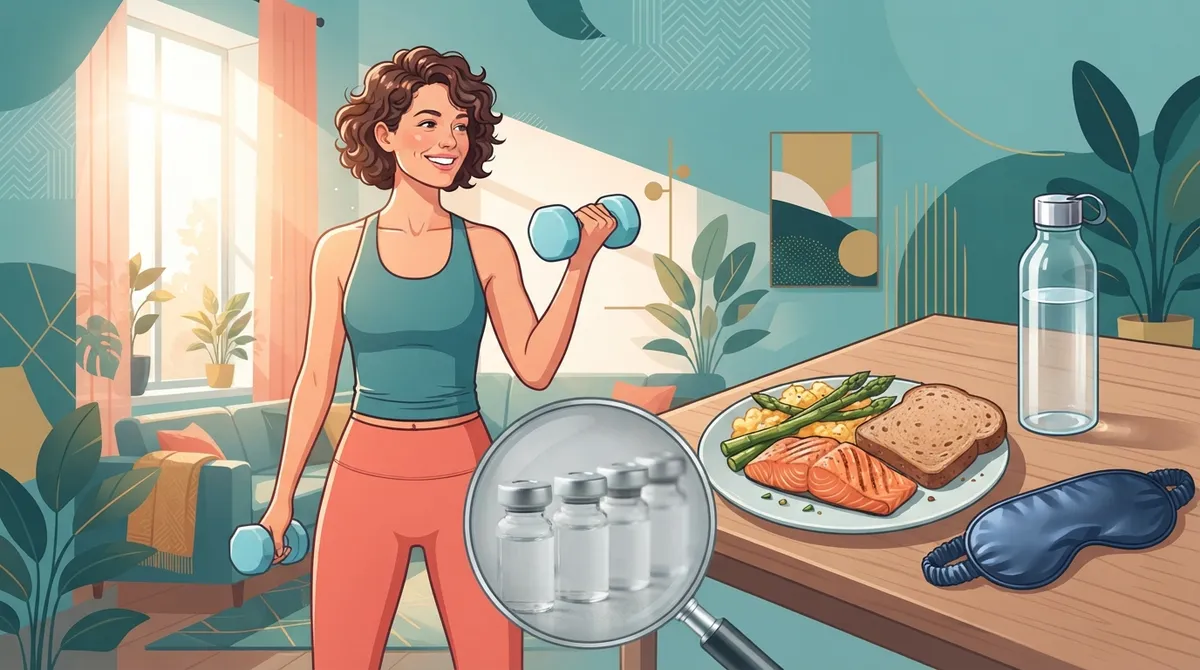
Proven healthspan supports include strength training, adequate protein, good sleep, stress care, regular screenings, and approved menopause or osteoporosis treatments when appropriate.
If you’ve scrolled social media lately, you’ve probably seen bold promises about peptides and aging. So, are there peptides for women’s healthspan? It’s a fair question, and you deserve a straight, friendly answer. Healthspan simply means the years you live in good health, with energy, strength, and independence. It’s not a medical diagnosis, and it’s not something any peptide has been proven to extend.
Here’s the honest picture. Peptides are a huge family of molecules, and some are real, FDA-approved medicines for specific conditions. But no peptide is FDA-approved to extend women’s healthspan or treat menopause. Many wellness peptides have limited human research behind them.
That doesn’t mean you’re out of options. It means you need a smart way to sort fact from hype. In this guide, you’ll learn what the evidence says, which questions to ask, and how to build a safe, lab-guided plan with licensed providers. Whether you’re a data-driven optimizer, a busy professional, or simply curious, let’s walk through it together.

What Does Healthspan Really Mean for Women?
Lifespan is how long you live. Healthspan is how long you live well. Think of it as the number of years you feel strong, sharp, and independent.
For women, healthspan often shifts around perimenopause and menopause. Hormone changes can affect sleep, mood, bone density, muscle, skin, and metabolism. That’s why so many women ask about peptides during midlife.
Here’s an important point. Healthspan is a goal, not a prescribable condition. Doctors treat specific problems, like bone loss, hot flashes, or high blood sugar. Healthspan improves when those pieces are supported over time.
The Main Pillars of Women’s Healthspan
- Bone health: Bone loss speeds up after menopause.
- Muscle and strength: Muscle supports metabolism, balance, and independence.
- Metabolic health: Blood sugar, weight, and cholesterol all play a role.
- Sleep and mood: Rest and mental health drive daily function.
- Heart and brain health: Prevention matters long before symptoms show up.

Are There Peptides for Women’s Healthspan? The Short Answer
Here is the clear answer. There is no FDA-approved peptide therapy for women’s healthspan, and none approved for menopause or hot flashes. Current evidence does not show that wellness peptides prevent aging or broadly improve women’s healthspan.
That said, peptides are not a single thing. Some are well-studied medicines for specific diagnosed conditions. Others are experimental. The difference matters a lot. If you’d like a plain-language primer first, our guide on what peptides are in 2026 is a great starting point.
Approved Peptide-Based Medicines Do Exist
Some peptide-based drugs are FDA-approved for particular conditions. For example, teriparatide is a peptide-based osteoporosis medicine used in eligible patients. GLP-1 medicines are another well-known group used for diabetes and weight management.
But here’s the catch. Approval for one condition does not make a peptide a general anti-aging tool. Teriparatide treats bone loss in certain patients. It is not a menopause fix or a longevity shortcut.
Approved Medicines vs. Wellness Peptides
This is the most useful distinction you can learn. It helps you read any clinic’s claims with a clear head.
| Category | Examples | Regulatory Status | Evidence Level |
|---|---|---|---|
| Approved peptide-based medicines | Teriparatide (osteoporosis), GLP-1 medicines (diabetes, weight) | FDA-approved for specific conditions | Large clinical trials for those uses |
| Wellness or experimental peptides | BPC-157, CJC-1295, ipamorelin, TB-500 | Not FDA-approved for anti-aging or healthspan | Mostly preclinical or small human studies |
| Compounded versions | Pharmacy-prepared peptide injections | Not FDA-approved; not reviewed for safety, effectiveness, or quality | Varies widely |
For a deeper comparison, see FDA-approved vs. compounded peptides. It explains why a prescription alone doesn’t prove a product is risk-free.
What the Research Says About Popular Wellness Peptides
Let’s be real about the data. Peptides like BPC-157, CJC-1295, ipamorelin, and TB-500 are popular in wellness circles. But strong human evidence for the benefits often advertised, such as injury recovery, fat loss, muscle gain, or longevity, is thin.
Much of what gets cited comes from animal or lab studies. Human data tends to be small. A few examples from recent reviews show how limited things can be:
- One interstitial-cystitis pilot study enrolled just 12 women.
- A knee-pain case series described 16 patients, with no control group.
- One intravenous safety pilot involved only two healthy adults.
Small, uncontrolled reports can’t prove a peptide caused an improvement. They’re interesting clues, not proof. If you’re curious about individual options, you can read about BPC-157 facts, ipamorelin benefits and safety, and TB-500 facts.
Safety and Regulation Concerns
The FDA has raised concerns about certain peptides considered for compounding. These include possible immune reactions, impurities, and a lack of human safety data. The FDA’s 2023 actions put several peptides under compounding-safety review.
Regulatory status can change. Always check current FDA guidance rather than relying on a seller’s claims. Our article on whether peptide therapy is safe goes deeper on this.
What Actually Supports Women’s Healthspan
Good news: plenty of proven tools exist. Evidence-based care depends on your symptoms, history, and goals. A clinician should review all of it before any treatment.
Evidence-Based Options to Discuss With Your Provider
- Menopause hormone therapy: Approved options can ease hot flashes and night sweats for the right candidates. See our guide to the safest hormone therapy options for women.
- Nonhormonal medicines: Some prescriptions help with hot flashes when hormones aren’t a fit.
- Osteoporosis treatment: Approved bone medicines can lower fracture risk in eligible patients.
- Strength training and protein: These help protect muscle and bone as you age.
- Sleep, stress, and nutrition support: Simple habits make a big difference.
- Preventive care: Screenings, blood pressure checks, and lab work catch problems early.
Curious how the two approaches compare? Read MHT vs. peptides for menopause to see where each one fits.
How to Judge Any Peptide Claim: A 6-Step Checklist
Use this simple list whenever you hear a big promise. It works for ads, influencers, and clinic websites alike.
- Ask what condition it treats. If the answer is “everything,” be cautious.
- Check FDA status. Is it approved, compounded, or neither? Verify it yourself.
- Look for human trials. Animal studies and testimonials are not enough.
- Check the sample size. A study of 12 or 16 people can’t settle a question.
- Confirm a licensed provider reviews you. Real care starts with your history and labs.
- Watch for guarantees. No honest provider promises to reverse aging.
You can also use our guide to verifying FDA approval and our list of consultation questions to ask before you commit.
Where Personalized Peptide Care Can Fit
So where does a clinic like Allura Longevity come in? A responsible telehealth provider doesn’t promise to extend your life. Instead, it uses labs and your goals to build a plan around real, specific needs. Those may include energy, sleep, recovery, skin, metabolism, or weight management.
At Allura Longevity, care starts with a $50 virtual consultation. You complete blood work through LabCorp, and a licensed provider reviews your results. Then you get a customized six-month plan, with ongoing monitoring and adjustments. Peptides are delivered to your home, so care fits a busy schedule.
Here is a quick look at how a lab-guided process compares with going it alone.
| Feature | Lab-Guided Telehealth Care | DIY or Online Marketplace |
|---|---|---|
| Provider review | Licensed provider reviews history and labs | Often none |
| Personalization | Based on your blood work and goals | One-size-fits-all |
| Monitoring | Ongoing check-ins and adjustments | Rarely offered |
| Product sourcing | Pharmacy-prepared, provider-directed | Unclear quality and purity |
| Claims | Honest about limits of evidence | Often exaggerated |
If you’re comparing approaches, how to start peptide therapy safely walks you through the first steps. You can also explore options built for peptides for women through our main site.
Setting Realistic Expectations
Let’s keep it honest and encouraging. Peptides are not a magic switch. For some women, a well-chosen, medically supervised plan may support areas like energy, sleep, recovery, or body composition. But these are targeted goals, not guaranteed healthspan gains.
Results also vary. Your starting point, habits, and health history all matter. A good provider will tell you that upfront. To see what a realistic timeline looks like, read how long peptide therapy results take.
Smart Habits to Pair With Any Plan
- Lift weights two to three times a week.
- Eat enough protein and fiber.
- Protect your sleep schedule.
- Keep up with checkups, mammograms, and bone density screens.
- Track labs over time so you can see real trends.
The National Library of Medicine hosts research on peptide science if you like reading the studies yourself. And for a basic overview, what are peptides on WebMD is easy to follow.
Conclusion: A Smarter Way to Think About Women’s Healthspan
So, are there peptides for women’s healthspan? Not in the sense of a proven, approved therapy that extends healthy years. But there are approved peptide-based medicines for specific conditions, and there are careful, personalized ways to support the areas that shape how you feel as you age.
The best path is simple. Ask smart questions, lean on evidence-based care, and work with licensed providers who tell you the truth. If you’d like a plan built around your labs and goals, request a consultation with Allura Longevity. Our licensed team, led by a board-certified Family Nurse Practitioner, serves clients in Florida, Georgia, Texas, Connecticut, Indiana, Maryland, New York, and California. Call (813) 510-6277. Spots for new clients are limited each month, so reach out while you’re thinking about it.
FAQs
Q: Are any peptides FDA-approved for menopause or women’s healthspan?
A: No, there is no FDA-approved peptide therapy for menopause, hot flashes, or extending women’s healthspan. Some peptide-based medicines are approved for specific conditions, like teriparatide for osteoporosis, but that doesn’t make them anti-aging treatments.
Q: Do peptides help with hot flashes, sleep, or libido?
A: The evidence is limited and varies by peptide. Approved hormone and nonhormonal medicines have stronger proof for hot flashes, so it’s worth talking with a licensed provider about what fits your symptoms, history, and goals.
Q: Are compounded peptide injections safe?
A: Compounded drugs are not FDA-approved, and the FDA doesn’t review them for safety, effectiveness, or quality before they’re sold. A prescription doesn’t prove a peptide is risk-free, so choose a provider who is open about sourcing and monitoring.
Q: What can I do right now to support my healthspan?
A: Start with the basics that have strong evidence: strength training, enough protein, good sleep, stress care, and regular screenings. A lab-guided visit with a licensed provider can then help you decide if any added therapy makes sense for you.
Q: How can I tell if a peptide claim is backed by research?
A: Look for human clinical trials with decent sample sizes, not just animal studies or testimonials. Check the FDA status yourself, and be wary of anyone promising to reverse aging or guaranteeing results.





