

Key Takeaways
-
No peptide has strong, replicated clinical evidence or FDA approval for helping people wake up refreshed, despite what online ads and some clinics claim.
-
Waking refreshed depends on sleep duration, sleep quality, circadian timing, medical conditions, and lifestyle habits, so no single peptide can fix it.
-
DSIP has only small, mostly decades-old human studies with conflicting results and is not an approved sleep treatment.
-
CJC-1295 and ipamorelin affect growth hormone pathways, but no controlled human trials show they improve sleep or morning freshness.
-
Waking tired despite enough sleep can signal sleep apnea, thyroid issues, low iron, or hormone changes, so get evaluated before trying any peptide.
-
Start with a consistent sleep schedule, morning light, caffeine cutoff after midday, and bloodwork reviewed by a licensed provider before considering any protocol.
You set the alarm, get your hours in, and still wake up feeling like you ran a marathon in your sleep. Sound familiar? You’re far from alone. Many busy professionals, biohackers, and health-minded adults ask the same question: are there peptides that can help me wake up refreshed?
Here’s the friendly, honest answer. No peptide has strong, replicated clinical proof or regulatory approval for helping people wake up refreshed. Online ads and some clinics say otherwise. The science doesn’t back them up yet. But that’s not the end of the story. Understanding what the research does and doesn’t show helps you make smart choices, avoid wasted money, and find a path that really works.
In this guide, you’ll learn how to think about the best peptides for waking refreshed, what the evidence says about popular options, and how to build a safe, step-by-step plan with a licensed provider. Let’s dig in together.
What Does Waking Refreshed Really Depend On?
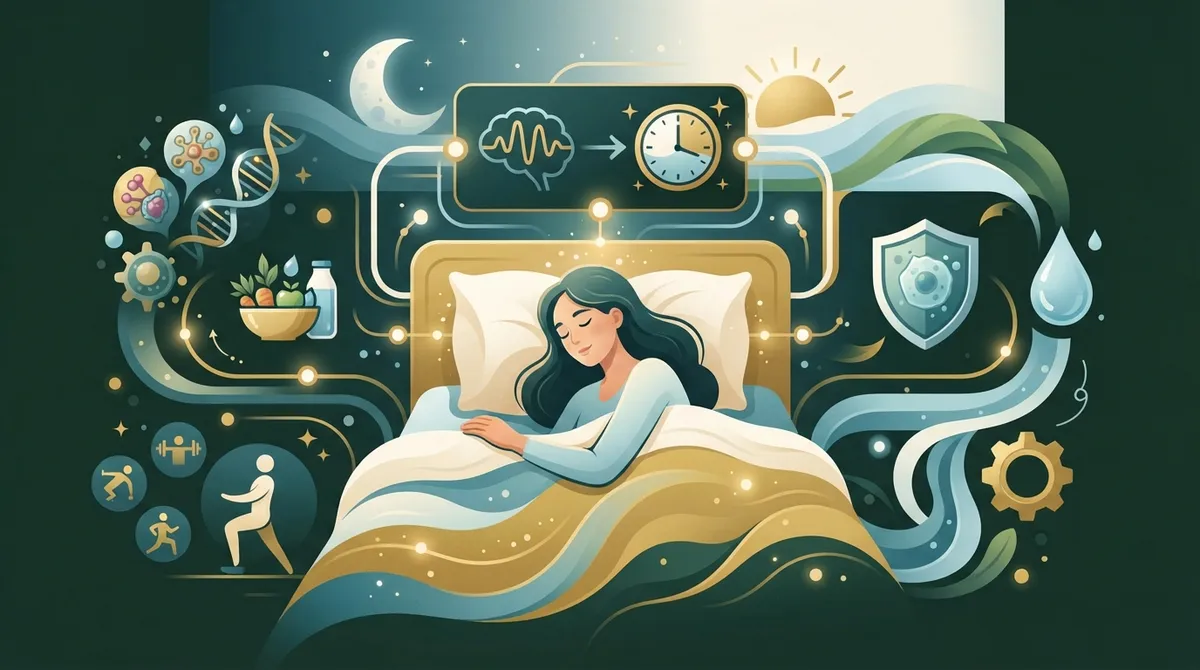
Waking refreshed isn’t a single switch that one molecule can flip. It’s an outcome shaped by many moving parts. Sleep length, sleep quality, body clock timing, stress, and hidden health conditions all play a role.
That’s why the idea of one “best peptide” for waking refreshed can be misleading. A peptide is a short chain of amino acids that acts as a signal in your body. If you want a plain-language refresher, what are peptides is a helpful starting point. Different peptides send different signals, and none of them is an approved sleep drug.
The Main Drivers of Morning Freshness
- Sleep duration: Most adults need seven or more hours.
- Sleep quality: Frequent wake-ups can leave you groggy even after eight hours in bed.
- Circadian timing: Going to bed and waking at inconsistent times can throw off your body clock.
- Medical conditions: Sleep apnea, thyroid problems, low iron, depression, and hormone shifts can all cause tiredness.
- Lifestyle habits: Late caffeine, alcohol, screens, and stress all chip away at rest.
Knowing this puts you in the driver’s seat. Before asking which peptide to try, ask why you’re waking up tired in the first place.

Peptides People Mention for Better Mornings
Three names come up most often when people search for the best peptides for waking refreshed: DSIP, CJC-1295, and ipamorelin. Let’s look at each one honestly, based on current research and FDA materials.
| Peptide | What It Is | Evidence for Waking Refreshed | Regulatory Status |
|---|---|---|---|
| DSIP (delta sleep-inducing peptide) | A small peptide studied for its link to sleep | Small, mostly older human studies with conflicting results | Not an approved sleep treatment |
| CJC-1295 | A growth hormone-releasing hormone analog | No controlled human trials showing better sleep or morning refreshment | FDA notes it is not part of any approved drug and safety data are limited |
| Ipamorelin | A growth hormone secretagogue | No controlled human trials showing better sleep or morning refreshment | Not an FDA-approved sleep medicine |
DSIP: Interesting, But Unproven
DSIP, also called emideltide, was first studied decades ago. A 1983 report described five human studies using intravenous injections under double-blind conditions, and it noted some sleep-related effects. Other controlled studies found weak or no clinically meaningful benefit.
Most human work on DSIP is small and dates back to the 1980s and 1990s. The findings conflict, and there’s no strong modern evidence base. So DSIP is a fascinating research peptide, but it can’t honestly be called a proven way to wake refreshed.
CJC-1295 and Ipamorelin: Growth Hormone Biology, Not Sleep Proof
Some clinics promote CJC-1295 and ipamorelin for sleep or recovery because they influence growth hormone pathways. That sounds logical. Growth hormone release naturally peaks during deep sleep, so people connect the dots.
But biological plausibility isn’t the same as proof. Searches of the available research found no controlled human trials showing that either compound improves sleep or helps people wake refreshed. FDA materials also state that the CJC-1295 substances they evaluated are not components of FDA-approved drugs. They note that clinical studies were small and short, which limits what we can say about long-term safety.
If you’re curious about how these compounds work in a clinical setting, you can read more in Ipamorelin Peptide Therapy: Benefits, Dosing & Safety and How to Use CJC-1295 Peptides Safely for Results.
How to Separate Evidence From Marketing
It’s easy to get swept up in glowing reviews. A little skepticism keeps you safe and saves you money. Use this simple checklist whenever you see a bold peptide claim.
- Ask what the claim is based on. Is it a controlled human trial, an animal study, or a customer testimonial?
- Check the study size and length. Small, short studies can’t prove long-term safety or benefit.
- Look at regulatory status. Is the product FDA-approved for that use, or is it compounded or marketed as a research chemical?
- Watch for promises of guaranteed results. Real medicine rarely guarantees outcomes.
- See who is guiding you. A licensed provider should review your history and labs first.
For a deeper look at how to read the research, the National Library of Medicine is a trustworthy place to start. You can also explore What Does “Science-Backed” Really Mean for Longevity Peptides? for plain-language help.
The Risks Worth Knowing Before You Try
Peptides can feel gentle because they’re made from amino acids. That doesn’t mean they’re risk-free. Safety matters most when evidence is thin.
- Limited long-term data: Short studies in healthy adults can’t show what happens after months or years.
- Hormone pathway effects: Growth hormone secretagogues affect the GH and IGF-1 axis, so medical screening matters.
- Product quality: Compounded or research-marketed products can vary in purity and labeling.
- Masking a real problem: Chasing a peptide fix may delay care for sleep apnea, insomnia, or another treatable issue.
To weigh these tradeoffs, see How to Weigh the Risks of Peptide Therapy Safely in 2026 and 7 Peptide Therapy Side Effects You Should Know.
How to Build a Smarter Plan for Waking Refreshed
Here’s the good news. You can take real, practical steps today. This sequence works for health optimizers, biohackers, and busy professionals alike.
Step 1: Track Your Sleep and Mornings
Spend two weeks noting bedtime, wake time, caffeine, alcohol, and how you feel on waking. Wearables can help, but a simple notebook works too. Patterns often jump out fast.
Step 2: Fix the Basics First
Before any peptide, tighten the foundations. Keep a steady sleep schedule. Get morning light. Cut caffeine after midday. Keep your bedroom cool and dark. Evidence-based approaches like CBT-I (cognitive behavioral therapy for insomnia) have strong support, and you can compare options in Sleep Peptides vs. CBT-I: Which Wins for Better Sleep?.
Step 3: Rule Out Medical Causes
If you regularly wake tired despite enough hours in bed, talk to a clinician. Sleep apnea, thyroid issues, anemia, low vitamin D, and hormone changes are common culprits. Persistent sleepiness should be investigated, not just supplemented.
Step 4: Get Labs Before Any Protocol
Bloodwork gives a clear picture of what’s happening inside your body. It helps a provider decide whether any peptide makes sense at all. Learn more in Lab Work for Peptide Therapy: What to Test and Why.
Step 5: Talk Through Options With a Licensed Provider
A good provider will be honest about what’s proven and what’s experimental. They’ll tailor choices to your health history, goals, and risk level. Not sure what to ask? Try 15 Peptide Consultation Questions to Ask in 2026.
Evidence-Based Habits vs. Peptides: A Quick Comparison
| Approach | Strength of Evidence for Better Sleep | Key Consideration |
|---|---|---|
| Consistent sleep schedule | Strong | Free and works for most people |
| CBT-I | Strong | First-line care for chronic insomnia |
| Treating sleep apnea | Strong | Needs proper diagnosis |
| DSIP | Limited and conflicting | Older, small studies |
| CJC-1295 / ipamorelin | No controlled human sleep trials found | Safety data are limited |
Where Peptide Therapy Can Fit
Peptides can still play a role in a wider wellness plan, just not as a magic sleep button. Some people explore peptide care for recovery, body composition, skin, or hormone support, and better sleep may happen as part of overall health improvements. That is different from a proven sleep treatment.
If energy is your bigger concern, you may find Can Peptides Help With Fatigue? What the Evidence Says and How to Increase Energy After 40 the Smart Way helpful. For a closer look at the sleep side, read How to Use Peptides for Falling Asleep Easier, Safely.
Allura Longevity offers personalized, medically supervised peptide therapy through telehealth. Care starts with a virtual consultation and LabCorp bloodwork, so any plan is built around your numbers and goals. Ashley, a board-certified Family Nurse Practitioner, leads care, and licensed providers monitor and adjust your plan over time. Telehealth is available in Florida, Georgia, Texas, Connecticut, Indiana, Maryland, New York, and California.
Red Flags to Watch For
Stay alert for these warning signs when shopping for peptide help.
- Claims that a peptide is “FDA-approved for sleep” when it isn’t
- No bloodwork or medical history review before treatment
- Pressure to buy long supplies upfront
- No clear way to reach a licensed provider with questions
- Promises of overnight results
Want help judging a provider? See Who Can Explain Peptide Therapy Safely? 2026 Guide and 5 Signs Longevity Medicine Telehealth Is Legit.
Ready to Wake Up Feeling Like Yourself?
Here’s the bottom line on the best peptides for waking refreshed. No peptide is a proven, approved fix. DSIP has mixed older research, and CJC-1295 and ipamorelin lack controlled sleep trials in humans. The smartest path combines good sleep habits, a check for hidden medical causes, and honest guidance from a licensed provider.
If you’d like personalized support that starts with your own labs and goals, request a consultation with Allura Longevity and talk through your options. Limited spots are available for new clients each month, and you can reach the team at (813) 510-6277. Your best mornings are worth a plan built just for you.
FAQs
Q: Are any peptides proven to help you wake up feeling refreshed?
A: Not yet, and that’s the honest truth. No peptide has strong, replicated clinical evidence or regulatory approval for waking refreshed. Better sleep habits, treating hidden conditions, and working with a licensed provider are the best places to start.
Q: Does DSIP improve sleep quality or daytime alertness?
A: The research is mixed. A few older, small studies reported sleep-related effects, while other controlled studies found weak or no meaningful benefit. DSIP isn’t established as an effective sleep treatment.
Q: Do CJC-1295 or ipamorelin improve sleep in humans?
A: People often hear this online, but searches of the available research found no controlled human trials proving it. These peptides affect growth hormone pathways, which sounds promising, but that isn’t the same as proven sleep benefits. Neither is an FDA-approved sleep medicine.
Q: What should I do if I wake up tired even after enough sleep?
A: Don’t just try to push through it. Persistent tiredness can point to sleep apnea, thyroid problems, low iron, or hormone changes. A clinician can check your labs and symptoms to find the real cause.
Q: How can I tell if a peptide therapy claim is backed by evidence?
A: Look for controlled human studies, honest talk about risks, and clear regulatory status. Be cautious of guaranteed results or providers who skip bloodwork. A trustworthy provider welcomes your questions and explains what’s proven versus experimental.





