
Key Takeaways
-
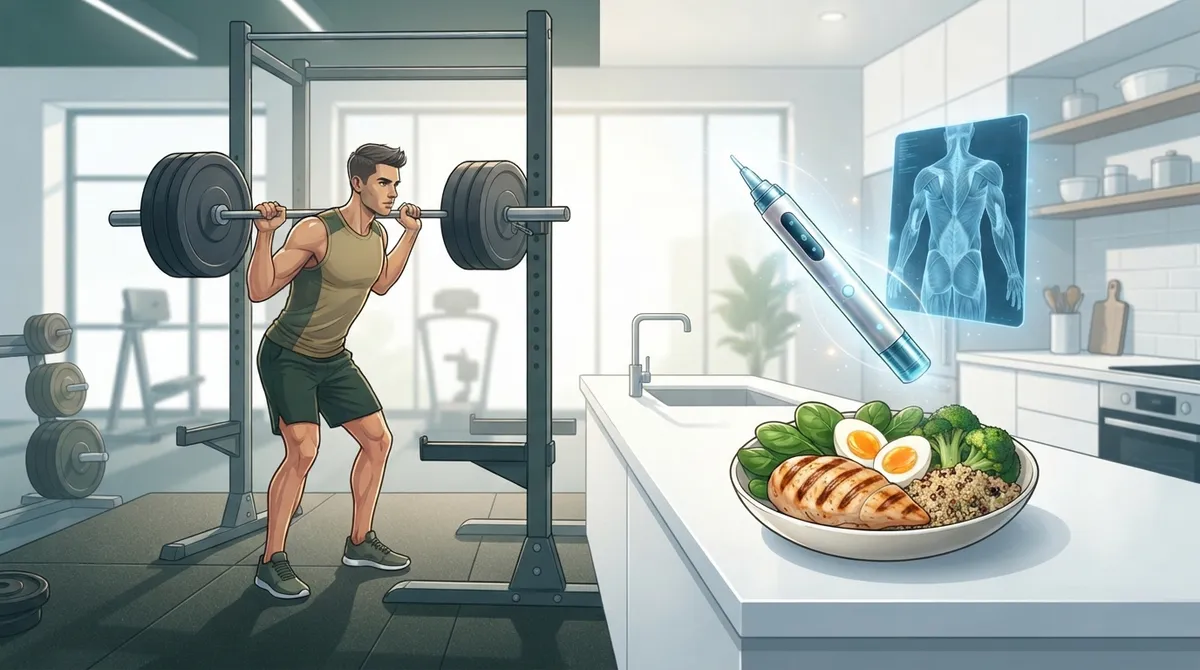
Peptides are not one treatment: approved GLP-1 medicines like semaglutide and tirzepatide have large trial data, while CJC-1295, ipamorelin, and BPC-157 lack evidence for preserving muscle during fat loss.
-
In the SURMOUNT-1 DXA substudy, about 25-26% of weight lost on tirzepatide was lean mass, so muscle loss during GLP-1 treatment is a real possibility to plan for.
-
A higher lean-mass percentage does not mean you kept your muscle; check absolute kilograms or pounds lost, since fat loss can inflate the percentage while lean tissue still drops.
-
DEXA 'lean mass' includes water and organs, not just muscle, so pair scan results with strength tracking and real-world function measures.
-
Resistance training, adequate protein, sufficient total calories, and good sleep are the habits clinicians most commonly recommend to support lean tissue during weight loss.
-
No current evidence shows that growth hormone-releasing or repair peptides preserve muscle during fat loss, and FDA has raised safety concerns about some compounded peptide products, so work with a licensed clinician.
You’re doing the work. You’re eating better, moving more, maybe even working with a clinician on a peptide-based weight plan. The scale is finally dropping. Then a worry creeps in: am I losing muscle along with the fat?
It’s a smart question, and you’re not alone in asking it. If you’ve wondered do peptides preserve muscle during fat loss, the honest answer is more nuanced than most headlines suggest. The word “peptides” covers a huge range of products, and the evidence differs a lot from one to the next.
In this guide, we’ll walk through nine plain-language truths. We’ll look at what studies on semaglutide and tirzepatide really show, why a DEXA scan can be misleading, and what actually helps protect lean tissue. We’ll also talk about what’s still unproven. Think of this as a friendly chat with someone who wants you to feel informed, not sold to.
1. “Peptides” Is a Broad Word, Not One Treatment
Let’s start with the basics. What are peptides? They are short chains of amino acids, the building blocks of protein. Your body makes thousands of them naturally. Some act as hormones, and some act as signals between cells.
In medicine, “peptide” can mean very different things:
- Approved incretin medicines like semaglutide and tirzepatide, which have large clinical trials behind them.
- Growth hormone-releasing peptides such as CJC-1295 or ipamorelin, which have much thinner evidence for weight loss.
- Repair-focused peptides like BPC-157, which are mostly studied for recovery, not body composition.
So when someone asks whether “peptides” preserve muscle, the right reply is: which one? Evidence for one product should never be borrowed to promote another. If you’re brand new to the topic, our guide on 10 peptide therapy basics every beginner should know is a gentle place to start.
2. The Best-Studied Fat Loss Peptides Are GLP-1 Based
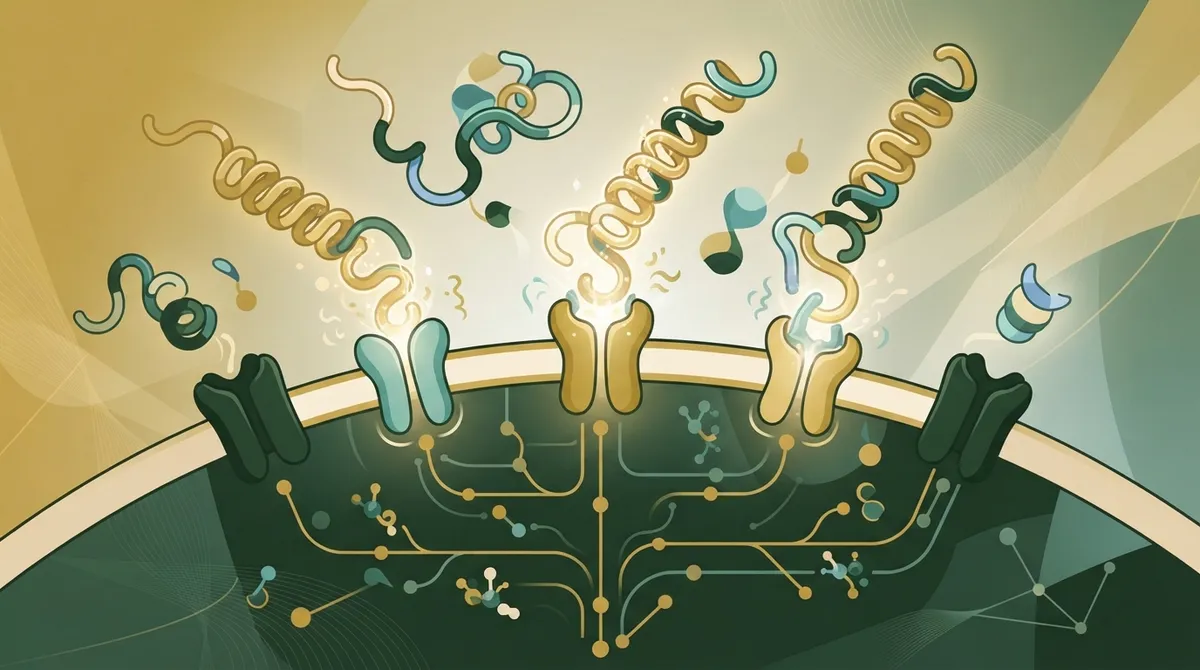
When it comes to weight loss, the strongest data belong to GLP-1 receptor agonists like semaglutide, and the dual GIP/GLP-1 agonist tirzepatide. These medicines reduce appetite and help many people lose a meaningful amount of weight.
If you want a refresher on how they work, see how GLP-1 works for weight loss. For a side-by-side look, our piece on semaglutide vs. tirzepatide breaks down the differences.
Here’s the key point for this article: these drugs were built to lower body weight and improve metabolic health. They were not designed or proven to protect muscle. That’s an important distinction, and it sets up everything else below.
3. These Medicines Cut Fat, But Some Lean Mass Goes Too
Here’s the part many people don’t hear. GLP-1 based medicines reduce fat mass in a big way. But in body-composition studies, a portion of the weight lost is also lean mass.
That doesn’t mean these drugs are “bad” or that you should avoid them. It simply means that losing a lot of weight, by any method, tends to take some lean tissue along for the ride. This happens with diet-only weight loss too.
The takeaway: no current evidence says semaglutide or tirzepatide reliably preserve muscle. Results vary from person to person.
4. What the Numbers Actually Say
Let’s look at real data. The research below comes from published body-composition substudies, and the numbers are group averages, not predictions for any one person.
| Study | Medicine | Duration | Key Body-Composition Finding |
|---|---|---|---|
| SURMOUNT-1 DXA substudy | Tirzepatide | 72 weeks | About 74–75% of weight lost was fat mass; about 25–26% was lean mass |
| SURMOUNT-1 (pooled doses) | Tirzepatide | 72 weeks | Fat mass down 15.9 kg (33.9%); lean mass down 5.6 kg (10.9%) |
| STEP 1 DXA substudy | Semaglutide | 68 weeks | Body weight down about 14.9%; lean mass down about 9.7% |
| SURPASS-3 MRI analysis | Tirzepatide | 52 weeks | Thigh muscle volume dropped, and so did fat inside the muscle |
So roughly one quarter of the weight lost in the tirzepatide study was lean mass. That’s a real number worth knowing, and it’s why muscle protection deserves a plan. For more context on what to expect, see our 15 semaglutide weight loss facts.
5. A Higher Lean-Mass Percentage Isn’t the Same as Keeping Your Muscle
This one trips up a lot of people, so let’s slow down. In the semaglutide STEP 1 substudy, lean mass fell, yet lean mass as a share of total body weight went up. How can both be true?
Because fat dropped even faster. When fat shrinks more than lean tissue does, lean tissue becomes a bigger slice of a smaller pie. It looks like a win on a percentage chart.
But a higher percentage does not mean you kept all your muscle. The absolute amount still went down. When you read a before-and-after report, look at the real kilograms or pounds, not just the percentage.
6. A DEXA Scan’s “Lean Mass” Isn’t Pure Muscle
Here’s another detail that deserves attention. DEXA (or DXA) scans report “lean mass,” and it’s tempting to read that as muscle. It isn’t quite that simple.
DXA lean mass includes:
- Skeletal muscle
- Water
- Organs and other soft tissue
That means a change in lean mass could reflect fluid shifts or organ changes, not only muscle. The numbers are useful, but they’re not a direct measure of muscle alone.
There’s also a difference between muscle quantity and muscle quality. In the SURPASS-3 MRI analysis, adults with type 2 diabetes on tirzepatide had lower thigh muscle volume, but also less fat tucked inside the muscle. That suggests muscle composition can improve even while volume shrinks. It’s a mixed picture, and researchers are still sorting it out.
7. What Actually Helps Protect Muscle: Lifting and Fueling
Now for the encouraging part. While no peptide is proven to guard your muscle on its own, there are habits that clinicians commonly recommend to support lean tissue during weight loss.
- Resistance training. Lifting weights, using bands, or doing bodyweight strength work sends your muscles a clear “keep me” signal. Aim for a few sessions a week, and build up slowly.
- Enough protein. Protein supplies the raw material your body uses to maintain muscle. Your clinician or a dietitian can help you set a target that fits your health.
- Enough total calories. Eating far too little can speed up lean-tissue loss, even with a great training plan.
- Sleep and recovery. Muscle is maintained during rest, so don’t skip it.
- Regular check-ins. Tracking strength, measurements, and labs helps you catch problems early.
A small 2025 case series followed three people using semaglutide or tirzepatide alongside regular activity, including resistance training three to five days a week. Their lean soft-tissue changes ranged from about −6.9% to +5.8%. That’s interesting, but it’s a tiny, uncontrolled sample. It can’t prove that these habits always work. Still, it fits the broader guidance, and these habits carry other health benefits too.
Curious how your fat-to-muscle balance can shift over time? Check out 10 ways peptides affect your fat-to-muscle ratio.
8. Do CJC-1295, Ipamorelin, or BPC-157 Preserve Muscle? Not Proven
This is where honesty matters most. You may have seen claims online that growth hormone-releasing peptides or repair peptides “protect muscle while you cut fat.” Based on the evidence we have, that claim isn’t supported.
Here’s a quick snapshot of where things stand:
| Peptide Type | Examples | Evidence for Preserving Muscle During Fat Loss |
|---|---|---|
| Approved incretin medicines | Semaglutide, tirzepatide | Strong fat-loss data; some lean mass is also lost; muscle preservation not shown |
| Growth hormone-releasing peptides | CJC-1295, ipamorelin | No solid basis in the cited evidence for this use |
| Repair-focused peptides | BPC-157 | Studied for recovery topics; not proven for muscle preservation during weight loss |
It’s also worth knowing that FDA safety communications have raised concerns about certain compounded peptide products. That’s one more reason to work with a qualified, licensed clinician rather than buying products on your own. Our articles on approved vs. wellness peptides and how to evaluate compounded GLP-1 medication safely go deeper on this.
If you’re curious about specific options, 5 fat loss peptides that protect muscle and peptides for muscle building: what really works explore the topic with clear eyes.
9. Monitoring and Medical Guidance Make the Biggest Difference
If there’s one theme running through all of this, it’s that individual results vary. Two people on the same medicine can have very different body-composition outcomes. That’s why personalized monitoring matters so much.
A thoughtful plan often includes:
- Baseline blood work and a health review before starting
- Tracking weight and strength, waist measurements, and how your clothes fit
- Periodic body-composition checks, with the DEXA caveats in mind
- Adjustments to dose, nutrition, or training if strength is slipping
- Honest conversations about goals, side effects, and pace
Busy schedule? Telehealth makes this much easier. At Allura Longevity, licensed providers design customized plans based on your own blood work and goals, with check-ins and adjustments along the way, and your treatment is delivered right to your door. Not sure if you qualify for GLP-1 medication? Our guide on how you qualify for GLP-1 medication in 2026 can help you prepare.
Questions to Ask Before You Start
Walking into a consultation with good questions helps you get the most from your visit. Consider asking:
- Is this medicine FDA-approved for weight loss, or is it a compounded or unapproved product?
- How will we track my muscle and strength, not just my weight?
- How much protein and how many calories should I aim for?
- What kind of strength training is safe for me right now?
- What labs will you check, and how often?
- What happens if I notice I’m losing strength?
For more ideas, see 15 peptide consultation questions to ask in 2026 and how to lose weight with peptide therapy in 2026. Research is also moving fast, and you can browse broader findings through the National Library of Medicine.
Putting It All Together
So, do peptides preserve muscle during fat loss? Based on today’s evidence, the honest answer is: not reliably, and not by themselves. GLP-1 based medicines are powerful fat-loss tools, but some lean mass is typically lost along with fat. No solid evidence shows that growth hormone-releasing peptides or repair peptides fix that problem.
The good news is that you have real influence. Strength training, enough protein, enough calories, good sleep, and careful medical monitoring all help support the lean tissue you’ve worked hard to build. You don’t have to figure it out alone.
If you’re ready for a plan built around your labs, your goals, and your schedule, we’d love to help. Request a consultation with Allura Longevity to start with a $50 virtual visit, and remember that spots for new clients are limited each month. You can also reach us at (813) 510-6277. Here’s to losing fat, keeping strength, and feeling fantastic in your own skin.
FAQs
Q: Do semaglutide or tirzepatide cause muscle loss?
A: They can lead to some loss of lean mass along with fat, just like many weight-loss methods do. In the SURMOUNT-1 substudy, about a quarter of the weight lost with tirzepatide was lean mass. Pairing treatment with strength training and enough protein is the usual way to help support your muscle.
Q: Does lean mass on a DEXA scan mean muscle?
A: Not exactly! DEXA lean mass includes muscle, but also water and organs, so it isn’t a pure muscle measurement. That’s why it helps to track strength and real-world function alongside your scan results.
Q: Can resistance training and protein help preserve muscle on a GLP-1 medicine?
A: They’re the most commonly recommended supports for lean tissue during weight loss. They can’t guarantee results for every person, but they’re safe, helpful habits to build with your clinician’s guidance.
Q: Do peptides like CJC-1295, ipamorelin, or BPC-157 preserve muscle during fat loss?
A: The current evidence doesn’t support that claim. These peptides haven’t been proven to preserve muscle while you lose fat, and certain compounded products carry safety concerns. It’s best to talk with a licensed provider before trying any of them.
Q: How can I monitor muscle loss during medical weight loss?
A: Track your strength, body measurements, and energy, and ask your clinician about periodic body-composition checks and lab work. Regular check-ins make it easier to adjust your plan early if something looks off.





