

Key Takeaways
-
Subcutaneous injection is the most commonly discussed administration route for BPC-157 in peptide-therapy settings, but should only occur under guidance of a qualified healthcare provider due to risks of infection and inaccurate dosing.
-
BPC-157 lacks FDA approval and validated human dosing protocols; animal studies show dose ranges from 6 micrograms to 20 milligrams per kilogram, making online protocols unreliable and potentially dangerous.
-
Oral capsules and intranasal sprays are marketed as alternatives, but peptides are proteins broken down by digestion, so absorption and effectiveness through these routes remain uncertain in humans.
-
Licensed providers typically require intake consultation, baseline lab work, personalized treatment plans, and follow-up monitoring—a structured approach that differs significantly from unverified online ordering.
-
Key risks include injection-site reactions, contamination from unregulated sources, inaccurate labeling, possible allergic reactions, and unknown long-term effects since most data comes from short-term animal studies.
-
Working with a telehealth provider licensed in your state and sourcing from reputable pharmacies is essential, as most human safety data remains limited and regulatory status can change.
If you’ve spent any time researching recovery peptides, you’ve probably landed on BPC-157. Maybe a friend at the gym mentioned it. Maybe you saw it on a biohacking forum. Either way, you’re here because you want a straight answer to a simple question: how is BPC-157 administered? We get it. You want facts, not hype. So let’s walk through this together, in plain language, with your safety front and center.
BPC-157 is a synthetic peptide made of 15 amino acids. It’s often discussed for its role in tissue repair and recovery, and it shows up a lot in conversations among peptides for women and peptides for men communities alike. But here’s the thing: it’s not FDA-approved for any human condition. That means there’s no official rulebook for dosing or delivery. This article will help you understand what providers commonly do, what science actually shows, and why working with a licensed prescriber matters more than any online protocol you’ll find.
What Is BPC-157, Exactly?
BPC-157 stands for Body Protection Compound-157. It’s a pentadecapeptide, meaning it has 15 amino acids strung together. The sequence is based on a protein found in gastric juice, which is why early interest centered on gut health.
Over time, interest expanded into tendon, ligament, and muscle recovery. You can learn more about the basics in our guide on what peptides actually are. It’s a helpful starting point if this is your first deep dive into peptide science.
How Is BPC-157 Administered? The Main Methods
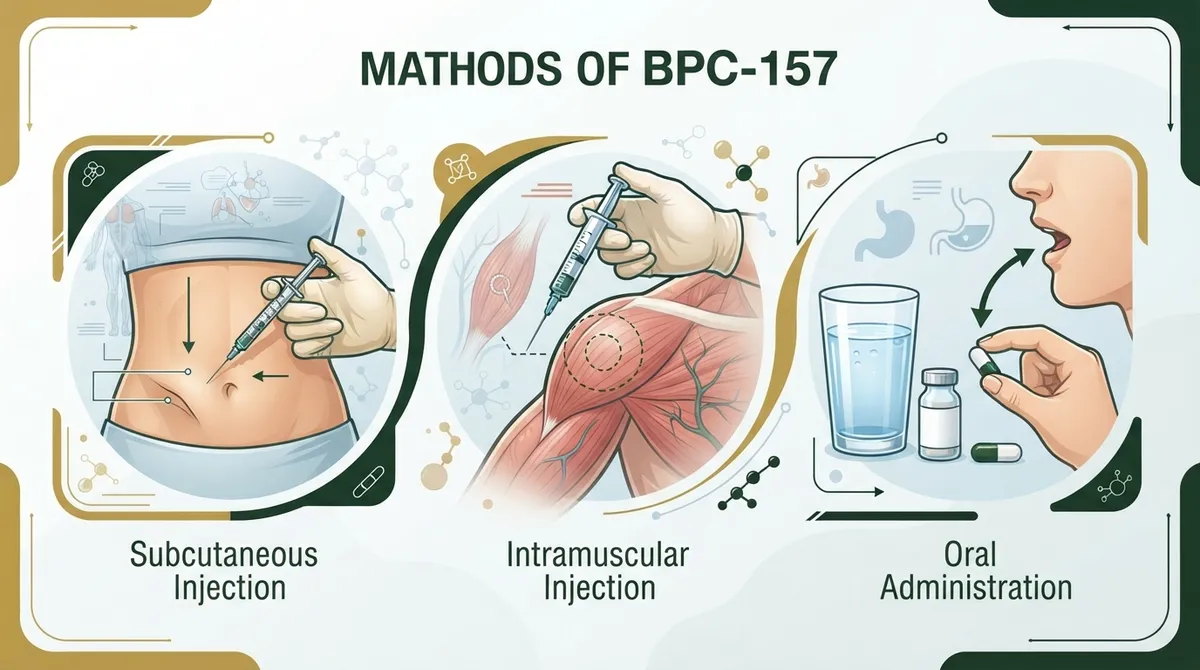
Let’s get to the heart of your question. In peptide-therapy settings, BPC-157 shows up in a few different forms. Here’s a breakdown of what’s commonly discussed:
1. Subcutaneous Injection
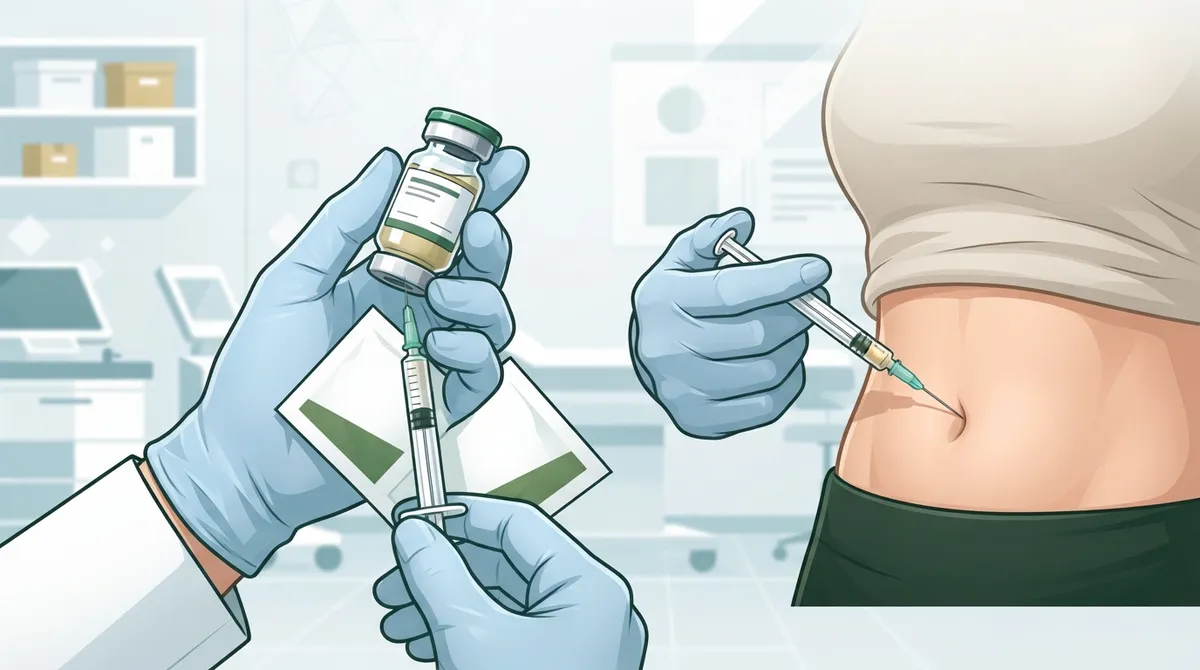
This is the most talked-about method in peptide-therapy circles. Subcutaneous means the injection goes just under the skin, not into a muscle or vein. Providers who work with this peptide typically discuss it as a shallow injection, similar to how someone might take insulin.
This route should only happen under the guidance of a qualified healthcare provider. Self-administering any peptide without proper evaluation carries real risks, including infection and inaccurate dosing.
2. Oral Capsules and Liquids
Some sellers market oral BPC-157 as a convenient, needle-free option. Sounds appealing, right? No one loves injections. But here’s the catch: peptides are proteins, and the digestive system is designed to break proteins down. That means absorption and effectiveness through the oral route remain uncertain.
3. Intranasal Sprays
A smaller number of providers offer nasal spray versions. Again, there’s no strong human evidence confirming how well this route works, how much reaches the bloodstream, or what a safe dose looks like.
4. Routes Studied in Animal Research Only
Laboratory studies have tested BPC-157 through intramuscular, intraperitoneal, and intravenous routes. These are research tools, not human treatment protocols. It’s tempting to see impressive animal results and assume they translate to people. But that’s simply not how medicine works.
| Administration Route | Common in Peptide-Therapy Discussions | Human Evidence Level |
|---|---|---|
| Subcutaneous Injection | Yes, most frequently discussed | Limited; mostly provider experience and preclinical data |
| Oral Capsule/Liquid | Yes, marketed by some sellers | Very limited; absorption not well established |
| Intranasal Spray | Occasionally marketed | Minimal to none in humans |
| Intramuscular/IV/Intraperitoneal | Rare, mostly research context | Animal studies only |
Why Dosing Guidance Is So Inconsistent
You’ve probably seen wildly different dosing numbers online. That’s not an accident. A 2025 review in orthopaedic and sports-medicine literature found animal-study dose ranges spanning from about 6 micrograms per kilogram all the way to 20 milligrams per kilogram. That’s an enormous range, and it should not be treated as a human dosing chart.
Here’s why this matters for you:
- Animal bodies process peptides differently than human bodies do.
- There is no FDA-reviewed human dosing protocol for BPC-157.
- Online “protocols” often copy each other without verified sourcing.
- Injection frequency and treatment length vary widely with zero clinical consensus.
- The same 2025 review noted that adverse events beyond six weeks were not assessed in the studies reviewed, leaving long-term safety unknown.
This is exactly why working with a licensed provider matters so much. A qualified nurse practitioner or physician can review your blood work and health history before recommending anything, rather than pulling numbers from a random internet post.
Is BPC-157 FDA-Approved or Legal?
Short answer: no, BPC-157 is not FDA-approved for any human medical use. It also doesn’t have an FDA-reviewed administration protocol. The regulatory landscape around compounded peptides has been shifting, and rules can change quickly depending on federal guidance and state pharmacy regulations.
This means compounded BPC-157 products you might see for sale online are not FDA-approved products. If you’re considering this peptide, always verify current legal status with a licensed prescriber and a legitimate pharmacy, not an anonymous online seller. Our article on finding legal peptide therapy you can trust walks through red flags to watch for.
Steps a Licensed Provider Typically Follows
Wondering what responsible peptide care actually looks like? Here’s a general outline, though your exact experience may vary by provider and state:
- Complete an intake consultation to discuss your health history and goals.
- Complete lab work, often through a trusted lab like LabCorp, to check baseline health markers.
- Review results with a licensed provider who evaluates whether peptide therapy fits your situation.
- Receive a personalized plan, including guidance on how the product should be handled and stored.
- Start with close monitoring, since providers may adjust the plan based on how you respond.
- Attend follow-up check-ins to track progress and address any concerns early.
This kind of structured process is very different from ordering a vial online and guessing at the rest. If you want to understand what a safe start actually looks like, check out our guide on how to start peptide therapy safely and see real results.
Risks You Should Know About
No treatment is risk-free, and BPC-157 is no exception. Because it’s experimental, several concerns deserve your attention:
- Injection-site reactions like redness, swelling, or irritation.
- Contamination or sterility issues, especially with unregulated sources.
- Inaccurate labeling, meaning the actual dose may not match what’s printed on the vial.
- Possible allergic or immune reactions in sensitive individuals.
- Unknown long-term systemic effects, since most data comes from short-term animal studies.
According to the National Library of Medicine, research on BPC-157 remains predominantly preclinical, meaning human safety data is still catching up. That gap is exactly why prescriber oversight isn’t optional; it’s essential.
How BPC-157 Compares to Other Recovery Peptides
You might be wondering how BPC-157 stacks up against other options discussed in recovery and wellness circles. Here’s a quick comparison to help frame your thinking:
| Peptide | Common Focus Area | Typical Discussion Route |
|---|---|---|
| BPC-157 | Tissue repair, gut support, general recovery | Subcutaneous injection (most common) |
| TB-500 | Muscle and connective tissue recovery | Subcutaneous injection |
| Sermorelin | Growth hormone support | Subcutaneous injection |
If you’d like a deeper comparison, our article on BPC-157 vs. TB-500 breaks down the differences in more detail. And if injury recovery is your main goal, our piece on TB-500 peptide facts is worth a read too.
Why Working With a Telehealth Provider Makes Sense
Let’s be honest: juggling work, family, and health goals is tough. That’s exactly why telehealth peptide therapy has become so popular among busy professionals and wellness seekers who don’t have time to sit in a waiting room every week.
At Allura Longevity, the process starts with a simple $50 virtual consultation. From there, clients complete blood work through LabCorp, and a licensed provider designs a personalized six-month treatment plan. Everything ships straight to your door, with ongoing monitoring from the care team led by Ashley, a board-certified Family Nurse Practitioner. This kind of oversight is exactly what separates responsible peptide care from guesswork you’d find on a random forum.
Care is available nationwide, with licensing in Florida, Georgia, Texas, Connecticut, Indiana, Maryland, New York, and California. If injury recovery, energy, or overall vitality are on your radar, our guide on preparing for safe, effective peptide injections is a great next stop.
Questions to Ask Before Starting BPC-157
Before you commit to any peptide protocol, run through this quick checklist:
- Is this provider licensed to prescribe and monitor peptide therapy in your state?
- Will you complete lab work before starting treatment?
- Does the plan include follow-up appointments to track your progress?
- Is the product sourced from a reputable, quality-tested pharmacy?
- Are you comfortable with the level of communication and support offered?
If a provider can’t confidently answer these questions, that’s a sign to keep looking. For more guidance, take a look at our article on BPC-157 facts to know before you start.
A Quick Note on Injection Frequency and Cycle Length
You may have seen claims about daily injections for four to six weeks, followed by a break. It’s worth repeating: there’s no universally accepted, evidence-based schedule for BPC-157 in humans. Any timeline you follow should come from a licensed provider who considers your specific health picture, not a generic number pulled from a forum post.
Learn more about the broader science of peptides through this overview from what are peptides, which explains how these small protein chains interact with the body in general terms.
Bringing It All Together
So, how is BPC-157 administered? In peptide-therapy conversations, subcutaneous injection is the most commonly discussed route, though oral and intranasal products exist too. None of these routes have a validated, FDA-approved human protocol. Most of what we know comes from animal and lab research, not large-scale human trials.
That doesn’t mean you have to navigate this alone or guess your way through it. Working with a licensed provider who reviews your labs, designs a personalized plan, and monitors your progress is the safest path forward. If you’re curious whether peptide therapy fits your goals, our candidate guide for peptide therapy can help you figure out your next step.
Ready to get real answers tailored to your body and your goals? Request a consultation with Allura Longevity today and take the guesswork out of peptide therapy. Spots are limited each month, so don’t wait too long to reach out.
FAQs
Q: Is BPC-157 administered by injection or taken orally?
A: Most peptide-therapy providers discuss BPC-157 as a subcutaneous injection, meaning it’s given just under the skin. Oral capsules and liquids are also marketed, but their absorption and effectiveness haven’t been well established in human studies, so injection remains the more commonly discussed route.
Q: How is subcutaneous BPC-157 injection performed safely?
A: Safe subcutaneous injection always starts with proper evaluation from a licensed provider, not a YouTube tutorial. Your provider will guide you on technique, sterile handling, and storage so you’re never left guessing on your own.
Q: What is the typical BPC-157 dose and injection frequency?
A: Honestly, there’s no universally accepted human dosing schedule for BPC-157 right now. Animal studies show huge dose variability, so any protocol you follow should come directly from a licensed provider who knows your health history.
Q: Is BPC-157 FDA-approved or legal to use in the United States?
A: BPC-157 is not FDA-approved for any human condition, and compounded versions aren’t FDA-approved products either. Regulations can shift, so it’s always smart to verify current rules with a licensed prescriber and legitimate pharmacy rather than an online seller.
Q: What are the side effects and risks of BPC-157 injections?
A: Potential risks include injection-site irritation, contamination from poor sourcing, inaccurate labeling, and unknown long-term effects since most research is still preclinical. That’s exactly why working with a monitored, licensed program matters so much for your safety.





