

Key Takeaways
-
Peptide therapy is an umbrella term: FDA-approved peptide medicines (like GLP-1s for weight and metabolic conditions) have real trial data, while popular wellness peptides often lack human research.
-
No peptide therapy is established as a general treatment for menopause; hot flashes, night sweats, and mood symptoms should first be addressed with well-studied, evidence-based options.
-
BPC-157 evidence is mostly animal research: a 2025 review found 35 of 36 studies were preclinical, and FDA says compounded versions lack enough safety data to rule out harm.
-
Vet any peptide clinic by checking for a licensed clinician, baseline blood work, clear product details, realistic expectations, and ongoing monitoring before committing.
If you’re a woman over 40, you’ve probably noticed that your body has started playing by new rules. Energy dips. Sleep gets lighter. Muscle takes longer to hold on to, and the scale seems to have opinions. So it’s no surprise that you keep hearing about peptides and wondering, is peptide therapy good for women over 40?
Here’s the friendly, honest answer: it depends. “Peptide therapy” isn’t one treatment. It’s a big umbrella covering many different substances. Some are FDA-approved medicines for specific conditions. Others are popular in wellness circles but have far less human research behind them.
In this guide, we’ll compare approved peptide medicines with wellness-style peptides, so you can see where the evidence is strong, where it’s thin, and how to make smart choices with a qualified clinician. Think of this as a chat with a well-informed friend who wants you to feel great and stay safe.

First, What Are Peptides, Really?
Peptides are short chains of amino acids, the building blocks of proteins. Your body makes many of them naturally, and they act like tiny messengers. Some tell your body to release hormones, others influence appetite, and others help manage inflammation. You can read a plain-language overview of what are peptides if you want a quick refresher.
Because peptides do so many different jobs, “peptide therapy” can mean very different things. If you want a deeper beginner overview, our guide to 10 peptide therapy basics every beginner should know is a great place to start.
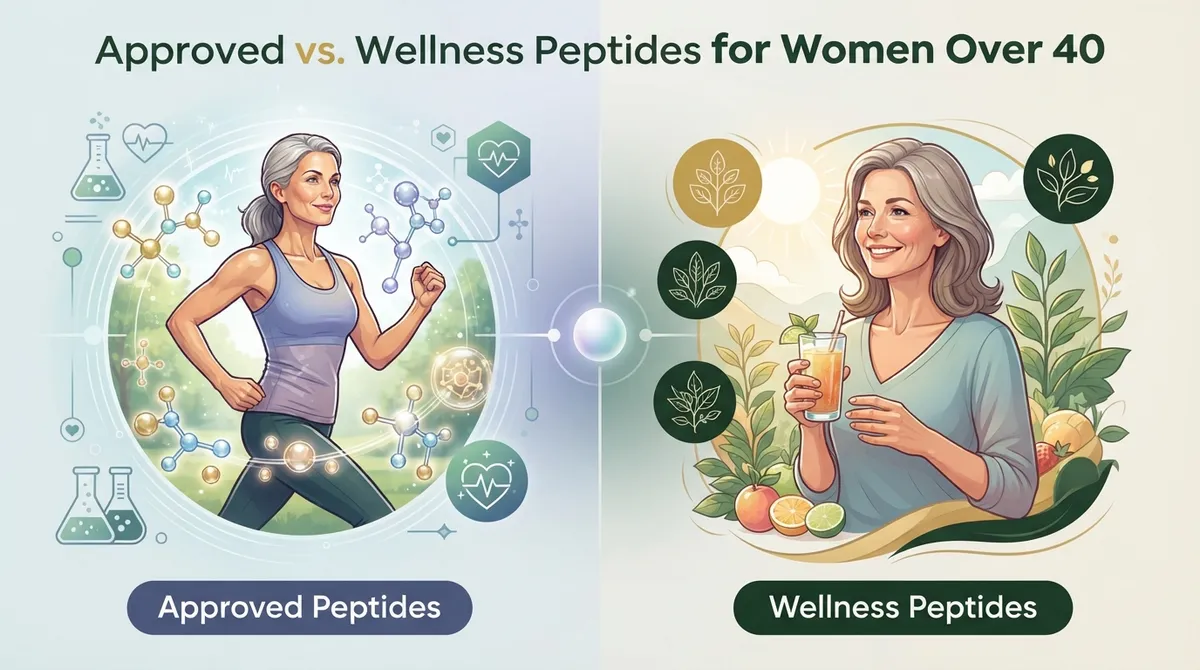
Approved Peptides vs. Wellness Peptides: The Big Picture
The most useful way to answer the question is to split peptides into two groups. This is where most of the confusion (and most of the risk) lives.
| Feature | FDA-Approved Peptide Medicines | Wellness-Style Peptides |
|---|---|---|
| Regulatory status | Approved for specific conditions | Often unapproved or compounded |
| Human research | Large, controlled trials | Often limited or mostly animal data |
| Safety information | Well documented | Often incomplete |
| Examples | GLP-1 medicines for weight and blood sugar | BPC-157, CJC-1295, ipamorelin |
| Best for | Specific diagnosed conditions | Individualized discussion with a clinician |
Approval for one drug and one use doesn’t mean other peptides work for women over 40. It also doesn’t mean the same drug is right for a different purpose. That’s why the specific product and goal matter so much. For more on this split, see our comparison of approved peptides vs. wellness peptides.
What the Evidence Says About Common Goals After 40
Let’s walk through the things women over 40 ask about most. We’ll be upfront about what’s proven and what isn’t.
Menopause and Perimenopause Symptoms
No peptide therapy has been established as a general treatment for menopause. Hot flashes, night sweats, and mood shifts have well-studied, evidence-based options, and those should come first. If you’re sorting through your choices, our guides on what menopause treatment options really work in 2026 and MHT vs. peptides can help you compare.
Weight and Body Composition
This is where approved medicines enter the picture. Certain GLP-1 peptide medications are FDA-approved for specific weight and metabolic indications, and they have real trial data behind them. Eligibility depends on your health history. You can learn more in how do you qualify for GLP-1 medication in 2026.
Growth-hormone-stimulating peptides like CJC-1295 and ipamorelin are often promoted for body composition and recovery. The evidence for those benefits is limited, though. If you’re curious, here’s a balanced look at fat loss peptides and muscle protection.
Skin, Recovery, and Healing
BPC-157 is often marketed for healing and recovery. But a 2025 systematic review found 36 studies of BPC-157, and 35 were preclinical animal studies. The only human study was a small, uncontrolled retrospective review of 12 patients. That isn’t enough to prove it works or that it’s safe. To dig into this one, read is BPC-157 safe? What the research really shows.
Skin peptides are a different story, and the research picture varies by product and form. Our piece on whether peptides for skin regeneration really work in 2026 breaks down what to expect.
Evidence at a Glance for Women Over 40
| Goal | Peptide Type | Strength of Human Evidence |
|---|---|---|
| Weight management | FDA-approved GLP-1 medicines | Strong for approved uses |
| Muscle and fat changes | CJC-1295, ipamorelin | Limited |
| Healing and recovery | BPC-157 | Mostly animal studies |
| Menopause symptoms | Wellness peptides | Not established |
Notice the pattern? The stronger the regulatory backing, the stronger the human evidence tends to be. That’s worth remembering when a flashy ad promises the moon.
Safety Concerns You Deserve to Know About
Being informed is a form of self-care. Here’s what FDA materials flag for some popular wellness peptides:
- CJC-1295: Limited clinical data, with reports of serious adverse events including increased heart rate and systemic vasodilatory reactions. There’s no reliable incidence rate.
- Ipamorelin: FDA cites safety and product-quality concerns for compounded versions. Serious adverse events, including death, were reported in one study using intravenous dosing for gastric motility. That doesn’t prove the same risk for every route or use, but it shows how little safety data exists for unapproved uses.
- BPC-157: FDA says it has insufficient safety information to determine whether compounded BPC-157 may cause harm. Concerns include immunogenicity and peptide-related impurities.
Another key point: compounded drugs aren’t FDA-approved drugs. Compounding doesn’t establish a product’s safety, effectiveness, or quality. Regulatory status can also change, so it’s smart to check current FDA guidance. For a broader look, see how to weigh the risks of peptide therapy safely in 2026 and 7 peptide therapy side effects you should know.
How to Tell If a Peptide Provider Is Legitimate
Not every clinic is created equal. Here’s a simple checklist to run through before you commit to anything:
- Licensed clinicians: Confirm that a licensed medical provider reviews your history and prescribes your plan.
- Lab work first: A responsible plan starts with blood work, not guesswork.
- Clear product details: You should know exactly which peptide you’re getting, why, and what the evidence says.
- Honest expectations: Be wary of promises to reverse aging or cure menopause.
- Ongoing monitoring: Good care includes follow-ups and adjustments.
Our guides on how to choose a peptide therapy clinic you trust and lab work for peptide therapy walk through these steps in more detail.
Telehealth vs. Going It Alone
Some women are tempted to buy peptides online without any medical oversight. That’s a risky path, especially given the quality and safety concerns above. Medically supervised telehealth gives you a middle ground: convenience from home, with a licensed provider guiding the process.
If you’re a busy professional, this matters. You don’t have to take time off work for in-person visits, and you still get personalized oversight. Learn how it works in how does telehealth prescription work for peptides.
| Approach | Medical Oversight | Lab Testing | Convenience |
|---|---|---|---|
| Buying online without a clinician | None | Rarely | High, but risky |
| Local in-person clinic | Yes | Often | Moderate |
| Medically supervised telehealth | Yes | Yes | High |
Where a Personalized Plan Fits In
For health optimizers and data-driven biohackers, personalization is the point. Your labs, symptoms, and goals should shape the plan, not a one-size-fits-all package. That’s the approach at Allura Longevity, where licensed providers build customized plans after reviewing your blood work, with treatment delivered to your door. Their care team, led by a board-certified Family Nurse Practitioner, adjusts your plan as you go.
Want to see how this works in practice? Check out 15 ways a peptide therapy plan gets personalized and how to judge peptides for women’s healthspan in 2026.
Questions to Bring to Your First Consultation
Walking in prepared makes a big difference. Consider asking:
- Which exact peptide are you recommending, and is it FDA-approved for my goal?
- What does the human research say about it?
- How will my medications and health history affect safety?
- What labs will you run, and how often will we recheck them?
- What happens if I don’t see results or have side effects?
For more ideas, see 15 peptide consultation questions to ask in 2026 and 3 peptide consultation mistakes that waste your first visit.
So, Is Peptide Therapy Good for Women Over 40?
It can be a helpful piece of the puzzle for some women, when the right product is matched to the right goal and guided by a qualified clinician. It is not a magic fix, and it is not proven for menopause or general anti-aging. Approved peptide medicines have the strongest backing for their specific uses. Wellness peptides deserve a more careful, individualized conversation. You can also review the broader research context through the National Library of Medicine.
The best move is to start with your labs, your goals, and an honest talk with a licensed provider. If you’re ready to explore what might fit you, request a consultation with Allura Longevity. New client spots are limited each month, and our team is happy to answer questions at (813) 510-6277.
FAQs
Q: Is peptide therapy FDA-approved for menopause?
A: No peptide therapy has been established as a general treatment for menopause. Some peptide medicines are approved for other specific conditions, but that doesn’t extend to menopause symptoms. If menopause is your main concern, talk with a clinician about evidence-based options first.
Q: Do CJC-1295 or ipamorelin help women lose fat or keep muscle?
A: They’re often promoted for body composition and recovery, but the human evidence is limited. FDA materials also note safety and product-quality concerns for these compounded peptides, so it’s best to discuss them carefully with a licensed provider.
Q: Is BPC-157 safe and effective for women?
A: Most BPC-157 research is preclinical, meaning animal or lab studies, and the FDA says it lacks enough safety information to rule out harm from compounded versions. That means effectiveness and safety haven’t been proven in women.
Q: How can I tell if a peptide clinic is legitimate?
A: Look for licensed clinicians, required blood work, clear information about which peptide you’re getting and why, and ongoing monitoring. Be cautious of any clinic that promises to reverse aging or guarantees results.
Q: Are all peptide therapies the same as FDA-approved peptide medicines?
A: No. Some peptides are FDA-approved for specific uses, while many wellness peptides are unapproved or compounded. Compounding alone doesn’t establish a product’s safety, effectiveness, or quality.





