Key Takeaways
-
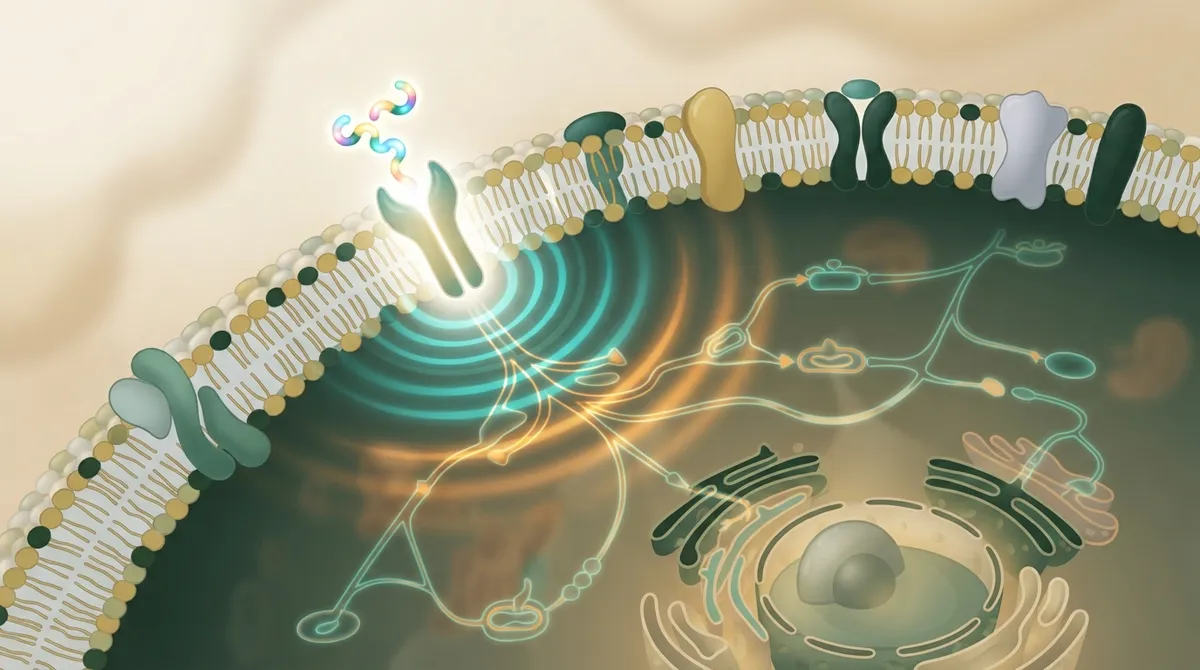
Peptides act as messengers by binding specific receptors on target cells; they don't enter the cell but trigger signals from the cell surface, like ringing a doorbell.
-
Binding often activates second messengers such as cAMP, calcium, or IP3, which amplify one small signal into many downstream changes inside the cell.
-
Different peptides use different pathways: insulin works through a receptor tyrosine kinase, many peptides use GPCRs, and some cytokine-like signals use JAK/STAT.
-
Natural peptide hormones made by your body are not the same as peptide medicines; FDA approval and evidence are specific to each product and use, not the broad label 'peptide therapy'.
-
Compounded products are not FDA-approved, and research-use peptides should not be assumed safe or effective for human treatment, so ask providers what exactly you're getting.
-
Because your hormone levels and health history shape how you respond, blood work and medical supervision should guide any peptide plan rather than guesswork.
Ever wonder how a tiny chain of amino acids can change your energy, appetite, or sleep? That is the magic of cell signaling, and it is also where a lot of confusion starts. If you have been curious about how do peptides act as messengers, you are in good company. Many people hear the word “peptide” and picture a miracle shot. The real story is far more interesting, and far more careful.
In your body, peptides carry short, specific notes from one cell to another. Some are hormones. Some are neuropeptides. Each one only works when it meets the right receptor. In 2026, more people than ever are exploring peptide therapy, so getting the basics right matters. Mix up the science and you can waste money, or worse, trust the wrong product.
Below, we walk through nine common mistakes that muddy the topic. Along the way, you will learn how peptide signaling really works and what to ask before you start. If you are a busy professional, a biohacker, or simply someone who wants to age well, this guide is for you.
First, What Does It Mean for a Peptide to Act as a Messenger?
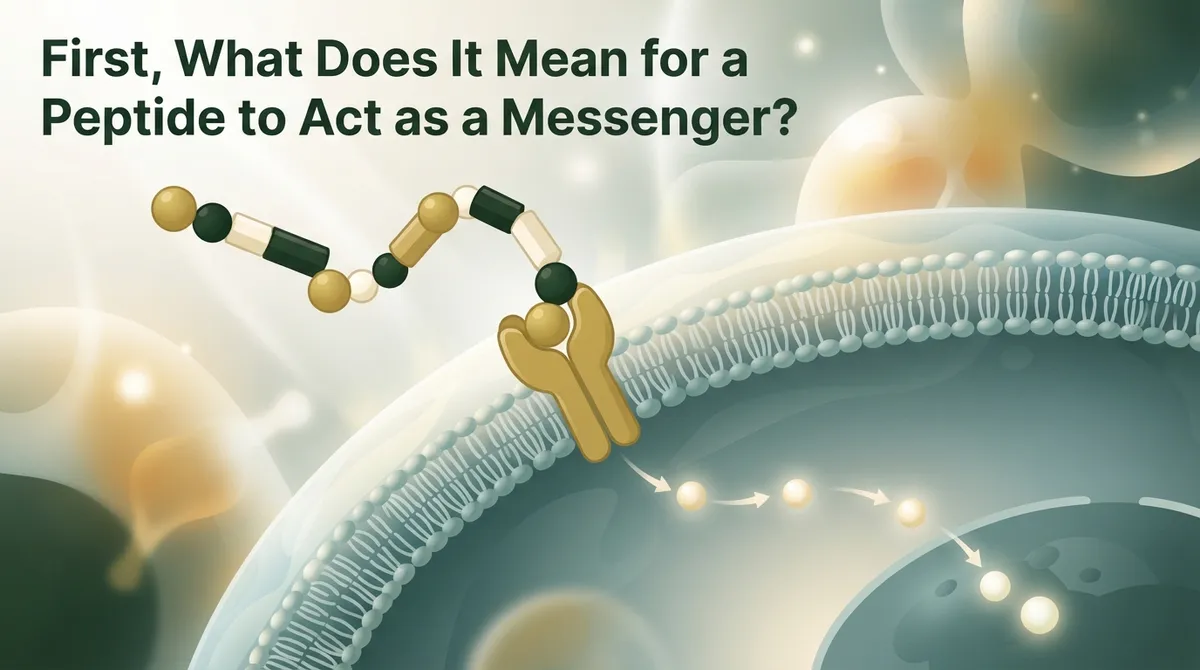
Peptides are short chains of amino acids. In the body, many of them work as signaling molecules. They carry information between cells, tissues, and organs, much like a text message sent to a specific phone number.
Here is the basic flow, step by step:
- A cell releases a peptide, such as a hormone or neuropeptide.
- The peptide travels through the blood or the space between cells.
- It finds a matching receptor on a target cell.
- Binding triggers a chain of events inside that cell.
- The cell changes what it is doing, such as releasing a hormone, burning fuel, or switching genes on or off.
The key idea is specificity. A peptide only talks to cells that have the right receptor. That is why one peptide can affect your appetite while another affects blood sugar. For a plain-language overview, what are peptides is a handy starting point.
Mistake 1: Thinking Peptides Walk Straight Into the Cell
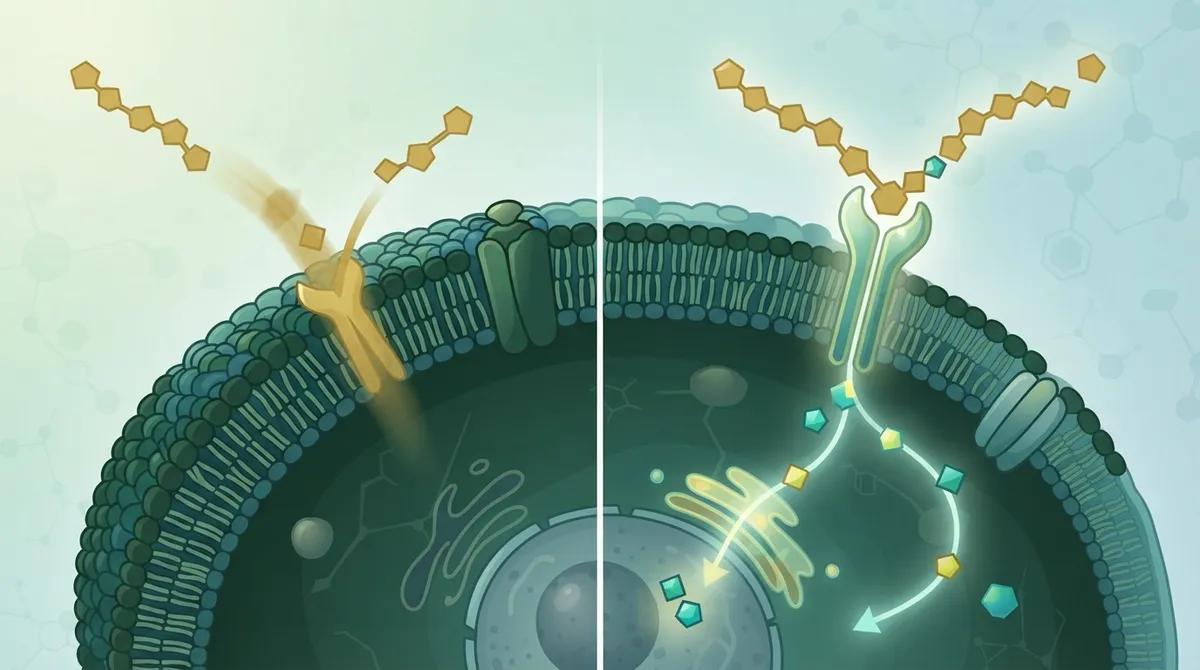
Many people picture a peptide slipping inside a cell like a key into a lock inside a house. In reality, most peptide hormones are water-soluble. That means they cannot easily cross the fatty cell membrane.
So instead of walking in, they knock on the front door. The peptide binds a receptor on the cell surface. The receptor then passes the message inward through a process called signal transduction. Think of it like ringing a doorbell. You do not need to enter the house for the people inside to respond.
This is a big reason peptides are so precise. The cell surface acts like a gatekeeper, and only the right messenger gets a reply.
Mistake 2: Ignoring the Receptor Side of the Story
A peptide is only half of the conversation. The receptor is the other half. Without a matching receptor, the message goes nowhere.
Many peptide receptors are G-protein-coupled receptors, or GPCRs. When a peptide binds a GPCR, it activates a G protein inside the cell. Depending on the receptor and the G protein, the cell may use different inner pathways.
| Signaling Route | Key Players | What It Can Change |
|---|---|---|
| cAMP pathway | Cyclic AMP, protein kinase A | Enzyme activity, metabolism, hormone release |
| Phospholipase C pathway | IP3, calcium, DAG, protein kinase C | Calcium release, secretion, muscle and nerve activity |
| Receptor tyrosine kinase | Phosphorylation cascades (insulin) | Glucose uptake, metabolism, gene activity |
| JAK/STAT | Janus kinases, STAT proteins | Gene expression, immune signaling |
So when someone says “peptides work through one simple pathway,” that is a mistake. The pathway depends on the peptide, the receptor subtype, and the target cell.
Mistake 3: Forgetting About Second Messengers
Here is a part that trips up even curious readers. When a peptide binds a receptor, the cell often creates small helper molecules called second messengers. The peptide is the first messenger. The helpers carry the news deeper inside.
Common second messengers include:
- cAMP (cyclic AMP), which activates protein kinase A
- Calcium, which can trigger secretion or muscle activity
- IP3 and DAG, which work together to release calcium and activate protein kinase C
This setup also amplifies the signal. One peptide binding event can trigger many downstream reactions. A small whisper at the surface becomes a loud announcement inside. That amplification is part of why even tiny amounts of a peptide can matter in the body.
Mistake 4: Assuming All Peptide Signals Use the Same Pathway
Insulin is a perfect example of why this assumption fails. Insulin is a peptide hormone, but it does not use a GPCR. It binds a receptor tyrosine kinase. That triggers phosphorylation and downstream pathways that help regulate glucose uptake, metabolism, and gene activity.
Some cytokine-like peptide signals use the JAK/STAT pathway instead. So the “messenger” model is real, but the details vary a lot. If you want to dig into the primary science, the National Library of Medicine is a trusted place to read peer-reviewed research.
For a deeper look at how this connects to treatment, see how peptide therapy mechanisms work in your body.
Mistake 5: Mixing Up Natural Peptide Hormones and Peptide Drugs
This one matters for anyone exploring therapy. A natural peptide hormone is made by your own body. A peptide drug is a medicine designed to mimic, replace, or modify a natural signal.
Good examples include insulin and GLP-1 receptor agonists such as semaglutide. These are prescription medicines with specific approved uses and clinical development behind them. They copy or boost a natural message so the body responds in a certain way.
| Feature | Natural Peptide Hormone | Peptide Medicine |
|---|---|---|
| Made by | Your body | A laboratory or manufacturer |
| Goal | Normal signaling | Mimic, replace, or modify a signal |
| Evidence | Basic physiology | Product- and indication-specific trials |
| Regulation | Not applicable | FDA approval is product-specific |
Peptide medicines are a real and growing part of modern medicine. A 2025 review reported that synthetic peptides made up over 11% of new pharmaceutical chemical entities authorized by the FDA between 2016 and 2024. That shows how important this drug class has become.
If GLP-1 medicines are on your radar, you might enjoy how GLP-1 works for weight loss for a clear explanation.
Mistake 6: Treating the Label “Peptide Therapy” as Proof of Safety
This might be the most important mistake on the list. “Peptide therapy” is a broad label. It does not prove that a product is approved, effective, or safe.
FDA approval is product- and indication-specific. Compounded products are not FDA-approved. And research-use peptides should never be assumed safe or effective for human treatment. Each molecule, form, and use needs its own look at the evidence.
That does not mean peptide therapy is a bad idea. It means you should choose carefully and work with licensed professionals. To learn the difference, check out approved peptides versus wellness peptides, and whether peptide therapy is safe.
Mistake 7: Skipping Your Own Biology and Lab Work
Because peptides are messengers, your body’s current signals matter. Your hormone levels, metabolism, and health history shape how you may respond. Guessing is a poor strategy.
That is why thoughtful programs start with data. Blood work helps a clinician understand what your body is already saying before adding anything new. If you like tracking numbers, you will appreciate lab work for peptide therapy and what to test.
At Allura Longevity, care starts with a virtual consultation, followed by blood work through LabCorp. Licensed medical providers then design a customized plan around your results and goals. Personalization is not a buzzword here. It is the whole point of working with a messenger system as complex as the human body.
Mistake 8: Expecting Every Peptide to Do Everything
One peptide does not fix every problem. Because each peptide has its own receptor and its own pathway, each one has its own effects, its own evidence, and its own limits.
Here are a few realistic examples of how targeted this can be:
- Insulin signals cells to take up glucose.
- GLP-1 receptor agonists act on pathways tied to appetite and blood sugar.
- Neuropeptides carry signals between nerve cells and influence things like pain, stress, and mood.
There is also no general statistic that tells us how many marketed “peptide therapy” products are effective. Claims should be judged one molecule, one formulation, and one use at a time. If you are comparing options, how to choose the right type of peptide therapy can help you ask better questions.
Mistake 9: Forgetting That Context Changes the Message
The same peptide can produce different results depending on the target cell and the situation in your body. Your age, stress level, sleep, nutrition, and other hormones all shape the outcome.
That is why a one-size-fits-all approach often disappoints. A solid plan considers the whole picture. It also includes check-ins, since your body’s needs can shift over time.
Here is a quick checklist of smart questions to bring to a clinician:
- Is this specific product FDA-approved, compounded, or neither?
- What evidence supports it for my goal?
- Which labs will you review before and during treatment?
- How will you monitor my progress and adjust the plan?
- What side effects should I watch for?
If you want a ready-made list, try 15 peptide consultation questions to ask in 2026, and avoid the slip-ups in 3 peptide consultation mistakes that waste your first visit.
Putting It All Together
So, how do peptides act as messengers? In short, they are short amino acid chains that bind receptors on target cells. That binding starts a signaling cascade, often with second messengers like cAMP and calcium, and it changes what the cell does. The result depends on the peptide, the receptor, the cell, and the setting.
Therapeutic peptides can copy or adjust those natural messages. But each product has its own evidence, approval status, and safety profile. Treat the words “peptide therapy” as a starting point for questions, not a promise.
That is where a trusted, medically supervised approach shines. Allura Longevity offers personalized peptide therapy through telehealth, with licensed providers, lab-guided plans, and home delivery in Florida, Georgia, Texas, Connecticut, Indiana, Maryland, New York, and California. New client spots are limited each month, so there is no better time to ask your questions. Ready to take the next step? Request a consultation or call (813) 510-6277 to talk with a licensed provider.
FAQs
Q: How do peptides send signals between cells?
A: Peptides are released by one cell and travel to another, where they bind a specific receptor on the surface. That binding starts a chain of reactions inside the cell, often using helpers like cAMP or calcium. The cell then changes what it is doing, such as releasing a hormone or using more fuel.
Q: What is the difference between a peptide hormone and a peptide drug?
A: A peptide hormone, like insulin, is made naturally by your body. A peptide drug is a medicine built to mimic, replace, or tweak a natural signal. Peptide drugs have their own approval status, evidence, and safety profile, so each one needs to be judged on its own.
Q: What are second messengers such as cAMP, calcium, and IP3?
A: Second messengers are small molecules a cell makes after a peptide binds its receptor. They carry the message deeper inside the cell and help amplify it. That is how one peptide signal can lead to many changes in enzymes, secretion, or gene activity.
Q: Are all peptides used in peptide therapy FDA-approved?
A: No, they are not. FDA approval is specific to each product and each use, and compounded products are not FDA-approved. It is smart to ask any provider exactly what you are being offered and what evidence supports it.
Q: What should I ask a clinician before considering peptide treatment?
A: Ask whether the product is approved or compounded, what research backs it for your goal, and which lab tests will guide your plan. Also ask how progress will be monitored and what side effects to watch for. A good provider will welcome every one of these questions.