

Key Takeaways
-
A skin elasticity peptide program is a marketing label, not a standardized treatment, so always ask for the exact peptide, form, dose, duration, and supervising provider.
-
The strongest human evidence is for oral hydrolyzed collagen supplements, and those findings do not prove that injectable or compounded peptides improve skin elasticity.
-
Meaningful changes in elasticity and hydration in studies appeared around 12 weeks, so judge any program only after at least two to three months.
-
Supplements and compounded drugs are not FDA-approved for effectiveness, so be wary of any claim that a peptide is FDA-approved or reverses aging.
-
Sun protection, sleep, protein, hydration, and not smoking do much of the heavy lifting for skin firmness; peptides are a supporting player, not the whole plan.
-
Start with a health history review and baseline tracking, including blood work and same-light monthly photos, so you can measure whether the program is actually working.
Let’s be honest: the phrase “skin elasticity peptide program” sounds so promising. Who wouldn’t want firmer, bouncier skin with a simple plan? But here’s the friendly truth most clinics won’t tell you. A skin elasticity peptide program is a marketing phrase, not a standardized medical treatment. It can mean very different things depending on who is selling it.
For some, it means a daily collagen powder. For others, it means a topical serum, or a clinic-guided plan with prescribed peptides. Each one has a different level of evidence, different rules, and different risks. Mixing them up is where people waste time and money.
This guide walks through 13 common mistakes people make with a skin elasticity peptide program, so you can spend smarter and set realistic goals. Whether you’re a health optimizer, a busy professional, or a wellness seeker who already invests in your health, you’ll find clear, honest answers here. Think of it as a chat with a well-informed friend who wants you to win. Let’s dive in.

What Is a Skin Elasticity Peptide Program, Really?
A skin elasticity peptide program is not one single therapy. It is a loose label used for plans that aim to support firmer, more resilient skin using peptides. Those plans can fall into three buckets:
- Oral collagen peptides: Dietary supplements, usually powders or capsules.
- Topical peptides: Creams and serums applied to the skin.
- Clinician-guided peptides: Prescribed or compounded products, often delivered by telehealth.
A good program should tell you the specific peptide, how it’s taken, the dose, how long you’ll use it, what the evidence says, and who is overseeing your care. If a plan can’t answer those questions, that’s a yellow flag.
If you’re new to the basics, our guide on 8 Facts That Explain What Are Peptides in 2026 is a great place to start. You can also read a general overview of what are peptides from a trusted health source.
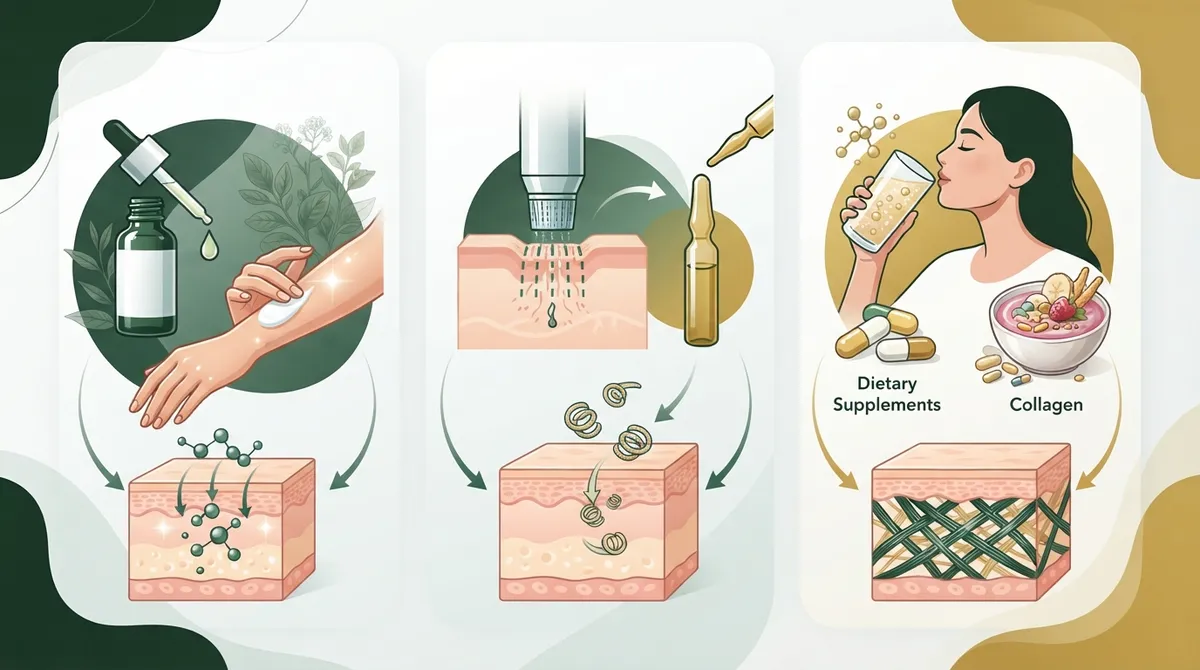
The Three Types of Peptide Programs Compared
Before we get to the mistakes, it helps to see how these categories differ side by side.
| Program Type | Typical Form | Strength of Human Evidence | Regulatory Status (U.S.) |
|---|---|---|---|
| Oral collagen peptides | Powder, capsule, drink | Moderate, with modest effects in many trials | Dietary supplement, not FDA-approved for effectiveness |
| Topical peptides | Cream, serum | Less established, varies by product | Usually cosmetic products |
| Clinician-guided or compounded peptides | Injection or other prescribed forms | Not established for cosmetic skin elasticity | Compounded drugs are not FDA-approved |
Keep this table handy. Nearly every mistake below comes from blurring these three lines.
13 Skin Elasticity Peptide Program Mistakes to Skip
1. Treating It Like One Proven Therapy
The biggest mistake is assuming a skin elasticity peptide program has one standard protocol. It doesn’t. There is no universal dose, schedule, or product. Always ask what is actually in the plan and why.
2. Assuming Collagen Supplement Results Apply to Injections
This one trips up a lot of smart people. The best human research is on oral hydrolyzed collagen peptides, which are dietary supplements. Those studies do not prove that injectable or compounded peptides improve skin elasticity. Supplement findings should never be used as proof for a different product or route.
3. Ignoring What the Research Actually Shows
Here’s the encouraging part, with an honest note attached. A 2023 meta-analysis of 26 randomized controlled trials with 1,721 participants reported significant improvements in skin hydration and elasticity with hydrolyzed collagen versus placebo. Another review cited 19 placebo-controlled trials with 1,125 participants, about 95% women, and reported that 90 days of supplementation improved elasticity and hydration and reduced wrinkles.
That sounds great, but results vary by product, study design, population, and how skin was measured. The size of the benefit may be modest, so keep your expectations grounded.
4. Expecting Overnight Results
Skin renews slowly. In the 2025 trial of 77 healthy women using 5,000 mg per day of bioactive collagen peptides, improvements in dermal density and hydration showed up after 12 weeks, not 12 days. Plan on at least two to three months before judging any program.
5. Falling for “FDA-Approved” Claims That Aren’t True
Dietary supplements are not FDA-approved for effectiveness before they hit the market. Compounded drugs are not FDA-approved either. If anyone tells you an unapproved peptide is FDA-approved, or that it “reverses aging,” walk away. Our article on FDA-Approved vs. Compounded Peptides: What Wins? breaks this down clearly.
6. Buying Topical Products Without Checking the Formula
Topical peptides vary a lot. The peptide type, the formula, and its ability to reach target skin layers all matter. The evidence is less settled than for oral collagen peptides. A pretty jar with “peptide complex” on the label tells you very little.
7. Crediting Collagen Alone in Multi-Ingredient Products
A 2024 clinical study of a supplement with collagen peptides, hyaluronic acid, and micronutrients reported better wrinkle scores and elasticity after three months. Sounds exciting! But since several ingredients were combined, you can’t give all the credit to collagen peptides. Always look at the full ingredient list.
8. Skipping the Medical History Review
A responsible program starts with questions. Your allergies, medications, chronic conditions, and pregnancy status all matter. If a program skips this step and just ships you a box, that’s not personalized care.
9. Forgetting That Quality Controls Matter
Not all products are made equally. Look for clear ingredient labeling, third-party testing where possible, and transparent sourcing. For prescribed products, ask where they are compounded and how quality is checked. Our guide on 503A vs. 503B: Which Peptide Compounding Wins? can help you ask smart questions.
10. Skipping Lab Work and Baseline Tracking
Biohackers, this one is for you. If you don’t measure where you start, you can’t tell what works. Blood work helps a clinician understand your overall health, and photos taken in the same light every month give you a simple way to track visible changes. Read more in 5 Blood Work Analysis Steps Before Peptides in 2026.
11. Overlooking the Basics That Protect Skin
No peptide can outwork daily sun exposure. Sunscreen, sleep, protein, hydration, and not smoking do heavy lifting for skin firmness. Think of peptides as a supporting player, not the whole team.
12. Ignoring Risks and Side Effects
Every product carries some risk. Supplements can cause allergic reactions or stomach upset. Injectables can bring injection-site reactions or other effects. Anyone who is pregnant, has allergies, takes medications, or lives with a chronic condition should talk with a qualified clinician first. For more on safety, see Is Peptide Therapy Safe? What You Really Need to Know.
13. Choosing a Provider Without Vetting Their Claims
The last mistake is trusting big promises. A trustworthy provider is open about what is proven, what is not, and what is still being studied. Use the checklist below to size up any clinic.
How to Evaluate a Peptide Clinic’s Claims
Use these steps whenever a program promises better skin elasticity:
- Ask which exact peptide is used, and in what form.
- Ask for the dose, schedule, and expected length of the plan.
- Ask what human research supports that specific product and route.
- Confirm whether the product is a supplement, a cosmetic, or a compounded drug.
- Ask who the licensed provider is and how follow-up works.
- Ask how side effects are monitored and reported.
- Be wary of words like “guaranteed,” “miracle,” or “reverses aging.”
Want to dig deeper? Try 15 Peptide Consultation Questions to Ask in 2026 before your next appointment.
What a Responsible Skin Elasticity Program Looks Like
A solid program feels more like a partnership than a sales pitch. Here’s what to look for:
- A clear explanation of which product category you are using
- A review of your health history, allergies, and medications
- Honest, realistic timelines, often 12 weeks or more
- Ingredient transparency and quality controls
- Follow-up check-ins and room to adjust the plan
- No claims that unapproved products are proven or FDA-approved
For women exploring this path, our piece on What Peptides Do for Skin: A Real-World Guide for 2026 and Peptides for Skin Elasticity: What the Evidence Shows in 2026 add helpful context.
Where Telehealth Fits In
For busy professionals, telehealth makes careful, personalized care easier to fit into real life. Instead of driving across town, you can meet a licensed provider online, review your goals, and have a plan built around your history and lab work.
At Allura Longevity, care starts with a $50 virtual consultation and blood work through LabCorp. Licensed providers, led by board-certified Family Nurse Practitioner Ashley, design a customized six-month plan and monitor your progress along the way. Services include skin rejuvenation support, and treatment is delivered to your door. We serve clients in Florida, Georgia, Texas, Connecticut, Indiana, Maryland, New York, and California. Curious how it compares to a walk-in clinic? Read Local Clinic vs. Telehealth: Best Peptide Therapy Near You?
Whether you pick a supplement, a topical product, or a clinician-guided plan, the goal is the same: honest guidance, safe choices, and realistic expectations. Peer-reviewed research is available through the National Library of Medicine if you like to read the science for yourself.
Realistic Timeline: What to Expect
| Time Frame | What You Might Notice |
|---|---|
| Weeks 1 to 4 | Adjusting to the routine; skin changes are usually subtle or not yet visible |
| Weeks 5 to 8 | Possible early changes in hydration and texture for some people |
| Weeks 9 to 12 | Window where studies of oral collagen reported measurable changes in elasticity and density |
| After 12 weeks | Time to review progress with your provider and decide whether to continue or adjust |
Remember, individual results differ, and these timelines come from studies of specific products and groups of people. Your experience may be different. For a deeper look, see How Long Until Peptides Improve Skin? A 2026 Timeline.
Final Thoughts: Be Hopeful and Be Smart
Wanting firmer, healthier-looking skin is completely valid, and there are real, science-backed ways to support it. The key is knowing what you’re buying. A skin elasticity peptide program can be a thoughtful addition to your routine when it’s built on honest information, quality products, and professional oversight.
Skip the hype, ask good questions, and give any plan enough time to show what it can do. If you’d like a licensed provider to walk through your options with you, we’d love to help. Request a consultation with Allura Longevity today, or call (813) 510-6277. We take on a limited number of new clients each month, so reach out soon to hold your spot.
FAQs
Q: What is a skin elasticity peptide program?
A: It’s a marketing phrase, not a standardized medical treatment. It may refer to oral collagen peptide supplements, topical peptide products, or clinician-guided peptides, and each has different evidence and rules. A good program spells out the exact product, dose, duration, and who oversees your care.
Q: Do collagen peptides really improve skin elasticity?
A: Several trials and reviews suggest oral hydrolyzed collagen may modestly improve measured skin elasticity and hydration after about 8 to 12 weeks or more. Results vary by product, study design, and the people studied, so think of it as a possible gentle boost rather than a guaranteed fix.
Q: Are injectable peptides proven to improve skin elasticity?
A: Not yet. The best human evidence is for oral collagen peptide supplements, and those findings don’t prove that injectable or compounded peptides work for cosmetic skin changes. It’s wise to ask any provider what specific research supports their product and route.
Q: Are peptide treatments for skin elasticity FDA-approved?
A: In the U.S., dietary supplements aren’t FDA-approved for effectiveness before they’re sold, and compounded drugs aren’t FDA-approved either. Be cautious if anyone claims an unapproved peptide is FDA-approved or proven to reverse aging.
Q: How can I evaluate claims made by a peptide therapy clinic?
A: Ask which exact peptide is used, the dose, the schedule, and what human research supports it. Confirm who the licensed provider is, how follow-up works, and how side effects are monitored. Honest clinics will share both the promise and the limits.





