

Key Takeaways
-
BPC-157 lacks FDA approval and has no large-scale human studies proving it treats gut conditions like IBS or leaky gut—most evidence comes only from animal studies, making it unproven for human use.
-
BPC-157 products are unregulated with variable quality, unknown long-term effects, and potential risks including contamination, immune reactions, and dangerous drug interactions that require medical supervision.
-
Never use BPC-157 to self-treat serious symptoms like gastrointestinal bleeding, unexplained weight loss, or diagnosed conditions like Crohn's disease; always consult a licensed provider for proper diagnosis.
-
Work with a board-certified medical provider who can review your bloodwork and health history to build a personalized treatment plan based on evidence-based options with stronger research support.
If your gut has been giving you trouble, you have probably searched online for answers. Somewhere in that search, you likely came across BPC-157. It shows up in wellness forums, biohacker chats, and social media as a possible fix for gut problems. But before you get excited, let’s slow down and look at what the science actually says. This guide breaks down eight important facts about BPC-157 for gut health, so you can make a smart, informed choice with your care team.
Whether you’re a busy professional trying to fix bloating between meetings, or a wellness seeker who tracks every lab result, you deserve honest information. We’re going to walk through the research, the risks, and the rules around this peptide together. Think of this as a friendly chat with someone who wants you to feel confident and cared for, not confused. By the end, you’ll know exactly what questions to bring to a licensed provider.
What Is BPC-157, Really?
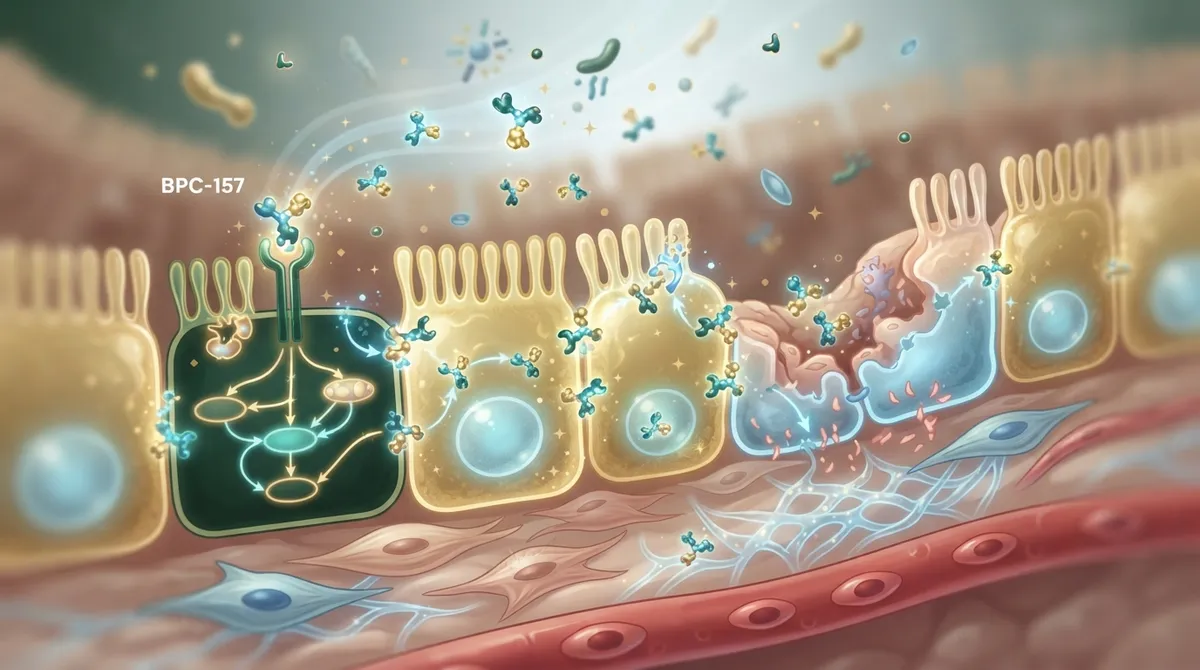
BPC-157, short for Body Protection Compound-157, is a synthetic peptide made of 15 amino acids. It was designed based on a protein naturally found in stomach fluid. Researchers have studied it mostly in lab and animal settings, hoping it might support tissue repair, calm inflammation, and encourage new blood vessel growth.
If you’re new to this world, it helps to understand what are peptides and how they work in the body before diving deeper into any single compound. Peptides act like tiny messengers, telling cells what to do. You can also read more from what are peptides for a general medical overview.
1. Animal Studies Show Some Interesting Signals
Most of what we know about BPC-157 comes from rodent studies. Scientists have looked at how it affects the stomach lining, intestinal healing, and inflammatory signals in these animal models.
- Some studies suggest it may help protect the stomach lining from damage
- Animal research has explored its role in healing ulcers
- Lab models have looked at intestinal tissue repair after injury
- Researchers have studied its effect on new blood vessel formation
These are early findings, not proof of how the peptide works in people. Think of animal studies as the first chapter of a much longer book that hasn’t been finished yet.
2. Human Research Is Still Very Limited
Here’s the honest truth: there is no large, well-designed human study proving BPC-157 fixes gut problems. We don’t have solid data showing it helps with leaky gut, IBS, ulcers, or inflammatory bowel disease in people.
The National Library of Medicine has published research reviews confirming that most BPC-157 data still comes from animal models. That gap between animal data and human proof matters a lot when it comes to your health decisions.

3. BPC-157 Is Not FDA Approved
This is one of the most important facts to understand. BPC-157 has no FDA-approved use for gut health or anything else. There’s no approved dosing chart, no official prescribing guide, and no standard treatment protocol.
According to FDA briefing materials reviewed through 2025, regulators found there was not enough clinical safety information available for BPC-157 free base or BPC-157 acetate. The agency also noted there is no United States Pharmacopeia or National Formulary monograph for either form of the peptide.
Why the FDA Raised Concerns
The FDA specifically flagged worries about using BPC-157 in compounding pharmacies. Here’s a quick summary of their concerns:
| FDA Concern | What It Means |
|---|---|
| No safety monograph | No official pharmacy standard exists for quality or purity |
| Limited safety data | Long-term risks in humans are not well understood |
| Lack of effectiveness proof | No solid evidence it treats ulcerative colitis |
| No approved product | No FDA-approved drug contains BPC-157 |
You can read more directly from regulatory sources like FDA compounding advisory materials if you want to dig into the details yourself.
4. Possible Risks You Should Know About
Because BPC-157 isn’t regulated the same way as approved medications, there are real risks worth discussing with a licensed provider. Unregulated products can vary wildly in quality.
- Unknown long-term effects on the body from repeated use
- Possible immune reactions to the peptide itself
- Contamination or incorrect concentration in poorly made products
- Injection site issues if not administered properly
- Unknown interactions with other medications you may take
- Theoretical concerns about blood vessel growth effects
These risks are exactly why working with a licensed medical team matters so much. If you’re exploring any peptide, it helps to first learn how to start peptide therapy safely and see real results.
5. Oral vs Injectable: What’s the Difference?
You may see BPC-157 sold as an oral capsule or as an injectable version. Both come with their own set of unknowns.
| Form | Claimed Use | Key Concern |
|---|---|---|
| Oral capsule | General gut support | Stomach acid may break down the peptide before absorption |
| Injectable | Systemic and local tissue support | Requires proper technique and sterile handling |
Neither form has strong human trial data backing gut health claims. If you’re curious about proper injection technique for any peptide, this guide on how to prepare for safe, effective peptide injections is a helpful starting point.
6. It Should Never Replace a Real Diagnosis
This one is important, so let’s be direct. BPC-157 should never be used to self-treat serious symptoms like gastrointestinal bleeding, ongoing stomach pain, sudden weight loss, or diagnosed conditions like Crohn’s disease or ulcerative colitis.
- Persistent abdominal pain needs a real medical evaluation
- Unexplained weight loss deserves prompt attention from a doctor
- Blood in your stool is always a reason to seek care right away
- Chronic bloating or digestive changes should be checked by a professional
Delaying a proper diagnosis while trying an unproven peptide can be dangerous. Your gut symptoms deserve real answers, not guesswork.
7. Evidence-Based Alternatives Exist
The good news? You don’t have to choose between doing nothing and trying something unproven. There are peptides and treatment approaches with a stronger evidence base worth discussing with your provider.
For example, some peptides have more research behind gut and tissue support than others. This article on which peptides for gut health actually have evidence is a great next read. You might also want to explore 9 BPC-157 peptide facts to know before you start for a deeper dive into dosing and safety questions.
A personalized plan built from your actual blood work often makes more sense than chasing trends. That’s the whole idea behind peptides for women and peptides for men programs designed around your unique labs and goals.
8. Working With a Licensed Provider Matters Most
At the end of the day, the safest path forward is talking to a licensed medical provider who can review your full health picture. They can help you understand real risks, realistic timelines, and whether any peptide fits your situation.
Allura Longevity connects clients with board-certified providers who build six-month treatment plans based on real lab work, not guesswork. Every plan starts with a simple virtual visit and bloodwork through LabCorp, so your care is based on your body, not a trend you saw online.
How to Approach Gut Health the Smart Way
Instead of jumping straight to an unproven peptide, consider these steps first:
- Get proper bloodwork done to rule out underlying issues
- Talk with a licensed provider about your specific symptoms
- Ask about evidence-based options with a stronger research base
- Discuss realistic timelines and honest expectations for any treatment
- Avoid buying unregulated products from unknown online sellers
- Follow up regularly so your plan can be adjusted as needed
This approach protects your health while still giving you access to modern, personalized care. If you’re also dealing with fatigue or sluggish metabolism alongside gut symptoms, it may be worth reading about how to pick peptides for energy that actually work as part of a bigger wellness picture.
Common Myths About BPC-157 and Gut Health
Let’s clear up a few misunderstandings floating around online:
- Myth: BPC-157 is FDA approved for gut healing. Fact: it is not approved for any use.
- Myth: Animal studies prove it works in humans. Fact: human trials are still lacking.
- Myth: All peptide products are the same quality. Fact: quality varies widely by source.
- Myth: It’s a safe substitute for medical diagnosis. Fact: it should never delay proper care.
Understanding these myths helps you make choices based on facts, not hype.
Final Thoughts on BPC-157 for Gut Health
BPC-157 is an interesting compound with promising animal research, but it’s simply not proven for human gut health yet. The lack of FDA approval, limited safety data, and missing human trials mean caution is the smart move here. Your gut health deserves real answers, not guesswork based on social media trends.
The best next step is a conversation with a licensed provider who can look at your actual health picture. Allura Longevity’s team, led by board-certified Family Nurse Practitioner Ashley, builds personalized plans based on real bloodwork and honest guidance. Spots are limited each month, so if you’re ready to get real answers about your gut health and overall wellness, request a consultation today and start your journey with a team that puts your safety first.
FAQs
Q: Does BPC-157 actually help with leaky gut or IBS?
A: Right now, there’s no solid human research proving BPC-157 helps with leaky gut, IBS, or similar conditions. Most of the promising findings come from animal studies, so we just can’t say for sure how it works in people yet. It’s always best to chat with a licensed provider about proven options for these symptoms.
Q: Is BPC-157 FDA approved for gut health treatment?
A: Nope, BPC-157 is not FDA approved for gut health or any other use. The FDA has actually raised safety concerns about it in compounding pharmacies, citing limited safety data and no official quality standards. That’s an important detail to keep in mind before considering it.
Q: What are the biggest risks of trying BPC-157 for digestive issues?
A: The biggest risks include unknown long-term effects, possible contamination in unregulated products, and injection-related complications. There’s also a chance it could interact with other medications you’re taking. Working with a licensed provider helps you understand these risks fully before making any decisions.
Q: How long does BPC-157 take to work for gut symptoms?
A: Honestly, there’s no reliable human data showing a proven timeline for gut health benefits. Any timeline you see online is based on animal studies or personal stories, not solid clinical research. This is exactly why a personalized, medically supervised approach matters so much.
Q: Are there safer alternatives to BPC-157 for gut health support?
A: Yes, there are peptides and treatment approaches with stronger evidence behind them for supporting overall wellness and recovery. A licensed provider can help you explore options based on your actual bloodwork and health goals. It’s always better to build a plan around real data instead of trends.





