

Key Takeaways
-
Peptide therapy is an umbrella term, not one treatment; evidence and risks differ widely by peptide, so ask which peptide, for which condition, and what proof exists.
-
FDA approval covers one specific product for one stated use and does not prove that a wellness peptide improves mood or other symptoms.
-
Research does not show strong clinical evidence that wellness peptides like Semax treat depression or anxiety; persistent low mood or anxiety needs a licensed clinician.
-
Compounded peptides are not reviewed by the FDA for safety, effectiveness, or quality before sale, so ask who makes them and how they are tested.
-
Never use 'research use only' or 'not for human consumption' peptide products; they are not made or tested for people and are not safe substitutes for prescriptions.
-
Start with a medical history and targeted blood work, since many causes besides hormones can drive fatigue and mood changes, and lifestyle basics like sleep, exercise, and protein still matter most.
You wake up tired. Your mood feels flat. Your body just does not feel like your own anymore. Sound familiar? Many adults in midlife and beyond ask the same question: could my hormones be behind this, and could peptides help?
It is a fair question, and you deserve a straight answer. Mood and hormone peptide therapy is a popular phrase in the wellness world in 2026. But it is not one single, standardized treatment. Peptides are a big family of molecules. Some are FDA-approved medicines for specific conditions. Others are sold with big promises and little proof.
In this guide, we walk through 15 clear facts to help you sort hype from help. Whether you are a health optimizer, a data-driven biohacker, or a busy professional who just wants to feel better, you will learn what peptides can and cannot do for mood and hormone health. Think of this as a friendly chat with someone who wants you to make smart, safe choices. Let’s dive in!
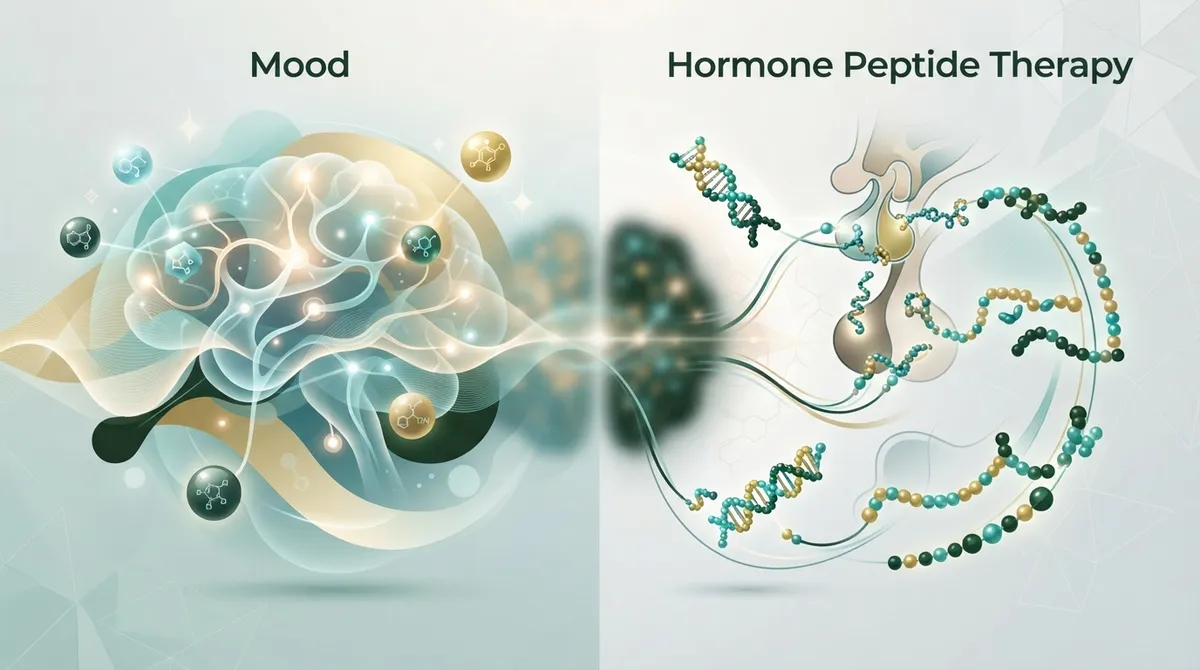
Fact 1: Mood and Hormone Peptide Therapy Is Not One Treatment
Here is the first thing to know. “Peptide therapy” is an umbrella term. Peptides are short chains of amino acids, the building blocks of proteins. Your body already makes many of them. They act like tiny messengers.
Because there are so many peptides, the evidence, risks, and rules differ for each one. If you want a solid primer, start with 8 Facts That Explain What Are Peptides in 2026. You can also read a general overview from WebMD on what peptides are.
So when someone says “peptides fix mood,” ask one question: which peptide, for which condition, and what is the proof?
Fact 2: Approval Applies to a Specific Product and Use
Some peptide medicines are FDA-approved. That is real and important. But approval covers one product for one stated use. It does not mean every peptide helps every symptom.
For example, an approved peptide medicine for a metabolic condition does not prove that a wellness peptide can lift your mood. Keep this rule in mind as you read marketing claims.
Fact 3: Mood Claims Need Careful Review
You may see peptides like Semax promoted for mood, stress, or focus. Be careful here. The research we reviewed does not show strong clinical evidence that these peptides treat depression or anxiety in a proven way.
Mood changes can come from many sources. These include:
- Sleep problems and stress
- Thyroid issues
- Perimenopause or menopause shifts
- Low testosterone in men
- Nutrient gaps and chronic illness
- Depression or anxiety disorders that need proper care
If you feel persistently low, hopeless, or anxious, please talk with a licensed clinician or mental health professional. Peptides should never replace that care. If you want to explore this topic further, see How to Approach Mood Disorder Management With Peptides.
Fact 4: Hormone Symptoms Have Many Possible Causes
Feeling tired, moody, or foggy does not automatically mean a hormone problem. Doctors look at your history, symptoms, and targeted lab tests before they suggest treatment.
This is why testing matters. A good plan starts with data, not guesses. Learn more in Why Does Hormone Level Testing Matter for Peptides?
Fact 5: Peptides Are Not the Same as Hormone Replacement
This one trips up a lot of people. Hormone therapy, like testosterone or estrogen, replaces a hormone your body is low on. Peptides work differently. Some signal your body to release its own hormones. Others have totally different jobs.
Here is a simple comparison:
| Feature | Hormone Replacement | Peptide Therapy |
|---|---|---|
| What it does | Replaces a hormone directly | Sends a signal; effects vary by peptide |
| Evidence base | Well studied for specific conditions | Varies widely by peptide |
| Typical use | Menopause symptoms, low testosterone | Depends on the specific peptide |
| Monitoring | Regular labs and follow-ups | Regular labs and follow-ups |
Curious about the differences? Check out How to Choose Between Bioidentical Hormones and Peptides.
Fact 6: Compounded Does Not Mean FDA-Approved
Compounded medicines are made by a pharmacy for a specific patient. They can be appropriate in some cases. But the FDA does not review them for safety, effectiveness, or quality before they are sold.
That is a big difference from an FDA-approved drug. It does not mean compounded products are always bad. It means you should ask good questions about who makes them and how they are tested. For a deeper look, read FDA-Approved vs. Compounded Peptides: What Wins?
Fact 7: The FDA Has Raised Concerns About Some Peptides
The FDA has flagged specific concerns about certain compounded peptides. These include possible immune reactions caused by clumping or impurities. There is also limited safety data for some routes of use.
Possible risks across the category can include:
- Incorrect strength or dose
- Contamination
- Injection-site reactions
- Allergic reactions
- Unknown interactions with other medicines
No one can promise a single risk number for all peptides, because they differ so much. That is why a licensed provider matters.
Fact 8: Never Use “Research Use Only” Products
Some websites sell peptides labeled “research use only” or “not for human consumption.” Please avoid these. They are not prescribed medicines. They are not made or tested for people.
If a product is not intended for human use, it is not a safe stand-in for a prescription. Always work with a licensed clinician. You can read more in How to Get Prescription Peptides Safely in 2026.
Fact 9: Where Peptides May Fit Into Hormone-Related Care
Some peptides are discussed in the context of growth hormone signaling or sexual wellness. Their uses, evidence, and legal status differ. A licensed provider can tell you what is supported and what is still emerging.
If you are curious about specific options, these guides are helpful:
- Growth Hormone Peptides: What They Are & How They Work
- Ipamorelin Peptide Therapy: Benefits, Dosing & Safety
- 8 Peptide Facts That Redefine Sexual Wellness in 2026
Fact 10: Mood and Hormones Are Closely Linked
Hormones and mood do influence each other. Shifts in estrogen and progesterone during perimenopause can affect sleep, energy, and emotions. Low testosterone in men can show up as low drive and low mood.
That is why a full picture matters. Learn more in How to Ease Mood Swings With HRT and Peptides and 10 Facts on Perimenopause Hormone Therapy for 2026.
Fact 11: Labs Come First, Always
A responsible plan begins with a medical history and blood work. This helps your provider see what is going on inside your body. It also gives you a baseline to track progress.
Here is a simple look at how a safe start often goes:
- Share your health history and goals.
- Complete blood work.
- Review results with a licensed provider.
- Decide on a plan that fits your diagnosis and goals.
- Follow up and adjust over time.
Want more detail? See How to Start Peptide Therapy Safely and See Real Results.
Fact 12: Results Take Time and Vary From Person to Person
No one can promise instant results. Your age, sleep, stress, nutrition, and health history all play a part. Some people notice changes in weeks. Others take longer. Some see little change at all.
Set realistic expectations. Read How Long for Peptide Therapy Results? A Real Timeline for a grounded view.
Fact 13: Lifestyle Still Does the Heavy Lifting
Peptides are not magic. The basics still matter most for both mood and hormone health.
- Aim for steady, quality sleep
- Move your body most days
- Eat enough protein and whole foods
- Manage stress with tools that work for you
- Stay connected with friends and family
Think of any therapy as a helper on top of a strong foundation, not a shortcut around it.
Fact 14: Clinic Quality Makes a Big Difference
Not every clinic is the same. A trustworthy provider is open about evidence, risks, and legal status. They also do not overpromise.
Use this quick checklist to size up a clinic:
| What to Look For | Why It Matters |
|---|---|
| Licensed medical providers | Ensures proper clinical oversight |
| Lab testing before treatment | Guides safe, personalized plans |
| Honest talk about evidence | Avoids false hope and hype |
| Clear product sourcing | Protects you from unsafe products |
| Ongoing monitoring | Lets your plan adjust as you do |
For more ideas, see How to Find Legal Peptide Therapy You Can Trust and 15 Peptide Consultation Questions to Ask in 2026.
Fact 15: Telehealth Can Make Personalized Care Easier
For busy professionals and anyone who dislikes waiting rooms, telehealth is a real plus. You can talk with a licensed provider from home, complete labs locally, and have treatment delivered to your door.
At Allura Longevity, care starts with a $50 virtual consultation. Clients complete blood work through LabCorp. Licensed providers, led by Ashley, a board-certified Family Nurse Practitioner, then build a personalized six-month plan with ongoing monitoring and adjustments. Care is available in Florida, Georgia, Texas, Connecticut, Indiana, Maryland, New York, and California. You can learn more in Local Clinic vs. Telehealth: Best Peptide Therapy Near You?
What the Research Does and Does Not Say
It helps to be honest about the evidence. The research we reviewed did not provide reliable clinical-trial numbers showing that peptide therapy treats mood disorders or broadly balances hormones. For background on how peptides work in the body, the National Library of Medicine is a good place to read more.
The takeaway? Judge each peptide on its own. Ask for evidence. Match treatment to a real diagnosis. That is how you stay safe and get the most from your investment.
Your Next Step Toward Feeling Like Yourself Again
Feeling off is frustrating, but you do not have to figure it out alone. The smartest path starts with questions, labs, and a licensed provider who listens. Mood and hormone peptide therapy may play a role for some people, but only when it is chosen carefully and monitored well.
If you are ready to talk through your goals with a team that values safety and personalization, request a consultation with Allura Longevity today. New client spots are limited each month, so reach out soon. You can also call (813) 510-6277. Explore options for peptides for women or peptides for men to see what fits you best.
FAQs
Q: Can peptide therapy improve mood or help with depression or anxiety?
A: The research we reviewed does not show strong clinical proof that wellness peptides treat depression or anxiety. Mood changes have many causes, so it is best to talk with a licensed clinician about a proper evaluation and care plan.
Q: Can peptide therapy balance hormones?
A: Peptides are not the same as hormone replacement, and evidence varies by peptide. A licensed provider can review your symptoms and labs to see whether a specific peptide, hormone therapy, or another approach fits your needs.
Q: What is the difference between an FDA-approved peptide and a compounded peptide?
A: An FDA-approved peptide has been reviewed for safety and effectiveness for a specific use. A compounded peptide is made for an individual patient and is not reviewed by the FDA before it is marketed, so quality and sourcing questions matter.
Q: What tests should I get before treating suspected hormone-related mood changes?
A: Your provider will usually start with your health history and targeted blood work based on your symptoms. That baseline helps guide a safe plan and lets you track your progress over time.
Q: How can I tell if a peptide clinic is making honest claims?
A: Look for licensed providers, lab testing before treatment, clear product sourcing, and open talk about evidence and risks. Be cautious of any clinic that promises guaranteed results or uses products labeled for research only.





