

Key Takeaways
-
A legitimate virtual peptide consultation should feel like a real medical visit: licensed clinician, detailed health history review, and a decision on whether treatment is appropriate, not an automatic sale.
-
Confirm the clinician is licensed in the state where you'll be physically located during the visit, and ask whether the peptide can be prescribed to you there and how the pharmacy ships it.
-
Ask whether any product is FDA-approved or compounded, since compounded drugs are not FDA-approved and the FDA has raised safety concerns about certain peptide bulk substances.
-
Red flags include guaranteed results, pressure to buy immediately, and no medical screening or follow-up plan; green flags include lab discussion, honest risk talk, and planned monitoring.
So you’re curious about peptide therapy, but the idea of driving to a clinic, sitting in a waiting room, and squeezing it into your workday sounds like a pain. Good news: a virtual peptide therapy consultation lets you talk with a licensed clinician from your couch, your car (parked, please!), or your home office.
But here’s the thing. Not every online appointment is created equal. A good one feels like a real medical visit. A weak one feels like a sales pitch with a video link. In 2026, more people than ever are exploring peptides for energy, recovery, sleep, skin, and healthy aging, so knowing what to expect is a smart move.
Whether you’re a data-loving biohacker, a busy professional, or someone who simply wants to feel like yourself again, this guide walks you through six things to know before you book. We’ll cover what happens during the visit, what labs may be involved, how licensing works, and which questions to ask. Think of it as a friendly checklist from someone who wants you to feel confident.

1. A Real Consultation Is a Medical Visit, Not a Sales Call
A virtual peptide therapy consultation is a telehealth appointment with a licensed clinician. The goal is to review your health history, symptoms, medications, goals, and (when it makes sense) lab results. Then the clinician decides whether a peptide-based treatment is even appropriate for you.
That last part matters. A responsible provider isn’t trying to sell you a product. They’re trying to figure out what’s right for your body. Sometimes the answer is yes. Sometimes it’s “let’s run labs first.” Sometimes it’s “this isn’t the right fit.”
If you want a refresher on the basics before your visit, our guide on 8 Facts That Explain What Are Peptides in 2026 is a great starting point. You can also read a plain-language overview from WebMD on what are peptides.
Green flags in a consultation
- The clinician asks detailed questions about your health history and current medications
- Labs are discussed as part of a clinical decision, not as an automatic upsell
- You hear about risks, alternatives, and uncertainty, not just benefits
- Follow-up care is planned before you start
- You’re never pressured to decide on the spot
2. Here’s What Usually Happens, Step by Step
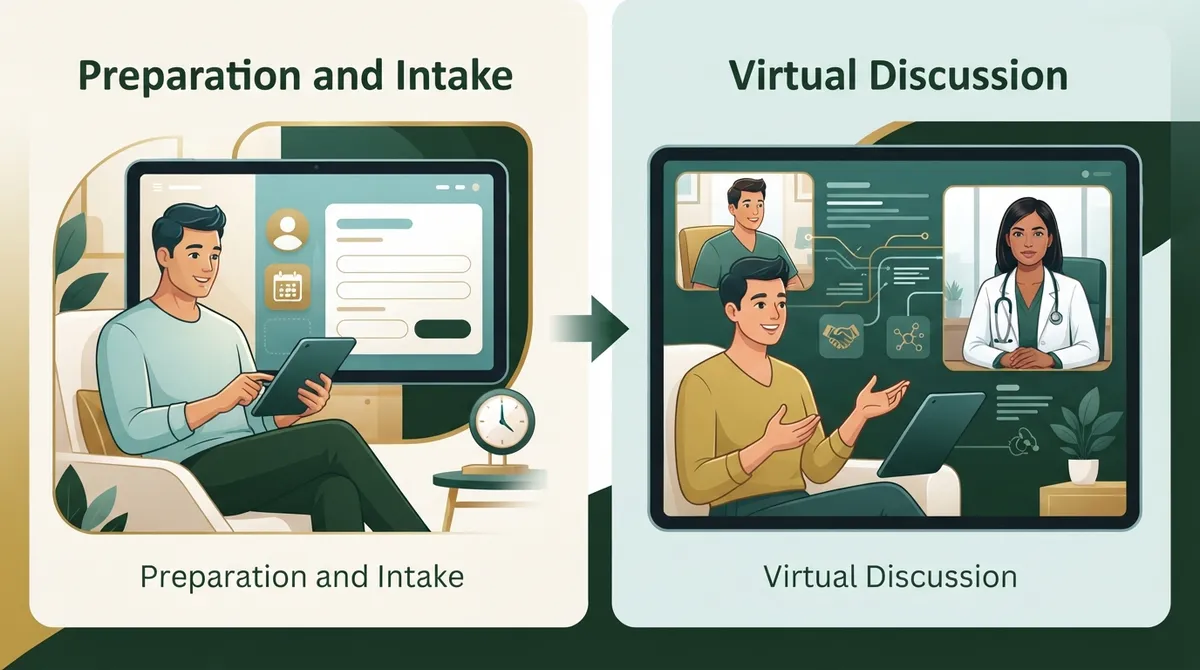
Every clinic runs things a little differently, but a thoughtful process often looks like this:
- Intake questionnaire. You share your health history, symptoms, medications, allergies, and goals. Be honest. This isn’t a test.
- Live video visit. You meet with a licensed provider in real time. You talk through what’s going on and what you hope to improve.
- Lab review or ordering. When clinically appropriate, the provider reviews recent labs or orders new ones.
- Treatment discussion. You talk about whether treatment makes sense, what the options are, and what the risks look like.
- Follow-up planning. You set up check-ins to monitor how you’re doing and adjust the plan if needed.
That’s the general flow. Testing and treatment decisions should always be individualized. Nobody should tell you there’s one mandatory protocol that works for everyone.
At Allura Longevity, the process starts with a $50 virtual consultation. From there, clients complete blood work through LabCorp and receive a customized six-month plan, guided by licensed providers and led by Ashley, a board-certified Family Nurse Practitioner. You can request a consultation whenever you’re ready to see how it works.
For a deeper look at the visit itself, check out What Really Happens During a Peptide Telehealth Visit?
3. Your Labs Help Shape the Plan
If you’re a numbers person, this is where it gets fun. Lab work can give your provider a clearer picture of what’s happening inside your body, so decisions are based on data instead of guesswork.
That said, there’s no single universal lab panel that every provider uses. What gets tested depends on your symptoms, history, and goals. Your clinician should explain why each test matters and how the results will influence your plan.
| Approach | How It Works | Why It Matters |
|---|---|---|
| Review of existing labs | Provider looks at recent results you already have | Saves time and avoids repeat testing when results are current |
| New blood work | Provider orders labs based on your goals and history | Fills in gaps and supports individualized decisions |
| Ongoing monitoring | Labs are repeated at planned intervals | Helps track progress and catch concerns early |
Curious about why testing comes first? Read 5 Blood Work Analysis Steps Before Peptides in 2026 and How to Use Biomarker Testing to Guide Peptide Therapy.
4. Licensing and Location Rules Are Real
Here’s something many people don’t realize. Telehealth doesn’t erase licensing rules. In general, a clinician must be authorized to practice where you are physically located during the visit. State rules can also affect how visits are done, what can be prescribed, and how pharmacies ship medications.
Because rules can change and vary by state and by medication, always confirm current requirements before you book. A trustworthy provider will tell you plainly whether they can care for you in your state.
Allura Longevity is licensed in Florida, Georgia, Texas, Connecticut, Indiana, Maryland, New York, and California. If you live in one of those states, you’re in the right place to start the conversation.
Quick licensing questions to ask
- Is my provider licensed in the state where I’ll be during the visit?
- Can this medication be prescribed to me in my state?
- Which pharmacy will dispense my treatment, and how is it shipped?
For more on this, see Which States Allow Telehealth Peptide Prescriptions?
5. Know the Difference Between FDA-Approved and Compounded
This one is important, so let’s slow down and keep it simple.
Compounded drugs are not FDA-approved drugs. The FDA has raised safety concerns about certain bulk drug substances used in compounded products, including some peptides. A compounded product should never be described as FDA-approved or as equivalent to an approved drug. And FDA policies can be specific to each substance and can change over time.
Many peptides promoted for wellness or performance also don’t have FDA-approved indications. That means marketing claims shouldn’t be treated as proven medical benefits. A good clinician will be upfront about the limits of the evidence, the possible risks, and the alternatives.
| Question to Ask | Why It Matters |
|---|---|
| Is this product FDA-approved or compounded? | Approved and compounded products are regulated differently |
| What evidence supports this for my goal? | Helps separate research-backed use from hype |
| What are the risks and alternatives? | Lets you weigh your options with full information |
| Which pharmacy dispenses it? | Tells you who prepares and ships your treatment |
Want to dig deeper? Our breakdown of FDA-Approved vs. Compounded Peptides: What Wins? and How to Verify FDA Approval Before Peptide Therapy can help. The National Library of Medicine is also a solid place to read peer-reviewed research on peptides.
6. Come Prepared With the Right Questions
Your consultation is your time. Use it! Here are questions worth bringing along, whether you’re a busy professional, a wellness seeker, or a biohacker with a spreadsheet:
- Who will be providing my care, and what are their credentials?
- Are you licensed to treat me in my state?
- What evidence supports the treatment you’re suggesting?
- Is the product FDA-approved or compounded?
- Which pharmacy will fill it?
- What monitoring and follow-up will I have?
- How are side effects or urgent concerns handled?
- What happens if this isn’t a good fit for me?
You can find even more ideas in 15 Peptide Consultation Questions to Ask in 2026.
How to spot a legitimate online provider
- Clear information about who the clinicians are and where they’re licensed
- No guaranteed results or miracle claims
- Transparent pricing and an explained process
- Medical screening before any prescription
- A plan for follow-up, not a one-and-done transaction
Our guide on How Do You Know Online Peptide Therapy Is Safe? goes into more detail.
Why Telehealth Works So Well for Busy People
Let’s be honest. Life is full. Telehealth removes the commute, the waiting room, and the scheduling headaches. Your visit happens where you are, and treatments ship to your door. If you’re weighing options, see Local Clinic vs. Telehealth: Best Peptide Therapy Near You?
Peptide therapy is also personal. Some people look into peptides for women focused on skin, energy, and hormonal balance, while others explore peptides for men for recovery, vitality, and testosterone support. A virtual consultation is the first step in figuring out what, if anything, fits your situation.
One more reminder: results vary from person to person, and nobody can promise a specific outcome. A good provider will set realistic expectations. If you want to understand the timeline side of things, How Long for Peptide Therapy Results? A Real Timeline is worth a read.
Ready to Take the Next Step?
A virtual peptide therapy consultation should leave you feeling informed, respected, and in control. You deserve a provider who listens, explains the evidence honestly, and builds a plan around your labs and your goals.
Allura Longevity offers personalized, medically supervised peptide therapy through telehealth, with licensed providers, LabCorp blood work, a customized six-month plan, and ongoing monitoring. New client spots are limited each month, so if you’ve been thinking about it, now is a great time. Request your consultation today or call (813) 510-6277 to get started.
FAQs
Q: What happens during a virtual peptide therapy consultation?
A: You’ll usually complete an intake questionnaire, then meet with a licensed clinician by video to talk through your health history, medications, and goals. If it makes sense, labs are reviewed or ordered, and you’ll discuss whether treatment is appropriate and how follow-up will work.
Q: Do I need lab tests before starting peptide therapy?
A: Not always, but labs often help your provider make safer, more personalized decisions. What gets tested depends on your symptoms, history, and goals, so there’s no single panel that fits everyone.
Q: Are compounded peptides FDA-approved?
A: No. Compounded drugs are not FDA-approved, and the FDA has raised safety concerns about certain substances used in compounded products, including some peptides. Always ask your provider whether a product is approved or compounded, and verify current FDA information.
Q: Can peptide therapy be prescribed online in my state?
A: It depends. Clinicians generally must be licensed where you’re located, and state rules can affect prescribing and pharmacy shipping. Allura Longevity is licensed in Florida, Georgia, Texas, Connecticut, Indiana, Maryland, New York, and California, so confirm your state before booking.
Q: How can I tell if an online peptide provider is legitimate?
A: Look for licensed clinicians, medical screening before any prescription, honest talk about risks and evidence, and a clear follow-up plan. Be cautious of guaranteed results, pressure to buy right away, or providers who can’t tell you where they’re licensed.





